
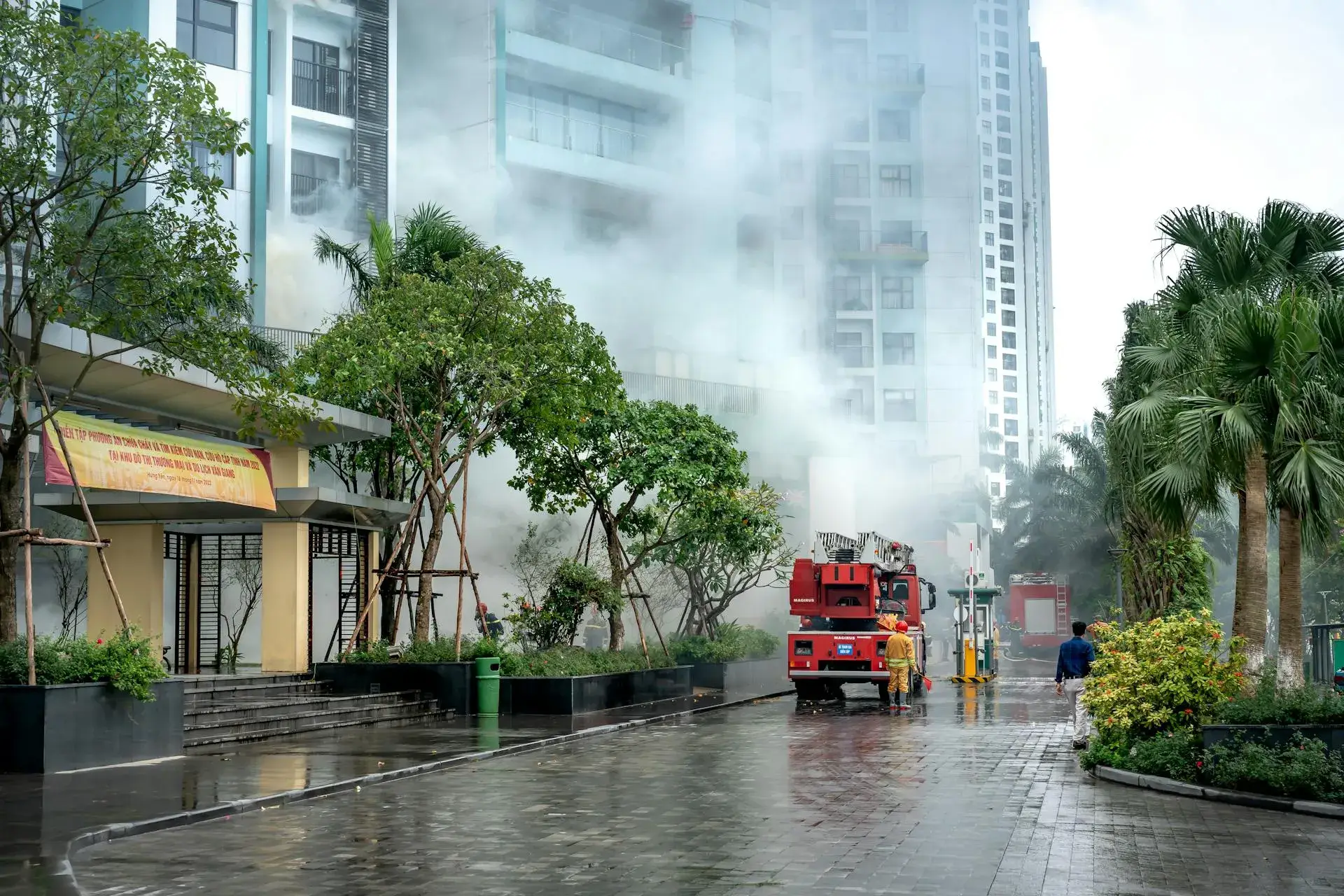
Smoke Damage Restoration in Madison, TN
Smoke residue attacks surfaces every hour it sits. Soot etches metal, stains fabric permanently, and embeds in ductwork. Our local team responds to Madison smoke damage within 60 minutes.
What Happens When You Call
A real person answers, not a call center. We identify the smoke source, assess the urgency, and begin coordinating your response immediately.
Your dedicated smoke restoration team is dispatched from our local base serving Madison and northeast Davidson County.
Team arrives with air scrubbers, soot removal equipment, and assessment tools. Source isolation and ventilation control begin immediately.
Smoke source contained, initial air quality stabilized, damage assessment documented, restoration plan outlined. You know exactly what comes next.
Smoke does not wait for you to figure out next steps. It migrates through every crack, vent, and duct opening in your home, depositing residue on surfaces you cannot see and embedding odor into materials you thought were untouched. Whether the source is a structure fire next door, a furnace puffback in your crawl space, or wildfire smoke that penetrated your building envelope during an air quality emergency, the damage deepens by the hour. X Response exists for exactly this moment. Call now. Your team is standing by.
Why Madison Homes Are Vulnerable to Smoke Damage
Madison's smoke damage exposure comes from three distinct sources, each requiring a different restoration approach. The first and most dramatic is structure fire smoke, whether from a fire in your own home or a neighboring property. The December 2023 EF-2 tornado that tracked through Madison created conditions for multiple secondary fires in the months that followed as compromised electrical systems and gas connections failed in storm-damaged homes. Smoke from a neighbor's fire can penetrate your home through shared walls in apartment complexes, through HVAC fresh air intakes, and through the normal air infiltration paths that every building has. The second source is wildfire smoke from distant events. On June 7, 2023, smoke from Canadian wildfires pushed Nashville's Air Quality Index above 200, triggering a Code Purple advisory from Metro Public Health that warned all Davidson County residents to limit outdoor exposure. That smoke blanketed Middle Tennessee for days, and it did not stay outdoors.
The June 2023 Canadian wildfire smoke event was not a one-day spike. Smoke persisted over Nashville and the surrounding metro through early June and returned again in mid-July when another wave of Canadian fire activity pushed haze and particulates back into Middle Tennessee, triggering a second air quality alert. During these multi-day events, fine particulate matter (PM2.5) infiltrated homes through every unsealed opening: gaps around windows and doors, attic vents, crawl space vents, fresh air intakes on HVAC systems, and the normal air leakage paths that all buildings have. Madison's 1950s and 1960s housing stock is particularly permeable because these homes were built before modern air-sealing standards. They have vented crawl spaces that draw outdoor air directly beneath the living space, single-pane windows with aging weatherstripping, and HVAC systems that pull return air through gaps in duct connections.
June 2023 Canadian Wildfire Smoke and Indoor Infiltration
On June 7, 2023, smoke from Quebec wildfires reached Middle Tennessee and pushed Nashville's Air Quality Index above 200, a level classified as 'Very Unhealthy' where all residents are advised to reduce outdoor activity. Metro Public Health issued a Code Purple advisory for Davidson County. The visible haze was dramatic, but the indoor impact was the real damage. Fine particulate matter (PM2.5) at those concentrations infiltrates residential buildings through every air pathway: window gaps, door seals, attic and crawl space vents, HVAC fresh air intakes, and the natural air exchange that all buildings undergo. Madison's older housing stock, built largely in the 1950s and 1960s with vented crawl spaces, single-pane windows, and unsealed duct connections, offered minimal resistance to infiltration. Homes that ran HVAC systems during the event pulled smoke directly through return ducts and distributed it throughout the living space, depositing fine residue on every interior surface.
Furnace Puffback Events in Crawl Space Installations
Many Madison homes operate oil or gas furnaces installed in crawl spaces or utility closets below the living area. A puffback occurs when unburned fuel accumulates in the combustion chamber and ignites explosively, sending a pressurized blast of soot through the heat exchanger, into the supply ductwork, and out through every register in the home in seconds. The result is a fine, oily soot coating on walls, ceilings, furnishings, and the interior of the entire duct system. It happens without warning, often during the first cold-weather startup after summer dormancy. In Madison's older homes with aging furnace installations in confined crawl spaces, puffbacks are not rare. The combustion chamber, flue connections, and ignition components in a 20-plus-year-old unit deteriorate in the humid crawl space environment, and the failure mode is sudden and catastrophic from a soot-damage perspective.
Neighbor-Fire Smoke in Multi-Family and Dense Residential Areas
Madison includes apartment complexes, townhome communities, and closely spaced single-family homes throughout its residential corridors. When a fire occurs in one unit or one home, smoke migrates into adjacent properties through shared walls, attic spaces, HVAC penetrations, and exterior air infiltration. The December 2023 tornado damaged an apartment complex on Palmer Avenue and destroyed homes along Nesbitt Lane and East Campbell Road. Subsequent fires in tornado-damaged structures send smoke into neighboring properties that may have already been compromised by storm damage to their own building envelopes. A home with a tarped roof or boarded windows after the tornado has even less resistance to smoke infiltration from a neighbor's fire than an intact structure. Restoration involves addressing smoke that entered through pathways the homeowner never knew existed.
HVAC Distribution of Smoke Throughout the Home
Regardless of the smoke source, the forced-air HVAC systems in virtually all Madison homes become the primary distribution mechanism once smoke enters the building. Return air grilles pull smoke-laden air from the living space into ductwork, through the blower assembly, and redistribute it to every room through supply registers. Smoke particles deposit inside the ductwork, on the evaporator coil, on the blower fan blades, and within the filter housing. Even after the smoke source is gone and the air clears visually, every time the system cycles it re-releases particles from these contaminated surfaces. Homeowners notice a persistent smoky smell weeks after a fire or smoke event and cannot identify the source because it is inside the ductwork they cannot see. Effective smoke restoration requires treating the HVAC system as a contaminated component, not just the visible room surfaces.
Soot Chemistry and Surface Damage Progression
Smoke residue is not just visually unpleasant. It is chemically active. Combustion byproducts include acids that etch metal surfaces, discolor paint and varnish, yellow white plastics, and permanently stain porous materials like fabric, unsealed wood, and grout. The chemical reaction between soot and the surfaces it contacts is time-dependent: the longer residue sits, the deeper it bonds and the more aggressive the cleaning method required to remove it. On metal fixtures, corrosion becomes visible within days. On painted walls, yellowing can become permanent within a week. On fabrics and upholstery, oily smoke residue sets into fibers and resists extraction if not addressed within the first 48 to 72 hours. This progression is why speed matters in smoke restoration, and why the humid climate in Davidson County, which slows evaporation and keeps soot damp against surfaces, accelerates the damage timeline compared to drier climates.
These smoke sources overlap in Madison. The 2023 wildfire events infiltrated thousands of homes across the community. The December 2023 tornado created conditions for secondary structure fires in the months that followed. Furnace puffbacks occur every heating season in Madison's aging crawl-space installations. And the dense residential layout means a neighbor's fire becomes your smoke problem whether you were involved or not. Effective smoke damage restoration requires identifying exactly what burned, how the smoke entered the home, what surfaces it contacted, and how the HVAC system distributed it. A team that understands Madison's housing stock, its permeable 1950s construction, and its crawl-space HVAC installations can target the restoration where it matters rather than treating symptoms the homeowner can see while missing the contamination they cannot.
What Happens to Your Home While You Wait
Within 1 Hour
Smoke residue deposits on all exposed surfaces. Acidic byproducts begin reacting with metal fixtures, painted finishes, and exposed wood. Fine particulates settle into fabric weave, carpet fibers, and upholstery. In Madison homes with forced-air HVAC running during the event, smoke distributes through the entire duct system and coats the evaporator coil, blower assembly, and interior duct surfaces within minutes.
1–24 Hours
Soot adheres more firmly as the chemical bond with surfaces strengthens. Metal tarnishes. White surfaces begin yellowing. Oily residue from synthetic material combustion penetrates deeper into porous substrates. The HVAC system continues cycling and redistributing contaminated air throughout the home even if the original smoke source has been removed. Odor permeates soft goods, bedding, clothing, and stored items.
24–72 Hours
Permanent staining sets into unfinished wood, natural stone, and light-colored fabrics. Metal corrosion progresses from tarnish to pitting. Oily protein-based soot from kitchen fires becomes extremely difficult to remove from painted drywall without damaging the finish beneath. Davidson County's humid climate keeps soot damp against surfaces, which accelerates the chemical reaction compared to dry environments. The window for gentle cleaning methods closes.
3–7 Days
Surfaces that could have been cleaned in place now require repainting or replacement. Fabric items that could have been professionally cleaned are now permanently stained. Smoke odor molecules embed deeply into structural materials: framing, insulation, concrete, and subfloor sheathing. The ductwork requires professional cleaning or replacement rather than simple filter changes. Restoration scope and cost expand significantly.
One Week and Beyond
Smoke odor becomes effectively permanent in porous structural materials without molecular-level treatment (thermal fogging, ozone, hydroxyl). Corrosion compromises electrical connections and plumbing fixtures. HVAC efficiency drops as the contaminated coil and blower accumulate buildup. What began as a surface-cleaning project becomes deep decontamination with material replacement. Insurance claims grow more complex.
Every hour of delay turns salvageable surfaces into replacement items and manageable cleaning into intensive decontamination. Contact X Response now. Our Madison team responds within 60 minutes.
How We Restore Smoke-Damaged Madison Homes
Smoke damage restoration requires a methodical, source-specific approach. The residue from a structure fire is different from wildfire particulate, which is different from a furnace puffback. Here is how we handle smoke damage in Madison properties.
Source Identification and Containment
Our team identifies exactly what burned and how the smoke entered your home. A structure fire in an adjacent unit leaves different residue than a furnace puffback in your own crawl space or wildfire smoke that infiltrated through the building envelope over several days. We isolate the HVAC system immediately to stop redistribution, seal air pathways that continue to admit outside smoke if the event is ongoing, and establish negative air pressure in affected areas to prevent migration into uncontaminated zones. The source determines everything that follows: the residue type, the cleaning chemistry, the surfaces at risk, and the restoration timeline.
Air Quality Stabilization
HEPA air scrubbers and negative air machines are deployed to capture airborne particulates and establish clean air in the living space. For wildfire smoke infiltration events, we seal the building envelope to stop ongoing infiltration before attempting interior cleanup. For post-fire smoke, we establish containment zones that separate treated areas from untreated areas. Air quality is monitored with particle counters to verify that the environment is safe for occupants and that our cleaning activities are not redistributing contamination to unaffected areas.
Surface Cleaning and Soot Removal
Every affected surface is cleaned using techniques matched to the material and the residue type. Dry chemical sponges for light soot on painted drywall. Wet cleaning with appropriate pH solutions for heavier deposits. Media blasting for exposed structural surfaces. Ultrasonic cleaning for delicate items and electronics. HEPA vacuuming for carpets and upholstery before extraction cleaning. The method matters: using the wrong technique on the wrong surface pushes residue deeper rather than removing it, causing permanent damage. Our technicians identify the soot type, which is determined by what burned, and select the cleaning chemistry accordingly.
HVAC Decontamination
The forced-air system in your Madison home is almost certainly contaminated if smoke was present while it was operating. We clean or replace the air filter, professionally clean the supply and return ductwork using mechanical agitation and HEPA collection, clean the evaporator coil and blower assembly, and treat the interior duct surfaces with an antimicrobial sealant if needed. For severe contamination, sections of flexible ductwork may need replacement rather than cleaning. This step is essential because an untreated HVAC system will re-release smoke particles every time it cycles, undoing the surface cleaning work and reintroducing odor to the living space indefinitely.
Odor Elimination and Verification
Surface cleaning removes visible residue but does not eliminate embedded odor molecules in structural materials, insulation, and enclosed cavities. We use thermal fogging to penetrate the same pathways smoke traveled, reaching into wall cavities, between flooring layers, and into structural joints. Hydroxyl generators provide ongoing molecular oxidation of odor compounds in occupied spaces. For severe contamination, ozone treatment in sealed, unoccupied spaces breaks down embedded odor molecules in materials that cannot be physically cleaned. Final verification confirms no residual odor under closed-house conditions with the HVAC running, simulating normal occupancy.
The X Response Difference
Smoke damage is invisible damage. It hides in ductwork, behind walls, in structural cavities, and in the molecular structure of porous materials. X Response finds it, treats it, and verifies it is gone.
Insurance Claim Guidance for Madison Homeowners
Smoke damage insurance coverage depends entirely on the source. Smoke from a covered peril, such as a structure fire in your home or a neighbor's home, is typically covered under the standard homeowner's policy including cleanup, content restoration, and additional living expenses if the home is uninhabitable. Smoke infiltration from wildfire events may fall under different policy provisions and often requires documentation proving the specific event caused measurable interior damage. Furnace puffback damage is generally covered as a sudden and accidental mechanical failure. In all cases, the challenge is proving the extent of damage because smoke affects areas far beyond what is visible to the naked eye. Proper documentation of contaminated ductwork, affected surfaces in every room, and impacted contents is essential for a complete claim.
How X Response Helps
- Document smoke contamination throughout the home, not just visibly sooty areas, using particle counters and surface testing
- Identify and document the specific smoke source and event date, which determines which coverage provision applies
- Inventory affected contents room by room with photos, as content claims often exceed structural claims in smoke events
- Document HVAC contamination with interior duct photos and air quality readings to support system cleaning or replacement
- Provide itemized scope separating cleaning, decontamination, material replacement, and content restoration for clear adjuster processing
X Response does not file claims on your behalf, adjust claims, or make coverage determinations. We provide documentation and guidance to help you make informed decisions about your property and your policy. Coverage decisions are made solely by your insurance carrier.
Certified Restoration Specialists Serving Madison
When you contact X Response for smoke damage in Madison, your restoration team is drawn from certified professionals who understand the specific challenges of northeast Nashville. They know how Madison's 1950s and 1960s housing stock with vented crawl spaces and aging HVAC systems responds to smoke infiltration. They have worked through post-tornado fire smoke in the East Campbell Road and Nesbitt Lane neighborhoods, furnace puffbacks in crawl-space installations throughout the community, wildfire smoke infiltration during the June and July 2023 events, and neighbor-fire smoke in the apartment complexes along the major corridors. They understand that smoke damage in this housing stock is a whole-building problem, not a surface-cleaning task.
Every technician holds current IICRC certification in fire and smoke restoration and is trained in the specific cleaning chemistries and techniques required for different soot types. Equipment includes commercial HEPA air scrubbers, thermal foggers, hydroxyl generators, ozone generators, duct cleaning systems, and professional surface-testing tools. When your team arrives, they bring the full range of restoration equipment because smoke damage reveals its extent during assessment, not before, and the team must be prepared to address whatever the inspection uncovers.
In Madison, X Response works with Tennessee Water and Fire, an independent local restoration partner serving Davidson County.
Smoke Damage Restoration FAQ for Madison Homeowners
Other Emergency Services in Madison

Water Damage Restoration
Burst pipes, storm flooding, standing water. We extract, dry, and restore before mold sets in.
Learn more
Fire Damage Restoration
Structural damage, soot, debris. We stabilize, clean, and rebuild what fire destroyed.
Learn more
Mold Remediation
Testing, containment, removal, prevention. We find the source, eliminate the growth, and stop it from returning.
Learn more
Sewage Cleanup
Sewer backups, contaminated water, biohazard. We extract, sanitize, and restore safely.
Learn moreNearby Service Areas
Also serving nearby: