
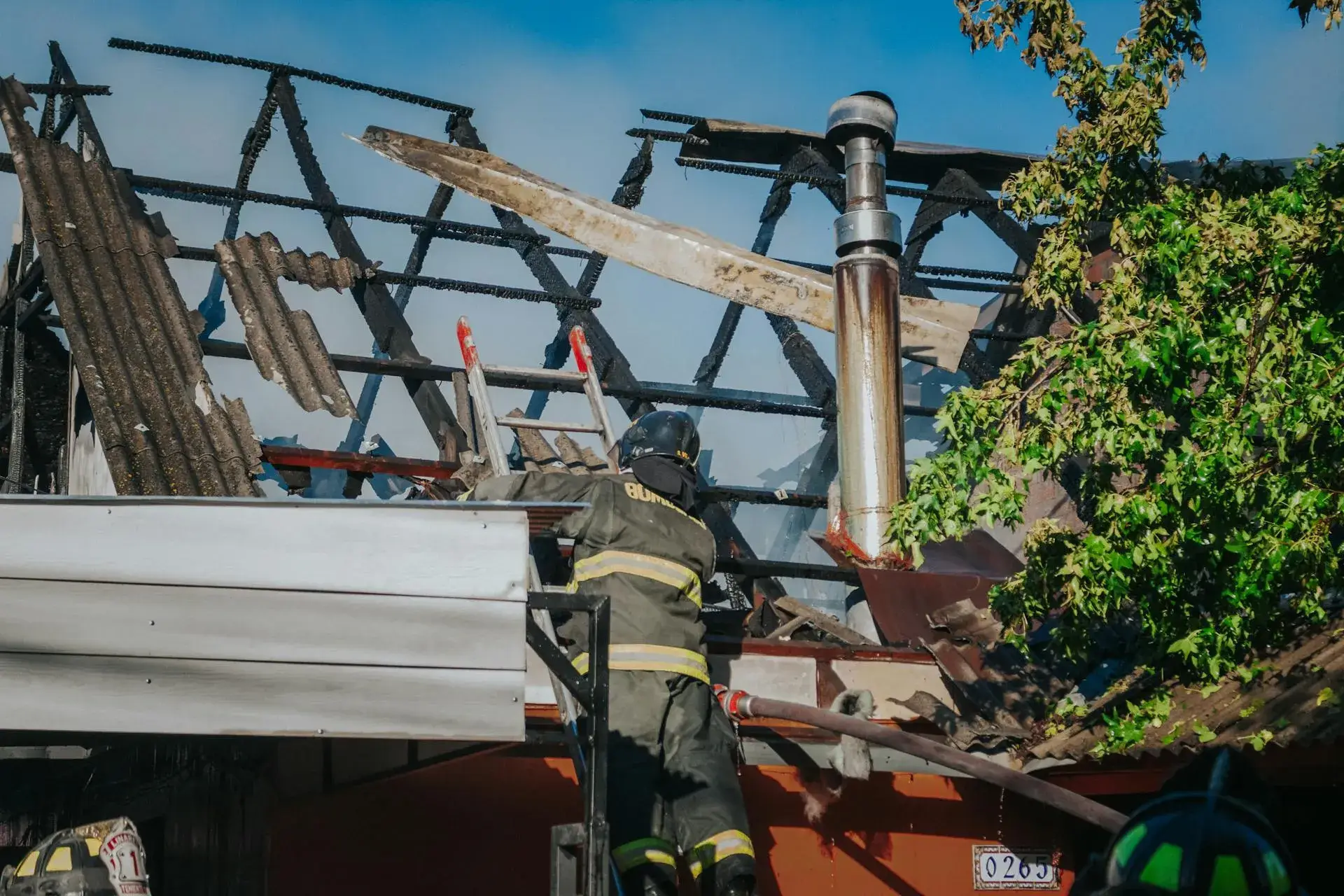
Fire Damage Restoration in Monroeville, PA
Caustic soot particles and extinguishing water begin permanently degrading building materials within hours of a fire. Our certified restoration crews arrive in Monroeville within 60 minutes to stabilize your property and halt secondary damage.
What Happens When You Call
Direct emergency dispatch mobilizes our local Monroeville response vehicle within minutes, coordinating arrival details and immediate security needs.
Technicians arrive on site within 60 minutes to establish structural shoring, secure exposed openings with weather-tight board-ups, and install roof tarps.
We assess chemical soot types across every room, neutralize corrosive residues on glass and metals, and begin high-volume water extraction.
Our certified crews execute complete thermal deodorization, media blasting of charred framing, and provide itemized documentation for your insurance adjuster.
A residential structure fire strikes without warning, leaving homeowners facing an overwhelming aftermath of charred timber, caustic smoke residue, and structural instability. Once first responders clear the scene, immediate professional mitigation is essential to secure the property and salvage building assemblies. X Response takes full command of your recovery. From weather-tight emergency board-ups and water extraction to deep soot decontamination and full structural rebuilding, one local team manages every stage. Call now. Your team is standing by.
Why Monroeville Homes Are Vulnerable to Fire Damage
Monroeville, Pennsylvania, is a major residential and commercial community in eastern Allegheny County with 28,640 residents spanning 19.8 square miles of hilly plateau terrain. The community's housing landscape reflects its post-war suburban growth, featuring extensive neighborhoods of mid-century brick ranches, multi-level split-levels, and two-story colonials constructed between the 1950s and 1980s. Many of these homes feature attached multi-car garages, vaulted cathedral ceilings, and open floor plans that allow heat and combustion gases to circulate rapidly through living spaces. According to the U.S. Fire Administration, residential structure fires account for 72.5 percent of all fire-related deaths in Pennsylvania, with structure fires producing 6.0 civilian deaths and 16.6 injuries per 1,000 fires statewide. When a fire breaks out in an attached garage or lower-level family room, combustible wood trusses and shared attic spaces accelerate fire spread into upper living quarters before suppression can be established.
The risks of residential fire in Monroeville are heavily amplified by western Pennsylvania's harsh winter heating season. Sub-freezing temperatures from December through March prompt heavy reliance on supplemental electric space heaters, older baseboard heating units, and natural gas or wood-burning fireplaces. In older split-level homes along Beatty Road, Garden City, and Ramsey Road, aging electrical panels and branch circuits struggle under simultaneous heating and appliance demands, creating acute breaker and wiring failure hazards. Furthermore, when the Monroeville Volunteer Fire Department companies extinguish a structure fire, thousands of gallons of suppression water saturate plaster, drywall, and structural floor joists. The combination of acidic chemical soot, burned structural framing, and standing water requires immediate, synchronized restoration to prevent catastrophic ceiling collapses and persistent microbial decay.
Attached Garage and Common Attic Fire Pathways
Many suburban residences in Monroeville feature attached garages positioned directly beneath bedrooms or sharing a continuous attic truss system. Fires ignited by automotive electrical shorts, lawn equipment fuel, or lithium-ion battery chargers rapidly breach gypsum firewalls, venting toxic combustion gases and flames directly into residential sleeping areas.
Winter Auxiliary Heating and Electrical Overloads
Prolonged winter freezing pushes residential electrical circuits to their operational limits. Space heaters drawing high continuous amperage through older 15-amp branch wiring, unattended wood stoves with creosote buildup, and faulty electric baseboard heaters represent frequent origins of winter structure fires across eastern Allegheny County.
Suppression Water Weight and Structural Sagging
Extinguishing a residential fire requires thousands of gallons of high-pressure water. In multi-level and split-level homes, this water pools on upper floorboards and soaks heavy acoustic ceiling tiles, placing tons of unexpected weight on load-bearing floor joists and creating severe ceiling collapse hazards.
Caustic Chemical Soot from Modern Synthetic Furnishings
Modern home contents consist largely of synthetic polymers, polyurethane foam, and vinyl finishes. When burned, these materials release corrosive, greasy soot laden with hydrochloric acid and sulfur compounds. Within 24 hours, this acidic residue chemically etches window glass, pits chrome plumbing, and ruins appliance finishes.
Fire restoration in Monroeville demands expert structural stabilization, rapid suppression water mitigation, and scientific soot removal. Our local certified specialists restore structural safety and indoor air quality across Allegheny County.
What Happens to Your Home While You Wait
Within Minutes
Superheated soot and toxic smoke spread into adjacent rooms and upper stories via convection currents. Synthetic combustion residues settle across walls, windows, and countertops, forming a yellow, acidic film that begins discoloring porous plastics and finishes.
1 to 24 Hours
Acidic soot interacts with ambient humidity to pit metals, corrode bathroom and kitchen fixtures, and etch painted drywall and glass. Firefighting water soaks floor joists and plaster ceilings, threatening sudden collapse if structural shoring is not immediately erected.
24 to 48 Hours
Corrosive soot penetrates deeply into wood cabinetry, flooring, and porous masonry, causing permanent staining and irreversible finish deterioration. Standing suppression water sparks microbial amplification, while untreated metals develop heavy rust pitting.
48 to 72 Hours
Porous wallboard, furniture, and personal items absorb synthetic soot particles beyond the point of non-destructive cleaning. Structural timbers retain heavy charred odors that resist surface washing, requiring dry ice blasting, thermal fogging, and specialized sealant encapsulation.
One Week and Beyond
Severe etching permanently destroys glass, tile glaze, and appliance housings. Delayed water removal compromises the load-bearing capacity of subflooring and framing, while invasive mold colonies expand across wet drywall and attic insulation.
The hours immediately following fire suppression determine whether your building materials can be saved or must be completely gutted. Contact X Response now for 60-minute emergency arrival across Monroeville.
How We Restore Fire-Damaged Monroeville Homes
Restoring a Monroeville home after a fire requires a disciplined multi-phase approach that integrates structural safety, water extraction, chemical decontamination, and precision reconstruction.
Emergency Site Security and Structural Shoring
Our team arrives in Monroeville with emergency carpentry gear, securing compromised doorways, windows, and roof breaches with structural OSB board-ups and weather-rated membrane tarps. We evaluate load-bearing beams and install temporary post jacks to stabilize sagging framing.
Suppression Water Extraction and Rapid Drying
Before soot remediation can proceed safely, we extract pooled firefighting water using high-volume submersible pumps and weighted extractors. We install commercial dehumidifiers to lower relative humidity and prevent secondary wood rot and mold development.
Corrosive Soot Identification and Removal
Technicians classify the soot residues present, whether dry timber soot, greasy protein residues, or synthetic chemical soot. Using HEPA vacuuming, dry chemical sponge wiping, and specialized alkaline detergents, we remove soot from ceilings, walls, and structural assemblies.
Thermal Deodorization and Media Blasting
To eliminate deep-seated smoke odors, we deploy hydroxyl generators, thermal fogging units, and ozone treatments in sealed containment zones. Charred joists and wall studs are remediated using dry ice blasting, followed by clear odor-barrier shellac sealant application.
Complete Structural Reconstruction and Handover
Once decontaminated and certified odor-free, our licensed reconstruction craftsmen rebuild framing, install new drywall, replace electrical wiring, and restore interior finishes. A final walkthrough with you and your insurance adjuster confirms the property meets pre-fire standards.
The X Response Difference
From initial emergency board-up to final coat of paint, X Response provides certified, full-service fire restoration across Monroeville.
Insurance Claim Guidance for Monroeville Homeowners
Fire damage insurance claims in Pennsylvania involve complex policy provisions governing structural repair, contents restoration, and temporary living costs. Standard homeowner policies generally cover structural fire repairs, soot removal, and secondary water damage resulting from firefighting efforts. However, claims require exhaustive inventories of personal property, detailed building scopes prepared with industry-standard estimating software, and careful documentation of Additional Living Expenses (ALE) if your home is deemed uninhabitable. Our team coordinates directly with your insurance adjuster to ensure all fire-related impacts are accounted for.
How X Response Helps
- Conduct an initial physical walkthrough with timestamped photographic and video documentation of all burned structural elements and soot travel.
- Compile comprehensive contents loss schedules distinguishing between salvageable personal items and non-restorable goods.
- Format all restoration estimates using standardized Xactimate line items required by Pennsylvania insurance adjusters.
- Track emergency board-up, roof tarping, and suppression water extraction under immediate emergency mitigation limits.
- Assist homeowners in documenting temporary relocation, utility, and lodging costs for prompt ALE reimbursement.
X Response works collaboratively with property owners and insurance carriers to provide accurate damage documentation. We do not act as licensed public adjusters and do not settle insurance claims; final coverage determinations are made by your insurer.
Certified Restoration Specialists Serving Monroeville
Our Monroeville fire restoration specialists hold advanced certifications from the Institute of Inspection, Cleaning and Restoration Certification (IICRC) in Fire and Smoke Damage Restoration (FSRT), Odor Control (OCT), and Applied Structural Drying (ASD). Having served communities across Allegheny County through all seasons, our technicians possess deep practical knowledge of local suburban architecture and structural recovery.
We maintain a dedicated fleet of commercial emergency vehicles stocked with industrial desiccant dehumidifiers, high-capacity extractors, hydroxyl generators, and specialized media blasting equipment. Whether addressing a kitchen fire in Garden City or severe structural charring in a multi-story home near Murrysville, our personnel deliver compassionate, certified care.
In Monroeville, X Response works with Restoworks Disaster Restoration, an independent local restoration partner serving Allegheny County.
Fire Damage Restoration FAQ for Monroeville Homeowners
Other Emergency Services in Monroeville

Water Damage Restoration
Burst pipes, storm flooding, standing water. We extract, dry, and restore before mold sets in.
Learn more
Smoke Damage Restoration
Soot residue, chemical odors, HVAC contamination. We decontaminate surfaces, eliminate odors, and restore air quality.
Learn more
Mold Remediation
Testing, containment, removal, prevention. We find the source, eliminate the growth, and stop it from returning.
Learn moreNearby Service Areas
Also serving nearby: