
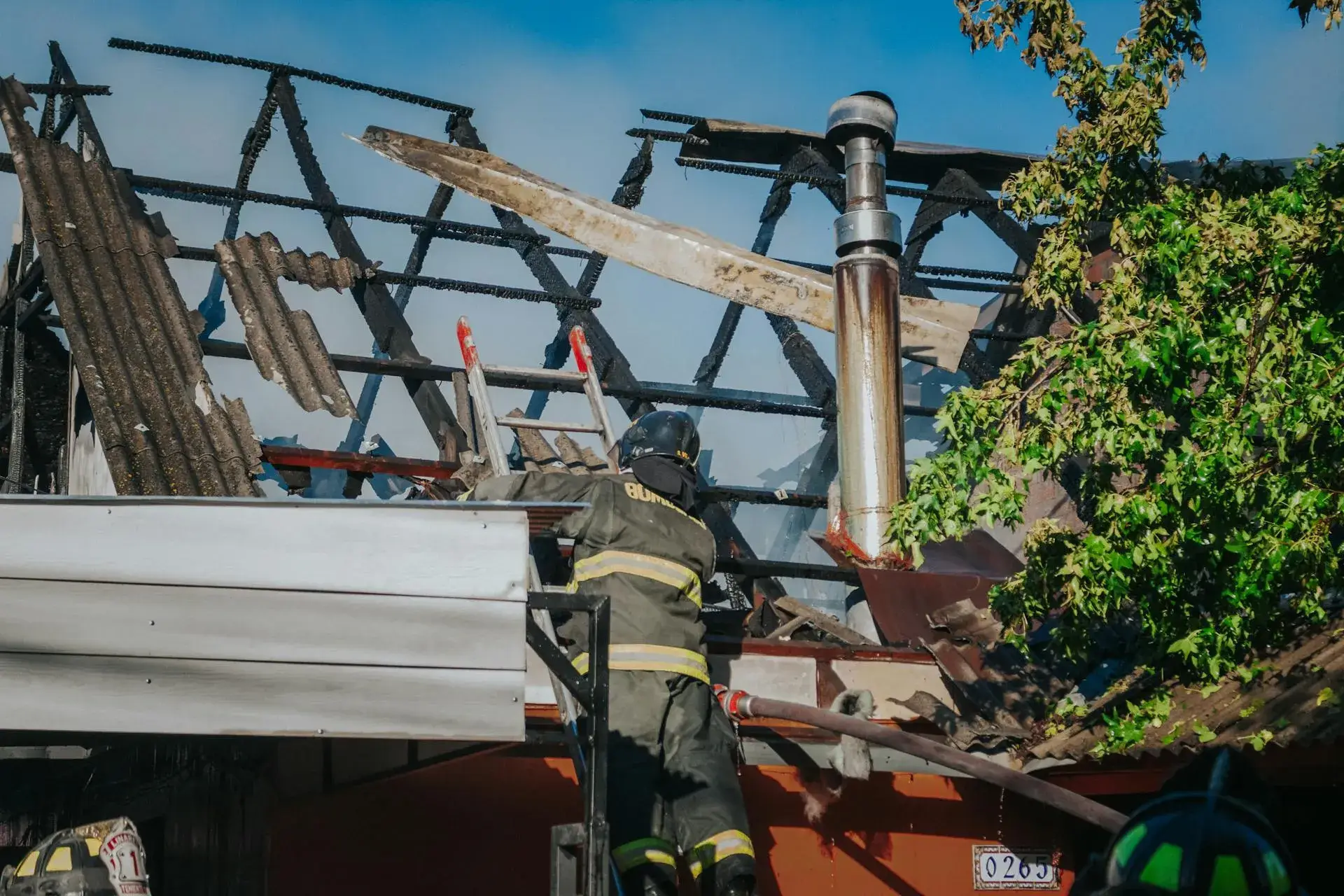
Fire Damage Restoration in Penn Hills, PA
Fire damage compounds every hour as soot corrodes surfaces and smoke odor bonds deeper into materials. Our local team responds to fire damage emergencies in Penn Hills and across Allegheny County to stabilize your property and begin restoration immediately.
What Happens When You Call
A real person answers, not a call center. We assess your situation, ask the right questions, and begin coordinating your response immediately.
Your dedicated restoration team is dispatched from our local base serving Penn Hills and surrounding Allegheny County communities.
Team arrives with structural stabilization equipment, industrial cleaning supplies, and protective gear. Emergency mitigation begins immediately.
Property secured, soot and debris assessment completed, restoration plan documented. You know exactly what comes next.
Your home has been damaged by fire, and the chaos of the aftermath feels overwhelming. X Response exists for exactly this moment. When you reach out, your restoration team is mobilized within minutes. From that point forward, one team manages everything: structural stabilization, soot removal, content cleaning, and insurance documentation. Call now. Your team is standing by.
Why Penn Hills Homes Are Vulnerable to Fire Damage
Penn Hills is a densely populated residential township in Allegheny County with a population of approximately 41,059. The township's housing stock spans several decades, with many homes built between the 1950s and 1970s featuring original electrical systems, aging gas infrastructure, and wood-frame construction that presents elevated fire risk. In March 2025, an 84-year-old woman died in a Penn Hills house fire on College Street that investigators determined was caused by a propane leak in the basement igniting kerosene, and the house was declared a total loss with a neighboring property sustaining heat damage. This incident underscores the dangers posed by supplemental heating fuels and aging mechanical systems in older residential properties.
Fire damage in Penn Hills often involves complex secondary effects. When fire departments suppress residential fires, thousands of gallons of water saturate the structure, creating immediate conditions for mold growth if professional drying does not begin promptly. In August 2025, a fire on Wexford Lane damaged multiple vehicles and a home, with two people requiring rescue. The proximity of homes in many Penn Hills neighborhoods means that heat, smoke, and fire suppression water can affect adjacent properties even when the flames are contained to one structure.
Aging Electrical and Heating Systems
Many Penn Hills homes operate on electrical systems installed decades ago. Outdated wiring, overloaded circuits, and aging furnaces create persistent ignition risks. Supplemental heating with space heaters and portable fuel sources during cold winters adds another layer of fire risk, particularly in basement utility areas.
Proximity and Neighbor Impact
Penn Hills neighborhoods feature homes built in close proximity to one another. Fire in one property generates radiant heat that can damage siding, roofing, and windows on adjacent homes. Smoke infiltration through shared fence lines and HVAC intake vents affects neighboring properties even when flames do not spread.
Suppression Water Damage
The volume of water used to extinguish residential fires creates severe secondary damage. Water saturates structural framing, insulation, and flooring, creating immediate conditions for mold growth if professional drying does not begin within hours of the fire being extinguished.
Winter Heating Season Risk
Penn Hills experiences bitter cold winters that drive heavy use of furnaces, fireplaces, and supplemental heating. Improperly maintained chimneys, malfunctioning furnace components, and portable heating devices are common sources of winter residential fires, often starting in areas where damage can be extensive before detection.
These factors combine in Penn Hills to create complex fire damage scenarios requiring coordinated structural stabilization, water extraction, soot removal, and reconstruction.
What Happens to Your Home While You Wait
Within 1 Hour
Acidic soot begins bonding to surfaces throughout the home. Metals tarnish and corrode. Suppression water saturates structural materials. Immediate board-up and tarping prevents further weather exposure.
1 to 24 Hours
Soot residue etches into glass, chrome, and finished surfaces permanently if not cleaned. Suppression water wicks through drywall and pools in lower areas. Smoke odor compounds penetrate deeper into porous materials.
24 to 48 Hours
Mold begins colonizing in areas saturated by suppression water. Soot staining on walls and ceilings becomes increasingly difficult to remove without specialized cleaning.
48 to 72 Hours
Structural wood exposed to heat and water begins to warp. HVAC ductwork distributes smoke particles throughout unaffected areas. Restoration costs escalate as secondary damage compounds.
One Week and Beyond
Corrosion damage to mechanical systems becomes permanent. Mold growth from suppression water spreads throughout the structure. Complete structural assessment and demolition may be required.
After a fire in Penn Hills, the damage continues to worsen every hour. Contact X Response now. Our team begins emergency stabilization immediately.
How We Restore Fire-Damaged Penn Hills Homes
From the moment our team arrives in Penn Hills, every step is documented, measured, and verified. Here is exactly what the fire damage restoration process involves.
Emergency Stabilization and Security
Our team secures the property with emergency board-up and tarping to prevent further exposure to weather and unauthorized entry. We assess structural integrity and establish safety zones for restoration work.
Damage Assessment and Documentation
We perform a comprehensive assessment of fire, smoke, soot, and water damage throughout the property. Every affected area is documented with timestamped photos and detailed notes for insurance purposes.
Soot and Debris Removal
All fire debris is removed. Soot is cleaned using specialized techniques matched to the type of residue. HEPA-filtered vacuums remove loose particulate before wet cleaning methods address bonded soot on structural components.
Structural Drying and Decontamination
Suppression water is extracted using commercial equipment. Affected areas are dried using industrial dehumidifiers and air movers. Antimicrobial treatments prevent mold growth. Air scrubbers with HEPA filtration remove airborne contaminants.
Reconstruction and Final Inspection
Damaged materials are repaired or replaced to restore your home to pre-loss condition. A final inspection verifies structural integrity, air quality, and completeness. Documentation is compiled for your insurance records.
The X Response Difference
When you contact X Response, you get a dedicated restoration team that manages every aspect of fire damage recovery in Penn Hills.
Insurance Claim Guidance for Penn Hills Homeowners
Fire damage insurance claims in Pennsylvania are among the most complex to navigate. While standard homeowner's policies cover structural fire damage, the scope of covered repairs and content replacement values can vary. Understanding your policy before filing is critical.
How X Response Helps
- Document all fire, smoke, soot, and suppression water damage with timestamped photos from the first hour.
- Prepare a detailed inventory of damaged and destroyed contents with estimated replacement values.
- Structure our restoration scope to align with standard insurance coverage categories.
- Coordinate documentation with your adjuster to support the full scope of necessary repairs.
- Explain your policy's coverage for structural damage, contents, and additional living expenses before you file.
X Response does not file claims on your behalf or make coverage determinations. We provide documentation to help you make informed decisions. Coverage decisions are made solely by your insurance carrier.
Certified Restoration Specialists Serving Penn Hills
When you contact X Response for a fire damage emergency in Penn Hills, your team consists of certified professionals who understand the specific challenges of Allegheny County. They know how homes in Penn Hills are constructed and how fire behaves in different construction types. This is a local team, positioned and ready to respond immediately.
Every technician holds current IICRC certification in fire and smoke restoration. We use commercial-grade equipment for structural stabilization, soot removal, deodorization, and reconstruction.
In Penn Hills, X Response works with Restoworks Disaster Restoration, an independent local restoration partner serving Allegheny County.
Fire Damage Restoration FAQ for Penn Hills Homeowners
Other Emergency Services in Penn Hills

Water Damage Restoration
Burst pipes, storm flooding, standing water. We extract, dry, and restore before mold sets in.
Learn more
Smoke Damage Restoration
Soot residue, chemical odors, HVAC contamination. We decontaminate surfaces, eliminate odors, and restore air quality.
Learn more
Mold Remediation
Testing, containment, removal, prevention. We find the source, eliminate the growth, and stop it from returning.
Learn more