
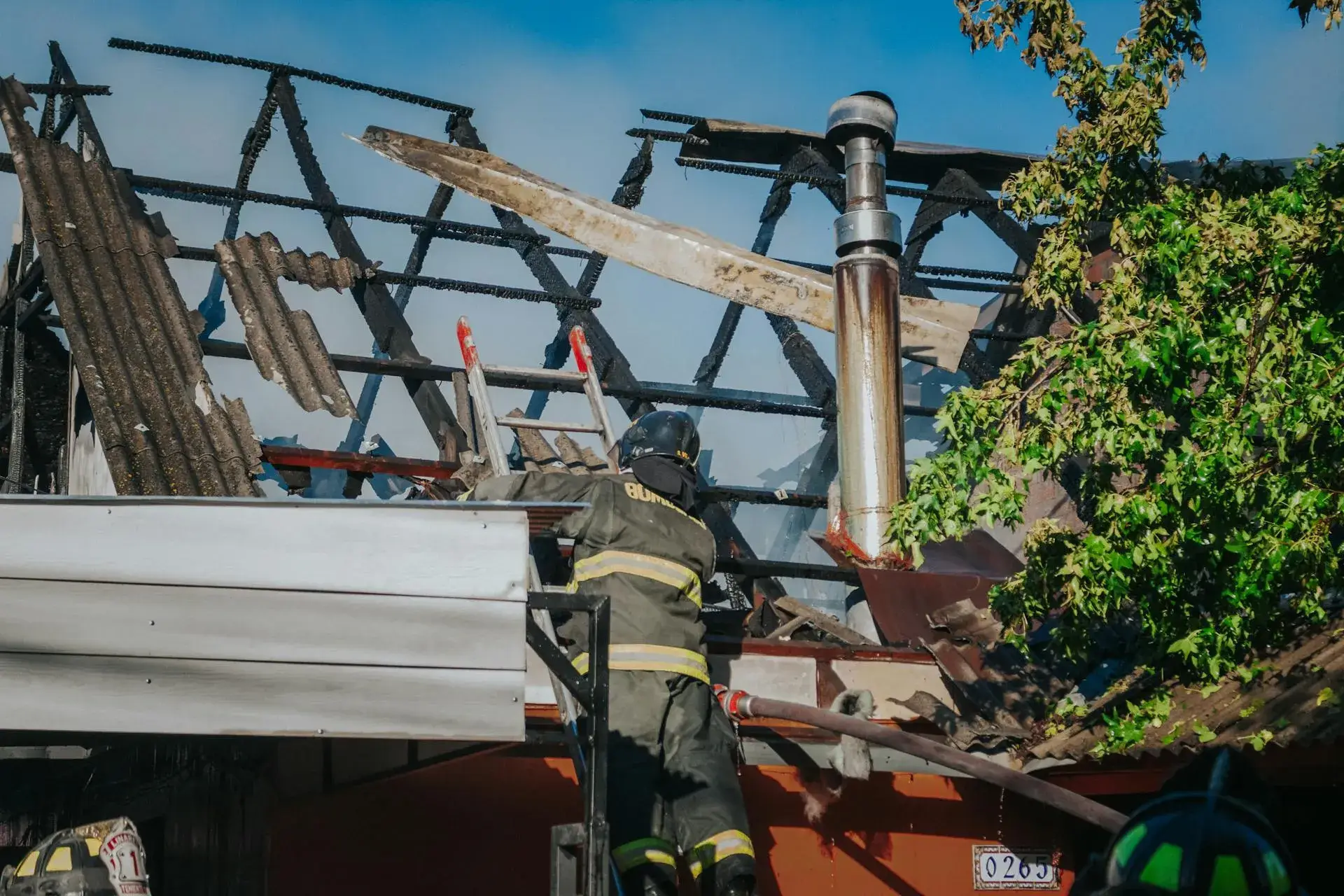
Fire Damage Restoration in Erie, PA
Acidic soot and extinguishing water begin permanently corroding metals and etching surfaces within hours of a fire. Our certified restoration crews arrive in Erie within 60 minutes to stabilize your property and halt secondary destruction.
What Happens When You Call
Direct emergency dispatch mobilizes our local Erie response vehicle within minutes, coordinating arrival details and immediate security needs.
Technicians arrive on site within 60 minutes to establish structural shoring, secure exposed openings with weather-tight board-ups, and install roof tarps.
We assess chemical soot types across every room, neutralize corrosive residues on glass and metals, and begin high-volume water extraction.
Our certified crews execute complete thermal deodorization, media blasting of charred framing, and provide itemized documentation for your insurance adjuster.
A residential structure fire turns your life upside down in seconds. Once first responders extinguish the active blaze, you face an overwhelming combination of charred framing, caustic soot fallout, and thousands of gallons of firefighting water. X Response takes command of the recovery process immediately. From emergency boarding and weather protection to structural decontamination and full rebuild, one local team manages every detail. Call now. Your team is standing by.
Why Erie Homes Are Vulnerable to Fire Damage
The City of Erie, Pennsylvania, serves as the economic and cultural center of northwestern Pennsylvania, home to 94,831 residents across 19.13 square miles in Erie County. Residential fire risks in Erie are heavily influenced by the age and construction methodology of its housing stock. More than half of all homes in the city were constructed prior to 1960, with significant concentrations of late 19th and early 20th-century residences in historic neighborhoods such as West Bayfront, Little Italy, and East Bayfront. These homes frequently feature historic balloon-frame construction, where wall cavities run unbroken from basement sills to attic rafters without modern fire blocking. According to the U.S. Fire Administration, residential structure fires in Pennsylvania account for 72.5 percent of all fire fatalities, resulting in 6.0 deaths and 16.6 injuries per 1,000 fires. The combination of open wall cavities, dry aged timber framing, and narrow lot lines common to older urban corridors allows fire to travel through concealed spaces with terrifying speed.
Compounding these structural vulnerabilities are the intense heating demands imposed by Lake Erie's snowbelt winters, where temperatures regularly remain below freezing for weeks at a time. Homeowners frequently supplement aging central heating systems with portable space heaters, wood-burning stoves, and fireplace inserts. In older homes where knob-and-tube electrical wiring or overloaded fuse panels remain active, sustained electrical loads and chimney creosote build-up present acute ignition hazards. Furthermore, when the City of Erie Fire Department suppresses a structure fire, hundreds or thousands of gallons of water saturate the building, trapping acidic soot deep within porous plaster, subflooring, and masonry foundations. Professional mitigation must simultaneously address fire, smoke, and extensive water intrusion to prevent catastrophic structural collapse.
Historic Balloon-Frame Construction Vulnerabilities
Turn-of-the-century residences throughout Erie often lack horizontal fire blocking inside exterior walls. When a fire ignites in a basement or lower living room, open stud bays act as natural chimneys, drawing flames, superheated gases, and smoke directly upward into upper floors and attics within minutes.
Winter Heating Demands and Electrical Overloads
Sustained sub-freezing temperatures from November through April drive intense heating system usage. Space heaters placed near combustible draperies, overtaxed electrical circuits in century-old homes, and uncleaned chimney flues are leading causes of winter structure fires across Erie County neighborhoods.
Extinguishing Water Saturation and Structural Weakening
Fire suppression crews must pump large volumes of water into roof assemblies, upper levels, and living spaces to extinguish stubborn blazes. This water pools on plaster ceilings, saturates hardwood subfloors, and drains into basements, creating immediate collapse risks and accelerating structural mold.
Corrosive Acidic Soot Deposition on Modern Materials
Combustion of synthetic carpeting, vinyl siding, foam furniture padding, and electronics generates caustic chemical soot containing hydrochloric and hydrocyanic compounds. When these acidic residues settle onto damp surfaces, they etch glass, pit metal fixtures, and cause permanent yellowing within 48 hours.
Fire damage recovery in Erie requires specialized understanding of historic timber construction, winter moisture dynamics, and complex chemical decontamination. Our local team restores properties to safe, pre-loss condition with verified structural integrity.
What Happens to Your Home While You Wait
Within Minutes
Superheated soot and toxic smoke spread into adjacent rooms and upper stories via convection currents. Synthetic combustion residues settle across walls, windows, and countertops, forming a yellow, acidic film that begins discoloring porous plastics and finishes.
1 to 24 Hours
Acidic soot interacts with ambient humidity to pit metals, corrode bathroom and kitchen fixtures, and etch painted drywall and glass. Firefighting water soaks floor joists and plaster ceilings, threatening sudden collapse if structural shoring is not immediately erected.
24 to 48 Hours
Corrosive soot penetrates deeply into wood cabinetry, flooring, and porous masonry, causing permanent staining and irreversible finish deterioration. Standing suppression water sparks microbial amplification, while untreated metals develop heavy rust pitting.
48 to 72 Hours
Porous wallboard, furniture, and personal items absorb synthetic soot particles beyond the point of non-destructive cleaning. Structural timbers retain heavy charred odors that resist surface washing, requiring dry ice blasting, thermal fogging, and specialized sealant encapsulation.
One Week and Beyond
Severe etching permanently destroys glass, tile glaze, and appliance housings. Delayed water removal compromises the load-bearing capacity of subflooring and framing, while invasive mold colonies expand across wet drywall and attic insulation.
The hours immediately following fire suppression determine whether your building materials can be saved or must be completely gutted. Contact X Response now for 60-minute emergency arrival across Erie.
How We Restore Fire-Damaged Erie Homes
Restoring an Erie home after a fire requires a disciplined multi-phase approach that integrates structural safety, water extraction, chemical decontamination, and precision reconstruction.
Emergency Site Security and Structural Shoring
Our team arrives in Erie with emergency carpentry gear, securing compromised doorways, windows, and roof breaches with structural OSB board-ups and weather-rated membrane tarps. We evaluate load-bearing beams and install temporary post jacks to stabilize sagging framing.
Suppression Water Extraction and Rapid Drying
Before soot remediation can proceed safely, we extract pooled firefighting water using high-volume submersible pumps and weighted extractors. We install commercial dehumidifiers to lower relative humidity and prevent secondary wood rot and mold development.
Corrosive Soot Identification and Removal
Technicians classify the soot residues present, whether dry timber soot, greasy protein residues, or synthetic chemical soot. Using HEPA vacuuming, dry chemical sponge wiping, and specialized alkaline detergents, we remove soot from ceilings, walls, and structural assemblies.
Thermal Deodorization and Media Blasting
To eliminate deep-seated smoke odors, we deploy hydroxyl generators, thermal fogging units, and ozone treatments in sealed containment zones. Charred joists and wall studs are remediated using dry ice blasting, followed by clear odor-barrier shellac sealant application.
Complete Structural Reconstruction and Handover
Once decontaminated and certified odor-free, our licensed reconstruction craftsmen rebuild framing, install new drywall, replace electrical wiring, and restore interior finishes. A final walkthrough with you and your insurance adjuster confirms the property meets pre-fire standards.
The X Response Difference
From emergency board-up to final coat of paint, X Response provides complete, certified fire restoration across Erie County.
Insurance Claim Guidance for Erie Homeowners
Fire insurance claims in Pennsylvania represent complex financial and legal processes involving multiple damage classifications. Standard homeowner policies generally cover structural fire damage, smoke remediation, and secondary water damage caused by emergency suppression efforts. However, claims require exhaustive inventorying of personal contents, precise line-item building scopes, and careful tracking of Additional Living Expenses (ALE) if your home is rendered uninhabitable. Our team coordinates directly with your insurance representative to ensure all fire-related impacts are documented accurately.
How X Response Helps
- Conduct a comprehensive initial walkthrough with timestamped photographic documentation of all structural charring, soot travel, and waterlines.
- Prepare detailed personal property loss inventories distinguishing between salvageable personal items and non-restorable goods.
- Establish transparent Xactimate scopes structured according to Pennsylvania Department of Insurance and national carrier standards.
- Track all emergency board-up, security fencing, and water mitigation costs under initial emergency services coverage limits.
- Assist homeowners in documenting temporary housing and living expense receipts for timely insurer reimbursement.
X Response works collaboratively with property owners and insurance carriers to provide accurate damage documentation. We do not act as licensed public adjusters and do not settle insurance claims; final coverage determinations are made by your insurer.
Certified Restoration Specialists Serving Erie
Our Erie fire restoration technicians hold advanced certifications from the Institute of Inspection, Cleaning and Restoration Certification (IICRC) in Fire and Smoke Damage Restoration (FSRT), Odor Control (OCT), and Applied Structural Drying (ASD). Having served northwestern Pennsylvania through severe winter weather and major structural emergencies, our team brings decades of combined hands-on experience to every recovery project.
We maintain an extensive inventory of commercial restoration equipment, including mobile power generators, desiccant drying systems, hydroxyl generators, and dry ice blasting systems. Whether your property is a historic Victorian near Lake Erie or a modern commercial space, our local personnel treat your home with the care, respect, and technical precision it deserves.
In Erie, X Response works with Restoworks Disaster Restoration, an independent local restoration partner serving Erie County.
Fire Damage Restoration FAQ for Erie Homeowners
Other Emergency Services in Erie

Water Damage Restoration
Burst pipes, storm flooding, standing water. We extract, dry, and restore before mold sets in.
Learn more
Smoke Damage Restoration
Soot residue, chemical odors, HVAC contamination. We decontaminate surfaces, eliminate odors, and restore air quality.
Learn more
Mold Remediation
Testing, containment, removal, prevention. We find the source, eliminate the growth, and stop it from returning.
Learn moreNearby Service Areas
Also serving nearby: