
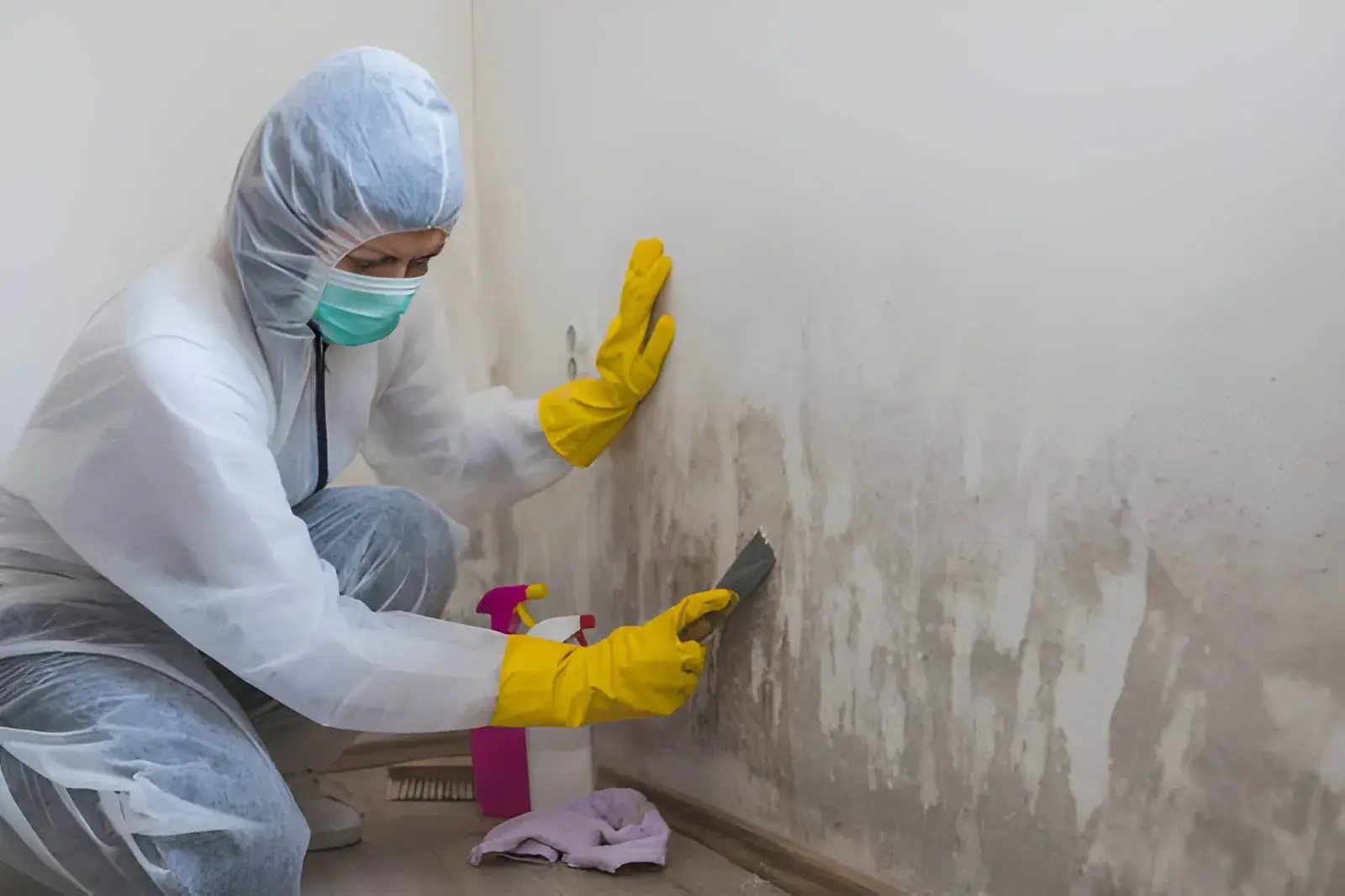
Mold Remediation in Penn Hills, PA
Mold spreads rapidly in Penn Hills' humid conditions, compromising indoor air quality and structural integrity. Our local team provides professional mold remediation across Allegheny County, addressing both the visible growth and the hidden moisture source.
What Happens When You Call
A real person answers, not a call center. We assess your situation and begin coordinating your response immediately.
Your dedicated remediation team is dispatched from our local base serving Penn Hills and surrounding Allegheny County communities.
Team arrives with containment barriers, HEPA air scrubbers, moisture detection equipment, and antimicrobial treatments. Assessment begins immediately.
Mold sources identified, containment established, remediation plan documented. You know exactly what comes next.
You have discovered mold in your home and need it handled safely and completely. X Response exists for exactly this moment. When you reach out, your remediation team is mobilized and on site quickly. One team manages everything: testing, containment, removal, moisture elimination, and documentation. Call now. Your team is standing by.
Why Penn Hills Homes Are Vulnerable to Mold
Penn Hills' housing stock creates conditions where mold growth is a persistent concern. Penn Hills' aging housing stock, with many homes built between the 1950s and 1970s featuring original plumbing and foundation systems, is especially vulnerable to hidden water intrusion that fosters mold growth behind finished basement walls and beneath flooring. The township's hilly terrain directs groundwater toward foundations, and the heavy clay soil common throughout Allegheny County retains moisture against basement walls, creating chronic hydrostatic pressure that forces water through cracks and mortar joints over time.
Mold in Penn Hills homes is frequently discovered after water damage events. The flash flooding that struck the township in June 2025 left many basements saturated, and homeowners who did not complete professional drying within the first 48 hours faced secondary mold colonization in wall cavities, behind baseboards, and under carpet padding. Pennsylvania does not require state licensing for mold remediation contractors, making it essential that homeowners verify IICRC certifications and proven methodology when selecting a remediation company.
Post-Flood Mold Growth
After the flooding events that regularly impact Penn Hills, mold can begin growing within 24 to 48 hours in saturated building materials. Drywall, insulation, and carpet padding that are not dried rapidly become colonized with mold that spreads through wall cavities and into adjacent spaces.
Foundation Moisture Intrusion
Heavy clay soil and hilly terrain create hydrostatic pressure against Penn Hills foundations. Water seeps through cracks, mortar joints, and floor-wall joints, causing chronic basement moisture that feeds mold growth for months or years before visible signs appear.
Hidden Plumbing Leaks
Original galvanized plumbing in mid-century Penn Hills homes develops pinhole leaks behind walls that create hidden moisture pockets. These slow leaks feed mold growth inside wall cavities where it cannot be seen, often discovered only when occupants notice musty odor or allergy symptoms.
HVAC Spore Distribution
Warm air rising through the home draws damp air from basements upward through the structure. Central HVAC systems then distribute mold spores to every room. Addressing basement mold without cleaning ductwork allows recontamination throughout the home.
Effective mold remediation in Penn Hills requires addressing the moisture source, removing growth under containment, and preventing recurrence through environmental controls.
What Happens to Your Home While You Wait
Within 24 Hours
After water intrusion, moisture saturates porous materials. Mold spores begin to activate on damp surfaces, though visible growth has not yet appeared.
24 to 48 Hours
Mold colonization begins on saturated materials. Microscopic growth starts inside wall cavities and behind baseboards where it is not visible.
3 to 7 Days
Visible mold growth appears on surfaces. Spores become airborne. Musty odor becomes noticeable. Occupants with allergies may experience symptoms.
1 to 2 Weeks
Mold colonies expand into wall cavities and structural framing. Mycotoxins create health hazards. Remediation scope expands significantly.
One Month and Beyond
Extensive growth compromises structural integrity. Indoor air quality deteriorates. Remediation costs escalate dramatically as demolition becomes necessary.
Mold in Penn Hills spreads faster than most homeowners expect. Contact X Response now for professional assessment and remediation.
How We Restore Mold-Affected Penn Hills Homes
From the moment our team arrives in Penn Hills, every step follows IICRC S520 protocols for professional mold remediation.
Mold Assessment and Moisture Mapping
We use thermal imaging, moisture meters, and professional testing to identify the full extent of contamination and the underlying moisture source. Findings are documented with photos and detailed notes.
Containment and Air Filtration
Negative-pressure containment using polyethylene barriers and HEPA air scrubbers prevents spores from spreading during removal. All contaminated zones are isolated before work begins.
Safe Mold Removal
Contaminated materials are removed following strict protocols. Non-salvageable materials are disposed of in sealed bags. Salvageable surfaces are cleaned with HEPA vacuuming and antimicrobial treatments.
Moisture Source Elimination
The underlying moisture source is identified and corrected, whether plumbing repairs, foundation waterproofing, drainage improvements, or dehumidifier installation.
Clearance Testing and Documentation
Post-remediation air testing verifies acceptable mold spore levels. All work is documented with before-and-after photos, moisture readings, and testing results.
The X Response Difference
When you contact X Response, you get a dedicated remediation team that follows IICRC protocols in Penn Hills.
Insurance Claim Guidance for Penn Hills Homeowners
Mold remediation insurance coverage in Pennsylvania depends on what caused the mold. If it resulted from a covered water damage event, your policy may cover remediation. Mold from maintenance issues or gradual leaks is typically excluded.
How X Response Helps
- Document the mold and its connection to a covered event with timestamped photos.
- Identify the moisture source to establish the causal link required by most policies.
- Prepare a remediation scope aligned with IICRC S520 standards.
- Structure documentation to demonstrate the connection between the covered event and resulting mold.
- Explain your policy's mold coverage limits before you file.
X Response does not file claims on your behalf or make coverage determinations. We provide documentation to help you make informed decisions.
Certified Restoration Specialists Serving Penn Hills
When you contact X Response for mold remediation in Penn Hills, your team consists of certified professionals who understand the specific moisture challenges of Allegheny County homes.
Every technician holds current IICRC certification in mold remediation. We use professional-grade containment, HEPA air scrubbers, thermal imaging, and antimicrobial treatments.
In Penn Hills, X Response works with Restoworks Disaster Restoration, an independent local restoration partner serving Allegheny County.
Mold Remediation FAQ for Penn Hills Homeowners
Other Emergency Services in Penn Hills

Water Damage Restoration
Burst pipes, storm flooding, standing water. We extract, dry, and restore before mold sets in.
Learn more
Fire Damage Restoration
Structural damage, soot, debris. We stabilize, clean, and rebuild what fire destroyed.
Learn more
Smoke Damage Restoration
Soot residue, chemical odors, HVAC contamination. We decontaminate surfaces, eliminate odors, and restore air quality.
Learn more