
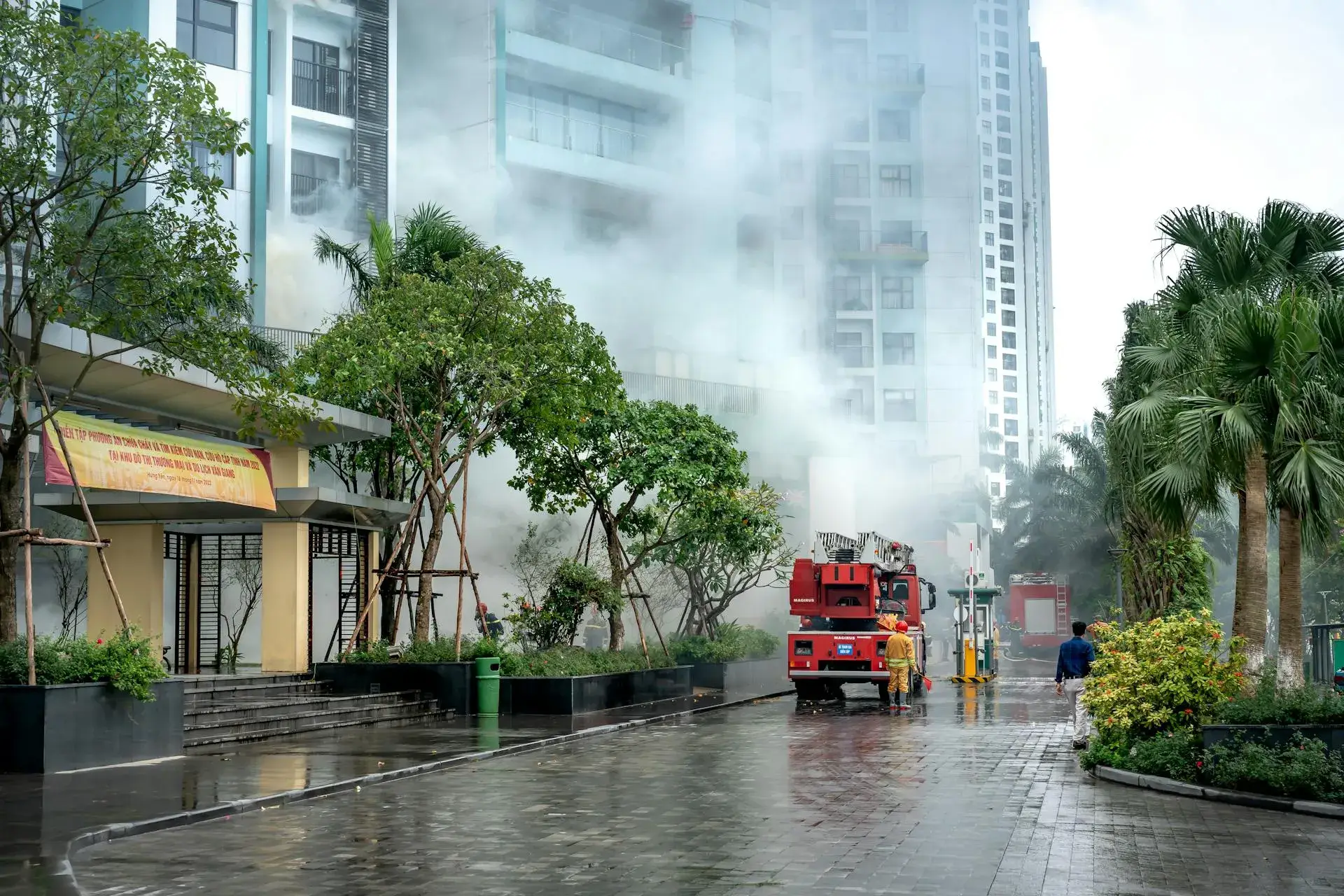
Smoke Damage Restoration in Penn Hills, PA
Smoke residue is acidic and begins corroding surfaces within hours. Our local team responds to smoke damage emergencies in Penn Hills and across Allegheny County to stop soot from causing permanent damage to your home.
What Happens When You Call
A real person answers, not a call center. We assess your situation and begin coordinating your response immediately.
Your dedicated restoration team is dispatched from our local base serving Penn Hills and surrounding Allegheny County communities.
Team arrives with HEPA air scrubbers, thermal fogging equipment, and professional cleaning supplies. Assessment begins immediately.
Soot residue cataloged, deodorization plan established, air quality testing scheduled. You know exactly what comes next.
Smoke has invaded your home and every surface feels contaminated. X Response exists for exactly this moment. When you reach out, your restoration team is mobilized within minutes. One team manages everything: soot removal, deodorization, HVAC cleaning, and insurance documentation. Call now. Your team is standing by.
Why Penn Hills Homes Are Vulnerable to Smoke Damage
Penn Hills' residential neighborhoods feature homes built in close proximity, which means smoke from a single fire event can contaminate multiple properties. In August 2025, a residential fire on Wexford Lane in Penn Hills damaged several vehicles and a home, with two people rescued during the incident, demonstrating how fire and smoke events in the township's closely built neighborhoods frequently impact multiple properties. Smoke particles travel through the air and infiltrate neighboring homes through open windows, HVAC intake vents, and gaps in the building envelope, depositing acidic soot on surfaces and odor compounds into porous materials.
The heating season presents additional smoke damage risks for Penn Hills residents. Malfunctioning furnaces, blocked flues, and poorly maintained chimneys can cause smoke and soot to back-draft into living spaces without any visible fire. These 'puff back' events coat interior surfaces with an oily black residue and fill ductwork with smoke particulate. Because the HVAC system distributes the contamination throughout the home, affected residents often do not realize the full extent of damage until odor and discoloration appear in every room.
Neighbor Fire Smoke Infiltration
When a fire occurs in a nearby property, smoke particles infiltrate adjacent homes through HVAC intakes, window seals, and structural gaps. Homeowners discover soot deposits and persistent odor even though their property had no direct fire exposure. Professional assessment is essential to determine the extent of contamination.
Furnace Puff Back Events
Oil and gas furnaces can experience ignition failures that release smoke and soot into the home through ductwork. These events coat surfaces with oily residue and contaminate the entire HVAC system. Specialized cleaning is required because the residue type differs from structural fire soot.
HVAC Distribution of Contaminants
Central heating and cooling systems pull smoke particles through return vents and deposit them throughout the home. Ductwork, coils, and filters become contaminated, re-releasing soot and odor every time the system runs until professionally cleaned.
Porous Material Penetration
Smoke odor compounds penetrate deeply into upholstery, carpet, drapery, and unfinished wood. Standard cleaning methods cannot reach the absorbed compounds. Professional thermal fogging and hydroxyl generation are required to eliminate odor at the molecular level.
These factors make smoke damage in Penn Hills a challenge that requires professional detection, specialized cleaning, and thorough HVAC decontamination to fully resolve.
What Happens to Your Home While You Wait
Within 1 Hour
Acidic soot begins bonding to metal, glass, and finished surfaces. Chrome fixtures and appliances start to corrode. Immediate surface protection can prevent permanent etching.
1 to 24 Hours
Soot residue penetrates deeper into porous surfaces. Smoke odor compounds begin bonding to wall paint, ceiling texture, and drapery at a molecular level.
24 to 48 Hours
HVAC systems that operated during the event have distributed soot throughout the home. Ductwork and filters are contaminated. Walls show visible discoloration.
48 to 72 Hours
Smoke odor becomes deeply embedded in insulation, wall cavities, and structural wood. Surface cleaning alone will no longer eliminate the smell.
One Week and Beyond
Permanent staining and corrosion damage to electronics and fixtures. Smoke odor is fully bonded into structural materials. Health impacts from poor air quality compound.
Smoke damage gets harder to fix with every passing hour. Contact X Response now. Our team begins decontamination immediately.
How We Restore Smoke-Damaged Penn Hills Homes
From the moment our team arrives in Penn Hills, every step is documented, measured, and verified.
Smoke Damage Assessment and Air Quality Testing
Our team evaluates the type of smoke residue, the extent of contamination, and tests air quality to establish baseline particulate and VOC levels. Everything is documented for insurance purposes.
HEPA Air Scrubbing and Ventilation
Industrial HEPA air scrubbers capture airborne smoke particles. Negative air pressure prevents cross-contamination to unaffected spaces.
Surface Cleaning and Residue Removal
Every surface is cleaned using techniques matched to the specific residue type. Dry soot, wet smoke, and protein residues each require different cleaning agents and methods.
Professional Deodorization
Thermal fogging reaches behind walls and inside cavities. Hydroxyl generators break down odor molecules at the molecular level. Severe contamination may require shellac-based surface sealing.
HVAC Cleaning and Final Verification
All ductwork is cleaned, filters replaced, and air handler decontaminated. Final air quality testing confirms safe levels before project completion.
The X Response Difference
When you contact X Response, you get a dedicated smoke damage restoration team that eliminates contamination at its source in Penn Hills.
Insurance Claim Guidance for Penn Hills Homeowners
Insurance coverage for smoke damage depends on the source and your specific policy language. Standard homeowner's policies generally cover smoke damage under fire coverage. Smoke from neighboring fires, furnace malfunctions, and kitchen incidents each present different coverage scenarios.
How X Response Helps
- Document all smoke and soot contamination with timestamped photos and air quality test results.
- Identify the smoke source and residue type to establish the scope of contamination.
- Prepare a detailed cleaning scope aligned with IICRC S700 standards.
- Structure documentation to support claims for both structural cleaning and content restoration.
- Explain how your policy's fire and smoke coverage applies to your specific situation.
X Response does not file claims on your behalf or make coverage determinations. We provide documentation to help you make informed decisions.
Certified Restoration Specialists Serving Penn Hills
When you contact X Response for a smoke damage emergency in Penn Hills, your team consists of certified professionals who specialize in smoke and soot decontamination across Allegheny County.
Every technician holds current IICRC certification. We use professional-grade thermal fogging systems, hydroxyl generators, HEPA air scrubbers, and specialized cleaning agents.
In Penn Hills, X Response works with Restoworks Disaster Restoration, an independent local restoration partner serving Allegheny County.
Smoke Damage Restoration FAQ for Penn Hills Homeowners
Other Emergency Services in Penn Hills

Water Damage Restoration
Burst pipes, storm flooding, standing water. We extract, dry, and restore before mold sets in.
Learn more
Fire Damage Restoration
Structural damage, soot, debris. We stabilize, clean, and rebuild what fire destroyed.
Learn more
Mold Remediation
Testing, containment, removal, prevention. We find the source, eliminate the growth, and stop it from returning.
Learn more