
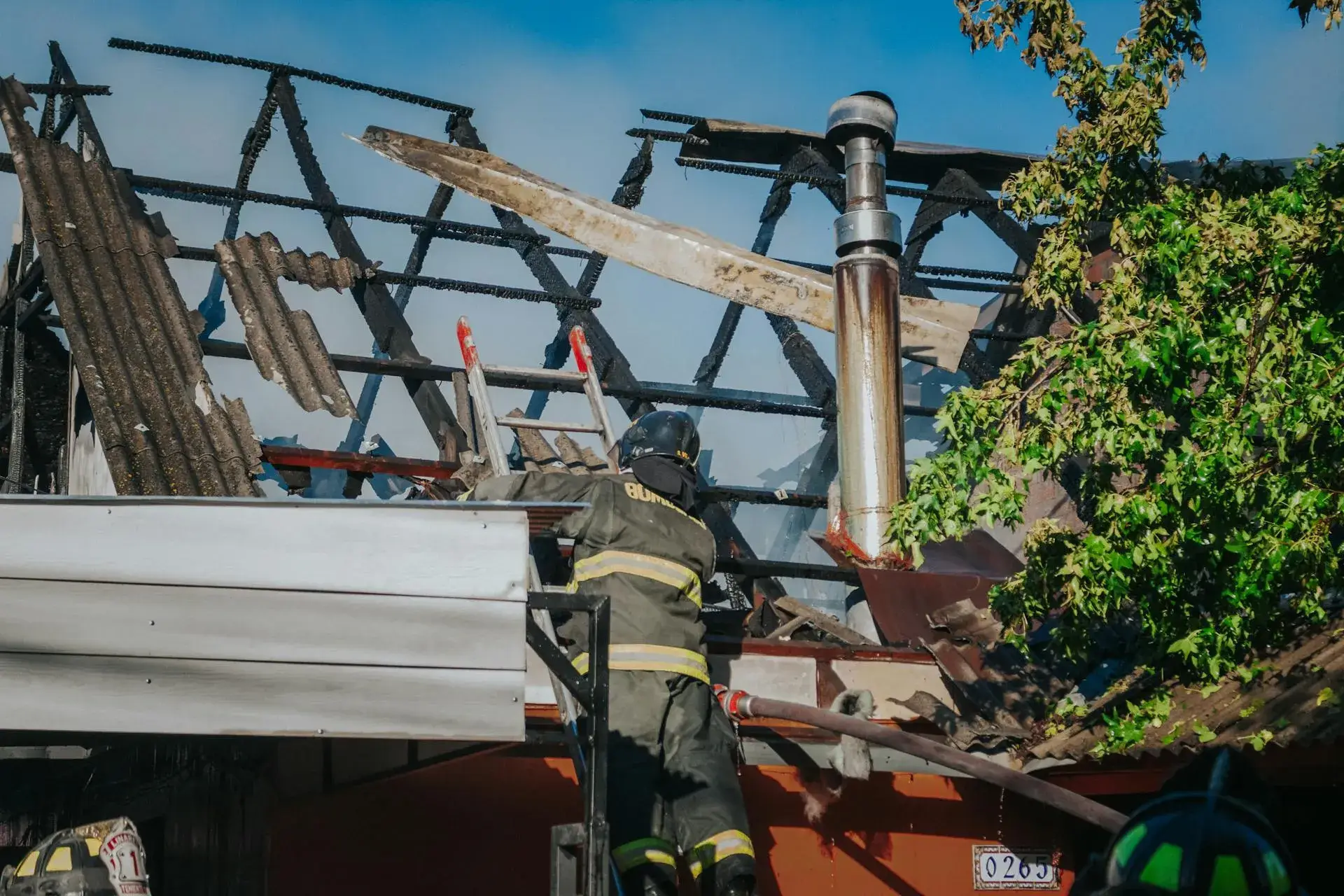
Fire Damage Restoration in Madison, TN
Fire leaves your home exposed to weather, theft, and accelerating secondary damage. Our local team responds to Madison emergencies within 60 minutes to stabilize and protect your property.
What Happens When You Call
A real person answers, not a call center. We assess your fire damage situation, determine the structural risk level, and begin coordinating your response immediately.
Your dedicated fire restoration team is dispatched from our local base serving Madison and northeast Davidson County.
Team arrives with board-up materials, structural tarps, air scrubbers, and assessment equipment. Emergency stabilization begins immediately to prevent secondary damage.
Structure secured against weather and entry, preliminary damage assessment documented, restoration plan outlined. You know exactly what comes next.
After the fire department leaves, your home sits open and vulnerable. Rain enters through the damaged roof. Soot migrates deeper into surfaces with every hour. Unsecured properties attract theft. X Response exists for exactly this moment. When you reach out, your fire restoration team is mobilized within minutes and on site within the hour. From that point forward, one team manages everything: structural stabilization, debris removal, smoke and soot cleanup, reconstruction, and insurance documentation. You are never left guessing about the next step. Call now. Your team is standing by.
Why Madison Homes Are Vulnerable to Fire Damage
Madison's fire damage risk is shaped by two forces that intersect in ways most communities do not experience: severe storm damage that compromises building systems, and a mid-century housing stock with aging electrical and heating infrastructure. On December 9, 2023, an EF-2 tornado with peak winds reaching 130 mph touched down in north Nashville and tracked northeast directly through Madison before continuing into Hendersonville and Gallatin. The NWS damage survey confirmed the tornado carved a 29.73-mile path across Davidson and Sumner Counties over 43 minutes. In Madison, the heaviest damage was concentrated off East Campbell Road and along Nesbitt Lane, where multiple mobile homes were destroyed, three people were killed, single-family homes and a church lost large roof sections with exterior walls collapsed, metal power poles were bent, and an apartment complex on Palmer Avenue sustained significant damage. The tornado also struck an industrial complex off Myatt Drive, toppling two buildings and damaging several others.
Storm damage on that scale does not just destroy buildings. It leaves surviving structures standing open and acutely vulnerable to fire. When a tornado strips roofing, tears exterior walls away from framing, and displaces ceilings, it simultaneously exposes and damages the systems that keep a house from burning. Electrical wiring is pulled loose from junction boxes and can arc against wet, displaced materials. Gas service lines and furnace connections can fracture and leak into compromised spaces where ignition sources remain. The rated assemblies, fire-stops, and drywall barriers that ordinarily contain a fire and slow its spread lose their function when they are cracked, displaced, or missing entirely. Madison saw exactly this combination after December 2023: hundreds of structures with compromised envelopes, damaged utilities, and missing fire separations, each one a heightened fire risk through every subsequent season.
Post-Tornado Fire Vulnerability (December 2023)
The December 9, 2023 EF-2 tornado did not just cause wind damage in Madison. It created hundreds of fire-vulnerable structures by destroying the building systems that prevent and contain fires. Homes along East Campbell Road and Nesbitt Lane lost roofs, exterior walls, and the interior fire-rated assemblies that slow flame spread between rooms and floors. Electrical wiring was torn from its rated path through walls and ceilings. Gas connections at furnaces, water heaters, and cooking appliances were stressed or severed. In the months after the tornado, these compromised systems remained in partially repaired states while homeowners waited for insurance settlements, contractor availability, and permit approvals. A home with temporary tarps over roof framing, partially reconnected electrical service, and displaced fire-stops between floors is at dramatically higher fire risk than the same home before the storm. Fire restoration in post-tornado Madison often means addressing both the fire damage itself and the storm-compromised structure beneath it.
1950s Electrical and Gas Infrastructure
Madison developed primarily in the 1950s and 1960s, and much of its housing retains original or minimally updated electrical systems from that era. Original wiring includes ungrounded two-wire circuits, aluminum branch wiring in some 1960s construction, and electrical panels that predate modern arc-fault protection. These systems were designed for a fraction of the electrical load a modern household draws. When overloaded circuits overheat at connections, arc at deteriorated insulation, or fail at corroded aluminum-to-copper junctions, the result is an electrical fire that often starts inside the wall cavity where it burns undetected until it breaches the finished surface. Add gas furnaces and water heaters from the same era with aging heat exchangers, corroded flue connections, and pilot-light ignition systems, and Madison's mid-century housing stock carries measurably higher ignition risk than newer construction with modern protection systems.
Nashville Fire Department Response and Station Coverage
Madison is served by the Nashville Fire Department, which operates Station 38 at 201 Larkin Springs Road within the community. NFD provides fire suppression, rescue, and emergency medical services across Davidson County's 526 square miles. Station 38's position in Madison means initial response reaches most of the community quickly, but Madison's mix of single-family residential, apartment complexes like those on Palmer Avenue, mobile home communities along Nesbitt Lane, and industrial properties off Myatt Drive creates a range of fire scenarios that each require different suppression approaches. A fire in a 1950s single-family home with a crawl space burns differently than a fire in a multi-story apartment building or a metal-clad industrial structure. Restoration after each type follows different protocols, timelines, and regulatory requirements.
Mobile Home and Manufactured Housing Fire Risk
The December 2023 tornado destroyed multiple mobile homes on Nesbitt Lane, and the broader Madison community includes several mobile home parks and manufactured housing communities. These structures carry higher fire risk than conventional site-built homes for several reasons: lighter-gauge framing and thinner wall assemblies provide less fire resistance, vinyl and composite exterior materials melt and fail quickly under heat, and the compact floor plans mean occupants have less time to evacuate once a fire reaches flashover. Electrical systems in older manufactured homes are often undersized and deteriorate faster than in site-built construction. When these homes catch fire, the damage is typically total, and restoration is replacement rather than repair. For manufactured homes that experience partial fire damage, the thin wall assemblies and integrated construction make targeted soot removal and reconstruction technically challenging.
Secondary Fire from Water Heater and HVAC Failures
Many Madison homes still operate gas water heaters and furnaces installed in crawl spaces or utility closets with limited clearance. These appliances produce heat, flame, and exhaust products in enclosed spaces adjacent to combustible framing. When a flue connection corrodes and separates, exhaust gases (including carbon monoxide) spill into the crawl space or utility area and can ignite accumulated dust or nearby stored materials. When a water heater's thermostat fails, the tank can overheat, and in extreme cases the T&P relief valve discharges scalding water that contacts nearby electrical connections. These appliance-origin fires are among the most common residential fire causes in mid-century housing, and they often originate in the crawl space where they burn through subfloor sheathing before anyone in the living space above realizes there is a fire below.
These risk factors converge in Madison. The December 2023 tornado left hundreds of structures with compromised fire-containment systems. The 1950s and 1960s housing stock carries aging electrical and gas infrastructure that ignites at a higher rate than modern systems. Mobile home communities face amplified risk from lighter construction. And appliance failures in crawl spaces can burn undetected until the fire reaches the living space. Fire damage restoration in Madison requires understanding not just the fire itself but the pre-existing conditions, storm damage, and infrastructure age that contributed to it and that remain present in the structure after the flames are out.
What Happens to Your Home While You Wait
Immediately After Fire
The structure is open and vulnerable. Holes in the roof admit rain. Unsecured openings invite unauthorized entry. Soot and smoke residue coat every surface and begin chemically reacting with finishes. Acidic byproducts from burned synthetic materials etch metal, discolor paint, and permanently stain porous surfaces if not neutralized quickly. The clock on secondary damage starts the moment the fire department leaves.
1–24 Hours
Soot residue migrates deeper into porous materials like drywall, upholstery, and wood grain. Acidic smoke byproducts corrode metal fixtures, hinges, and appliance surfaces. If the roof is compromised, any rain introduces water damage on top of fire damage, activating mold risk in the saturated, soot-coated materials. In Madison's humid climate, moisture intrusion through fire-damaged openings begins immediately and accelerates deterioration.
24–72 Hours
Smoke odor penetrates HVAC ductwork and distributes throughout undamaged areas of the home. Tarnishing and corrosion become visible on metal surfaces. Water intrusion through the damaged structure saturates insulation and drywall, combining fire damage with water damage. The scope of restoration expands beyond the fire-affected areas as smoke and water reach further into the home.
3–7 Days
Without board-up and tarping, continued weather exposure causes progressive structural deterioration. Wood framing absorbs moisture and begins to rot at fire-weakened connection points. Mold colonizes wet materials behind walls and in attic spaces. Soot that has set into porous surfaces becomes increasingly difficult to clean without more aggressive methods. Salvageable contents become unsalvageable.
One Week and Beyond
Structural integrity degrades as fire-weakened framing absorbs moisture from ongoing weather exposure. Mold spreads through wall cavities and HVAC systems. Corrosion damages electrical panels, wiring, and plumbing fixtures. What began as a contained fire with a defined restoration scope has expanded into fire, water, and mold damage across the entire structure. Restoration cost and timeline multiply.
The first hours after a fire determine whether your Madison home can be restored or must be rebuilt from the framing up. Contact X Response now. Our team arrives within 60 minutes to stabilize and protect your property.
How We Restore Fire-Damaged Madison Homes
Fire damage restoration is more complex than water damage because it involves structural compromise, multiple damage types, and regulatory requirements that vary by scope. Here is exactly how the process works for Madison properties.
Emergency Stabilization and Board-Up
Our team arrives and immediately secures the structure against weather and unauthorized entry. This means boarding windows and door openings, tarping roof damage, and assessing structural integrity to determine which areas are safe to enter. For Madison homes damaged by both the December 2023 tornado and a subsequent fire, we evaluate the cumulative structural compromise before entering. Temporary shoring may be required where fire has weakened load-bearing framing that storm damage already stressed. The structure is secured, and we document conditions for your insurance claim before any cleanup begins.
Damage Assessment and Scope Development
Once the structure is safe to enter, we conduct a comprehensive damage assessment using thermal imaging, moisture meters, and visual inspection to map the full extent of fire, smoke, soot, and water damage. In Madison's older homes, this includes inspecting crawl spaces where crawl-space fires originate, checking wall cavities in balloon-framed construction where fire can travel vertically, and assessing the condition of aging electrical panels and gas connections that may have contributed to the fire. The result is a detailed written scope of work that defines what will be demolished, what can be cleaned and restored, and what the reconstruction involves.
Debris Removal and Soot Cleanup
Fire-damaged materials beyond salvage are removed and properly disposed of according to Davidson County waste regulations. Remaining surfaces are cleaned of soot and smoke residue using techniques matched to the material: dry sponge cleaning for light protein residue on painted drywall, wet cleaning for heavier deposits, media blasting for exposed framing and masonry. HEPA air scrubbers and negative air machines run throughout the process to capture particulates and prevent cross-contamination of unaffected areas. Every surface in the affected zone is addressed because smoke travels through the entire air volume, not just the rooms where flames were visible.
Odor Elimination and Decontamination
Smoke odor penetrates every porous material and enters HVAC ductwork, distributing throughout the home. Surface cleaning alone does not eliminate embedded odor. We use thermal fogging, hydroxyl generators, and ozone treatment in unoccupied spaces to neutralize odor molecules in materials, ductwork, and structural cavities that cannot be physically cleaned. In Madison homes with forced-air HVAC systems, the ductwork is cleaned or replaced depending on contamination severity. The goal is not to mask the odor but to eliminate it at the molecular level so it does not return after the home is sealed and HVAC resumes normal operation.
Structural Reconstruction
Once the structure is clean, dry, and decontaminated, reconstruction begins. For Madison homes, this often involves bringing aging electrical and gas systems up to current Davidson County code as part of the rebuild, which means the home emerges from restoration with safer infrastructure than it had before the fire. Framing, insulation, drywall, flooring, and finishes are rebuilt to match existing construction or upgraded where code requires it. Permits are pulled through Metro Nashville's codes department, inspections are scheduled at required stages, and the project is managed through completion. You get one team from emergency board-up through final walk-through.
The X Response Difference
When you contact X Response after a fire in Madison, you get a single restoration team that handles everything from the moment we arrive until you move back in. No handoffs, no gaps, no surprises.
Insurance Claim Guidance for Madison Homeowners
Fire damage insurance claims in Tennessee are generally more straightforward than water claims because most standard homeowner's policies cover fire regardless of cause. However, the claim process is complex because fire damage involves multiple damage categories: structural, smoke, water from firefighting efforts, and additional living expenses while the home is uninhabitable. Each category has its own coverage limits and documentation requirements. For Madison homes that experienced both tornado damage and subsequent fire, the claim may involve two separate events and potentially two different coverage sections. Proper documentation from day one determines whether the full scope of damage is covered.
How X Response Helps
- Document all fire, smoke, soot, and water damage with professional photos and written scope before any cleanup begins
- Separate tornado-related structural damage from fire-specific damage when both are present, as they may fall under different policy sections
- Track additional living expenses from the day the home becomes uninhabitable through completion of restoration
- Align our restoration scope with insurance coverage categories so your adjuster can process each component efficiently
- Provide itemized reconstruction estimates that meet Davidson County building code requirements and your carrier's documentation standards
X Response does not file claims on your behalf, adjust claims, or make coverage determinations. We provide documentation and guidance to help you make informed decisions about your property and your policy. Coverage decisions are made solely by your insurance carrier.
Certified Restoration Specialists Serving Madison
When you contact X Response for fire damage in Madison, your restoration team is drawn from certified professionals who work across Davidson County and understand the specific challenges of northeast Nashville. They know how the 1950s and 1960s housing stock here is constructed, where fire travels in balloon-framed walls and crawl-space foundations, how the December 2023 tornado left structures with pre-existing compromise that affects restoration approach, and what Metro Nashville's codes department requires for reconstruction permits. They have worked through tornado-driven structural fires, electrical fires in aging wiring, appliance failures in crawl spaces, and total-loss mobile home fires. This is not a generic crew reading a manual. It is a local team that knows Madison's building stock, infrastructure, and regulatory environment.
Every technician holds current IICRC certification in fire and smoke restoration, and our reconstruction crews carry appropriate Tennessee contractor licensing and Davidson County permits for structural work. Equipment includes commercial air scrubbers, thermal foggers, hydroxyl generators, ozone treatment systems, and full reconstruction tools. When your team arrives for the initial board-up, they bring everything needed to secure the structure immediately and begin the assessment process without waiting for a second trip.
In Madison, X Response works with Tennessee Water and Fire, an independent local restoration partner serving Davidson County.
Fire Damage Restoration FAQ for Madison Homeowners
Other Emergency Services in Madison

Water Damage Restoration
Burst pipes, storm flooding, standing water. We extract, dry, and restore before mold sets in.
Learn more
Smoke Damage Restoration
Soot residue, chemical odors, HVAC contamination. We decontaminate surfaces, eliminate odors, and restore air quality.
Learn more
Mold Remediation
Testing, containment, removal, prevention. We find the source, eliminate the growth, and stop it from returning.
Learn more
Sewage Cleanup
Sewer backups, contaminated water, biohazard. We extract, sanitize, and restore safely.
Learn moreNearby Service Areas
Also serving nearby: