
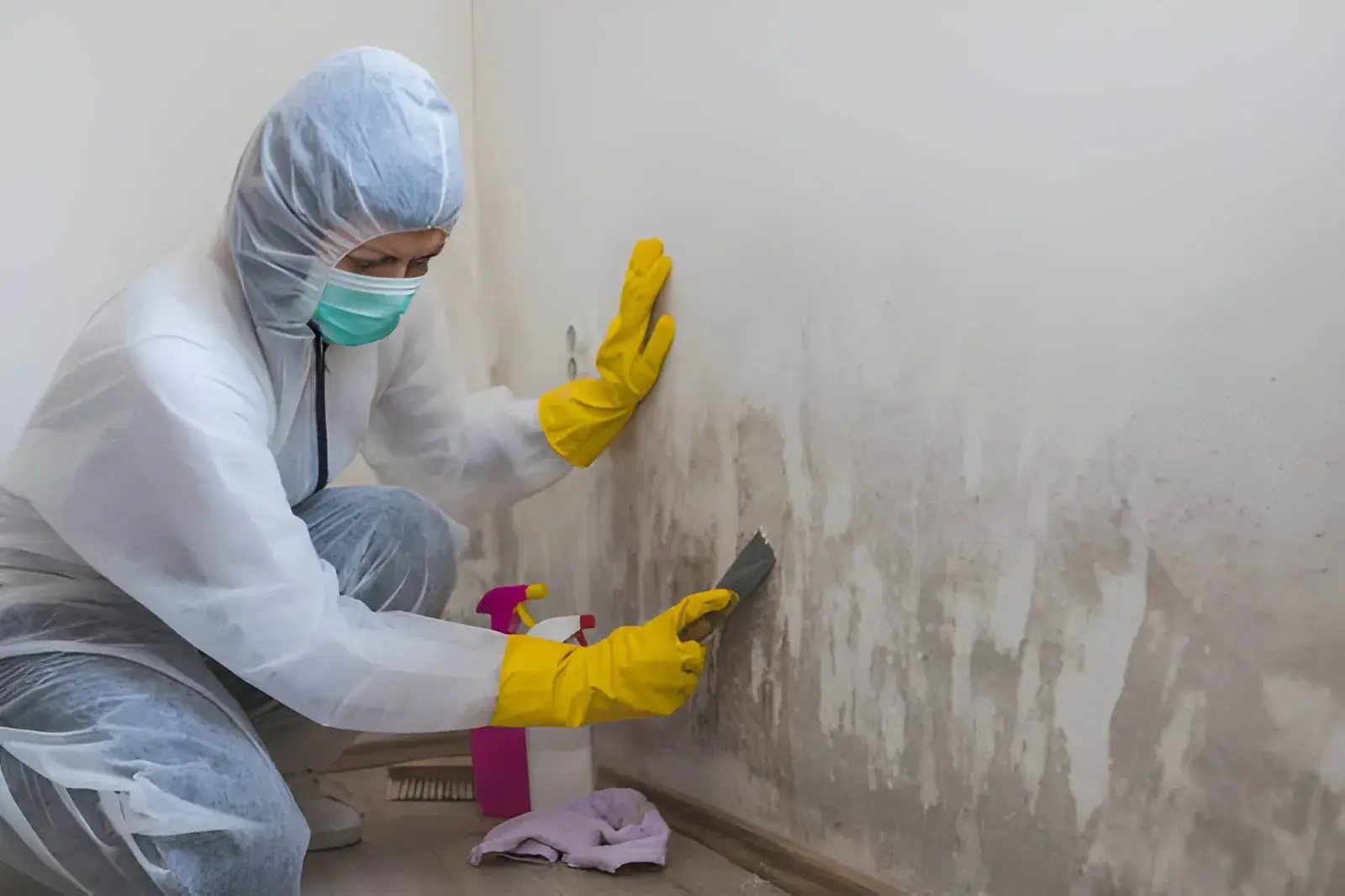
Mold Remediation in Madison, TN
Mold doubles its colony size every 24 to 48 hours in the right conditions. Madison's humid climate and crawl space housing stock provide those conditions year-round. Call now for professional assessment.
What Happens When You Call
A real person answers, not a call center. We assess your situation, determine the likely moisture source, and begin coordinating your response immediately.
Your dedicated mold remediation team is dispatched from our local base serving Madison and northeast Davidson County.
Team arrives with moisture meters, thermal imaging, air sampling equipment, and containment materials. Assessment begins immediately to map the full extent of growth.
Moisture source identified, mold extent mapped, containment established, remediation plan documented. You know exactly what comes next and what it involves.
Mold does not announce itself. It grows in the dark, behind walls, beneath floors, and inside HVAC ductwork where you cannot see it until it has spread far beyond the original moisture source. By the time you notice a musty smell, discolored drywall, or respiratory symptoms, the colony has been established for days or weeks. X Response exists for exactly this moment. When you reach out, your mold remediation team is mobilized within minutes. From that point forward, one team manages everything: assessment, containment, removal, treatment, and prevention. Call now. Your team is standing by.
Why Madison Homes Are Vulnerable to Mold
Madison's mold problem is structural, climatic, and historical all at once. Davidson County sits in IECC Climate Zone 4A, a mixed-humid zone where the annual average relative humidity runs high and rainfall approaches 50 inches per year. That combination creates an environment where mold does not need a dramatic water event to establish itself. It needs only a surface that stays damp and a temperature above 60 degrees, conditions that exist year-round inside the vented crawl spaces beneath most of Madison's housing stock. The community developed primarily in the 1950s and 1960s, and the homes built during that era used vented crawl space foundations as standard practice. The design theory was simple: outdoor air circulating through the crawl space would keep it dry. In Middle Tennessee's climate, the opposite happens. Warm, humid outdoor air enters the crawl space through foundation vents, meets the cooler surfaces of floor joists, subfloor sheathing, and ductwork, and condenses. The result is a permanently damp environment that feeds mold growth without any plumbing leak or flood ever occurring.
On top of that baseline crawl space problem, Madison carries the legacy of two major water events that saturated homes and structures across the community. The May 2010 flood pushed the Cumberland River to 51.86 feet, sending floodwater up every tributary and drainage channel along Neely's Bend and into low-lying residential neighborhoods. Homes that took floodwater and were not professionally dried and treated within 48 to 72 hours developed mold colonies in wall cavities, beneath flooring, and throughout crawl spaces that persisted for years. Then on December 9, 2023, an EF-2 tornado tracked through Madison with 130 mph winds, destroying roofs and exterior walls on hundreds of structures. Every one of those compromised homes took subsequent rainwater directly into wall cavities, attic insulation, and ceiling assemblies. Structures that sat with temporary tarps for weeks or months while awaiting repair developed mold behind intact interior finishes where it grew unseen until the reconstruction contractor opened the walls.
Vented Crawl Space Condensation (The Baseline Problem)
The majority of Madison's housing stock sits on vented crawl space foundations built in the 1950s and 1960s. These crawl spaces have foundation vents intended to allow airflow, but in Davidson County's humid subtropical climate, they function as moisture delivery systems. During the six warmest months, outdoor air at high relative humidity enters through the vents and hits crawl space surfaces that are cooler than the dewpoint. Condensation forms on floor joists, subfloor sheathing, ductwork, and any metal surfaces below the home. This moisture sustains mold growth on wood framing year after year, season after season, without any water intrusion event at all. Homeowners often do not know they have a mold problem in the crawl space until they notice cupping hardwood floors above, musty air rising through floor registers, or a home inspector finds extensive growth during a sale.
Post-2010 Flood Mold Legacy
The May 2010 flood affected properties throughout the Cumberland River corridor, including Madison's low-lying neighborhoods along Neely's Bend. Homes that took river floodwater were exposed to Category 3 contaminated water that saturated wall cavities, insulation, and structural framing. Properties that were professionally remediated within 72 hours had a reasonable chance of preventing persistent mold colonization. Properties that were not, whether because the homeowner was displaced, because they waited for insurance, or because they attempted to dry the home themselves without commercial equipment, developed mold colonies that became embedded in structural materials. More than fifteen years later, some of these homes still carry hidden mold in wall cavities, beneath flooring, and in crawl spaces that were never fully addressed. The mold was treated superficially or never discovered because it grew behind intact drywall where visual inspection could not reach it.
Post-Tornado Water Intrusion and Hidden Growth (December 2023)
The December 9, 2023 EF-2 tornado that tracked through Madison compromised roofs, exterior walls, and building envelopes on hundreds of structures. Every opening created by the tornado became an entry point for rainwater in the days, weeks, and months that followed while homeowners waited for insurance settlements, contractor availability, and permits. Water entered attic insulation through missing shingles and torn decking. It ran down wall cavities through gaps where exterior sheathing was displaced. It pooled on ceiling drywall above intact interior finishes where it could not be seen. This slow, persistent moisture intrusion in enclosed cavities is ideal for mold establishment. By the time a reconstruction contractor opens a wall or ceiling six to eight weeks later, mold has colonized the studs, sheathing, and insulation behind the drywall. The home needs mold remediation before reconstruction can proceed, adding weeks and cost to an already complex project.
HVAC-Distributed Mold and Ductwork Contamination
Madison's forced-air HVAC systems become both victims and vectors of mold contamination. In homes with crawl space installations, the air handler, supply plenum, and ductwork sit in the same humid environment that grows mold on floor joists. Condensation forms on the exterior of supply ducts running through the crawl space, and mold colonizes the insulation wrap. Inside the ductwork, the evaporator coil stays damp during cooling season and can develop mold on its fins and in the drain pan. When the system operates, it distributes mold spores from the crawl space contamination, from the coil, and from any mold growing inside the ducts themselves to every room through the supply registers. Homeowners experience this as respiratory symptoms, allergies, or a musty smell that intensifies when the system runs. Remediation must include the HVAC system, not just the visible growth areas.
No Tennessee State Mold License (Credential Standards)
Tennessee does not require a state-specific mold remediation license, which means any contractor can legally offer mold removal services regardless of training, equipment, or methodology. This creates a wide range in service quality. Some operators spray bleach on visible mold and declare the job complete, which does nothing to address the moisture source, the hidden growth in wall cavities, the contaminated HVAC system, or the crawl space conditions that will grow new mold within weeks. Professional mold remediation follows IICRC S520 standards and AMRT (Applied Microbial Remediation Technician) certification protocols, which define proper containment, air filtration, removal techniques, antimicrobial treatment, and post-remediation verification. Without a state licensing requirement, the homeowner must verify the contractor's credentials directly.
These factors compound in Madison. The baseline humidity creates mold in crawl spaces without any water event. The 2010 flood left hidden colonies in wall cavities along the river corridor. The 2023 tornado created hundreds of new moisture entry points that fed hidden mold growth for months. The HVAC systems distribute spores from crawl space contamination throughout the living space. And the absence of state licensing means homeowners cannot rely on regulation to ensure quality. Effective mold remediation in Madison requires understanding the moisture source, whether that is chronic crawl space condensation, flood legacy, storm damage, or plumbing failure, because the source must be eliminated permanently or the mold returns regardless of how thoroughly it was removed.
What Happens to Your Home While You Wait
24–48 Hours After Moisture
Mold spores, which are always present in ambient air, begin germinating on any organic surface that stays damp. In Madison's humid crawl spaces and enclosed wall cavities, conditions are ideal: temperatures above 60 degrees, relative humidity above 60 percent, and organic material like wood framing, drywall paper, and insulation backing. Initial growth is microscopic and invisible.
3–7 Days
Colonies become visible as fuzzy or discolored patches on surfaces in crawl spaces, behind baseboards, and on the backside of drywall in wall cavities. Musty volatile organic compounds (MVOCs) become noticeable as odor in enclosed spaces. Spore production begins, increasing airborne contamination levels. In homes where the HVAC draws air from a contaminated crawl space, spores distribute throughout the living space.
1–2 Weeks
Mold spreads along connected organic materials: from one floor joist to adjacent joists, along subfloor sheathing, up wall studs from the sill plate, and into insulation batts. The colony produces more spores and MVOCs. Occupants may notice increased allergy symptoms, headaches, or respiratory irritation. The musty odor intensifies. What started as a single-surface problem is becoming a structural problem.
2–4 Weeks
Extensive colonization of structural materials. Mold penetrates into the surface grain of wood framing, making it impossible to clean without sanding or removal. Drywall paper provides unlimited food source and growth spreads behind intact wall surfaces where it cannot be seen. HVAC contamination is well established. Remediation scope has expanded from spot treatment to structural containment, removal, and material replacement.
One Month and Beyond
Mold becomes deeply embedded in structural wood, requiring aggressive sanding, media blasting, or full replacement of affected framing members. Indoor air quality degrades significantly. Secondary damage includes wood rot at connection points, delaminating subfloor, and compromised structural integrity of floor systems. Health impacts for occupants with sensitivities become pronounced. The project timeline extends from days to weeks as material removal and reconstruction become necessary.
Mold grows exponentially. Every day of delay multiplies the remediation scope, cost, and health exposure. Contact X Response now. Our Madison team assesses and contains the problem before it spreads further.
How We Restore Mold-Affected Madison Homes
Mold remediation is not mold cleaning. It is a systematic process of identifying the moisture source, containing the growth, removing affected materials safely, treating the structure, and preventing recurrence. Here is how we approach mold in Madison homes.
Moisture Source Investigation and Mold Assessment
Our team arrives with professional moisture meters, thermal imaging cameras, and air sampling equipment to identify both the moisture source and the full extent of mold growth. In Madison homes, we inspect the crawl space first because it is the most common origin point. We check for condensation on floor joists and ductwork, standing water, vapor barrier condition, and visible growth on wood surfaces. We also inspect wall cavities where flood damage or storm damage may have introduced moisture, and we check the HVAC system for coil contamination and duct mold. The assessment maps every affected area and identifies the moisture source that must be eliminated for the remediation to hold.
Containment and Air Filtration
Before any removal begins, we establish physical containment around the affected areas using polyethylene sheeting and negative air pressure. This prevents mold spores released during removal from migrating into unaffected areas of the home. HEPA air scrubbers run continuously inside the containment zone and in adjacent areas to capture airborne spores. For whole-crawl-space remediation, the crawl space itself becomes the containment zone with HEPA filtration at the access point. The HVAC system is isolated and shut down during remediation to prevent distribution of disturbed spores through the ductwork.
Mold Removal and Material Disposal
Affected materials are removed according to IICRC S520 protocols. Porous materials with embedded mold growth, including contaminated drywall, insulation, carpet, and severely affected wood, are cut out, bagged inside the containment zone, and disposed of according to Davidson County waste regulations. Structural wood that can be salvaged is sanded or media-blasted to remove surface growth, then treated with antimicrobial agents. Non-porous surfaces are cleaned with appropriate solutions. All removed material is sealed in polyethylene before passing through the containment barrier to prevent cross-contamination during disposal.
Antimicrobial Treatment and HVAC Decontamination
Once affected materials are removed and structural surfaces are cleaned, we apply EPA-registered antimicrobial treatments to all surfaces within the remediation area. For crawl space remediation, this includes treating every accessible joist face, sill plate, subfloor surface, and foundation wall. If the HVAC system is contaminated, the evaporator coil is cleaned, the drain pan is treated, and ductwork is professionally cleaned or replaced depending on contamination severity. The goal is to eliminate residual spores on surfaces and within the air handling system so the home does not immediately recontaminate once the containment is removed.
Moisture Source Correction and Prevention
Remediation without addressing the moisture source guarantees recurrence. For Madison's crawl space mold, the permanent fix is typically crawl space encapsulation: closing foundation vents, installing a sealed vapor barrier over the floor and up the walls, and adding mechanical dehumidification to control humidity below 60 percent year-round. For flood or storm damage moisture, the fix may be drainage correction, foundation waterproofing, or roof repair. For plumbing failures, the fix is the plumbing repair itself. We identify and either correct the moisture source or provide a specific scope for the correction so you can hire the appropriate specialist. Without this step, the mold returns within weeks or months regardless of how thoroughly it was removed.
The X Response Difference
Mold remediation is not a cleaning task. It is a containment, removal, and prevention project that requires training, equipment, protocols, and verification. X Response provides all of it under one team with one standard.
Insurance Claim Guidance for Madison Homeowners
Mold insurance coverage in Tennessee depends on the cause of the moisture that led to the growth. Most standard homeowner's policies cover mold remediation when the mold resulted from a covered water damage event, such as a burst pipe or storm-driven roof leak, and when the homeowner took reasonable steps to mitigate the water damage promptly. Mold from chronic conditions like crawl space condensation, ongoing roof leaks that were not repaired, or the natural humidity of the environment is typically excluded as a maintenance issue. Many Tennessee policies also carry specific mold coverage caps, often $10,000 to $25,000, regardless of the actual remediation cost. Understanding your coverage before filing is essential to avoid claim complications.
How X Response Helps
- Document the water event that caused the mold growth, establishing the causal link to a covered peril
- Demonstrate timely mitigation of the original water damage to show the mold was not caused by negligence or delayed action
- Provide professional mold assessment with air sampling results and written scope to support the claim
- Identify whether your policy has a mold-specific coverage cap and whether the scope falls within or exceeds that limit
- Separate mold remediation costs from moisture source correction costs, as they may fall under different policy sections
X Response does not file claims on your behalf, adjust claims, or make coverage determinations. We provide documentation and guidance to help you make informed decisions about your property and your policy. Coverage decisions are made solely by your insurance carrier.
Certified Restoration Specialists Serving Madison
When you contact X Response for mold remediation in Madison, your team is drawn from certified professionals who understand the specific mold conditions of northeast Nashville. They know how Madison's 1950s crawl space foundations create chronic condensation that feeds mold without any water event. They have worked through post-2010 flood mold in the Neely's Bend corridor, post-2023 tornado hidden growth behind intact walls, and the routine HVAC-distributed crawl space contamination that is the most common mold complaint in this community. They understand that in Davidson County's Climate Zone 4A humidity, removing mold without correcting the moisture source is a temporary measure that guarantees return business rather than solving the homeowner's problem.
Every technician holds AMRT (Applied Microbial Remediation Technician) certification through the IICRC and follows S520 remediation protocols. Equipment includes HEPA air scrubbers, negative air machines, professional air sampling pumps, moisture meters, thermal imaging cameras, containment materials, and antimicrobial application systems. Tennessee does not require a state mold license, which means you cannot rely on regulation to ensure quality. You can rely on our certifications, our protocols, and our documented post-remediation verification to confirm the work was done to national standards.
In Madison, X Response works with Tennessee Water and Fire, an independent local restoration partner serving Davidson County.
Mold Remediation FAQ for Madison Homeowners
Other Emergency Services in Madison

Water Damage Restoration
Burst pipes, storm flooding, standing water. We extract, dry, and restore before mold sets in.
Learn more
Fire Damage Restoration
Structural damage, soot, debris. We stabilize, clean, and rebuild what fire destroyed.
Learn more
Smoke Damage Restoration
Soot residue, chemical odors, HVAC contamination. We decontaminate surfaces, eliminate odors, and restore air quality.
Learn more
Sewage Cleanup
Sewer backups, contaminated water, biohazard. We extract, sanitize, and restore safely.
Learn moreNearby Service Areas
Also serving nearby: