
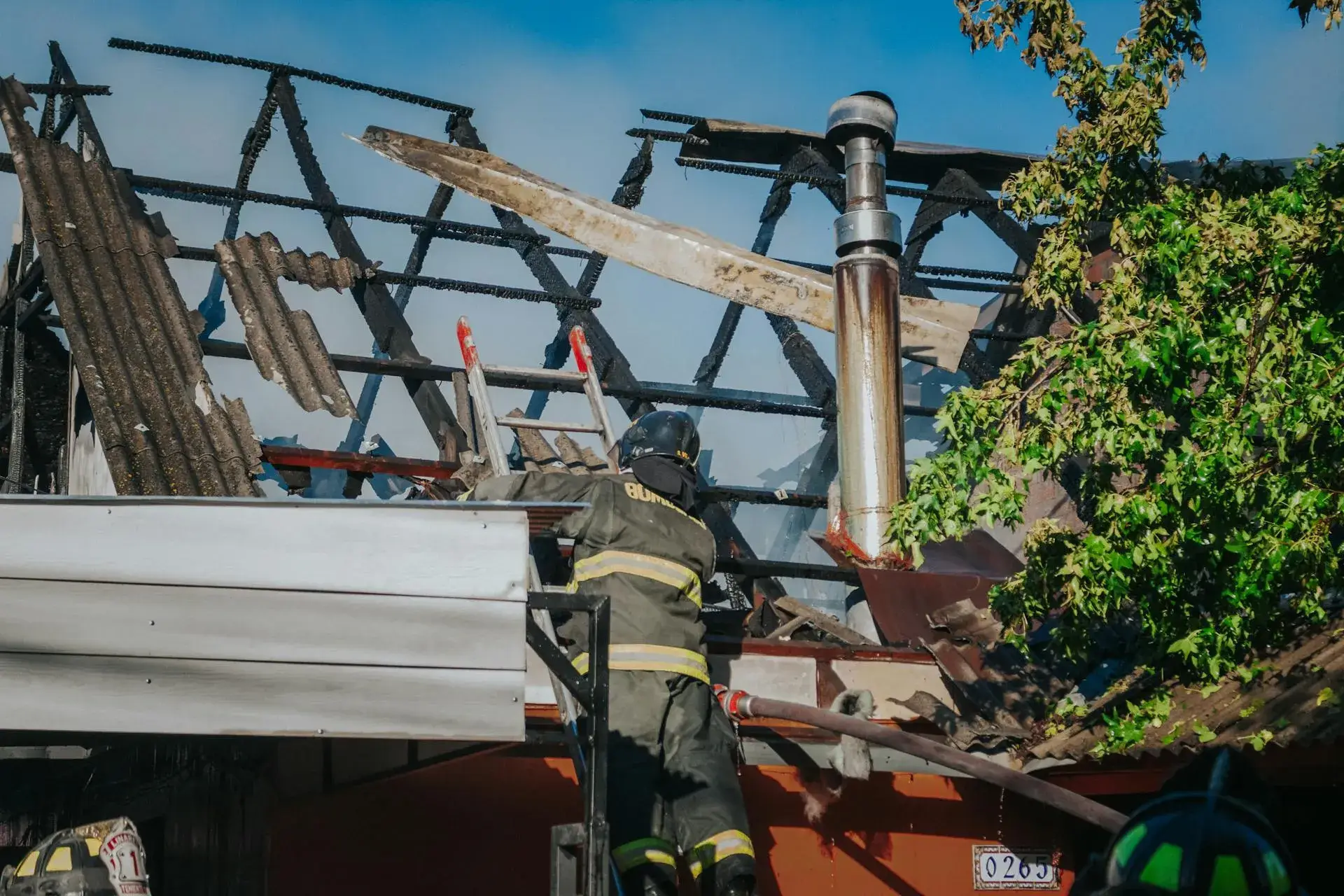
Fire Damage Restoration in Nolensville, TN
Fire leaves your home exposed to weather, theft, and accelerating secondary damage. Our local team responds to Nolensville emergencies within 60 minutes to stabilize and protect your property.
What Happens When You Call
A real person answers, not a call center. We assess your fire damage situation, determine the structural risk level, and begin coordinating your response immediately.
Your dedicated fire restoration team is dispatched from our local base serving Nolensville and the surrounding Williamson County communities.
Team arrives with board-up materials, structural tarps, air scrubbers, and assessment equipment. Emergency stabilization begins immediately to prevent secondary damage.
Structure secured against weather and entry, preliminary damage assessment documented, restoration plan outlined. You know exactly what comes next.
After the fire department leaves, your home sits open and vulnerable. Rain enters through the damaged roof. Soot migrates deeper into surfaces with every hour. Unsecured properties draw thieves. X Response exists for exactly this moment. When you reach out, your fire restoration team is mobilized within minutes and on site within the hour. From that point forward, one team manages everything: structural stabilization, debris removal, smoke and soot cleanup, reconstruction, and insurance documentation. You are never left guessing about the next step. Call now. Your team is standing by.
Why Nolensville Homes Are Vulnerable to Fire Damage
Nolensville's fire risk became national news on July 30, 2024, when a lightning strike during an evening thunderstorm ignited a house fire on Nolenmeade Place. On July 30, 2024, a lightning strike ignited a house fire on Nolenmeade Place in Nolensville, injuring four firefighters including three who sustained burns while fighting the blaze in the attic of a home without sprinklers. Nolensville Fire and Rescue Assistant Chief Matthew Lupo described how crews arrived to find no visible flames from the exterior but discovered fire running through the attic space once they entered. The home, like much of Nolensville's housing stock built in the last two decades, did not have a residential sprinkler system. Three firefighters suffered burns and a fourth was treated for smoke inhalation. The injured were transported to Williamson Health and Stonecrest hospitals. The incident demonstrated both the severity of lightning-strike fires in this area and the particular danger posed by attic fires in homes where the suppression system consists entirely of manual intervention.
This was not an isolated event. In November 2023, Nolensville Fire responded to a two-alarm residential fire on Stoneway Court where a firefighter was injured and three dogs were rescued from the home. These incidents reflect the reality of fire risk in a rapidly growing suburban community where hundreds of homes are built close together in subdivisions, where lightning is common during Middle Tennessee's frequent spring and summer thunderstorms, and where the housing stock is primarily wood-framed residential construction without commercial-grade fire suppression. Effective fire restoration in Nolensville means understanding how these homes are built, how fire behaves within their construction, and how to stabilize and restore them before secondary damage from weather exposure and soot migration compounds the loss.
Lightning-Strike Fires During Severe Thunderstorms
Middle Tennessee averages 50 to 60 thunderstorm days per year, and Williamson County sits squarely in the corridor where warm Gulf moisture collides with frontal systems moving off the Highland Rim. Lightning strikes are common from April through September, and when a bolt hits a residential structure, the electrical discharge often enters the attic through roofing materials, ridge vents, or metal flashing and ignites insulation, framing, or wiring. The July 2024 Nolenmeade Place fire illustrated the specific danger: fire running through the attic space is invisible from outside the home, giving it time to spread before detection. By the time firefighters entered, the attic was fully involved. In Nolensville's newer subdivisions, attics are large, open truss spaces with engineered lumber that can fail rapidly under fire conditions. A lightning-strike attic fire in these homes can compromise the roof structure within minutes of ignition.
Rapid Subdivision Growth and Concentrated Housing
Nolensville grew from under 6,000 residents in 2010 to nearly 17,000 by 2024, and that growth has taken the form of dense residential subdivisions carved from former farmland. Homes in these neighborhoods sit on smaller lots with reduced setbacks compared to the rural properties that preceded them. When fire damages one structure, radiant heat, wind-driven embers, and proximity can threaten adjacent homes. The concentration of construction also means more structures are exposed to the same lightning storm simultaneously, and Nolensville Fire and Rescue must cover an expanding footprint with limited apparatus. Response time increases as the department covers more territory, and a fire that starts small can grow large in the minutes before the first engine arrives at a subdivision on the town's expanding perimeter.
Wood-Frame Construction Without Residential Sprinklers
Virtually all of Nolensville's residential construction is conventional wood framing with vinyl or fiber cement exterior cladding. Tennessee does not require residential fire sprinklers in single-family homes unless a local jurisdiction adopts a stricter code, and Nolensville has not. The July 2024 Nolenmeade Place fire underscored the consequence: once fire reached the attic, there was no automated suppression to slow it before firefighters arrived. In these homes, fire-rated assemblies (drywall, draft-stopping) provide passive containment, but a lightning strike that enters above the ceiling bypasses those barriers entirely. The roof truss system, typically built from engineered lumber and light-gauge metal connector plates, loses load-bearing capacity rapidly under fire exposure. A fire that reaches the trusses can cause partial or full roof collapse within 10 to 20 minutes, a timeline that defines whether the home is restorable or a total loss.
Attic Fires and Hidden Structural Compromise
Attic fires are among the most dangerous for both occupants and restoration outcomes because they operate out of sight in the largest uninterrupted void in a residential structure. Fire can spread across an entire attic before breaking through the ceiling into living spaces below, and the heat it generates can weaken truss connections, warp metal plates, and char structural members without visible surface damage below. In Nolensville's newer homes, attics run the full footprint of the house and contain HVAC equipment, ductwork, and electrical distribution, all of which sustain damage and require assessment after any attic fire. Restoration must address not just the visibly burned areas but the structural integrity of every truss connection across the affected span. This requires a team that understands engineered truss systems and can evaluate hidden damage behind insulation and above drywall.
Heating-Season Fires and Supplemental Heat Sources
While Nolensville is predominantly a newer community, many homes use gas fireplaces, gas furnaces, and occasionally supplemental electric or propane space heaters during Middle Tennessee's cold months. Heating equipment is among the leading causes of residential fires nationally, and in Williamson County the risk peaks between November and February. Gas fireplace installations in newer homes are generally safe when maintained, but neglected venting, accumulated dust on gas logs, and clearance violations where combustibles are placed too close to hearths contribute to ignition. The combination of gas fuel sources and wood-frame construction means a heating-related fire can escalate quickly, particularly if it starts in a wall cavity behind a gas fireplace chase or in a furnace closet with limited clearance.
These factors define Nolensville's fire damage landscape. Lightning storms are frequent and strike residential structures in a community without sprinkler requirements. The housing stock is concentrated, wood-framed, and relatively new but not immune to fire. Attic fires burn unseen until they compromise the roof structure, and heating-season ignitions can escalate in enclosed utility spaces. Effective fire damage restoration here means understanding how engineered truss systems respond to fire, how to assess hidden damage in attic spaces, and how to stabilize a structure before Williamson County's rain and humidity create secondary water and mold damage on top of the fire loss.
What Happens to Your Home While You Wait
Within 1 Hour
Acidic soot begins etching glass, metal fixtures, and appliance surfaces. Synthetic materials off-gas corrosive compounds that react with moisture in the air. Every surface the smoke touched begins to deteriorate. In Williamson County's humid climate, this chemical reaction accelerates because airborne moisture activates the acids in soot residue faster than in drier regions.
1–24 Hours
Soot permanently stains grout, unsealed stone, and porous surfaces. Metal hardware tarnishes and pits. Fiberglass insulation absorbs smoke odor that cannot be removed once embedded. If the roof is compromised, Middle Tennessee's frequent rain introduces water damage on top of the fire damage, creating compound deterioration. The structure loses value with every hour it sits unsecured and untreated.
24–48 Hours
Smoke odor permeates soft goods, upholstery, and clothing more deeply. Soot migrates through HVAC ductwork into rooms the fire never reached. Walls, ceilings, and contents in remote areas begin to discolor. The scope of contamination expands far beyond the fire-affected rooms, and salvageable items become total losses as exposure time extends.
48–72 Hours
Corrosion becomes permanent on metal surfaces and electronics. Soot etching on glass becomes irreversible. Mold begins colonizing where water from fire suppression saturated materials, especially in Middle Tennessee's warm, humid conditions. The cost of restoration climbs as more materials cross from salvageable to replacement-required.
One Week and Beyond
Widespread corrosion, permanent odor absorption into structural materials, active mold growth on water-damaged surfaces, and pest intrusion through unprotected openings. What started as a contained fire with restorable structure becomes a full demolition and rebuild. Insurance claim complexity and cost escalate with every stage of delay.
The gap between restoring your Nolensville home and demolishing it often comes down to how quickly stabilization begins after the fire department leaves. Contact X Response now. Our Nolensville team responds within 60 minutes.
How We Restore Fire-Damaged Nolensville Homes
From the moment our team arrives, every step is documented, measured, and verified. Here is exactly what the fire restoration process involves.
Emergency Stabilization and Board-Up
Our first priority is securing your property against further damage. That means boarding up window and door openings, tarping compromised roof sections, and shutting off utilities if they have not already been disconnected. For Nolensville homes with attic fire damage, tarping is critical because the roof structure may be compromised and Middle Tennessee rain is frequent and often heavy. We install temporary fencing if the structure is unsafe and post the property against unauthorized entry. Every opening is sealed against weather intrusion to prevent water damage from compounding the fire loss. Documentation begins immediately with photos, structural notes, and a preliminary assessment.
Damage Assessment and Scope Development
Once the structure is secure, our team conducts a comprehensive assessment of all fire, smoke, soot, and water damage. We map the fire's path, identify which materials are salvageable versus which require removal, and evaluate the structural integrity of load-bearing elements. For Nolensville's engineered truss homes, that means inspecting every metal connector plate in the fire-affected span for heat damage, warping, or separation. Trusses that appear intact from below may have compromised connections above the insulation line. We also assess HVAC systems, ductwork, and electrical panels that sit in attic spaces where fire traveled. Everything is documented with photos, measurements, and written descriptions that form the foundation of your insurance claim, and we produce a detailed scope of work with line-item estimates.
Debris Removal and Soot Cleaning
Materials that cannot be restored are removed: charred framing, destroyed insulation, melted fixtures, and contaminated drywall. We remove only what cannot be saved and preserve everything that can be cleaned and restored. Soot is cleaned from remaining surfaces using techniques matched to the material: dry sponging for painted walls, chemical cleaning for metals, HEPA vacuuming for textured surfaces, and ultrasonic cleaning for electronics and delicate items. In Nolensville's newer homes, engineered flooring, quartz countertops, and modern finishes require specific cleaning approaches that differ from working with historic plaster or hardwood. Every cleaning decision weighs the cost of restoration against replacement and the realistic service life of the restored material.
Deodorization and Air Quality Restoration
Smoke odor embeds in porous materials at a molecular level and cannot be eliminated by surface cleaning alone. We deploy thermal fogging to penetrate the same micro-spaces the smoke reached, breaking down odor molecules rather than masking them. For severe cases, hydroxyl generators run continuously to neutralize volatile compounds in the air and on surfaces. HEPA air scrubbers filter particulate from the indoor environment throughout the project. In attic fire situations common to Nolensville, smoke often travels down through ceiling penetrations, can lights, and HVAC returns into every room below, embedding odor in spaces the flames never touched. We trace the smoke migration path and treat every affected area, not just the rooms with visible damage.
Reconstruction and Completion
Once the structure is clean, dry, and odor-free, reconstruction begins. For Nolensville's newer homes, we rebuild to match existing finishes and meet current Williamson County building codes. Attic reconstruction may require full truss replacement across the damaged span, new roof decking and shingles, and replacement of HVAC equipment and ductwork that occupied the attic space. We coordinate all trades including framing, roofing, electrical, HVAC, drywall, paint, and flooring under a single project manager so nothing falls between contractors. A final inspection confirms all work meets specifications, and we hand you completion documentation including before-and-after photos, a detailed scope of all work performed, and the records your insurance company needs to close the claim.
The X Response Difference
When you contact X Response after a fire, you get a dedicated restoration team that manages everything from emergency board-up through final reconstruction. One team, one point of contact, one standard of work from stabilization to move-back day.
Insurance Claim Guidance for Nolensville Homeowners
Fire damage is one of the most comprehensively covered perils under standard Tennessee homeowner's policies. Coverage typically includes the dwelling structure, personal property, additional living expenses while your home is uninhabitable, and debris removal. Lightning-strike fires like the July 2024 Nolenmeade Place incident are covered as a named peril under virtually all policies. However, claims can become complex when the fire exposes pre-existing conditions, when smoke damage extends to neighboring properties, or when the scope of reconstruction triggers code-upgrade requirements that exceed the original structure's specifications. Williamson County's building codes may require that reconstructed areas meet current standards rather than matching the original construction, which can create gaps between insurance coverage and actual rebuild cost if the policy does not include an ordinance-or-law endorsement.
How X Response Helps
- Document all fire, smoke, soot, and water damage with professional photos, thermal imaging, and a detailed scope from the first hour
- Map the full extent of smoke migration through HVAC systems and ceiling penetrations to capture damage beyond visibly burned areas
- Identify code-upgrade requirements under current Williamson County building standards that may affect reconstruction scope and cost
- Prepare line-item estimates that align with insurance coverage categories so your adjuster can process the claim efficiently
- Document additional living expenses and contents losses with the detail your carrier requires for those coverage sections
X Response does not file claims on your behalf, adjust claims, or make coverage determinations. We provide documentation and guidance to help you make informed decisions about your property and your policy. Coverage decisions are made solely by your insurance carrier.
Certified Restoration Specialists Serving Nolensville
When you contact X Response after a fire in Nolensville, your restoration team is drawn from certified professionals who work across Williamson County and understand the specific challenges of restoring homes here. They know how Nolensville's newer engineered-truss homes respond to fire, how attic fires compromise roof systems that appear intact from below, and how Middle Tennessee's frequent rain threatens any structure left open after a fire. They have worked through lightning-strike fires, heating-system ignitions, and kitchen fires across the range of housing that exists in this rapidly growing community. This is not a crew dispatched from hours away with no local knowledge. It is a local team with local expertise, operating under national quality standards.
Every technician on your team holds current IICRC certification in fire and smoke restoration and carries the appropriate Tennessee state licensing for the work being performed. Equipment is commercial-grade and maintained to manufacturer specifications. When your team arrives, they bring everything needed to begin stabilization immediately, including board-up materials, structural tarps, HEPA air scrubbers, thermal imaging cameras, and the assessment tools needed to evaluate hidden damage in attic spaces, wall cavities, and HVAC systems.
In Nolensville, X Response works with Tennessee Water and Fire, an independent local restoration partner serving Williamson County.
Fire Damage Restoration FAQ for Nolensville Homeowners
Other Emergency Services in Nolensville

Water Damage Restoration
Burst pipes, storm flooding, standing water. We extract, dry, and restore before mold sets in.
Learn more
Smoke Damage Restoration
Soot residue, chemical odors, HVAC contamination. We decontaminate surfaces, eliminate odors, and restore air quality.
Learn more
Mold Remediation
Testing, containment, removal, prevention. We find the source, eliminate the growth, and stop it from returning.
Learn more
Sewage Cleanup
Sewer backups, contaminated water, biohazard. We extract, sanitize, and restore safely.
Learn moreNearby Service Areas
Also serving nearby: