
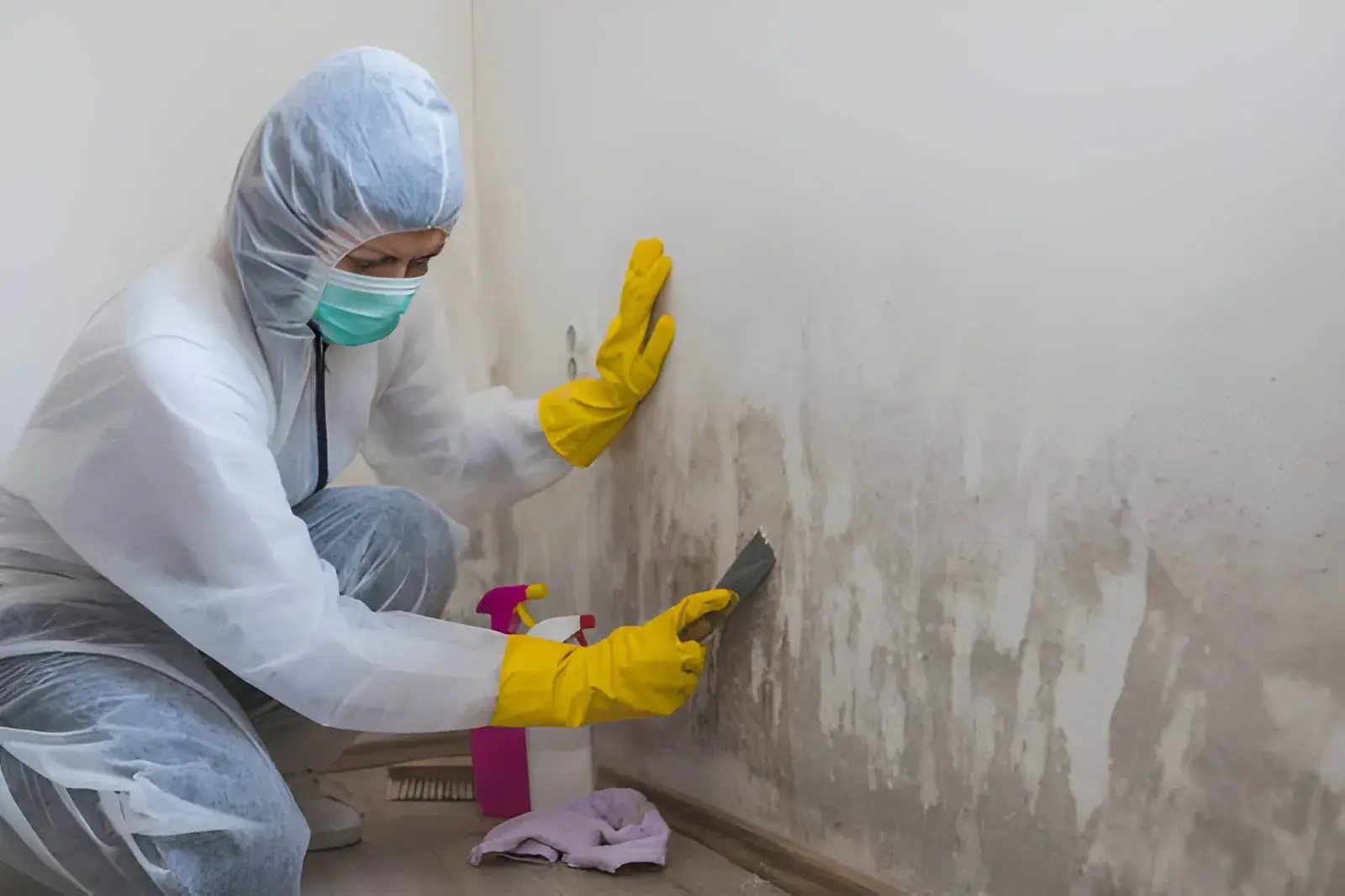
Mold Remediation in Nolensville, TN
Mold spreads through hidden spaces every day it goes unaddressed. Our local team provides professional inspection and remediation for Nolensville homes within 24 hours of your call.
What Happens When You Call
A real person answers, not a call center. We assess your situation, ask about visible signs, water history, and health concerns, and begin coordinating your response immediately.
Your dedicated mold remediation team is dispatched from our local base serving Nolensville and the surrounding Williamson County communities.
Team arrives with moisture meters, thermal imaging, air sampling equipment, and containment materials. Professional assessment begins immediately to determine the scope and source.
Assessment complete, containment established, remediation plan documented. You know exactly what was found, where it is, and what comes next.
Mold does not wait for a convenient time. It colonizes wet materials within 24 to 48 hours and spreads through wall cavities, crawl spaces, and HVAC systems without visible signs until it is well established. Whether you have discovered visible growth, detected a persistent musty odor, or are dealing with the aftermath of a water event, X Response provides the professional assessment and remediation Nolensville homeowners need. When you reach out, your mold remediation team is mobilized and on site within 24 hours. From that point forward, one team manages everything: inspection, containment, removal, and prevention. You are never left guessing about the next step. Call now. Your team is standing by.
Why Nolensville Homes Are Vulnerable to Mold
Mold thrives in Nolensville because the town combines every condition that promotes fungal growth: a humid subtropical climate with average relative humidity exceeding 70% for much of the year, heavy clay soils that hold moisture against foundations, crawl space construction that creates enclosed humid environments below living spaces, and a pattern of rapid residential development on former farmland that has altered drainage patterns and increased the amount of water reaching home foundations. Nolensville's crawl space homes sit on heavy clay soils characteristic of the Highland Rim-Central Basin transition, and the Town Engineering Department conducts annual stormwater inspections specifically to protect Mill Creek and its tributaries from the increased runoff generated by rapid residential development on former farmland. Those inspections protect the creek, but the same development patterns that threaten Mill Creek's water quality also change how moisture interacts with the homes built on that converted land. Where fields once absorbed rainfall gradually, impervious surfaces now shed it toward foundations and low spots where homes sit.
The crawl space is where mold problems in Nolensville most often begin and where they are hardest to detect. A vented crawl space in Middle Tennessee's climate operates as a humidity trap: during summer months, warm moist outdoor air enters through foundation vents, contacts the cooler surfaces of floor joists, subfloor sheathing, and ductwork, and condensation forms. That condensation, combined with ground moisture wicking up through the clay soil beneath the vapor barrier (if one exists), keeps the crawl space at humidity levels well above the 60% threshold where mold growth becomes active. Once established on crawl space framing, mold produces spores that rise through floor penetrations, plumbing chases, and HVAC returns into the living space above, degrading indoor air quality without any visible growth appearing in the occupied rooms. Many Nolensville homeowners first notice the problem as a persistent musty smell, cold damp floors in summer, or respiratory symptoms that improve when they leave the house.
Clay Soils and Persistent Foundation Moisture
Nolensville sits on the transition between the Highland Rim and the Central Basin, and the soils here are predominantly heavy clay. Clay is nearly impermeable when saturated, which means rainwater that falls on or near a foundation does not drain away quickly. Instead it pools against foundation walls, presses through joints in block or poured concrete, and wicks upward through the ground surface inside crawl spaces. After the September 2020 flash flood that crested Mill Creek at 19.53 feet, clay soils around Nolensville homes held that moisture for weeks afterward, keeping crawl spaces and foundation perimeters damp long after the visible water receded. This persistent ground moisture is the foundational condition that enables mold in Nolensville crawl spaces: the soil keeps supplying humidity to the enclosed space below the home regardless of whether it has rained recently.
Vented Crawl Spaces in a Humid Climate
The majority of Nolensville's homes were built with vented crawl spaces, following building code provisions that assumed ventilation would keep the space dry by allowing moisture to escape. In Middle Tennessee's humid subtropical climate, the opposite occurs. During the warm months from May through September, outdoor air carries high moisture content. When this warm, humid air enters a crawl space through foundation vents and contacts the cooler surfaces beneath the floor, it reaches its dew point and condensation forms on floor joists, subfloor sheathing, metal ductwork, and any other cool surface. The crawl space essentially operates as a dehumidifier in reverse, pulling moisture out of the air and depositing it on structural materials. Relative humidity inside vented crawl spaces in Middle Tennessee routinely exceeds 80% during summer, far above the 60% threshold where mold colonization becomes active. This is not a defect in any individual home. It is a climate-construction mismatch that affects the entire housing stock.
Rapid Development on Converted Farmland
Nolensville grew from under 6,000 residents in 2010 to nearly 17,000 by 2024, and virtually all new construction occurred on land that was previously agricultural. The grading and construction process compacts the clay subsoil around foundations, reducing its already-limited drainage capacity. New homes are placed on lots where the surrounding grade is often marginally sloped and the clay beneath was compacted by heavy equipment during site work. The result is foundations that sit in soil that drains poorly even by clay standards, surrounded by grading that directs stormwater toward the structure rather than away from it. Within a few years of construction, as site grading settles and landscaping matures, these homes develop persistent moisture conditions around their foundations that were not apparent during the first year of occupancy. Mold problems in Nolensville frequently emerge two to five years after construction, once the soil has settled and drainage patterns have established themselves.
Post-Flood Mold in the Mill Creek Corridor
When Mill Creek floods, as it did dramatically on September 13, 2020, water enters crawl spaces and lower levels of homes along the creek corridor and the Nolensville Road spine. Floodwater introduces not only moisture but also organic material, sediment, and microorganisms that accelerate mold colonization. Even homes that did not take visible flooding may have experienced groundwater rise through the clay soil into their crawl spaces during the event. The USGS gauge recorded 19.53 feet at the Nolensville station during that flood, and the laterally saturated soils pushed moisture into crawl spaces well beyond the creek's visible flood footprint. Homeowners who did not inspect and dry their crawl spaces after the September 2020 event may have active mold growth on structural framing that has been developing for years without visible symptoms in the living space above.
HVAC Systems and Mold Spore Distribution
Every Nolensville home runs a forced-air HVAC system, and many of these systems have ductwork and air handlers located in the crawl space. When mold colonizes crawl space framing and the air in that space carries elevated spore counts, the HVAC return draws those spores into the air handling system and distributes them throughout the home every time it cycles. Condensation on evaporator coils and in condensate drain pans creates additional moisture sources within the HVAC system itself, potentially supporting mold growth on coils and in duct interiors. The result is a home where the crawl space mold problem manifests as respiratory symptoms, musty odors from registers, and elevated indoor spore counts in rooms that have no visible moisture problem. Addressing mold in Nolensville homes frequently requires treating the HVAC system as an integral part of the remediation rather than just the visibly colonized surfaces in the crawl space.
These factors create a mold environment that is structural and climate-driven rather than incident-based. Nolensville's clay soils hold moisture, the humid climate condenses it in crawl spaces, rapid development has intensified drainage pressure on foundations, flood events introduce contamination that accelerates growth, and HVAC systems distribute spores throughout homes. Effective mold remediation here means addressing the conditions that sustain growth, not just removing visible colonies. It requires a team that understands crawl space moisture dynamics in Middle Tennessee's climate and can implement solutions that prevent recurrence rather than simply repeating cleanup.
What Happens to Your Home While You Wait
24–48 Hours After Moisture Exposure
Mold spores, which are always present in the air, begin colonizing any organic material that remains wet. In Nolensville's warm, humid climate, this colonization timeline is at the short end of the range. Floor joists, subfloor sheathing, drywall paper, carpet backing, and insulation facing all provide food sources. Initial growth is microscopic and invisible to the naked eye.
3–7 Days
Visible mold colonies appear on affected surfaces. In crawl spaces, this typically presents as dark staining on floor joists and subfloor sheathing. Behind walls, it grows on the paper face of drywall where moisture has reached it. Musty odors become detectable in the living space as the colony produces volatile organic compounds. At this stage the growth is still localized and containable.
1–4 Weeks
Mold spreads across affected materials and begins producing heavy spore loads. Spores migrate through floor penetrations, wall cavities, and HVAC returns into occupied spaces. Indoor air quality measurably degrades. Respiratory symptoms, persistent allergies, and headaches may develop in occupants. The remediation scope grows from localized treatment to multi-area containment and removal.
1–3 Months
Established colonies begin degrading the structural integrity of organic materials. Wood framing softens at connection points. Subfloor sheathing loses its load-bearing capacity in affected areas. The remediation shifts from surface treatment to material replacement, and the project scope expands significantly as affected framing must be sister-sistered or replaced rather than simply cleaned.
6 Months and Beyond
Extensive structural compromise in affected crawl space framing. Subfloor replacement required in affected spans. HVAC contamination requires ductwork replacement. The project is no longer remediation but reconstruction. Health impacts for occupants may have become chronic. Early detection and treatment prevents this outcome entirely.
Mold damage compounds over time rather than stabilizing. The earlier it is identified and addressed, the smaller the scope and cost of remediation. Contact X Response now for a professional inspection of your Nolensville home.
How We Restore Mold-Affected Nolensville Homes
From the moment our team arrives, every step is documented, measured, and verified. Here is exactly what the mold remediation process involves.
Professional Inspection and Assessment
Our team arrives with professional moisture meters, thermal imaging cameras, and air sampling equipment. We inspect the living space for visible signs of mold, moisture staining, and elevated humidity, then conduct a thorough crawl space inspection including moisture readings on all accessible framing and sheathing. Thermal imaging identifies moisture patterns behind walls that are not visible to the naked eye. If air testing is warranted, we collect samples for laboratory analysis to identify mold species and quantify spore counts relative to outdoor baseline levels. For Nolensville's crawl space homes, the inspection always includes the foundation perimeter, vapor barrier condition, ventilation configuration, and ground moisture levels, because these are the conditions that drive or prevent mold growth.
Source Identification and Moisture Control
Mold is a symptom of a moisture problem. Before remediation begins, we identify and address the moisture source so growth does not recur after treatment. In Nolensville homes, common sources include inadequate crawl space drainage, missing or damaged vapor barriers, grade sloping toward the foundation, plumbing leaks in crawl space supply or drain lines, condensation from uninsulated HVAC ductwork in the crawl space, and insufficient crawl space ventilation management. We resolve the moisture source as part of the remediation scope: repairing grading, replacing vapor barriers, addressing plumbing, and recommending crawl space encapsulation or dehumidification where the vented-crawl-space-in-humid-climate problem cannot be solved by passive measures alone.
Containment and Air Filtration
Before mold removal begins, we establish containment barriers to prevent spores from migrating into unaffected areas of the home during the disturbance of removal work. Negative air pressure within the containment zone ensures airflow moves inward rather than outward, and HEPA filtration captures spores before they exit the work area. For crawl space remediation, containment includes sealing floor penetrations, plumbing chases, and HVAC connections that could carry disturbed spores upward into the living space. Air scrubbers run continuously throughout the remediation to maintain indoor air quality in the occupied areas of the home.
Mold Removal and Surface Treatment
Affected materials are treated or removed depending on the extent of colonization and the material type. Structural wood with surface mold growth is cleaned using mechanical methods (sanding, wire brushing, or media blasting) to the clean wood beneath, then treated with EPA-registered antimicrobial agents. Porous materials with deep penetration, such as insulation, carpet, drywall, or severely compromised sheathing, are removed and replaced. We remove only what cannot be effectively treated and preserve structural elements wherever possible. For Nolensville's crawl space homes, this often means treating floor joists and sill plates in place while replacing vapor barriers, insulation, and any sheathing sections that have lost structural integrity.
Verification and Prevention
After remediation, we conduct post-treatment air sampling and surface testing to verify spore counts have returned to normal levels relative to outdoor baseline. Moisture readings confirm the source has been controlled and the treated area is maintaining acceptable humidity levels. For crawl space work, we verify that the moisture management solution is performing as designed: humidity levels below 60%, no standing water, vapor barrier intact, and drainage functioning. We provide completion documentation including before-and-after testing results, photos of all treated areas, and a written summary of the moisture control measures implemented. If conditions suggest ongoing risk, we recommend monitoring protocols to catch any recurrence early.
The X Response Difference
When you contact X Response for mold remediation, you get a team that treats the cause, removes the growth, verifies the results, and implements prevention. One team, complete solution, documented outcomes.
Insurance Claim Guidance for Nolensville Homeowners
Mold coverage under Tennessee homeowner's policies varies significantly between carriers and policy types. Most standard policies cover mold remediation when the growth resulted from a covered peril, such as a burst pipe, appliance failure, or storm damage that was reported and addressed promptly. However, mold that developed over time due to ongoing moisture conditions, poor drainage, construction defects, or deferred maintenance is typically excluded as a maintenance issue. Many policies also carry a mold sublimit that caps coverage at $5,000 to $25,000 regardless of actual remediation cost. For Nolensville homeowners, the practical implication is this: mold that appeared because a pipe burst last week and you called immediately is likely covered. Mold that has been growing in your crawl space for two years because the clay soil holds moisture against the foundation is likely excluded. The distinction turns on whether the moisture source was sudden and accidental versus gradual and preventable.
How X Response Helps
- Document the moisture source and timeline clearly, which determines whether the mold loss qualifies as a covered peril
- Provide professional air testing and moisture readings that establish the scope and connect it to a specific event if applicable
- Identify your policy's mold sublimit and explain how the actual remediation scope relates to that cap
- Prepare documentation that distinguishes event-driven mold from maintenance-related conditions so your carrier can process the applicable portion
- Recommend timing for filing to preserve coverage where the mold resulted from a previously reported water damage claim
X Response does not file claims on your behalf, adjust claims, or make coverage determinations. We provide documentation and guidance to help you make informed decisions about your property and your policy. Coverage decisions are made solely by your insurance carrier.
Certified Restoration Specialists Serving Nolensville
When you contact X Response for mold remediation in Nolensville, your team is drawn from certified professionals who work across Williamson County and understand the specific conditions that drive mold growth in this community. They know how Nolensville's clay soils hold moisture against foundations, how the vented crawl spaces common in this housing stock trap humidity during summer, and how the rapid development on former farmland has changed drainage patterns around newer homes. They have remediated crawl space mold in homes along the Mill Creek corridor, treated post-flood contamination in the Nolensville Road properties, and resolved chronic humidity problems in the subdivisions built on converted agricultural land. This is not a crew dispatched from hours away with no understanding of local conditions. It is a local team with local expertise, operating under national quality standards.
Every technician on your team holds current IICRC certification in mold remediation and water damage restoration, and carries the appropriate Tennessee state licensing for the work being performed. Equipment includes professional moisture meters, thermal imaging cameras, air sampling cassettes, HEPA air scrubbers, negative air machines, containment materials, and the specialized removal tools required for crawl space work in tight-clearance environments. When your team arrives, they bring everything needed to begin assessment and containment immediately.
In Nolensville, X Response works with Tennessee Water and Fire, an independent local restoration partner serving Williamson County.
Mold Remediation FAQ for Nolensville Homeowners
Other Emergency Services in Nolensville

Water Damage Restoration
Burst pipes, storm flooding, standing water. We extract, dry, and restore before mold sets in.
Learn more
Fire Damage Restoration
Structural damage, soot, debris. We stabilize, clean, and rebuild what fire destroyed.
Learn more
Smoke Damage Restoration
Soot residue, chemical odors, HVAC contamination. We decontaminate surfaces, eliminate odors, and restore air quality.
Learn more
Sewage Cleanup
Sewer backups, contaminated water, biohazard. We extract, sanitize, and restore safely.
Learn moreNearby Service Areas
Also serving nearby: