
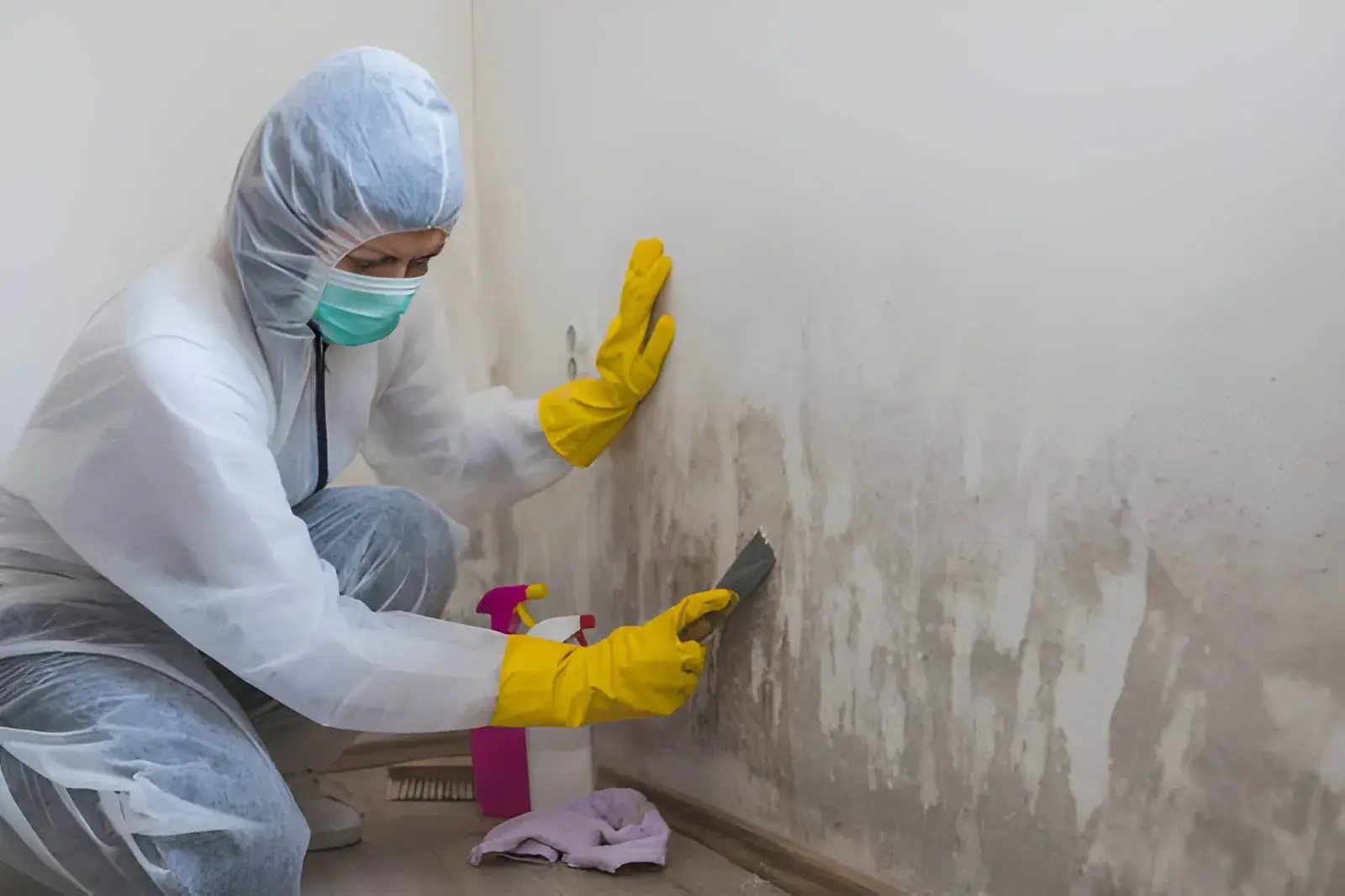
Mold Remediation in Longwood, FL
In Longwood's subtropical humidity above 74%, mold colonizes damp materials within 24 hours, not days. Every hour of delay allows contamination to spread deeper into wall cavities, HVAC systems, and structural assemblies. Our local team responds immediately.
What Happens When You Call
A real person answers, not a call center. We assess your situation, ask about visible growth and moisture history, and begin coordinating your response immediately.
Your dedicated remediation team is dispatched from our local base serving Longwood and the surrounding Seminole County communities.
Team arrives with containment materials, HEPA filtration, moisture detection equipment, and PPE. Assessment and containment begin immediately to prevent further spread.
Moisture source identified, containment established, remediation plan documented. You know exactly what the scope involves and what happens next.
You found mold, or you smell it. That musty odor means colonies are already established and growing, releasing spores into the air your family breathes. In Longwood's climate, waiting even a few days allows contamination to spread into wall cavities, HVAC ductwork, and areas you cannot see or reach. X Response exists for this moment. When you reach out, your remediation team mobilizes within minutes. One team manages everything: identifying the source moisture, containing the contamination, removing affected materials safely, treating the area to prevent recurrence, and verifying clean air quality before declaring the job complete. Call now. Your team is standing by.
Why Longwood Homes Are Vulnerable to Mold
Longwood sits in humid Seminole County where average relative humidity hovers above 74% year-round and annual rainfall exceeds 50 inches, creating conditions where even minor water intrusions can lead to mold colonization within 24 to 48 hours according to Seminole County emergency management guidelines. Located roughly 15 miles north of downtown Orlando with approximately 15,087 residents, Longwood exists in one of the most mold-conducive climates in the United States. Summer months regularly exceed 80% humidity during afternoon thunderstorm cycles, and the wet season from May through October delivers daily thunderstorms as the norm. These conditions mean that any moisture intrusion inside a Longwood home, whether from a roof leak, plumbing failure, condensation buildup, or flooding, creates conditions for mold germination within 24 hours rather than the 48 to 72 hours typical of temperate climates. Seminole County emergency managers routinely advise homeowners that prolonged humidity following summer thunderstorms or a named storm can turn minor moisture into a full-scale mold infestation in as little as 24 to 48 hours.
Longwood's mold challenge is compounded by its housing stock. The city's residential growth occurred primarily during the 1970s through 1990s, producing thousands of homes now 30 to 55 years old with HVAC systems, plumbing, and building envelopes that have degraded over decades of subtropical exposure. Many of these homes were built with construction practices that inadvertently create mold-friendly conditions: minimal attic ventilation, vapor barriers installed on the wrong side of the wall assembly for Florida's cooling-dominated climate, bathroom exhaust fans that vent into attic spaces rather than to the exterior, and HVAC systems undersized for the loads they now serve as the original equipment ages and loses capacity. Hurricane Ian's flooding in September 2022 saturated building materials throughout Seminole County, and homes that were not dried promptly or completely developed mold in wall cavities, beneath flooring, and inside HVAC plenums where the contamination remained hidden until occupants began reporting respiratory symptoms or musty odors weeks or months after the water receded.
Year-Round Humidity Above the Mold Growth Threshold
The Environmental Protection Agency identifies indoor humidity above 60% as sufficient to support mold development on building materials. Longwood's outdoor humidity averages above 74% year-round, meaning the ambient air itself exceeds the mold growth threshold before any water intrusion event occurs. During summer months, outdoor humidity routinely reaches 85-95% during overnight and early morning hours, creating a dew point differential that produces condensation on any surface cooler than the outdoor air temperature. Air-conditioned homes create exactly this condition: cooled interior surfaces attract condensation whenever warm, humid outdoor air infiltrates through gaps, cracks, and building envelope failures. The air conditioning system removes moisture from indoor air during normal operation, but when the system cycles off overnight or fails mechanically, indoor humidity can spike above 70% within hours. Homes with aging HVAC systems that have lost cooling capacity or developed refrigerant leaks are particularly vulnerable because the system runs longer without adequately dehumidifying, or short-cycles without completing the moisture removal phase that occurs during sustained operation.
HVAC Condensation and Mold in Aging Systems
Central air conditioning is not optional in Longwood; it is the primary mechanism for controlling indoor humidity. The evaporator coil inside the air handler produces condensation continuously during operation, collecting moisture from the indoor air and draining it through a condensate line to the exterior. In a properly functioning system, this process keeps indoor humidity below 55%. But in Longwood's aging housing stock, multiple failure points create mold conditions. Condensate drain lines clog with algae and biofilm growth (accelerated by Florida's warmth), causing water to overflow the drain pan and saturate insulation, drywall, and flooring beneath the air handler. Aged duct insulation absorbs condensation from the exterior surfaces of ducts running through unconditioned attic spaces where summer temperatures exceed 140 degrees, creating a perpetually damp environment inside the duct wrap where mold thrives unseen. Supply registers that deliver cold air to rooms create cold spots on adjacent drywall surfaces where condensation forms behind furniture and inside closets where air circulation is restricted. These HVAC-related mold conditions develop slowly, often over months or years, and are typically discovered only when visible growth appears on a wall or ceiling, or when occupants develop unexplained respiratory symptoms.
Post-Hurricane Ian Hidden Moisture and Delayed Mold Discovery
Hurricane Ian deposited over 10 inches of rain across Seminole County in September 2022, flooding an estimated 2,000 homes and saturating building materials throughout the region. Many Longwood homeowners addressed visible standing water but did not identify moisture trapped in wall cavities, beneath tile and laminate flooring, inside insulated wall assemblies, and within HVAC plenums and ductwork. In slab-on-grade construction, water absorbed into the bottom few inches of drywall and into the concrete slab itself can remain present for weeks or months, maintaining humidity levels inside the wall cavity well above the mold growth threshold long after the visible water has been cleaned up. Homeowners who believed their homes were dry because they could not see standing water discovered mold growth months later when musty odors developed, when removing baseboards for renovation revealed extensive growth on the backside of drywall, or when respiratory symptoms prompted an indoor air quality investigation. This delayed discovery pattern means that even years after Hurricane Ian, Longwood homes continue to reveal hidden mold growth in areas that were affected by the storm but never properly dried.
Bathroom Exhaust Venting Into Attic Spaces
A construction practice common in homes built before the 1990s, and unfortunately still found in some later construction, involves venting bathroom exhaust fans into the attic space rather than through the roof or soffit to the exterior. This configuration dumps warm, moisture-laden air directly into the attic during every shower and bath, where it condenses on the cooler underside of the roof decking and on attic insulation. In Longwood's climate, this moisture load accumulates over years, creating persistent dampness that supports mold growth on roof sheathing, truss members, and the top surface of ceiling insulation. Homeowners rarely enter their attics and may not discover the contamination until a roof repair, an insulation upgrade, or a home inspection reveals extensive mold colonization across the entire underside of the roof deck. By the time visible staining appears on the ceiling below, the contamination in the attic space is typically widespread. Proper remediation requires accessing the attic, removing contaminated insulation, treating the wood surfaces, correcting the exhaust venting to terminate at the exterior, and ensuring adequate attic ventilation to prevent recurrence.
Slab-on-Grade Moisture Migration
Most Longwood homes are built on concrete slab-on-grade foundations that sit directly on the sandy soil above the seasonal high water table. When the water table rises during wet periods, particularly after tropical systems or sustained summer rainfall, moisture migrates upward through the concrete slab by capillary action. This moisture reaches the interface between the slab and the flooring material above: the adhesive layer beneath tile, the underlayment beneath laminate, or the carpet pad sitting directly on concrete. In Longwood's warmth, this trapped moisture zone between the slab and the flooring creates ideal conditions for mold growth that is completely invisible from above. Homeowners typically discover the problem only when musty odor develops, when flooring begins to buckle or discolor, or when an inspection lifts a section of flooring to reveal growth beneath. Homes without a properly installed vapor barrier between the slab and the ground below are most vulnerable, and many homes from the 1970s and 1980s either lack this barrier entirely or have barriers that have degraded over decades. The remediation approach for slab-moisture mold requires removing flooring, treating the slab surface, addressing the ongoing moisture source (either through drainage improvements or the application of penetrating sealers), and installing new flooring with appropriate moisture barriers to prevent recurrence.
Longwood's mold profile is driven by a climate that exceeds the mold growth threshold every day of the year, a housing stock with aging HVAC systems that create condensation problems, post-hurricane moisture hidden in building assemblies, ventilation practices that dump humidity into attic spaces, and slab foundations that wick groundwater into the living space from below. Effective remediation requires identifying and eliminating the moisture source first, because removing visible mold without correcting the condition that created it guarantees recurrence in this climate.
What Happens to Your Home While You Wait
Within 24 Hours
In Longwood's humidity above 74% and temperatures consistently above 75 degrees, mold spores that are always present in Florida's air begin germinating on damp building materials within 24 hours of moisture contact. This is not a theoretical timeline; it is the operational reality that Seminole County emergency management communicates to homeowners after every flooding event. Hyphae (the root-like structures of mold colonies) penetrate into the paper facing of drywall, the surface of wood framing, and the fibers of carpet and pad, establishing a hold that surface wiping cannot remove.
48–72 Hours
Visible mold colonies become apparent on the surfaces of affected materials. Growth appears as discolored patches on drywall, dark spots on wood surfaces, or fuzzy growth on organic materials like cardboard, fabric, and paper. Behind the visible surface growth, hyphae are penetrating deeper into the substrate, consuming the cellulose in drywall paper and the lignin in wood. Spore production begins, releasing reproductive structures into the indoor air that colonize new damp surfaces and degrade indoor air quality. In wall cavities with no air circulation, colonies expand rapidly across the backside of drywall and onto framing members without any visible indication on the room side of the wall.
One Week
Mold growth is actively producing spores that circulate through the home via the HVAC system, spreading contamination to areas far from the original moisture source. Occupants may notice musty odors, increased respiratory symptoms, or allergic reactions. The colony is now established deeply enough in building materials that surface cleaning is ineffective; affected drywall, insulation, and heavily colonized wood must be removed. Mycotoxin production begins in certain mold species (including Stachybotrys and Aspergillus), creating toxic byproducts that pose health risks beyond the allergenic response that all mold produces.
Two Weeks and Beyond
Without intervention, mold colonization spreads throughout connected wall cavities, across attic spaces, into HVAC ductwork, and through any building assembly where moisture and organic material coexist. Remediation scope grows substantially as more materials require removal. Structural wood framing begins to show surface degradation. Indoor air quality deteriorates to levels that can cause respiratory illness in healthy individuals, not just those with existing sensitivities. The total project cost and timeline escalate with every week of delayed response, as demolition scope expands and the risk of structural damage increases.
In Longwood's climate, the difference between a contained mold remediation and a full-scale interior demolition project is often measured in days, not weeks. Contact X Response now. Our team assesses, contains, and begins remediation the same day.
How We Restore Mold-Affected Longwood Homes
Mold remediation is not cleaning; it is a controlled removal process that eliminates the contamination, identifies and corrects the moisture source, and verifies safe indoor air quality through testing. Here is exactly what the process involves.
Inspection and Moisture Source Identification
Our team arrives with professional moisture meters, thermal imaging cameras, and air sampling equipment to assess the full extent of mold contamination and identify the moisture source driving it. We probe wall cavities through small inspection holes, scan for hidden moisture with infrared imaging that reveals temperature differentials indicating dampness, and test indoor air quality to quantify spore concentrations. Critically, we identify the moisture source: a leaking roof, a failed condensate drain, a plumbing supply line dripping inside a wall, humidity from an improperly vented bathroom fan, or groundwater migrating through the slab. Without correcting the moisture source, mold removal is temporary; the contamination returns within weeks in Longwood's climate. Our inspection report documents both the contamination extent and the moisture correction needed, providing a complete scope for remediation and repair.
Containment and Negative Air Pressure
Before any mold-contaminated material is disturbed, we establish engineering controls that prevent spore dispersal into clean areas of the home. Polyethylene sheeting sealed with tape creates physical barriers isolating the work zone from adjacent rooms. HEPA-filtered negative air machines create negative pressure inside the containment, ensuring that any air movement flows into the work zone rather than out of it. This means disturbed spores are captured by the HEPA filtration rather than spreading through the home's air volume. HVAC registers within the containment zone are sealed to prevent contamination from entering the duct system and distributing throughout the house. Workers enter and exit through a decontamination chamber that prevents carrying spores on clothing into clean spaces. These controls remain in place throughout the remediation and until post-remediation verification confirms safe conditions.
Contaminated Material Removal
Mold-affected materials are removed in a controlled sequence designed to minimize spore release. Drywall is scored and removed in sections, with each piece immediately bagged in the containment zone before transport. Insulation is removed and bagged on site. Carpet, pad, and contaminated flooring materials are cut into manageable sections and sealed in heavy polyethylene bags within the containment. In Longwood's slab-on-grade construction, we remove materials down to the concrete surface and assess whether the slab itself requires treatment for embedded growth. Structural wood framing that shows surface mold but remains structurally sound is treated with professional-grade antimicrobial agents and preserved. Framing that shows soft rot or structural compromise from prolonged moisture exposure is documented and flagged for structural repair. All contaminated materials are disposed of according to Seminole County waste regulations.
Treatment and Antimicrobial Application
After contaminated materials are removed, all exposed surfaces within the containment receive antimicrobial treatment. We apply EPA-registered fungicides to the concrete slab, exposed framing, and any remaining building materials to kill residual mold growth and prevent immediate recolonization. For structural wood that is being preserved, we apply penetrating treatments that reach into the wood fiber where hyphae have penetrated the surface. The containment atmosphere is maintained under negative pressure throughout treatment, and HEPA air scrubbers continue operating to capture any spores released during the application process. After treatment and appropriate drying time, surfaces are inspected under high-intensity lighting to verify complete removal of visible growth and confirm the antimicrobial treatment has reached all affected areas.
Post-Remediation Verification and Clearance
Before containment is removed and the area is declared safe for occupancy, we conduct post-remediation verification that confirms successful remediation. Visual inspection under high-intensity lighting confirms no remaining visible growth on any surface. Air sampling collects spore counts from inside the remediated area and compares them to outdoor baseline levels and to unaffected areas of the home. In Florida, successful remediation is typically confirmed when indoor spore counts are at or below outdoor ambient levels and the species composition does not show elevated concentrations of indicator species like Stachybotrys or Aspergillus. Moisture readings confirm the work area has dried to levels that do not support mold growth (below 60% relative humidity at the material surface). Only after these objective criteria are met is the containment removed and the space cleared for reconstruction and reoccupancy.
The X Response Difference
When you contact X Response for mold in your Longwood home, you get a certified remediation team that follows the full IICRC S520 protocol: inspect, contain, remove, treat, verify. No shortcuts. No painting over the problem. Documented results that confirm the job is actually done.
Insurance Claim Guidance for Longwood Homeowners
Mold coverage in Florida homeowner's policies varies significantly by carrier and policy type. Most standard policies provide limited mold coverage, typically capped at $10,000 to $50,000, and only when the mold results from a covered water damage event such as a burst pipe, appliance failure, or storm-driven roof leak. Mold from maintenance failures, such as a slowly leaking pipe the homeowner did not address, condensation from a poorly maintained HVAC system, or humidity from inadequate ventilation, is frequently excluded or denied. Florida's Assignment of Benefits reform (2022) and ongoing insurance market volatility have made mold claims particularly contentious, with carriers scrutinizing the moisture source and the timeline between water intrusion and mold discovery.
How X Response Helps
- Document the moisture source and its relationship to a covered water damage event before filing
- Provide professional moisture readings and mold inspection results that establish the connection between the water intrusion and the mold growth
- Prepare documentation that demonstrates the mold was not caused by long-term maintenance neglect, which carriers routinely use to deny claims
- Photograph all affected areas before remediation begins, including behind removed materials where growth is most extensive
- Track remediation costs against your policy's mold coverage sublimit and communicate with your adjuster before exceeding it
X Response does not file claims on your behalf, adjust claims, or make coverage determinations. We provide documentation and guidance to help you make informed decisions about your property and your policy. Coverage decisions are made solely by your insurance carrier.
Certified Restoration Specialists Serving Longwood
When you contact X Response for mold remediation in Longwood, your team is drawn from certified professionals who work across Seminole County and understand the specific mold challenges of this subtropical environment. They know how Longwood's persistent humidity above 74% accelerates colonization timelines, how aging HVAC systems create condensation conditions throughout older homes, and how the high water table interacts with slab-on-grade foundations to produce moisture migration that feeds mold growth from below. They have remediated post-hurricane hidden mold discovered months after the water receded, attic contamination from improperly vented bathrooms, and chronic HVAC-related mold in Longwood's 1980s and 1990s housing stock. This is a local team with specialized remediation training, not a general contractor guessing at protocol.
Every technician on your team holds current IICRC certification in mold remediation (AMRT) and operates under the IICRC S520 Standard and Reference Guide for Professional Mold Remediation. Equipment includes professional moisture meters, thermal imaging cameras, HEPA-filtered negative air machines, air sampling cassettes, and the full range of containment materials and personal protective equipment required for safe mold removal. When your team arrives, they bring the training, equipment, and chemicals needed to handle the remediation safely from inspection through clearance testing, without waiting for additional resources to arrive.
In Longwood, X Response works with Hugo Fire and Water, an independent local restoration partner serving Seminole County.
Mold Remediation FAQ for Longwood Homeowners
Other Emergency Services in Longwood

Water Damage Restoration
Burst pipes, storm flooding, standing water. We extract, dry, and restore before mold sets in.
Learn more
Fire Damage Restoration
Structural damage, soot, debris. We stabilize, clean, and rebuild what fire destroyed.
Learn more
Smoke Damage Restoration
Soot residue, chemical odors, HVAC contamination. We decontaminate surfaces, eliminate odors, and restore air quality.
Learn more
Sewage Cleanup
Sewer backups, contaminated water, biohazard. We extract, sanitize, and restore safely.
Learn more