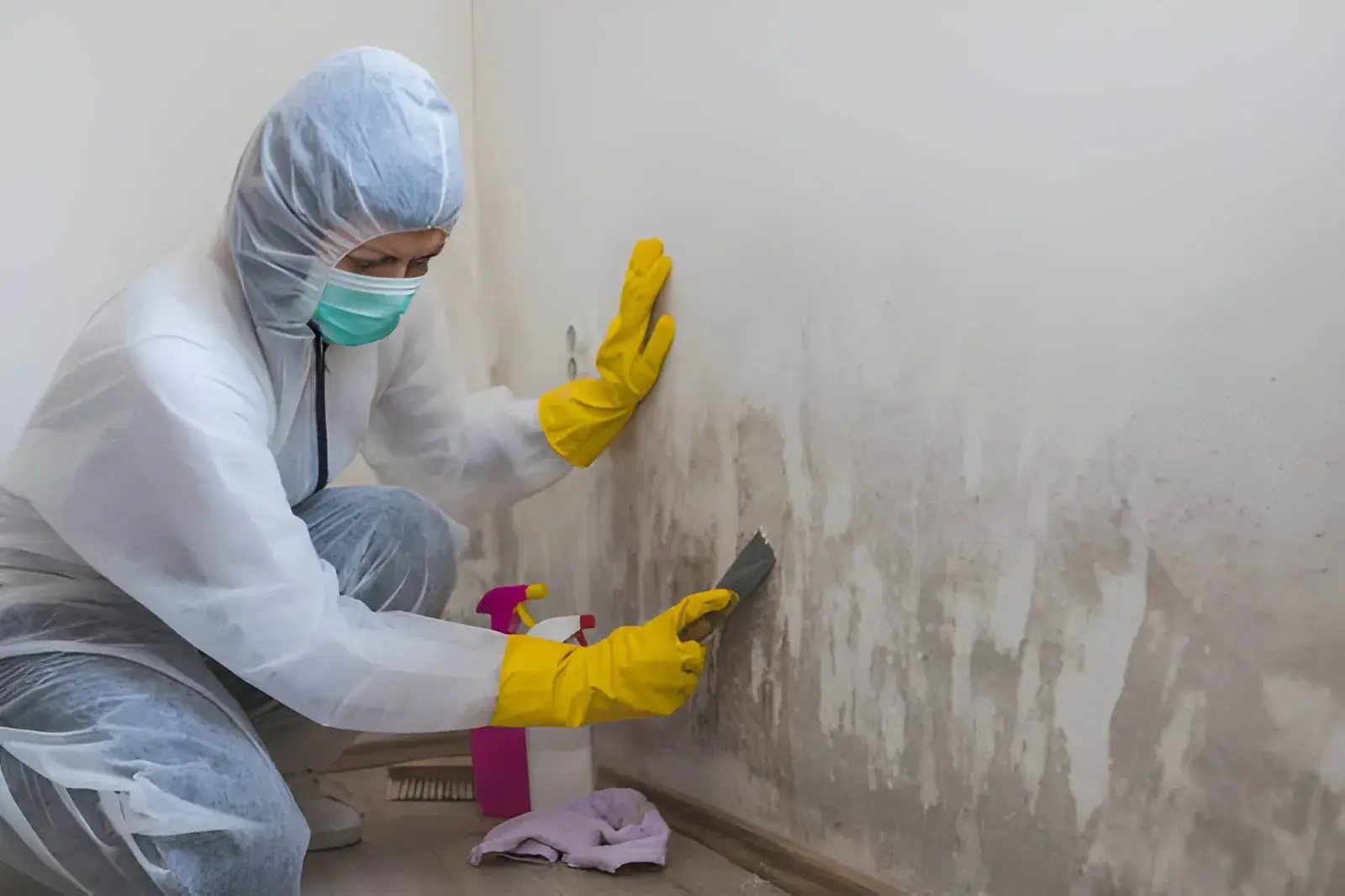
Mold remediation specialist in protective gear inspecting and treating mold growth in a residential property
Teams Active in Seminole County

Mold Remediation in Sanford, FL

Mold can colonize a damp Sanford home within 24 to 48 hours. Our state-licensed local team responds fast to test, contain, and remove it for good.

60-Min Response IICRC Certified Insurance Guidance Serving Seminole County

What Happens When You Call

You Call

A real person answers. We ask about visible mold, odors, recent water problems, and any health symptoms, then begin coordinating your assessment immediately.

15 Minutes

Your dedicated team is coordinated from our local base serving Sanford and the greater Seminole County area, with testing and containment equipment ready.

Same Day

A licensed specialist inspects the property with moisture meters, thermal imaging, and air sampling to map the full extent of the mold and its moisture source.

Next Steps

You receive a documented remediation protocol with lab results, scope of work, and insurance documentation. You know exactly what comes next.

You found mold, or you smell it, and you are worried about your home and your family's health. That concern is valid, and acting on it now is the right call. When you reach out to X Response, your assessment is coordinated quickly and a licensed specialist evaluates the full extent of the problem, including what is hidden inside walls. From there, one team manages everything: testing, containment, removal, moisture correction, and clearance verification. You are never left guessing whether it is truly gone. Call now. Your team is standing by.

Why Mold Thrives in Sanford Homes

Mold needs three things to grow: moisture, a food source, and time. In Sanford, the climate provides the moisture nearly year-round. Seminole County sits in a humid subtropical zone where summers are long, hot, and oppressively humid, relative humidity stays high in every season, and the wet season delivers near-daily afternoon thunderstorms. Indoor humidity that holds above 60 percent is enough to feed mold, and Sanford's outdoor air pushes well past that for months at a time. Add the cellulose in drywall, wood, and the original plaster and lath of the city's historic homes, and the food source is everywhere.

What turns that constant background risk into an active problem is water, and Sanford has no shortage of it. The city sits at the head of the St. Johns River on the shore of Lake Monroe, and Hurricane Ian in 2022 left around 2,000 Seminole County homes flooded, many of them saturated for days or weeks. Statewide, an estimated 47 percent of homes already have some mold or dampness. When floodwater, a roof leak, or an air conditioning problem introduces moisture into a Sanford home and it is not dried quickly and completely, mold can begin colonizing within 24 to 48 hours, often inside walls where no one sees it until the odor or staining appears.

Year-Round Heat and Humidity

Central Florida's climate keeps relative humidity high in every season, and indoor levels above 60 percent are all mold needs to grow. In Sanford, the long humid summer and near-daily wet-season storms mean the conditions that feed mold are present most of the year. Unlike drier climates where mold is occasional, here it is a constant background risk that any added moisture can activate within a day or two.

Lingering Moisture from Flooding

When Hurricane Ian pushed the St. Johns River and Lake Monroe over their banks, around 2,000 Seminole County homes flooded, and many stayed wet for days. Floodwater drives moisture deep into drywall, subfloors, and framing, and unless every affected material is fully dried, mold follows. Sanford homes that flooded, or that take on water during the recurring stormwater backups in low-lying neighborhoods, carry a high risk of hidden mold long after the visible water is gone.

Improperly Dried Repairs and Historic Materials

In the rush to rebuild after flooding, new drywall is sometimes installed over framing that was never fully dried, and mold grows hidden on the back of it. Sanford's older and historic homes add another layer: original plaster, lath, and dense wood hold moisture and dry slowly, and decades of patches and remodels can trap damp materials inside walls. Both situations create concealed growth that surface inspection misses until odor or staining appears.

Air Conditioning Condensation

In Sanford, air conditioning runs nearly year-round, and the systems themselves are a frequent mold source. Clogged condensate drain lines, oversized units that cool without dehumidifying, and uninsulated ductwork all create condensation that feeds mold inside air handlers, around vents, and in the spaces around ducts. Because the HVAC system touches every room, mold that starts there can spread spores throughout the entire home.

Florida's Strict Mold Licensing Law

Florida regulates mold work more tightly than most states. Under Statute 468, jobs over 10 square feet require a DBPR license, and the law separates the assessor who tests from the remediator who removes, preventing the conflict of interest where the company diagnosing the problem also profits from inflating the cleanup. Licensed remediators must also carry significant liability insurance. Hiring unlicensed help on a sizable job risks both your health and your insurance claim.

Health Effects on Occupants

Mold is not only a property problem. Prolonged exposure can trigger allergic reactions, asthma attacks, sinus infections, and respiratory irritation, and the effects are worse for children, older adults, and anyone with a compromised immune system. In a humid climate where windows stay closed and air conditioning recirculates indoor air, occupants can be exposed continuously. Addressing mold promptly protects your family's health as much as your home's value.

These factors reinforce each other. The climate keeps humidity high, flooding and leaks leave moisture trapped in walls, older materials and the air conditioning add their own dampness, and mold spreads quietly inside cavities where no one can see it. By the time staining or odor appears, the colony is usually well established. Professional remediation in Sanford means finding the full extent with testing, removing it under containment, correcting the moisture source, and verifying the result with clearance sampling. Anything less invites the mold right back.

How Mold Spreads While You Wait

24 to 48 Hours

Mold begins colonizing damp materials. In Sanford's humidity, this happens at the fast end of the range. The growth is microscopic at first, establishing on drywall paper, wood, and other cellulose surfaces before it is visible.

3 to 7 Days

Colonies become visible and begin releasing spores into the air. A musty odor develops. Spores spread to new damp areas, and the air conditioning system can carry them throughout the home, seeding growth in rooms far from the original source.

1 to 2 Weeks

Mold establishes inside wall cavities and around HVAC components. Surface cleaning alone is no longer enough. Affected porous materials begin to require removal rather than treatment, and occupants may notice worsening allergy or respiratory symptoms.

2 to 4 Weeks

Mold penetrates deep into porous materials. Drywall, wood framing, and insulation become structurally compromised and must be removed rather than cleaned. Secondary colonies establish through spore distribution via the HVAC system. A contained problem becomes a multi-room project.

One Month and Beyond

Extensive contamination throughout wall cavities, ductwork, and framing. Mycotoxin-producing species like Stachybotrys can establish on chronically wet cellulose, a particular risk in older homes with original wood and plaster. Health effects intensify for occupants. Remediation expands to full containment, extensive material removal, and HVAC decontamination.

The difference between a contained remediation and a whole-home project is often just a few days of response time. If you suspect mold in your Sanford home, contact X Response now. Early intervention saves time, money, and your family's health.

How We Remediate Mold-Contaminated Sanford Homes

From initial inspection through clearance testing, every step follows the ANSI/IICRC S520 standard for professional mold remediation. Here is exactly what the process involves.

Inspection, Testing, and Moisture Mapping

Our certified specialist arrives with professional moisture meters, thermal imaging cameras, and air sampling equipment. We inspect all areas of suspected contamination, including inside wall cavities, under flooring, and within the HVAC system. In Sanford's older homes, thermal imaging is critical for finding moisture trapped behind plaster and inside framing that is invisible from the surface. Air samples and surface swabs are sent to an accredited laboratory to identify mold species and measure spore concentrations. The inspection produces a detailed scope of work and the documentation your insurance company needs.

Containment and Engineering Controls

Before any mold is disturbed, we establish containment to prevent cross-contamination to clean areas. This involves sealing off the work area with polyethylene sheeting, creating negative air pressure using HEPA-filtered air scrubbers, and deactivating the HVAC system that serves the contaminated zone. For larger projects where mold has spread through ductwork, we isolate multiple zones. The negative air pressure ensures that when mold is disturbed during removal, spores are captured by filtration rather than spreading to clean parts of your home.

Mold Removal and Material Disposal

Contaminated porous materials that cannot be effectively cleaned are removed and disposed of following proper protocols. This typically includes affected drywall, insulation, carpet, and wood where mold has penetrated below the surface. In Sanford's older homes, this can mean carefully removing damaged plaster and trim to reach mold growing in the wall cavity behind it, work that demands extra care where original materials are worth preserving. Non-porous surfaces like concrete, metal, and tile are cleaned using HEPA vacuuming followed by antimicrobial treatment. All removed materials are bagged inside the containment area before transport to prevent spore release.

Antimicrobial Treatment and Moisture Correction

After contaminated materials are removed, all remaining surfaces in the work area are treated with EPA-registered antimicrobial agents to eliminate residual mold and prevent regrowth. We use directed airflow and dehumidification to ensure framing and cavities are fully dried. Critically, we identify and correct the moisture source that caused the mold in the first place. Whether it is a plumbing leak, an air conditioning condensate problem, inadequate ventilation, or post-flood water intrusion that was never fully dried, the moisture issue must be resolved or the mold will return regardless of how thorough the removal was.

Clearance Testing and Verification

Once removal and treatment are complete, we verify the result rather than simply declaring the job done. Following the ANSI/IICRC S520 standard, an independent post-remediation assessment and clearance air sampling confirm that spore levels inside the work area have returned to normal background levels. This third-party verification is exactly why Florida law separates the assessor from the remediator. You receive laboratory documentation proving your Sanford home is safe, which also supports your insurance claim and any future real estate disclosure. If clearance does not pass, we continue work until it does.

The X Response Difference

Typical Experience A handyman sprays bleach on the visible mold and paints over it. The growth returns within weeks because the moisture source and the mold inside the wall were never addressed.
X Response We test to find the full extent, remove it under containment, and correct the moisture source so the mold does not come back.
Typical Experience An unlicensed crew works on a large job with no containment, spreading spores through the rest of the home and putting your insurance claim at risk.
X Response We work under Florida's licensing requirements with full containment and engineering controls, protecting the rest of your home and your claim.
Typical Experience The company that finds the mold also sells you the cleanup, with every incentive to overstate the problem and no independent check on the result.
X Response We follow Florida's separation of assessment and remediation and verify the work with independent clearance testing, so success is proven by lab results.
Typical Experience You are left to figure out whether your policy covers the mold and how to document it for a skeptical adjuster.
X Response We connect the mold to its moisture source and document everything, helping you understand your coverage and sub-limits before you file.

When you contact X Response, you get a dedicated, state-licensed team that manages everything, from testing and containment through moisture correction to independent clearance verification. One team, one point of contact, one standard of work from start to finish.

Insurance Claim Guidance for Sanford Homeowners

Mold coverage is one of the most misunderstood parts of a Florida homeowner's policy, and the details matter. Most policies cover mold only when it results from a covered peril, such as a sudden pipe burst or a covered water event, and many carry mold sub-limits that cap payment somewhere between 1,000 and 10,000 dollars regardless of the true cost. Mold caused by gradual leaks, deferred maintenance, or chronic humidity is typically excluded, and mold caused by flooding falls under flood insurance, not your standard policy. That last point caught many Sanford homeowners after Hurricane Ian, when river flooding produced mold that a standard policy would not cover without separate flood coverage. The key to a successful claim is connecting the mold to a covered moisture source and documenting it clearly from the start.

How X Response Helps

  • Document the mold, its location, and laboratory test results with detailed photos and a written scope of work
  • Connect the mold to its moisture source, which is what determines whether and how your policy responds
  • Explain your policy's likely mold sub-limit and exclusions before work begins, so there are no surprises
  • Provide the assessment and clearance documentation your carrier needs, formatted the way adjusters expect
  • Coordinate with any related water or storm claim so the mold is tied correctly to the originating event

X Response does not file claims on your behalf, adjust claims, or make coverage determinations. We provide documentation and guidance to help you make informed decisions about your property and your policy. Coverage decisions are made solely by your insurance carrier.

State-Licensed Mold Specialists Serving Sanford

When you contact X Response for mold in Sanford, your remediation is handled by professionals who hold the Florida licensing the law requires and who understand how mold behaves in Seminole County's climate and housing. They know how moisture hides behind original plaster in a historic home, how the air conditioning seeds growth from the air handler outward, and how flooding from the St. Johns and Lake Monroe leaves homes quietly at risk for months. They work within Florida's separation of assessment and remediation, so the verification of your home is independent and credible. This is not a crew dispatched from across the state. It is a local team with local knowledge, operating under national quality standards.

Every project follows the ANSI/IICRC S520 standard for professional mold remediation, and our technicians carry the appropriate Florida state licensing and IICRC certification for the work being performed. Equipment is commercial-grade and maintained to manufacturer specifications. When your team arrives, they bring everything needed to assess, contain, and begin remediation without delay.

In Sanford, X Response works with Hugo Fire and Water, an independent local restoration partner serving Seminole County.

IICRC Certified
Florida State Licensed
24/7 Availability
Serving Seminole County
EPA Lead-Safe

Mold Remediation FAQ, Sanford, FL

Nearby Cities We Serve

Also serving nearby: Daytona Beach DeLand Lake Mary Longwood Deltona DeBary Orange City

Mold Spreads Quietly. Act Before It Spreads Further

Your Sanford remediation team is standing by. Free assessment, no obligation, state-licensed specialists, and independent clearance verification. The sooner we test and contain, the smaller the problem stays.

Call Now Get Help Now Text Us