
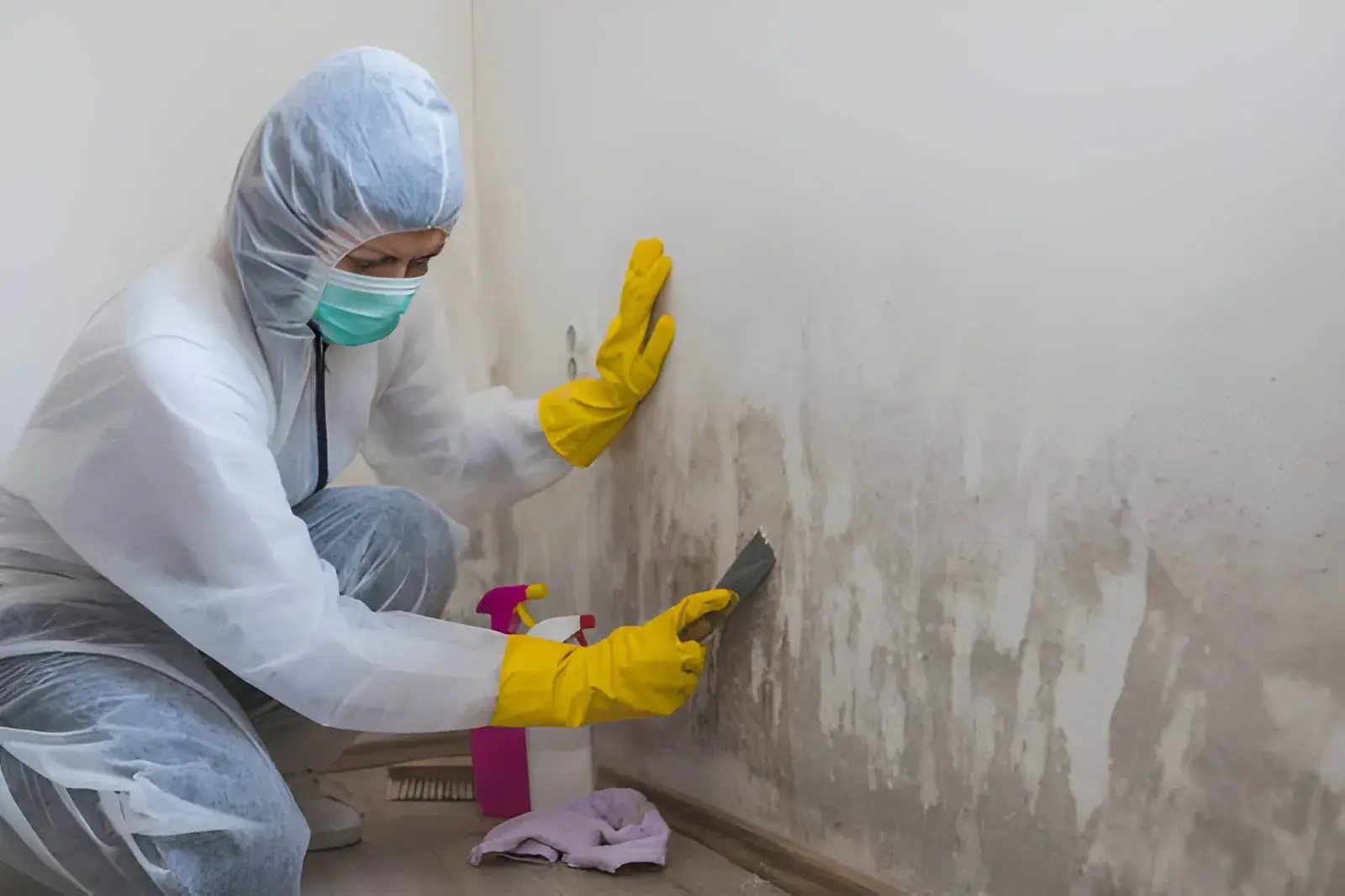
Mold Remediation in Roeland Park, KS
Toxic mold spores spread through basement framing and central HVAC systems in 24 to 48 hours. Our certified Roeland Park remediation team responds within 60 minutes.
What Happens When You Call
Contact our certified remediation coordinators to discuss your concerns and arrange an immediate diagnostic moisture inspection.
Technicians arrive at your Roeland Park residence to perform thermal moisture imaging, foundation inspection, and baseline spore sampling.
We erect airtight polyethylene containment chambers and activate HEPA-filtered negative air equipment to isolate affected areas.
Our team physically removes contaminated building materials, micro-cleans framing with HEPA vacuuming, and applies antimicrobial sealants.
Discovering mold inside your Roeland Park home requires immediate, scientific remediation to protect family health and preserve structural integrity. In northeast Johnson County's humid continental climate, airborne mold spores colonize damp organic materials like drywall, subflooring, and framing within 48 hours of moisture exposure. X Response delivers certified mold remediation adhering to strict IICRC S520 standards. We establish negative air pressure containment, deploy industrial HEPA air scrubbers, physically remove fungal growth, and eliminate root moisture sources to ensure permanent indoor safety. Schedule a Roeland Park mold inspection today.
Why Roeland Park Homes Are Vulnerable to Mold
Roeland Park occupies an elevated topography along the northeast boundary of Johnson County, where post-war subdivisions such as Roe Manor Heights, Roe Highlands, Southridge, and the streets around R Park and Grennan Heights line sloping hillside streetscapes. Homes constructed throughout the municipality during the late 1930s through the 1950s predominantly feature native limestone masonry or concrete block basements beneath wood-frame Cape Cod, bungalow, and ranch designs. Northeast Kansas experiences a humid continental climate characterized by long, sweltering summers with sustained ambient dew points frequently surpassing 68 to 72 degrees Fahrenheit. Subterranean soils across Roeland Park consist of dense, plastic silty clay that holds immense volumes of moisture. This hydro-geology creates sustained capillary vapor pressure against older masonry basement walls, compounded by steep yard grades directing overland runoff toward foundation perimeters.
The Johnson County Department of Health and Environment warns that indoor relative humidity exceeding 50 percent fosters rapid fungal colonization, particularly in below-grade basements subject to high clay moisture retention. In Roeland Park homes where homeowners have finished basement levels into recreation rooms, extra bedrooms, or home offices, summer humidity easily exceeds this safety threshold. Cool subterranean foundation masonry acts as a condensing surface when warm, humid outdoor air infiltrates through grade-level doors, windows, and utility penetrations. This micro-condensation accumulates behind finished drywall assemblies, wood paneling, and perimeter carpeting, establishing an ideal incubator for toxic fungal species including Aspergillus, Penicillium, Cladosporium, and Stachybotrys chartarum, which flourish unseen before circulating spores throughout the home's forced-air heating and cooling network.
Heavy Johnson County Clay and Hydrostatic Foundation Drive
The native soil profile in Roeland Park is characterized by dense silty clay with high plasticity. During seasonal wet periods, these expansive soils swell and trap groundwater tightly against basement foundation perimeters. Porous concrete masonry units, stone joints, and mortar lines absorb this groundwater through capillary wicking. Moisture vapor migrates continuously inward toward finished wall cavities, elevating cavity humidity to near-saturation and fostering pervasive fungal growth behind baseboards and insulation batts.
Summer Dew Point Condensation on Cool Basement Masonry
During sweltering Kansas summer months, outdoor air carries high absolute moisture content. Because below-grade basements in Roeland Park remain naturally cool, warm indoor air reaching uninsulated concrete surfaces cools below its dew point. Droplets of condensation form along base of walls, around cold water supply pipes, and underneath carpeting laid directly on concrete slabs, providing the essential water source required for rapid fungal sporulation.
Finished Living Spaces in Older Mid-Century Framing
Many Roeland Park homeowners have remodeled original basements by framing 2x4 wood stud walls directly against exterior concrete block without an exterior vapor barrier or adequate capillary break. As dampness migrates through the masonry, wood studs, fiberglass batt insulation, and paper-faced gypsum board absorb the moisture. Mold colonies flourish undetected inside the sealed wall cavities, often discovered only when musty odors permeate the home or structural drywall softens.
Forced-Air HVAC Distribution of Fungal Spores
Central heating and air conditioning units in Roeland Park properties frequently draw return air through unlined joist cavities in basement ceilings. If mold establishes colonies near mechanical rooms or basement storage areas, the furnace blower pulls airborne spores into the duct system. Every operational cooling or heating cycle subsequently blows fungal particulates throughout the ground floor, settling on upholstered furniture, draperies, and mattresses.
Crawl Space Soil Evaporation and Subfloor Moisture
A portion of Roeland Park's housing stock incorporates hybrid foundation designs with attached crawl spaces adjacent to partial basements. In many older homes, dirt crawl spaces lack continuous 6-mil polyethylene vapor barriers. High ground moisture evaporates freely from exposed earth, elevating subfloor relative humidity above 80 percent and causing widespread wood rot and fungal colonies on structural floor joists and subflooring.
Completely removing mold from Roeland Park homes requires sophisticated diagnostics, airtight containment, and certified remediation chemistry. Our IICRC-certified technicians eradicate fungal contamination and implement permanent moisture control strategies engineered for Johnson County's climate.
What Happens to Your Home While You Wait
Within 24–48 Hours
Microscopic mold spores germinate on damp drywall, carpet padding, and wood framing. Fungal hyphae anchor deep into porous cellulose surfaces. Faint musty odors become noticeable in closed basement rooms and storage areas.
3–7 Days
Visible fungal colonies expand across baseboards, wall cavities, and cabinetry backs. Mold enzymes break down drywall paper facings, weakening gypsum integrity. Saturated carpet padding begins deteriorating, and sensitive occupants experience allergic symptoms.
1–2 Weeks
Colonies mature and begin active sporulation, releasing millions of airborne spores into living areas. Forced-air HVAC systems distribute mycotoxins throughout upper floors. Paint finishes bubble and custom wood trim begins warping.
2–4 Weeks
Extensive structural framing contamination occurs. Wood sill plates and floor joists suffer cellular degradation. Indoor air quality deteriorates to hazardous levels, causing persistent respiratory distress and headaches among household members.
One Month and Beyond
Deep wood rot sets in as fungal hyphae compromise structural joists and subflooring. Gypsum wallboard crumbles completely, requiring extensive structural demolition and framing sistering to restore structural integrity.
Prompt remediation halts fungal colonization and protects family health. Contact X Response immediately for certified mold removal in Roeland Park.
How We Restore Mold-Affected Roeland Park Homes
Our IICRC S520-compliant mold remediation protocol provides verified fungal elimination, structural cleaning, and long-term moisture control for Roeland Park homes.
Comprehensive Moisture Mapping and Environmental Assessment
Our certified remediation technicians utilize infrared thermography, pin-type moisture meters, and optical cavity scopes to locate hidden moisture pockets and assess the full perimeter of mold growth behind Roeland Park basement walls.
Containment Chamber Construction and HEPA Air Filtration
We erect airtight 6-mil polyethylene barriers with zippered airlocks to isolate affected zones. Commercial HEPA negative-air machines vent directly outside, establishing continuous negative pressure to prevent spore migration into clean living areas.
Controlled Demolition of Saturated Porous Materials
Contaminated drywall, wet insulation, and un-salvageable carpeting are misted with botanical antimicrobials, sealed into heavy bags inside containment, and safely transported out of your Roeland Park home to prevent cross-contamination.
Abrasive Framing Cleaning and HEPA Vacuuming
Technicians mechanically clean structural timber and concrete foundation walls using wire brushing, abrasive sanding, and commercial HEPA vacuuming down to 0.3 microns, removing embedded fungal hyphae from the wood grain.
Antimicrobial Treatment and Clear-Coat Encapsulation
All exposed framing surfaces are treated with EPA-registered botanical antimicrobials followed by a mold-resistant translucent sealant that prevents future spore adhesion. Independent post-remediation clearance testing verifies normal fungal ecology.
The X Response Difference
Eliminating mold permanently requires certified containment and thorough structural cleaning. Choose X Response for guaranteed mold remediation in Roeland Park.
Insurance Claim Guidance for Roeland Park Homeowners
Navigating mold insurance coverage in Roeland Park requires clear technical proof of the originating moisture source under Kansas property coverage rules. Standard homeowner insurance policies generally exclude gradual moisture, humidity buildup, or deferred maintenance. However, mold growth that directly results from a sudden and accidental covered peril, such as an interior pipe burst, broken appliance supply line, or sudden water intrusion, is frequently eligible for remediation under policy endorsements. We assist you and your adjuster by preparing detailed documentation that traces fungal colonies to the specific covered moisture source.
How X Response Helps
- Digital photographic evidence linking mold colonization directly to the documented water loss event
- Psychrometric moisture logs and thermal imaging reports detailing building moisture migration pathways
- Standardized Xactimate itemized remediation estimates conforming to Johnson County regional labor and disposal rates
- Detailed chain-of-custody documentation and third-party laboratory air quality sample results
- Direct consultations with insurance claims adjusters to clarify containment protocols and remediation scopes
X Response delivers certified mold remediation and moisture documentation. We do not act as public insurance adjusters or negotiate insurance claim settlements. Policyholders must verify specific mold liability limits, endorsements, and deductibles with their insurance carrier.
Certified Restoration Specialists Serving Roeland Park
Our mold remediation specialists hold active certifications from the Institute of Inspection, Cleaning and Restoration Certification (IICRC), including Applied Microbial Remediation Technician (AMRT) and Water Damage Restoration Technician (WRT). Serving Roeland Park, Mission, and Fairway, our team brings exceptional dedication and scientific expertise to restoring healthy indoor air environments.
We operate fully equipped emergency service units stocked with commercial HEPA negative-air scrubbers, calibrated optical cavity scopes, industrial low-grain refrigerant dehumidifiers, and EPA-registered botanical antimicrobials. We prioritize indoor environmental safety, honest communication, and meticulous workmanship on every remediation project.
In Roeland Park, X Response works with Best Option Restoration, an independent local restoration partner serving Johnson County.
Mold Remediation FAQ for Roeland Park Homeowners
Other Emergency Services in Roeland Park

Water Damage Restoration
Burst pipes, storm flooding, standing water. We extract, dry, and restore before mold sets in.
Learn more
Fire Damage Restoration
Structural damage, soot, debris. We stabilize, clean, and rebuild what fire destroyed.
Learn more
Smoke Damage Restoration
Soot residue, chemical odors, HVAC contamination. We decontaminate surfaces, eliminate odors, and restore air quality.
Learn more
Sewage Cleanup
Sewer backups, contaminated water, biohazard. We extract, sanitize, and restore safely.
Learn more