
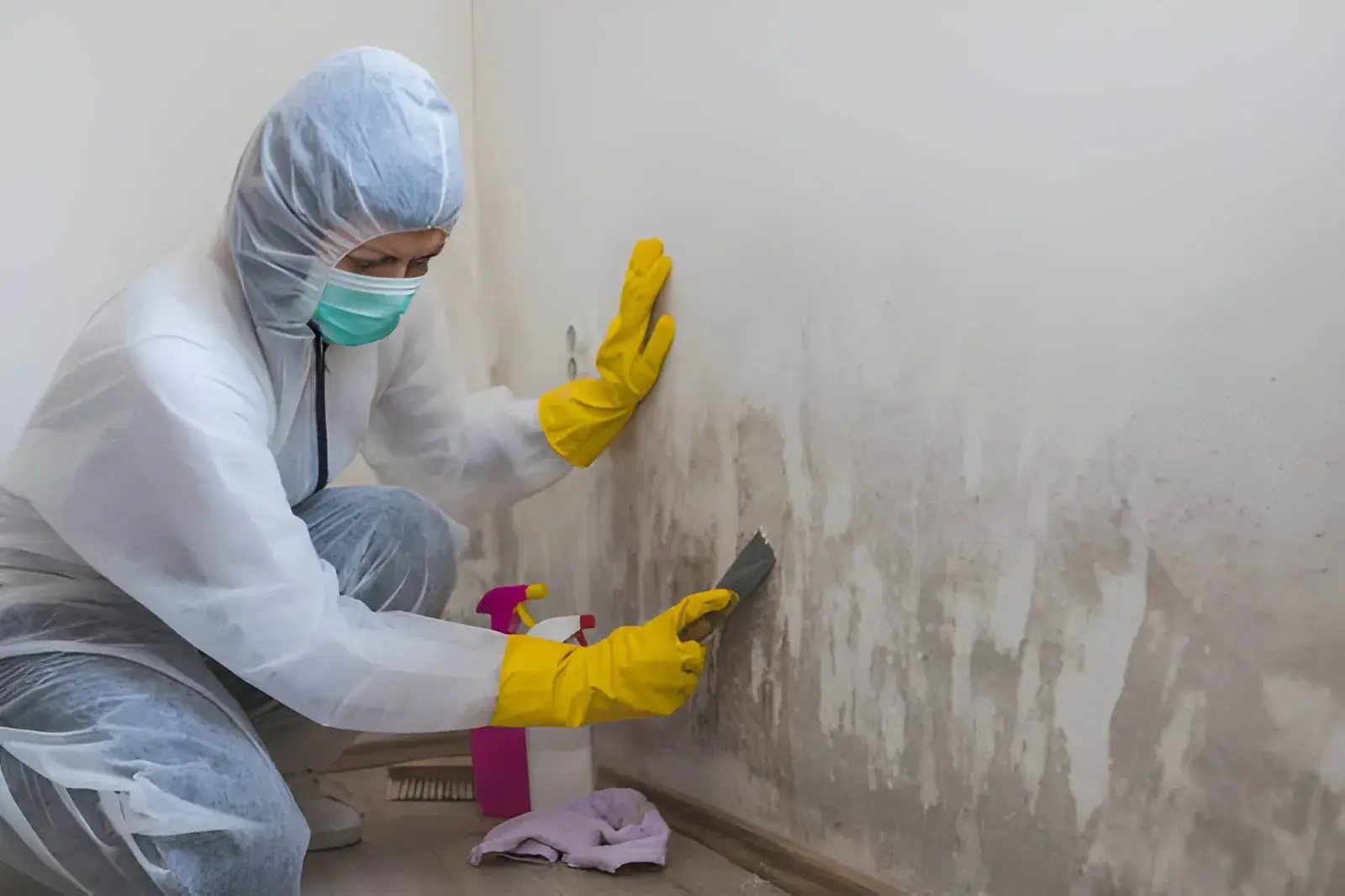
Mold Remediation in Prairie Village, KS
Toxic mold spores spread through basement framing and central HVAC systems in 24 to 48 hours. Our certified Prairie Village remediation team responds within 60 minutes.
What Happens When You Call
Contact our local remediation specialists for an immediate consultation and rapid scheduling of an on-site moisture and mold inspection.
Certified technicians arrive at your Prairie Village residence to perform diagnostic moisture mapping, thermal imaging, and baseline spore sampling.
We erect sealed polyethylene containment barriers and activate negative air HEPA filtration to isolate affected zones from living quarters.
Our team physically removes contaminated porous materials, micro-cleans framing with HEPA vacuums, and applies antimicrobial encapsulants.
Mold growth inside your Prairie Village home indicates an active or chronic moisture reservoir that must be identified and corrected. In northeast Johnson County's humid continental climate, airborne mold spores colonize damp organic materials like drywall, carpet padding, and wood subfloors within 48 hours. X Response provides certified mold remediation adhering to strict IICRC S520 standards. We establish negative air pressure containment, deploy industrial HEPA air filtration, physically remove fungal colonies, and address underlying moisture intrusion to ensure your living space remains permanently healthy. Schedule a Prairie Village mold inspection today.
Why Prairie Village Homes Are Vulnerable to Mold
Prairie Village features mature residential neighborhoods developed primarily during the mid-20th century, comprising single-family ranches, Cape Cod cottages, and split-level homes. Most of these residences possess full poured concrete or concrete block basements that homeowners have converted into finished living areas, bedrooms, and offices. Northeast Kansas experiences a humid continental climate marked by hot, sweltering summers where outdoor dew points frequently exceed 65 to 70 degrees Fahrenheit from June through August. The surrounding Johnson County terrain consists of dense, slow-draining silty clay soils that retain high ground moisture. This geological reality exerts continuous capillary vapor drive against basement foundation walls, creating a cool, damp subterranean environment highly vulnerable to condensation and fungal growth.
The Johnson County Department of Health and Environment identifies mold as one of the primary indoor air quality hazards affecting residential properties, noting that moisture control in basements is essential to prevent rapid spore colonization. In Prairie Village, older homes frequently feature uninsulated foundation walls where warm, humid summer air infiltrating through windows or ventilation registers contacts cold below-grade concrete. This temperature drop triggers condensation on sill plates, behind perimeter baseboards, and within hidden wall cavities behind finished drywall. Once relative humidity exceeds 60 percent, dormant fungal species such as Aspergillus, Penicillium, Cladosporium, and Stachybotrys chartarum colonize rapidly, releasing mycotoxins and airborne spores that circulate into upper living spaces.
Heavy Clay Soils and Foundation Vapor Permeation
The soils across Prairie Village are predominantly heavy montmorillonite clay, which expands when saturated and holds ground water against foundation walls long after rain subsides. Post-war concrete masonry unit and poured foundations were rarely built with modern external waterproofing membranes. As ground moisture presses against porous foundation walls, water vapor diffuses into the structure through capillary action. When homeowners install stud walls, fiberglass insulation, and drywall directly against concrete without a sealed vapor barrier, moisture becomes trapped, creating an optimal dark, humid breeding ground for toxic mold.
High Summer Dew Points and Condensation Cycles
Johnson County experiences prolonged summer humidity spikes where outdoor air holds exceptional moisture levels. In Prairie Village ranch homes, basements remain naturally cool due to surrounding earth temperatures, often hovering in the upper 60s. When warm, moisture-laden outdoor air enters the basement through doors, windows, or unconditioned fresh air intakes, it reaches its dew point against cold slab floors, copper water supply lines, and foundation perimeters. The resulting micro-condensation saturates carpet backing and drywall facings without an obvious plumbing leak.
Unsealed Crawl Spaces Beneath Mid-Century Additions
Many Prairie Village ranch homes have undergone rear room additions or kitchen expansions built over shallow crawl spaces rather than full basements. In older homes, these crawl spaces frequently lack heavy polyethylene vapor retarders over bare dirt floors and feature inadequate foundation vent cross-flow. Moisture continually evaporates from the ground into crawl space subflooring, rotting rim joists and breeding dense colonies of wood-decay fungi that migrate upward into hardwood flooring.
Concealed Wall Cavity Growth in Finished Basements
When basements in Prairie Village were renovated during previous decades, contractors commonly fastened 2x4 framing directly to exterior masonry walls. Moisture wicking through the foundation dampens the back of gypsum drywall and paper-faced fiberglass batts. Homeowners often detect a persistent musty odor or suffer unexplained allergy flare-ups while basement walls appear clean on the surface, unaware that square yards of black mold colonies are thriving inside sealed wall cavities.
HVAC Forced-Air Spore Distribution
Prairie Village residences rely on forced-air heating and cooling systems, with furnace and central evaporator coils typically installed in basement utility rooms. If active mold colonizes the basement floor, unsealed return ductwork draws millions of microscopic fungal spores into the blower compartment. When the air handler cycles on, it pressurizes and broadcasts these spores through supply ducts into every bedroom and living space, contaminating furniture, draperies, and mattresses.
Remediating mold in Prairie Village requires addressing both visible fungal growth and the underlying moisture dynamics that fuel it. Our certified technicians combine scientific containment, specialized air purification, and moisture control solutions tailored specifically to mid-century Johnson County residences.
What Happens to Your Home While You Wait
Within 24–48 Hours
Microscopic mold spores germinate on wet drywall, carpet backing, and structural lumber. Fungal hyphae penetrate porous paper facings, anchoring colonies into building materials. Faint musty odors develop in closed basement rooms and crawl spaces.
3–7 Days
Visible black, green, or white fungal colonies expand across surfaces. Mold digests organic cellulose in drywall, weakening gypsum integrity. Saturated carpet padding and baseboards begin deteriorating, and residents with asthma or mold sensitivities experience respiratory irritation.
1–2 Weeks
Colonies mature and begin sporulation, releasing millions of microscopic spores into the air. Central HVAC systems draw spores into ductwork, distributing mycotoxins throughout upper living areas. Paint bubbles and drywall softens as fungal digestion spreads.
2–4 Weeks
Extensive structural framing contamination occurs. Wood sill plates and floor joists experience cellular degradation. Indoor air quality drops to hazardous levels, causing headaches, sinus congestion, and allergic reactions among occupants.
One Month and Beyond
Severe structural compromise and chronic health hazards take hold. Fungal rot undermines load-bearing subflooring and framing members. What could have been resolved with localized containment now requires full structural gutting, hazardous material disposal, and comprehensive reconstruction.
Early remediation protects family health and prevents costly structural demolition. Contact X Response now for certified Prairie Village mold removal.
How We Restore Mold-Affected Prairie Village Homes
Our comprehensive mold remediation protocol follows strict IICRC S520 guidelines, ensuring safe spore removal without cross-contaminating your home.
Inspection, Moisture Mapping, and Air Quality Testing
We inspect your property using thermal imaging cameras and digital moisture meters to locate hidden water intrusion points behind walls and beneath floors. We collect baseline indoor and outdoor air samples, which are analyzed by independent accredited laboratories to identify specific fungal species and spore concentrations.
Containment Isolation and Negative Air Pressure Setup
Before disturbing any mold growth, we construct airtight critical barriers using heavy six-mil polyethylene sheeting to seal off the work zone from living areas. Industrial air scrubbers equipped with true HEPA filters exhaust air outside, establishing continuous negative pressure that prevents microscopic spores from migrating into clean rooms.
Safe Removal of Contaminated Porous Building Materials
Porous materials that are heavily colonized, including water-damaged drywall, carpet padding, and fiberglass insulation, are misted with botanical agents to suppress airborne dust, carefully removed, sealed into heavy bags, and safely disposed of in compliance with local regulations.
Structural Framing Micro-Cleaning and HEPA Vacuuming
All remaining structural framing, concrete foundation walls, and subfloors undergo meticulous physical micro-cleaning. We utilize commercial HEPA vacuum units that capture 99.97 percent of particles down to 0.3 microns, followed by mechanical sanding and EPA-registered antimicrobial washdowns to eradicate residual root systems.
Antimicrobial Encapsulation and Post-Remediation Verification
We apply a high-performance, mold-resistant translucent encapsulant to structural wood framing to prevent future fungal colonization. Once remediation is complete, third-party clearance air testing verifies that spore counts inside the containment zone have returned to normal, healthy outdoor baseline levels.
The X Response Difference
Choose scientific mold eradication engineered to protect your home and family. X Response guarantees verified clearance results.
Insurance Claim Guidance for Prairie Village Homeowners
Navigating homeowner insurance coverage for mold remediation in Kansas requires careful analysis of your policy terms. Most standard homeowner insurance policies contain mold exclusions or carry limited mold endorsements (frequently capped between $5,000 and $10,000). However, if mold growth directly resulted from a covered sudden and accidental peril, such as a ruptured copper pipe or sudden appliance failure, remediation costs are typically covered under the primary water claim. We provide Prairie Village homeowners with detailed technical documentation to substantiate legitimate claims.
How X Response Helps
- Comprehensive moisture mapping and thermal imagery establishing the direct link between covered water releases and mold growth
- Independent accredited laboratory spore trap reports detailing species identification and airborne particulate concentrations
- Line-item remediation estimates formatted in Xactimate adhering to standardized insurance billing guidelines
- Detailed photographic evidence documenting hidden wall cavity colonization and structural framing moisture content
- Direct coordination with insurance claims adjusters during on-site inspections to review required containment and protocol scopes
X Response performs certified remediation services and prepares technical loss documentation. We do not act as public adjusters or interpret insurance policy contracts. Homeowners should review their policy declaration pages and consult their insurance carrier regarding mold coverage limitations.
Certified Restoration Specialists Serving Prairie Village
Our mold remediation specialists hold active certifications from the Institute of Inspection, Cleaning and Restoration Certification (IICRC), including Applied Microbial Remediation Technician (AMRT) and Water Damage Restoration Technician (WRT). Serving Prairie Village, Mission Hills, and northeast Johnson County, our team combines extensive technical knowledge with a practical understanding of local mid-century construction.
We equip our mobile remediation fleet with commercial HEPA air scrubbers, containment airlock systems, negative-air monitoring equipment, and calibrated thermal diagnostic tools. We approach every mold remediation project with technical rigor, strict safety protocols, and a commitment to restoring a clean, healthy living environment for your household.
In Prairie Village, X Response works with Best Option Restoration, an independent local restoration partner serving Johnson County.
Mold Remediation FAQ for Prairie Village Homeowners
Other Emergency Services in Prairie Village

Water Damage Restoration
Burst pipes, storm flooding, standing water. We extract, dry, and restore before mold sets in.
Learn more
Fire Damage Restoration
Structural damage, soot, debris. We stabilize, clean, and rebuild what fire destroyed.
Learn more
Smoke Damage Restoration
Soot residue, chemical odors, HVAC contamination. We decontaminate surfaces, eliminate odors, and restore air quality.
Learn more
Sewage Cleanup
Sewer backups, contaminated water, biohazard. We extract, sanitize, and restore safely.
Learn moreNearby Service Areas
Also serving nearby: