Mold Remediation in Ann Arbor, MI
Mold colonizes damp surfaces within 24 to 48 hours, and in Ann Arbor's older basements near the Huron River where groundwater keeps foundations perpetually damp, it spreads aggressively once established. Our local team responds within 60 minutes to assess and contain the contamination.
What Happens When You Call
A real person answers, not a call center. We assess your situation, determine the likely moisture source, and begin coordinating your response immediately.
Your dedicated remediation team is dispatched from our local base serving Ann Arbor and the surrounding Washtenaw County communities.
Team arrives with moisture detection equipment, air sampling tools, HEPA filtration, and containment materials. Assessment begins immediately to determine the full scope.
Contamination mapped, moisture source identified, containment established, remediation plan documented. You know exactly what comes next.
You have discovered mold in your home. Whether it is visible growth on a basement wall, a musty odor in a century-old home's lower level, or test results confirming elevated spore counts, the contamination is active and expanding. In Ann Arbor's humid summers and older basements with stone or block foundations, mold grows as a chronic condition driven by ongoing moisture rather than a one-time event. X Response exists for exactly this moment. When you reach out, your remediation team is mobilized within minutes. Call now. Your team is standing by.
Why Ann Arbor Homes Are Vulnerable to Mold
Mold growth in Ann Arbor is driven by a combination of the city's Huron River hydrology, its humid continental climate, and a housing stock that includes thousands of homes with century-old basements never designed for modern moisture management. Ann Arbor's relative humidity runs high in July and August, creating sustained conditions that promote mold growth on cool basement surfaces throughout the summer months. When that humid outdoor air enters a basement through open windows, through gaps at the sill plate, or through the natural stack effect, it encounters stone or concrete surfaces that stay at 55 to 60 degrees year-round and condenses. This condensation creates a continuous moisture supply that sustains mold colonies from late May through early October without any discrete water event. Ann Arbor started its Footing Drain Disconnection Program in 2001 to deal with chronic sewer backups in basements, and by 2009 more than 1,300 homes in the first five neighborhoods had been disconnected.
The Huron River flows directly through Ann Arbor, and homes within the river corridor experience elevated groundwater levels that fluctuate with rainfall and seasonal snowmelt across the upper watershed. When the river rises, the water table in adjacent neighborhoods rises with it, pressing groundwater against basement foundations and increasing moisture migration through walls and floor slabs. For homes in the neighborhoods near Argo Pond, Gallup Park, and along Huron River Drive, this elevated water table creates chronic basement dampness that persists for weeks after the river recedes. The moisture sustained by the Huron's influence, combined with summer condensation from the high ambient humidity, makes basements in the river corridor among the most mold-prone residential environments in southeast Michigan.
Ann Arbor's oldest homes, built between 1880 and 1930 in neighborhoods like the Old West Side, Burns Park, and Water Hill, have basements with stone, rubble, or early concrete block foundations that are inherently porous. These foundations were built without exterior waterproofing membranes, without footer drains, and without the vapor barriers that modern construction uses to separate the damp exterior from the conditioned interior. After 100 or more years of soil contact, these foundations pass moisture continuously in both liquid and vapor form. Plaster walls in upper levels of these homes can also harbor mold when roof leaks, ice dam water, or plumbing failures introduce moisture into the plaster and wood lath, creating hidden growth on the organic backside of the wall material.
The city's large student rental housing market creates a distinct mold problem. Older homes converted to multi-unit student apartments often suffer from deferred maintenance: leaky roofs, aging plumbing, inadequate ventilation, and basements that have accumulated moisture damage over decades of neglect. Students cycling through these units every year may not report slow leaks or musty odors to landlords, allowing moisture conditions to persist for semesters. By the time mold is discovered, it has often spread extensively through wall cavities and ductwork. The high occupancy density in student housing also increases moisture generation from cooking, showering, and daily activities, compounding the baseline moisture that the building's deteriorating envelope already admits.
Summer Condensation at high Humidity
Ann Arbor's humid July and August weather creates conditions where condensation on cool basement surfaces is nearly continuous throughout the summer. Foundation walls and floor slabs in contact with the ground stay between 55 and 60 degrees year-round, well below the dewpoint of high humidity air at summer temperatures. The result is persistent liquid water forming on basement surfaces exactly as moisture forms on a cold glass in humid weather. In older homes where the basement is the primary conditioned-air return path, this condensation occurs on surfaces that are in direct contact with the HVAC system, meaning the moisture and any resulting mold growth are connected to the air distribution for the entire home. Without continuous mechanical dehumidification maintaining basement humidity below 50 percent from May through October, summer condensation alone sustains active mold colonization.
Huron River Groundwater Influence on Foundation Moisture
Homes within several blocks of the Huron River and its impoundments experience a direct hydraulic connection between river levels and basement moisture. When the river rises from rainfall or snowmelt across the upper watershed, the water table in the permeable soils near the river corridor rises in concert, pressing against basement foundations with increased hydrostatic pressure. This pressure forces groundwater through foundation walls, floor slabs, and any joint or penetration point in the structure. The moisture arrives on the interior face of the foundation as persistent dampness that sustains mold growth regardless of indoor humidity management. During extended wet periods, the groundwater influence can persist for weeks after the river itself has receded, because the surrounding soils release their stored water slowly. Homes nearest the river corridor face this pressure most intensely, but the influence extends well beyond the mapped floodplain into residential areas that do not consider themselves flood-prone.
Century-Old Foundations Without Moisture Barriers
Ann Arbor's pre-1930 homes have basements constructed from stone, rubble, or early unreinforced concrete without the exterior waterproofing systems that modern construction employs. After a century or more of soil contact, whatever original mortar joints or surface treatments existed have long since failed, and the foundation functions essentially as a moisture wick from the surrounding soil to the interior air. In the Old West Side neighborhood, where homes commonly date to the 1880s and 1890s, stone foundation walls are inherently porous and pass both liquid water and water vapor continuously. Mold colonizes the interior face of these walls, the exposed wood sill plate resting on the stone, the floor joists above, and any organic material stored against or near the damp foundation surface. Because these homes predate modern finishing of basements, the mold is often visible on exposed surfaces, but it also grows in the concealed spaces where the first-floor structure meets the foundation.
Student Rental Housing and Deferred Maintenance
Ann Arbor's rental market serves over 48,000 university students, and a significant portion of that housing consists of older homes converted to apartments decades ago. These properties experience high tenant turnover, deferred maintenance by absentee landlords, and occupancy patterns that leave buildings vacant during summer breaks when humidity is highest and no one is running dehumidifiers or reporting musty conditions. Slow roof leaks, deteriorating plumbing, inadequate bathroom ventilation, and basement moisture go unreported for months because each semester brings new tenants unfamiliar with the building's baseline conditions. When mold is finally discovered, often during a move-out inspection or when health symptoms prompt testing, the contamination has typically been growing for multiple semesters. The challenge for remediation is that these are rental properties where the landlord bears the cost, the tenant bears the health impact, and Michigan tenant law governs the rights and obligations of both parties.
HVAC Distribution in Older Forced-Air Converted Homes
When older Ann Arbor homes were converted from their original heating systems to forced-air, the ductwork was typically installed in the basement, with the return air pulled from the basement space. This means that any mold growing in the basement, whether on foundation walls, on stored materials, or on the HVAC cabinet itself, has a direct pathway to every room in the house through the supply ductwork. The blower distributes spores to bedrooms, living areas, and kitchens each time the system cycles, creating whole-house contamination from a basement-only source. The evaporator coil, filter housing, and interior duct surfaces can all become colonized, creating a persistent spore distribution system that continues affecting air quality even after visible basement mold is removed. Effective remediation must include inspection and treatment of the entire HVAC system, not just the original basement colony.
Mold in Ann Arbor reflects the intersection of river hydrology, extreme summer humidity, housing that spans three centuries of construction, and a rental market with inherent maintenance gaps. The high summer humidity, the Huron River's influence on groundwater, and the porous foundations of the city's oldest homes create conditions where mold grows as a chronic environmental response rather than a one-time contamination event. Effective remediation addresses both the colony and the moisture source sustaining it.
What Happens to Your Home While You Wait
Within 24 Hours of Moisture
Mold spores begin germinating on damp surfaces. In an Ann Arbor basement with a century-old stone foundation already carrying residual moisture, new water from a flood, leak, or condensation event compounds existing dampness and accelerates germination. The process is invisible but active on drywall paper, wood surfaces, stored cardboard, and fabric.
24 to 48 Hours
Visible colonies form on the most favorable surfaces. Growth is fastest in enclosed spaces with no airflow: behind furniture pushed against damp walls, inside closed storage areas, and in wall cavities behind finished surfaces. A musty odor becomes detectable.
48 Hours to One Week
Mold penetrates into substrate materials. Colonies extend through drywall paper, carpet backing, and along wood grain in framing and stored furniture. Spore production increases and airborne concentrations rise. The HVAC system begins distributing spores to upper floors when it cycles.
One to Four Weeks
Established colonies spread across wall surfaces, into concealed cavities, along floor joists, and into HVAC ductwork. Multiple species colonize based on available moisture and nutrients. Occupants develop respiratory symptoms and allergic reactions. Remediation scope expands significantly.
One Month and Beyond
Extensive colonization throughout the structure. In Ann Arbor's oldest homes, mold can penetrate into plaster, wood structural members, and even masonry over extended periods. Full remediation requires containment, material removal, HVAC decontamination, and air quality verification. In student rental properties where growth has continued for multiple semesters undetected, the scope can encompass the entire basement and portions of the first floor.
In Ann Arbor's humid climate with high summer humidity and river-influenced groundwater, mold grows faster and recurs more reliably than in drier inland locations. Contact X Response now. Our Ann Arbor team responds within 60 minutes.
How We Restore Mold-Affected Ann Arbor Homes
Mold remediation follows strict protocols for containment, removal, and verification. Here is how we approach the work in an Ann Arbor home.
Inspection and Moisture Assessment
Our team arrives with moisture meters, thermal imaging cameras, and air sampling equipment. In Ann Arbor, the inspection accounts for multiple potential moisture sources: Huron River groundwater influence, summer condensation, foundation moisture migration, plumbing failures in century-old systems, and roof leaks through aging building envelopes. We scan foundation walls, check behind finished surfaces, inspect the HVAC system, and take air samples from affected and reference areas. Identifying the moisture source is critical because removal without solving the underlying supply guarantees recurrence.
Containment and Negative Air Pressure
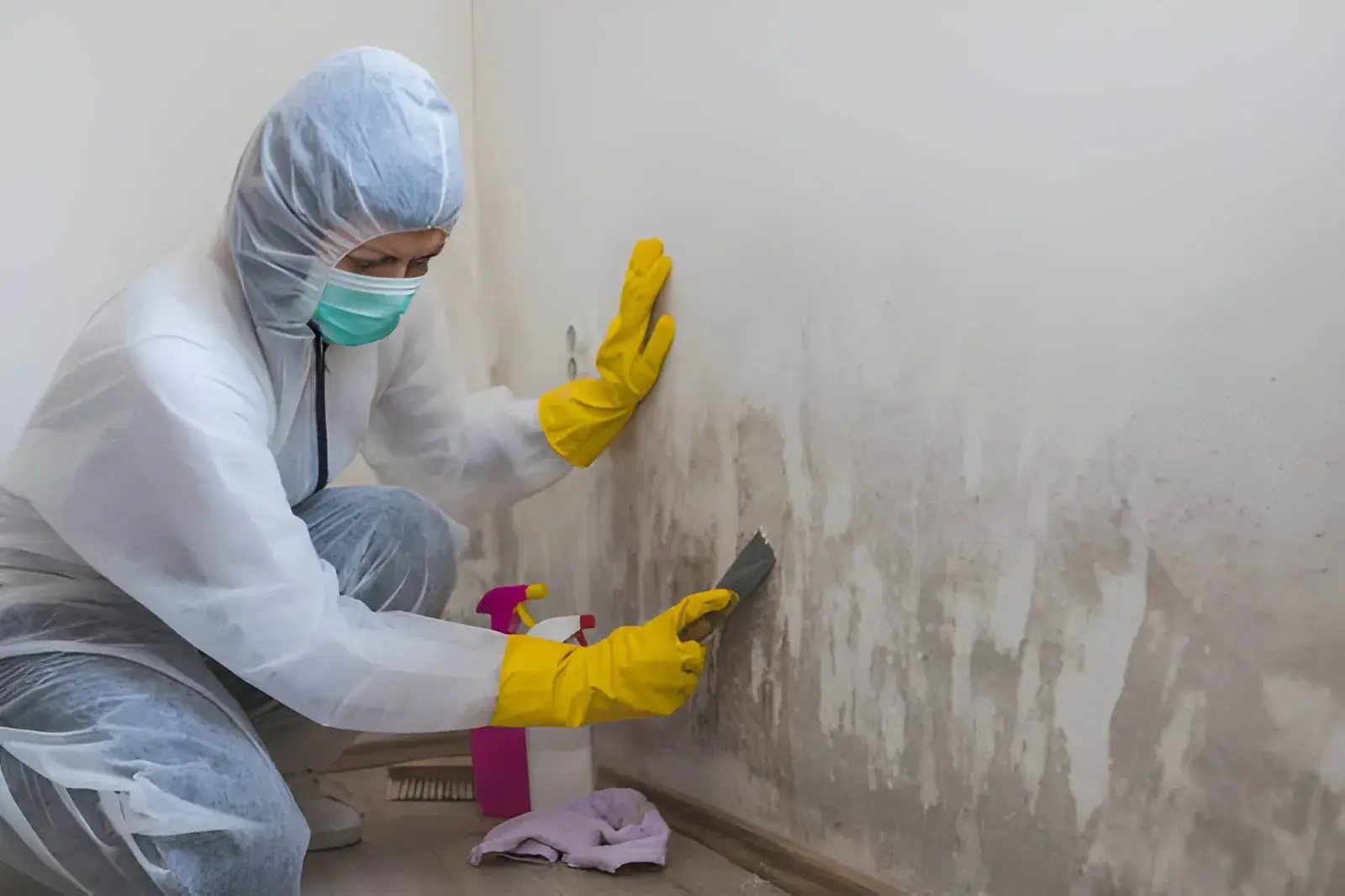
Before mold is disturbed, we establish physical containment with sealed polyethylene sheeting. HEPA-filtered negative air machines maintain negative pressure inside the work zone. All HVAC registers within containment are sealed to prevent spore distribution. For Ann Arbor's older homes where the HVAC return draws from the basement, we ensure the system cannot operate during remediation and distribute disturbed spores throughout the house.
Removal of Contaminated Materials
Porous materials where mold has penetrated beyond the surface must be physically removed. In Ann Arbor's older homes, this requires careful assessment of what is salvageable: century-old plaster with surface mold growth may be cleanable if the bond with the lath is intact, but plaster where mold has penetrated the backside requires removal. Wood framing with surface colonization is treated in place; framing with deep penetration may require sistering or replacement. All materials are bagged within containment before removal.
Surface Treatment and Antimicrobial Application
After contaminated materials are removed, all remaining surfaces receive treatment. Stone and masonry foundations are wire-brushed and treated with antimicrobial solutions that penetrate porous substrates. Wood framing, sill plates, and subfloor receive appropriate treatment. For Ann Arbor homes near the Huron River where ongoing foundation moisture is expected, we apply encapsulant coatings to create a barrier between the damp masonry and any future finished materials. HEPA air scrubbers run throughout treatment and for 24 hours after.
Post-Remediation Verification and Clearance
Remediation is complete only when verification confirms successful elimination. Post-remediation air samples are compared against pre-work baselines and outdoor ambient levels. Spore counts must be at or below outdoor ambient before clearance. Moisture readings confirm conditions no longer support regrowth. We provide a written report with complete data. For Ann Arbor properties with chronic moisture sources, we advise on dehumidification, drainage, and maintenance strategies to prevent recurrence after the remediation investment.
The X Response Difference
Mold remediation in Ann Arbor must account for summer humidity, river hydrology, and the porous masonry of the city's oldest homes. X Response eliminates the contamination, addresses the moisture pathway, and provides the data and recommendations needed to prevent recurrence in this challenging environment.
Insurance Claim Guidance for Ann Arbor Homeowners
Mold remediation insurance coverage depends on what caused the moisture. If mold resulted from a covered sudden event like a burst pipe and the homeowner responded promptly, remediation is typically covered under the same claim. Mold from chronic conditions such as groundwater migration near the Huron River, persistent summer condensation, or long-term deferred maintenance in rental properties is generally excluded. Most Michigan policies include mold sublimits of $5,000 to $10,000. For Ann Arbor's student rental properties, the landlord's commercial property policy handles structural mold, while the tenant's renter's policy covers personal property and additional living expenses if displacement is necessary.
How X Response Helps
- Document the moisture source and timeline, establishing whether mold resulted from a sudden covered event or a chronic excluded condition
- Photograph all visible growth before work begins with measurements showing extent
- Provide air sampling data establishing the necessity of professional remediation
- Itemize mold costs separately from any associated water damage for proper coverage application
- For rental properties, clearly document which costs are structural (landlord's policy) versus contents (tenant's policy)
X Response does not file claims on your behalf, adjust claims, or make coverage determinations. We provide documentation and guidance to help you make informed decisions about your property and your policy. Coverage decisions are made solely by your insurance carrier.
Certified Restoration Specialists Serving Ann Arbor
When you contact X Response for mold remediation in Ann Arbor, your team is drawn from certified professionals who understand the specific mold challenges of this community. They know how the Huron River drives groundwater into homes along the corridor, how high summer humidity creates condensation that sustains growth from May through October, and how century-old stone foundations in the historic neighborhoods pass moisture continuously from the surrounding soil. They have remediated homes in the Old West Side with 1890s masonry basements, addressed multi-semester mold growth in student rental housing, and cleared HVAC systems that distributed basement spores throughout entire buildings. This is a local team with direct experience in Ann Arbor's housing stock and moisture dynamics.
Every technician holds current IICRC certification in mold remediation and carries appropriate Michigan licensing. Equipment includes professional air sampling pumps, HEPA-filtered negative air machines, thermal imaging cameras, and commercial dehumidification systems. Our containment protocols follow IICRC S520 standards, and clearance criteria require post-remediation spore counts at or below outdoor ambient levels.
In Ann Arbor, X Response works with H2O Pros, an independent local restoration partner serving Washtenaw County.