
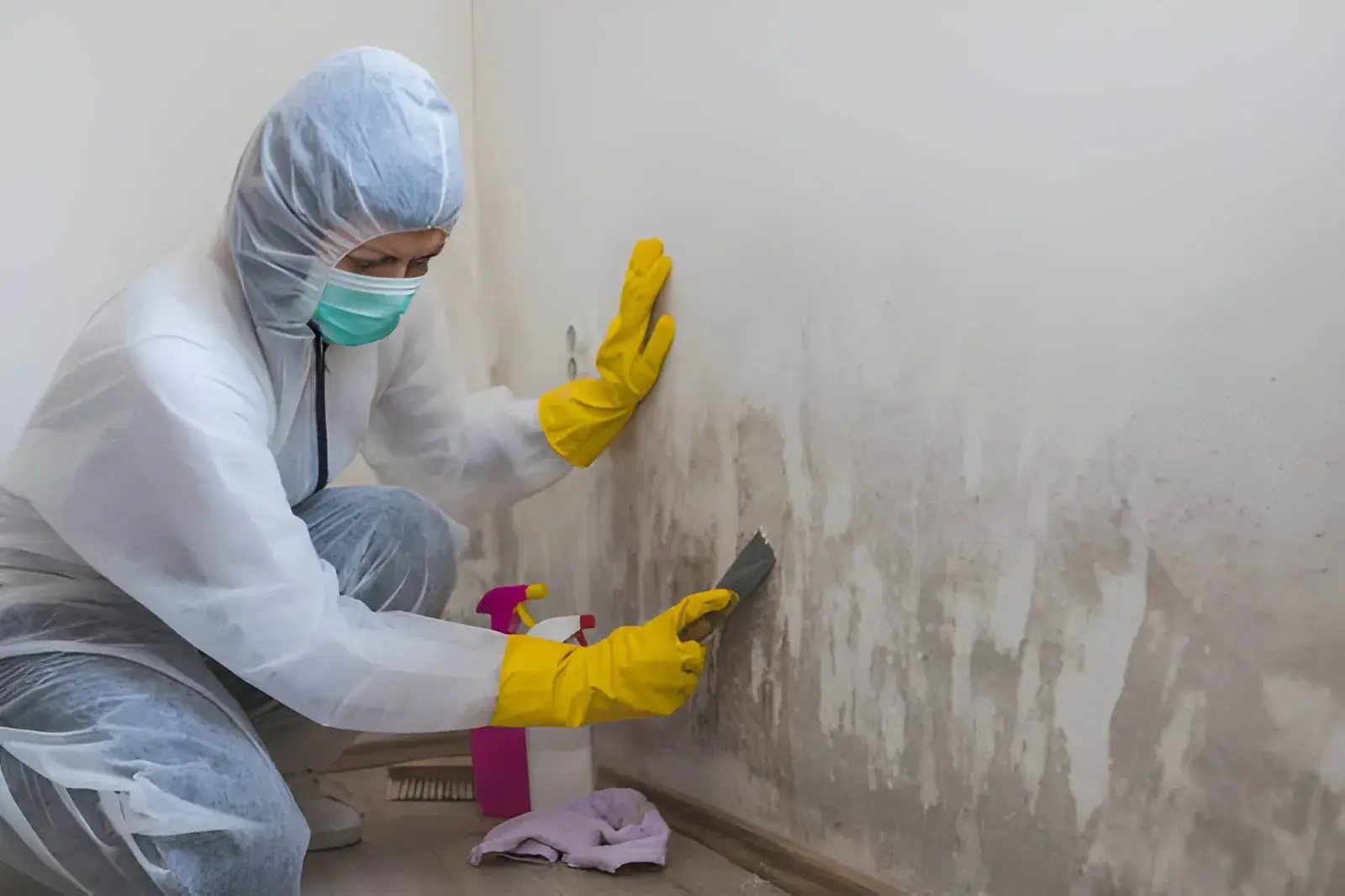
Mold Remediation in Dearborn, MI
In a city where two-thirds of homes flooded with sewage in 2021, post-flood mold is not hypothetical. Mold colonizes damp surfaces within 24 to 48 hours, and in Dearborn's basements with chronic moisture from the Rouge watershed, it spreads aggressively. Our local team responds within 60 minutes.
What Happens When You Call
A real person answers, not a call center. We assess your situation, determine the likely moisture source, and begin coordinating your response immediately.
Your dedicated remediation team is dispatched from our local base serving Dearborn and the surrounding Wayne County communities.
Team arrives with moisture detection equipment, air sampling tools, HEPA filtration, and containment materials. Assessment begins immediately to determine the full scope of contamination.
Contamination mapped, moisture source identified, containment established, remediation plan documented. You know exactly what comes next.
You have discovered mold in your home. Whether it is visible growth on a basement wall, a musty odor that appeared weeks after a flooding event, or test results confirming elevated spore counts, the contamination is active and expanding. In Dearborn, where recurring sewer backups have soaked basements repeatedly, mold is an expected consequence of the city's flooding reality. X Response exists for exactly this moment. When you reach out, your remediation team is mobilized within minutes. From that point forward, one team manages everything: assessment, containment, removal, and verification. Call now. Your team is standing by.
Why Dearborn Homes Are Vulnerable to Mold
Mold in Dearborn is inseparable from the city's chronic flooding history. The city experienced particularly massive flood events in 2014 and especially 2021, when about two-thirds of Dearborn homes got sewage water in their basements, creating widespread post-flood mold conditions across the city. When 6,000 to 8,000 homes flood simultaneously with contaminated combined sewer water, and many homeowners perform only basic water removal without professional structural drying, the result is a citywide mold crisis that unfolds in the weeks and months that follow. Basements that were pumped out but not professionally dried retain moisture in concrete block walls, beneath floor slabs, inside wall cavities behind drywall, and within carpet padding that was left in place. That residual moisture, combined with the organic nutrients deposited by the sewage water itself, creates ideal growth conditions for mold colonies that establish and expand silently until the odor or visible growth forces discovery.
Dearborn's position as the furthest downstream community in the 480-square-mile Rouge River watershed means flooding is not a one-time event but a recurring condition. Major floods struck in 2014, 2018, and 2021, and the city's sewer system has capacity for only 3.5 inches of stormwater per event. Any storm that exceeds this threshold creates basement backups, and many Dearborn homes have experienced multiple flood events over the past decade. Each flooding cycle deposits new moisture, new organic material, and new contamination into basements that may not have fully dried from the previous event. Mold that was dormant between flood cycles reactivates with each new wetting event, and colonies that were partially addressed but not professionally remediated resume growth as soon as moisture returns. This repeated wetting pattern produces deeply established mold contamination that cannot be addressed with surface cleaning alone.
East Dearborn's pre-World War II housing stock presents specific mold challenges beyond the flooding itself. These homes were built with minimal basement waterproofing by modern standards, and their foundations have had over 80 years of moisture exposure. The concrete block and poured walls pass groundwater continuously from the saturated clay soil outside, keeping the interior surface perpetually damp at a level that sustains mold growth independent of any discrete flooding event. When homeowners finished these basements by framing against the damp foundation and covering with drywall, they created enclosed dark cavities where moisture, warmth, and organic material combine to produce mold growth that is invisible from the living space. The 2021 flood made this existing hidden contamination dramatically worse by saturating these cavities with contaminated water, but the underlying moisture condition was present before the flood and will persist after remediation unless the moisture pathway is addressed.
Michigan's humid summers compound the baseline moisture problem in Dearborn basements. From June through September, outdoor dewpoints routinely reach the mid-60s to low 70s, and when that humid air enters a cool basement through open windows or natural infiltration, it condenses on foundation walls and floor slabs. This condensation adds liquid moisture to surfaces that are already damp from groundwater migration and post-flood residual moisture. The combination creates conditions where mold growth is sustained year-round: groundwater and residual flood moisture during the cool months, and condensation plus humidity during the warm months. Without continuous mechanical dehumidification, Dearborn basements provide a perpetual moisture environment that supports active mold colonization across all four seasons.
Post-Flood Mold from Recurring Sewer Backups
Dearborn's recurring flood events create a unique mold dynamic where each backup reinfects basements that may not have fully recovered from the previous one. The 2021 event flooded two-thirds of the city's homes with combined sewage, and the 2014 and 2018 floods affected large sections of east Dearborn. Sewage-contaminated water deposits organic material, bacteria, and mold spores on every surface it contacts, creating a far more aggressive growth environment than clean water would produce. Homeowners who pumped out the visible water and dried the surface with fans but did not remove saturated drywall, carpet padding, or insulation left the ideal substrate for mold colonization inside wall cavities and beneath flooring. Within two to four weeks, colonies established in these hidden locations and continued growing through the summer heat. Many Dearborn homeowners who were affected by the 2021 flood are still discovering mold in previously unaddressed areas of their basements years later.
Hidden Mold Behind Finished Basement Walls
Dearborn's older basements were frequently finished by framing directly against foundation walls and applying drywall without modern vapor barriers or air gaps. The foundation wall continues passing moisture inward from the surrounding soil exactly as it has for decades, but now that moisture encounters organic material in an enclosed space: wood framing, drywall paper, and fiberglass insulation batts. Mold colonizes the hidden face of the drywall, the bottom plate of the wood framing, and the paper facing of the insulation. The colony grows for months or years without producing visible evidence from the finished side, because the dark, still, humid cavity behind the drywall is essentially an incubator. Discovery typically occurs when the colony grows large enough to produce a persistent musty odor that cleaning cannot eliminate, when visible staining appears on the finished surface where moisture has wicked through, or when the drywall is removed during a renovation or flood cleanup and reveals extensive contamination behind.
Foundation Moisture Migration in Pre-War Construction
East Dearborn's pre-World War II homes have foundations that were built without modern exterior waterproofing membranes, drainage boards, or footer drain systems. After more than 80 years of soil contact, these poured concrete and block foundations pass moisture continuously through capillary action, through cracks that have developed over decades of settlement and thermal cycling, and through the cold joint where the wall meets the floor slab. The moisture arrives on the interior surface as persistent dampness that sustains mold growth independently of any flooding event. Even during dry weather, groundwater from the Rouge watershed maintains saturation in the clay soil surrounding these foundations, providing a constant moisture source. For homeowners in east Dearborn, the mold problem is not limited to flood aftermath; it is an ongoing condition driven by the interaction between old foundations and perpetually saturated soil.
HVAC-Distributed Mold Contamination
Dearborn's forced-air heated homes pull return air from the basement through the furnace and distribute conditioned air through supply ductwork to every room. When mold grows in the basement, the return air stream carries spores into the HVAC system and distributes them to bedrooms, living areas, and kitchens on every level of the home. The blower, evaporator coil, filter housing, and interior surfaces of ductwork can all become colonized, creating a persistent source of spore distribution that continues contaminating the home even after the visible basement growth is removed. In Dearborn homes that flooded in 2021 and had mold growth in the basement afterward, the HVAC system often became contaminated during the same period and was never professionally cleaned. These homeowners may have cleaned visible basement mold but still experience respiratory symptoms because the duct system continues circulating spores from its own colonized surfaces.
Summer Condensation Compounding Residual Flood Moisture
Southeast Michigan summers bring sustained dewpoints in the 60s and low 70s from June through September. When warm, humid outdoor air enters a Dearborn basement through open windows, gaps at the sill plate, or the natural stack effect, it contacts foundation walls and floor slabs that stay at 55 to 60 degrees year-round due to ground contact. The temperature difference drives condensation on these cool surfaces, adding liquid water on top of whatever residual moisture remains from flooding, groundwater migration, or previous condensation cycles. For Dearborn basements that were inadequately dried after the 2021 flood, summer condensation reactivates dormant mold colonies every warm season, creating an annual growth cycle that produces visible expansion and worsening odor each summer before going partially dormant each winter when the home is sealed and heated. Breaking this cycle requires both eliminating the existing contamination and installing continuous mechanical dehumidification to prevent condensation from resupplying moisture to the remediated surfaces.
Mold remediation in Dearborn cannot be separated from the city's flooding reality. The repeated sewer backups that have saturated basements across the city, combined with pre-war foundations that pass moisture continuously, create a mold environment that is chronic rather than episodic. Effective remediation addresses both the visible contamination and the moisture source that sustains it, whether that source is residual flood moisture, foundation migration, summer condensation, or the combination of all three that most Dearborn basements face.
What Happens to Your Home While You Wait
Within 24 Hours of Moisture
Mold spores begin germinating on damp surfaces. In a Dearborn basement that flooded with sewage, the organic nutrients deposited by the contaminated water accelerate germination compared to a clean-water event. Damp drywall paper, carpet backing, stored cardboard, and wood framing all serve as growth substrates. The process is invisible at this stage but active.
24 to 48 Hours
Visible colonies form on the most favorable surfaces. Growth is fastest on surfaces contaminated by sewage because the organic material provides additional nutrients. A musty odor develops. In a closed Dearborn basement with no ventilation or dehumidification, the humid environment accelerates colony expansion across all damp surfaces simultaneously.
48 Hours to One Week
Mold penetrates beyond the surface into substrate materials. Colonies grow through drywall paper into the gypsum core, through carpet backing into the padding beneath, and along wood grain in framing members. Spore production increases and airborne concentrations rise throughout the basement. The HVAC system distributes spores to upper floors when it runs.
One to Four Weeks
Colonies spread to new surfaces throughout the basement: wall cavities, floor joists, ductwork, and stored contents. Multiple mold species establish based on moisture levels and available nutrients. Occupants may develop respiratory symptoms, persistent headaches, and allergic reactions. The remediation scope expands significantly as more materials become penetrated beyond the point of surface cleaning.
One Month and Beyond
Extensive colonization throughout basement structure, HVAC system, and potentially upper floors via duct distribution. Full remediation requires containment, removal of all contaminated porous materials, structural treatment, HVAC decontamination, and post-remediation air quality verification. In Dearborn homes with repeated flood exposure, the mold has often been growing for years in hidden locations by the time professional remediation is requested.
In Dearborn basements with a history of sewer backups, mold growth is often more advanced than it appears because each flood cycle adds moisture and nutrients to hidden locations where colonies expand undisturbed. Contact X Response now. Our Dearborn team responds within 60 minutes.
How We Restore Mold-Affected Dearborn Homes
Mold remediation in Dearborn requires strict containment, removal, and verification protocols, particularly in homes with a history of sewage-contaminated flooding. Here is how we approach the work.
Inspection and Moisture Assessment
Our team arrives with professional moisture meters, thermal imaging cameras, and air sampling equipment. In Dearborn, the inspection must account for both current contamination and the flooding history that may have deposited mold in hidden locations over multiple events. We scan foundation walls for ongoing moisture migration, check behind finished drywall for concealed growth, inspect the HVAC system for colonization, and take air samples from affected and reference areas to quantify spore levels and identify species present. The moisture source identification is critical in Dearborn because the answer is often multi-layered: residual flood moisture, ongoing foundation migration, and summer condensation all contribute simultaneously.
Containment and Negative Air Pressure
Before mold is disturbed, we establish physical containment using polyethylene sheeting sealed to isolate the work area. HEPA-filtered negative air machines create negative pressure so air flows into the containment zone rather than outward, preventing spores from reaching clean areas during removal. All HVAC registers within the containment are sealed. Workers wear full-face respirators and protective suits. For Dearborn basements with extensive contamination from years of post-flood growth, we may establish staged containment zones to manage the work in sections while keeping the rest of the home protected.
Removal of Contaminated Materials
Porous materials where mold has penetrated beyond the surface must be physically removed. In a typical Dearborn basement with post-flood mold, that includes drywall installed against foundation walls, all carpet and padding, contaminated insulation in wall cavities, and stored materials with visible colonization. In homes that flooded with sewage, materials at and below the flood line are treated as both mold-contaminated and biohazard-contaminated, requiring dual handling protocols. Materials are double-bagged inside containment before removal through the home. Structural wood framing with surface colonization that remains structurally sound is treated in place after aggressive mechanical removal of the growth.
Surface Treatment and Antimicrobial Application
After contaminated materials are removed, all remaining structural surfaces receive professional treatment. Foundation walls are wire-brushed and treated with EPA-registered antimicrobial solutions that penetrate into the porous concrete. Exposed framing, subfloor, and sill plate areas receive treatment appropriate to wood substrates. For Dearborn basements where ongoing foundation moisture is expected due to the city's high water table and clay soil, we apply encapsulant coatings to create a physical barrier between the damp concrete and any future finished materials. HEPA air scrubbers run continuously throughout treatment and for 24 hours after to capture residual airborne spores.
Post-Remediation Verification and Clearance
Remediation is not complete until verification confirms the contamination has been eliminated. We take post-remediation air samples and compare them against pre-remediation baselines and outdoor ambient levels. Spore counts in the work area must be at or below outdoor ambient before clearance is granted. Moisture readings on all treated surfaces must confirm that conditions no longer support regrowth. For Dearborn homes with chronic moisture, we establish a realistic moisture baseline for the foundation type and advise on dehumidification requirements to maintain that level going forward. We provide a written remediation report with complete before-and-after data. Only after clearance is confirmed do we release containment.
The X Response Difference
In Dearborn, where flooding has deposited mold in thousands of basements over multiple events, effective remediation means more than cleaning what you can see. X Response eliminates the full contamination, addresses the moisture driving it, and verifies the result with independent data.
Insurance Claim Guidance for Dearborn Homeowners
Mold remediation insurance coverage in Dearborn depends on the relationship between the mold and the water event that caused it. If mold developed as a direct result of a covered water damage event, such as a burst pipe, and the homeowner took prompt mitigation steps, the mold remediation is typically covered under the same claim. However, mold resulting from sewer backups is only covered if the homeowner carries a water backup endorsement, and even then, most policies include mold sublimits of $5,000 to $10,000 that cap total coverage. Mold from chronic moisture conditions such as groundwater migration through old foundations, recurring flood exposure without professional drying, or persistent condensation is generally excluded as a maintenance issue. For many Dearborn homeowners whose mold traces back to the 2021 flood, the coverage gap is significant: the flood itself may not have been covered due to a missing backup endorsement, and the resulting mold is excluded as a consequence of an uncovered event.
How X Response Helps
- Document the moisture source and timeline, establishing whether the mold resulted from a covered sudden event or from a sewer backup requiring endorsement coverage
- Photograph all contamination before work begins, with measurements showing extent
- Provide air sampling data confirming elevated spore counts that justify professional remediation rather than DIY cleaning
- Itemize mold remediation costs separately from any associated water damage so your adjuster can apply correct coverage categories and sublimits
- If the mold traces to an event that was itself uncovered, document the current health risk to support any appeal or alternative coverage argument
X Response does not file claims on your behalf, adjust claims, or make coverage determinations. We provide documentation and guidance to help you make informed decisions about your property and your policy. Coverage decisions are made solely by your insurance carrier.
Certified Restoration Specialists Serving Dearborn
When you contact X Response for mold remediation in Dearborn, your team is drawn from certified professionals who work across Wayne County and understand the specific mold challenges of this community. They know that Dearborn's recurring flood events have deposited contamination in thousands of basements over multiple cycles, that the city's position at the bottom of the Rouge watershed creates persistent high water tables that keep foundations damp year-round, and that east Dearborn's pre-war construction with minimal waterproofing creates chronic moisture conditions that sustain mold independently of any single flood. They have remediated homes still recovering from the 2021 catastrophe, addressed multi-year hidden growth behind finished basement walls, and cleared HVAC systems that had been distributing spores for months. This is a local team with direct, extensive experience in Dearborn's unique mold environment.
Every technician holds current IICRC certification in mold remediation and carries appropriate Michigan licensing. Equipment includes professional air sampling pumps, HEPA-filtered negative air machines, thermal imaging cameras for locating hidden moisture and growth, and commercial dehumidification systems for post-remediation moisture control. Our containment protocols follow IICRC S520 standards, and clearance criteria require post-remediation spore counts at or below outdoor ambient levels before the work area is released.
In Dearborn, X Response works with H2O Pros, an independent local restoration partner serving Wayne County.
Mold Remediation FAQ for Dearborn Homeowners
Other Emergency Services in Dearborn


Nearby Service Areas
Also serving nearby: