
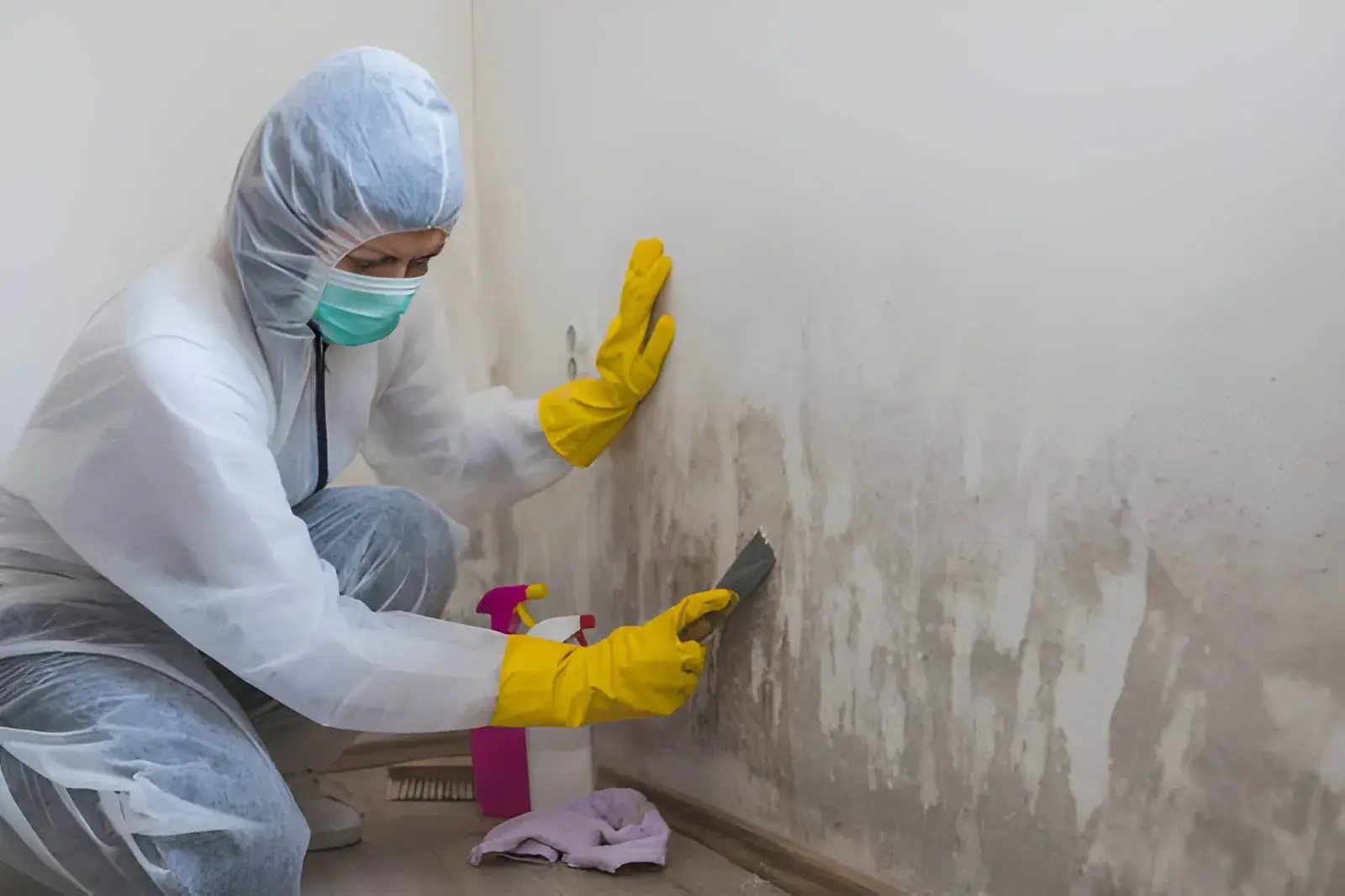
Mold Remediation in Westland, MI
Mold colonizes damp surfaces within 24 to 48 hours after a water event, and in Westland's older basements with block walls and limited ventilation, it spreads fast once established. Our local team responds within 60 minutes to assess and contain the contamination.
What Happens When You Call
A real person answers, not a call center. We assess your situation, determine the likely moisture source, and begin coordinating your response immediately.
Your dedicated remediation team is dispatched from our local base serving Westland and the surrounding Wayne County communities.
Team arrives with moisture detection equipment, air sampling tools, HEPA filtration, and containment materials. Assessment begins immediately to determine the full scope of contamination.
Contamination mapped, moisture source identified, containment established, remediation plan documented. You know exactly what comes next.
You have discovered mold in your home. Whether it is visible growth on a basement wall, a persistent musty odor from the HVAC registers, or test results confirming elevated spore counts, the contamination is active and expanding right now. In Westland's humid summers and poorly ventilated basements, mold spreads quickly once moisture gives it a foothold. X Response exists for exactly this moment. When you reach out, your remediation team is mobilized within minutes. From that point forward, one team manages everything: assessment, containment, removal, and verification. Call now. Your team is standing by.
Why Westland Homes Are Vulnerable to Mold
Mold growth in Westland is driven by the convergence of chronic basement moisture, aging housing construction, and a climate that alternates between humid summers and cold winters that seal homes tight for months. A Michigan State University project identified the high proportion of impervious surfaces and inadequate stormwater infrastructure as primary drivers of chronic flooding in the Ecorse Creek watershed, which includes Westland and contributes to persistent basement moisture conditions that promote mold growth. When basements flood repeatedly or groundwater seeps through aging block walls during every major rain event, the moisture never fully leaves the concrete, and the mold that establishes itself between events simply goes dormant until the next wetting cycle reactivates it. This is not a one-time problem for many Westland homeowners; it is a recurring condition driven by the infrastructure and geology beneath their homes.
Westland's housing stock was built primarily in the 1950s and 1960s on full basements constructed with concrete masonry unit block walls. These block walls are inherently porous, and over 60 to 80 years the exterior waterproofing membrane applied during original construction has long since deteriorated. Groundwater migrates through the block at a microscopic level, depositing minerals on the interior face (visible as white efflorescence) and maintaining a thin film of moisture on the wall surface that is invisible to the eye but measurable with a professional moisture meter. This persistent surface moisture, combined with the organic paper facing of any drywall installed against the block, creates an ideal substrate for mold colonization. Homeowners who finished their basements by framing against the block wall and applying drywall without a vapor barrier created a hidden cavity where moisture accumulates and mold grows undetected until the colony is large enough to produce a musty odor or visible staining on the finished surface.
Michigan's summers bring sustained humidity that compounds the basement moisture problem. From June through September, outdoor dewpoints regularly climb into the 60s and low 70s, and that humid air enters basements through open windows, through gaps around the sill plate, and through the natural stack effect that draws outdoor air into the lowest level of the home. When warm, humid outdoor air contacts the cool surface of a concrete block wall or a cool basement floor slab, it condenses, adding liquid water to surfaces that are already damp from groundwater migration. Many Westland homeowners open basement windows in summer thinking ventilation will help, but it actually introduces more moisture than it removes because the cool basement surfaces act as condensation magnets. Without mechanical dehumidification running continuously from May through October, summer humidity alone can sustain active mold growth on basement surfaces even in the absence of a discrete water event.
The June 2021 storm that dropped a record 5.77 inches of rain on Wayne County and overwhelmed the sewer system created a mold crisis that extended for months after the floodwater receded. Thousands of Westland basements filled with contaminated water during that event, and many homeowners performed basic water removal but did not address the moisture trapped inside block walls, behind finished drywall, and within carpet padding. Within weeks, mold colonies established themselves in these hidden locations and continued growing through the summer heat and humidity. By the time visible signs appeared or the musty odor became undeniable, the contamination had spread through wall cavities and into the HVAC ductwork that runs through most Westland basements, distributing spores throughout the entire home.
Block Wall Moisture Migration and Hidden Mold Growth
Concrete masonry unit block walls are the standard foundation construction in Westland's postwar housing stock, and their inherent porosity creates a chronic moisture pathway from the surrounding soil into the basement interior. Each block contains hollow cores that trap moisture and allow water to wick from the exterior face to the interior surface through capillary action. Over 60 to 80 years, the original exterior waterproofing has failed, and the block becomes a slow but constant moisture delivery system. When homeowners finish these basements by building a framed wall directly against the block and covering it with drywall, they create a sealed cavity where moisture has nowhere to escape. Mold colonizes the backside of the drywall, the paper facing, the bottom plate of the framing, and any insulation placed in the cavity. The colony can grow for months or years in this hidden space, with the only external sign being a faint musty odor or inexplicable allergy symptoms in the household. By the time the mold is discovered, it often extends across entire walls and has penetrated into the floor system above.
Post-Flood Mold Following Sewer Backups
When Westland basements flood from sewer backups during intense rain events, the contaminated water deposits organic material, bacteria, and mold spores on every surface it touches. Even after the standing water is removed, the moisture absorbed into block walls, concrete slabs, carpet padding, and the lower portions of drywall provides a nutrient-rich environment for mold colonization. Category 3 water from a sewer backup introduces additional microbial load that accelerates fungal growth compared to a clean-water pipe burst. Homeowners who pump out the visible water and run a box fan but do not address the moisture trapped inside porous materials often discover active mold growth two to four weeks later, by which point the colony has spread beyond the original flood line into areas that appear dry from the surface but retain sufficient internal moisture to sustain growth.
Summer Condensation on Cool Basement Surfaces
Southeast Michigan summers produce outdoor dewpoints that regularly reach the mid-60s to low 70s from June through September. When this warm, humid air enters a Westland basement, either through open windows or through natural infiltration, it encounters surfaces 10 to 20 degrees cooler than the outdoor temperature. The cool block walls, floor slab, and cold water pipes act as condensation surfaces, collecting liquid water from the air exactly as a cold glass sweats on a humid day. This condensation accumulates on surfaces that already carry residual moisture from groundwater migration, creating a continuously damp environment that sustains active mold growth without any discrete water intrusion event. The problem intensifies in basements where the HVAC system's supply ductwork runs through the space, because the cool duct surfaces also collect condensation and the moisture drips onto framing and drywall below.
HVAC Distribution of Mold Spores Throughout the Home
In Westland's forced-air heated homes, the furnace and air handler sit in the basement, with return air pulled from the basement space and supply air distributed to every room in the house. When mold is growing in the basement, whether on walls, on stored belongings, or inside the HVAC cabinet itself, the blower draws spores into the return air stream and pushes them through the supply ductwork to every register in the home. This means a basement mold problem becomes a whole-house air quality problem as soon as the system runs. Mold can also colonize the interior surfaces of ductwork, the evaporator coil, the filter housing, and the humidifier pad if one is installed, creating a persistent spore source that continues contaminating the indoor air even after the original basement growth is removed. Effective remediation must include inspection and treatment of the entire HVAC system, not just the visible colony.
Crawl Space and Sill Plate Moisture in Older Homes
While most Westland homes have full basements, some of the earliest construction from the 1940s and properties that were later modified include crawl space sections, particularly under additions, enclosed porches, and bump-outs. These crawl spaces often have dirt floors with no vapor barrier, exposed block or poured walls with no insulation, and minimal ventilation. In this environment, ground moisture evaporates directly into the enclosed space and condenses on the floor joists, subfloor, and sill plate above. Mold colonizes the wood framing in these spaces aggressively because the combination of darkness, still air, high humidity, and organic material is essentially ideal growth conditions. The sill plate where the wood framing meets the foundation is a particular vulnerability point because it sits closest to ground level moisture and is often the first structural member to show active colonization.
Mold remediation in Westland requires understanding that the problem is rarely a single event with a clear beginning and end. The city's aging block-wall basements, its position within a flood-prone watershed, and Michigan's humid summers create conditions where mold grows as a chronic response to ongoing moisture rather than a one-time contamination from a discrete water loss. Effective remediation addresses not just the visible colony but the moisture pathway that sustains it, because removing mold without solving the moisture source guarantees recurrence.
What Happens to Your Home While You Wait
Within 24 Hours of Moisture
Mold spores, which are present everywhere in normal air, begin germinating on damp surfaces. The process is invisible at this stage but active. Damp drywall paper, carpet backing, cardboard, and stored fabric provide ideal substrates. In a Westland basement with block walls that are already carrying residual moisture, new water from a flood, leak, or condensation event compounds the existing dampness and accelerates germination.
24 to 48 Hours
Visible mold colonies begin forming on the most favorable surfaces. In a closed basement environment with limited airflow, colonies spread rapidly across drywall paper, behind furniture pushed against damp walls, and on any organic material stored on or near the floor. A musty odor becomes detectable as the colony produces volatile organic compounds as metabolic byproducts.
48 Hours to One Week
Mold penetrates into the substrate rather than remaining on the surface. Colonies extend through drywall paper into the gypsum core, into carpet backing and padding, and along the grain of wood framing. Spore production increases and airborne concentrations rise, especially in the closed basement environment. The HVAC system begins distributing spores to upper levels when it cycles on.
One to Four Weeks
Established colonies spread across entire wall surfaces, into wall cavities behind finished drywall, along floor joists above, and into ductwork. Multiple mold species may now be present, including species that produce mycotoxins. Occupants may experience respiratory symptoms, allergic reactions, and persistent headaches. The scope of remediation expands significantly as more materials become colonized beyond the point of cleaning and require removal.
One Month and Beyond
Mold has colonized structural materials, HVAC components, and stored contents throughout the basement and potentially the upper levels via ductwork distribution. Remediation at this stage involves extensive containment, removal of finished materials down to bare structure, HVAC decontamination, and full air quality verification before the space can be safely reoccupied. Prevention of recurrence requires solving the underlying moisture source, whether it is groundwater migration through block walls, inadequate dehumidification, or recurring flood exposure.
In Westland's older basements with porous block walls and limited natural ventilation, mold grows faster and spreads further than in newer, drier construction. The window between a manageable surface cleaning and a full remediation project narrows quickly. Contact X Response now. Our Westland team responds within 60 minutes.
How We Restore Mold-Affected Westland Homes
Mold remediation is a controlled process that follows strict containment, removal, and verification protocols. Unlike water damage, where speed of extraction is the priority, mold work requires methodical containment to prevent spreading contamination to clean areas during the removal process. Here is how we approach mold remediation in a Westland home.
Inspection and Moisture Assessment
Our team arrives with professional moisture meters, thermal imaging cameras, and air sampling equipment to determine the full extent of the mold contamination and identify the moisture source sustaining it. In a Westland home, that means scanning block walls for moisture migration, checking behind finished basement drywall for hidden growth, inspecting the HVAC system for contamination, and testing crawl space framing if present. We take air samples from the affected area and from unaffected reference areas to quantify the spore levels and identify the mold species present. The moisture source identification is critical: removing mold without addressing what keeps the surface wet guarantees the colony returns.
Containment and Negative Air Pressure
Before any mold is disturbed, we establish physical containment using polyethylene sheeting sealed with tape to isolate the contaminated area from the rest of the home. HEPA-filtered negative air machines create negative pressure inside the containment zone so that air flows inward through any gaps rather than outward, preventing spores from escaping into clean areas during removal. For a Westland home where the HVAC system runs through the basement, we seal all supply and return registers within the containment zone and verify that the system cannot distribute disturbed spores to upper floors. Workers inside containment use full-face respirators, disposable Tyvek suits, and HEPA-filtered exhaust to protect themselves and prevent cross-contamination.
Removal of Contaminated Materials
Materials that mold has penetrated beyond the surface cannot be cleaned and must be physically removed. In a typical Westland basement remediation, that includes drywall that was installed against block walls, carpet and carpet padding, any stored cardboard or fabric with visible colonization, and wood framing members where the mold has penetrated into the grain. Materials are bagged inside the containment zone before being carried through the home to prevent spore release. Structural framing that is colonized on the surface but not structurally compromised is treated in place with aggressive mechanical removal followed by antimicrobial treatment. Everything removed is documented with photos for your records and insurance documentation.
Treatment and Antimicrobial Application
After contaminated materials are removed, all remaining surfaces within the remediation area receive treatment. Block walls are wire-brushed to remove surface colonization and then treated with EPA-registered antimicrobial solutions that penetrate into the porous concrete. Exposed framing, subfloor, and any structural wood retained in place receive similar treatment. We apply encapsulant coatings to block walls and concrete surfaces where ongoing moisture migration is expected, creating a barrier between the damp substrate and any future finished materials. HEPA air scrubbers continue running throughout the treatment phase and for a minimum of 24 hours after to capture any residual airborne spores.
Post-Remediation Verification and Clearance
Remediation is not complete until independent verification confirms the contamination has been successfully eliminated. We take post-remediation air samples from the work area and compare them against the baseline samples taken before work began and against outdoor ambient levels. Spore counts in the remediated space must be at or below outdoor ambient levels before clearance is granted. Moisture readings on all treated surfaces must be at or below acceptable thresholds, confirming that the moisture source has been addressed and the environment will not support regrowth. We provide a written remediation report with before-and-after air quality data, moisture readings, photos, and a summary of all work performed. Only after clearance is confirmed do we release the containment and allow reconstruction to begin.
The X Response Difference
Mold remediation done correctly eliminates the contamination and prevents recurrence by solving the moisture source. X Response delivers verified results with documentation that proves the job is complete, not just a surface cleaning that masks the problem until it returns.
Insurance Claim Guidance for Westland Homeowners
Mold remediation insurance coverage in Michigan depends entirely on the cause of the moisture that led to the mold growth. If mold resulted from a covered water damage event, such as a burst pipe or appliance failure, and the homeowner took reasonable steps to mitigate the water damage promptly, the resulting mold remediation is typically covered under the same claim. However, mold that develops from long-term moisture conditions like groundwater seepage through basement walls, chronic humidity, or deferred maintenance is generally excluded from standard homeowner's policies. Many Michigan policies include specific mold coverage sublimits, often $5,000 to $10,000, that cap the insurer's liability for mold-related costs regardless of the total remediation expense. Understanding your policy's mold coverage before a claim arises helps you make informed decisions about both remediation scope and moisture prevention.
How X Response Helps
- Document the moisture source and timeline clearly, establishing whether the mold resulted from a sudden covered event or a chronic condition
- Photograph all visible mold growth and affected areas before remediation begins, with measurements showing the extent of contamination
- Provide air sampling data showing elevated spore counts, establishing that professional remediation is necessary rather than simple cleaning
- Itemize remediation costs separately from any associated water damage restoration so your adjuster can apply the correct coverage and sublimits
- Document that mitigation of the original water event was performed promptly, demonstrating that the mold was not the result of delayed response or deferred maintenance
X Response does not file claims on your behalf, adjust claims, or make coverage determinations. We provide documentation and guidance to help you make informed decisions about your property and your policy. Coverage decisions are made solely by your insurance carrier.
Certified Restoration Specialists Serving Westland
When you contact X Response for mold remediation in Westland, your team is drawn from certified professionals who work across Wayne County and understand the specific mold challenges of this community's housing stock. They know how Westland's 1950s block-wall basements create chronic moisture migration that sustains mold growth between visible flooding events, how finished basements built against bare block without vapor barriers develop hidden mold colonies that grow for years undetected, and how the forced-air HVAC systems in these homes distribute spores from a basement colony to every room in the house. They have remediated homes after the 2021 sewer overflow event, addressed condensation-driven mold in basements where homeowners did not realize summer humidity was the problem, and cleared multi-room contamination spread through ductwork. This is a local team with direct experience in Westland's specific mold dynamics.
Every technician on your team holds current IICRC certification in mold remediation and carries appropriate Michigan licensing. Equipment includes professional air sampling pumps, HEPA-filtered negative air machines, thermal imaging cameras for mapping hidden moisture, and commercial dehumidification systems for post-remediation moisture control. Our containment protocols follow IICRC S520 standards, and our clearance criteria require post-remediation spore counts at or below outdoor ambient levels before the work area is released.
In Westland, X Response works with H2O Pros, an independent local restoration partner serving Wayne County.
Mold Remediation FAQ for Westland Homeowners
Other Emergency Services in Westland


Nearby Service Areas
Also serving nearby: