
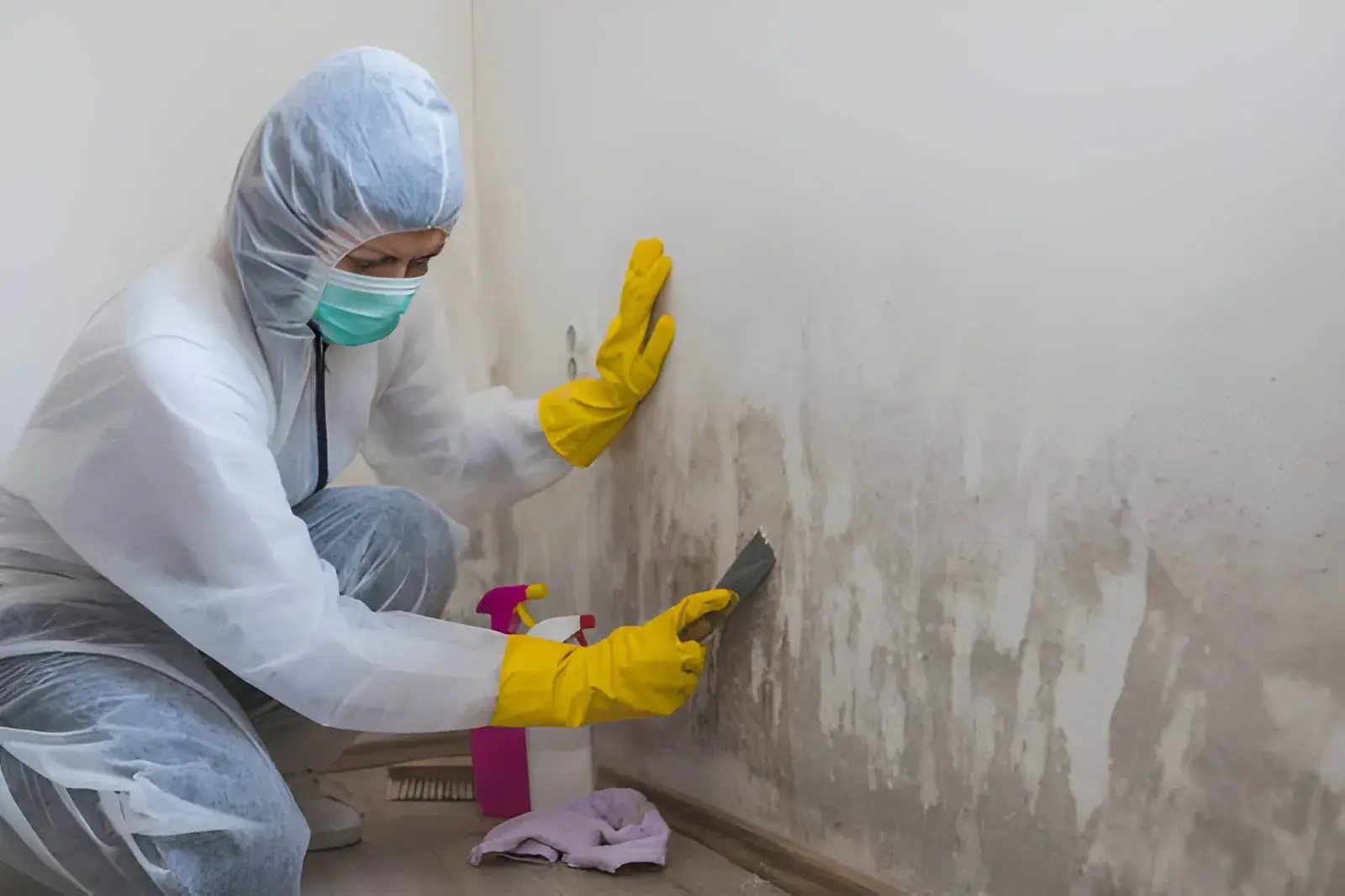
Mold Remediation in Livonia, MI
Mold colonizes damp surfaces within 24 to 48 hours of moisture exposure, and in Livonia's clay-soil basements where foundation seepage is chronic, it spreads aggressively once established. Our local team responds within 60 minutes to assess and contain the contamination.
What Happens When You Call
A real person answers, not a call center. We assess your situation, determine the likely moisture source, and begin coordinating your response immediately.
Your dedicated remediation team is dispatched from our local base serving Livonia and the surrounding Wayne County communities.
Team arrives with moisture detection equipment, air sampling tools, HEPA filtration, and containment materials. Assessment begins immediately to determine the full scope of contamination.
Contamination mapped, moisture source identified, containment established, remediation plan documented. You know exactly what comes next.
You have discovered mold in your home. Whether it is visible growth on a basement wall, a persistent musty odor that will not resolve with ventilation, or test results confirming elevated spore counts, the contamination is active and expanding. In Livonia's climate and soil conditions, basement mold is rarely a one-time event; it is the symptom of an ongoing moisture source that feeds the colony continuously. X Response exists for exactly this moment. When you reach out, your remediation team is mobilized within minutes. From that point forward, one team manages everything: assessment, containment, removal, and verification. Call now. Your team is standing by.
Why Livonia Homes Are Vulnerable to Mold
Mold growth in Livonia is driven by a geological reality that no amount of ventilation or surface cleaning can overcome on its own. Livonia sits on relatively flat terrain with clay-rich soil that slows runoff and allows moisture to accumulate around foundations, creating persistent basement dampness that promotes mold growth year-round. Unlike sandy soils that drain moisture away from structures quickly, Livonia's clay expands when wet and holds moisture in direct contact with foundation walls for weeks after a rain event. This creates a slow, continuous moisture supply to basement walls and floor slabs that sustains mold colonies even during periods without rain or visible water intrusion. The result is a city where basement mold is not primarily caused by catastrophic floods or pipe bursts, though those certainly accelerate it, but by the everyday interaction between clay soil, groundwater, and aging concrete foundations.
The housing stock in Livonia spans nearly a century of construction, from 1920s bungalows through modern homes built in the 2000s. Each era presents different mold vulnerabilities. The oldest homes have stone or block foundations with minimal waterproofing and shallow basements where groundwater contact is practically guaranteed during wet seasons. Mid-century homes from the 1950s through 1970s were built with poured concrete or block walls and finished basements that placed drywall directly against foundation surfaces without modern vapor barriers. Homes from the 1980s and 1990s improved on this with interior drain tiles and sump systems, but those systems require functional pumps and regular maintenance that many homeowners neglect. Across all eras, the common thread is clay soil pressing moisture against the foundation, and whatever generation of waterproofing technology was applied has had decades to deteriorate.
Michigan's climate creates a seasonal mold cycle in Livonia basements. During the winter, homes are sealed against the cold and the furnace runs continuously, reducing basement humidity to comfortable levels. But when spring arrives, snowmelt saturates the clay soil and groundwater rises, pressing against foundations with renewed force. Then summer brings outdoor dewpoints in the 60s and low 70s, and that humid air enters the cool basement where it condenses on foundation walls and floor slabs. The condensation adds liquid water to surfaces already damp from groundwater migration, creating continuously wet conditions from May through September. Homeowners who open basement windows in summer make the problem worse because they introduce more warm humid air to condense on cool surfaces. Without mechanical dehumidification running throughout the warm season, summer condensation alone sustains active mold growth on basement surfaces.
The February 2018 water main rupture that flooded neighborhoods and dropped water pressure citywide created a secondary mold crisis in the weeks that followed. Homes that took on water from the main break, from the resulting pressure surge that blew out residential plumbing connections, or from the loss of pressure that allowed backflow had to contend with moisture trapped in wall cavities and beneath flooring. In homes where professional drying did not occur promptly, mold colonies established themselves within days and continued growing through the remainder of that cold, damp February and into the spring thaw. The event demonstrated that any significant water intrusion in a Livonia home, whether from a burst pipe, a main break, or a sewer backup, becomes a mold event if not dried within 48 hours.
Clay Soil Moisture Migration and Chronic Foundation Dampness
Livonia's clay-rich glacial till creates a permanent moisture source against every foundation in the city. Clay particles are small enough to hold water by capillary action, meaning the soil does not release moisture under gravity alone. It must dry by evaporation, which proceeds extremely slowly at the depth of a basement wall or footer. The result is soil that remains saturated for weeks or months after a wetting event, maintaining continuous hydrostatic pressure against the foundation. This pressure forces moisture through concrete pores, hairline cracks, cold joints, and any penetration point where pipes or conduits pass through the wall. The moisture arrives on the interior face of the foundation as a thin film of dampness that is invisible to casual inspection but readily measurable with a professional moisture meter. When finished materials are placed against this perpetually damp surface, mold colonizes the backside of the material where it remains hidden for months or years before the homeowner detects it.
Finished Basements Without Vapor Barriers
Thousands of Livonia basements were finished during the 1970s, 1980s, and 1990s by framing wood stud walls directly against the concrete or block foundation and applying drywall to the interior face. In most of these installations, no vapor barrier was placed between the concrete and the framing, and no air gap was left to allow the inevitable moisture to evaporate before contacting the wood and paper. The concrete wall continues to pass moisture inward from the clay soil as it always has, but now that moisture encounters organic material, wood studs and drywall paper, in a dark, enclosed space with no airflow. These conditions are ideal for mold colonization, and the colony grows for months or years unseen on the backside of the drywall, along the bottom plate of the framing, and on the paper facing of any fiberglass insulation placed in the cavity. The homeowner typically discovers the problem only when the colony grows large enough to produce a persistent musty odor, when visible staining appears on the finished surface, or when they remove the drywall for a renovation and find extensive growth behind.
Summer Condensation on Cool Basement Surfaces
From June through September, outdoor dewpoints in the metro Detroit area routinely reach the mid-60s to low 70s Fahrenheit. When this humid air enters a Livonia basement through open windows, open doorways, or natural infiltration at the sill plate, it encounters foundation walls and floor slabs that remain at 55 to 60 degrees year-round due to ground contact. The temperature difference between the warm humid air and the cool surfaces drops the air below its dewpoint, and liquid water condenses on the concrete exactly as it does on a cold glass on a summer day. This condensation runs down walls, pools at the base of the foundation, and wets any material in contact with the cool surfaces. In basements with exposed block or poured walls, the condensation is visible as a sheen or as running drips. In finished basements, it occurs invisibly behind the drywall against the foundation surface, feeding hidden mold colonies continuously through the warm months.
HVAC Distribution of Basement Mold to Upper Floors
In Livonia's forced-air heated homes, the furnace and air handler sit in the basement, pulling return air from the basement environment and distributing conditioned air through supply ductwork to every room. When mold is growing in the basement, whether on foundation walls, behind finished drywall, or on stored materials, the return air stream carries mold spores into the HVAC system. The blower then distributes those spores through supply registers to bedrooms, living areas, and kitchens on the main and upper floors. The interior of ductwork, the evaporator coil, the filter housing, and the blower compartment can all become colonized, creating a persistent source of spore distribution that continues contaminating the home even after the original basement colony is removed. Effective remediation must include HVAC inspection and treatment, not just the visible basement growth.
Post-Flood Mold Following Water Infrastructure Events
Livonia's aging water infrastructure creates periodic flood events that produce mold as a secondary consequence. The 2018 main break, the June 2021 sewer overflow, and routine frozen pipe bursts all introduce water into basements that were not designed to dry themselves. In each case, the clock to mold colonization starts the moment water contacts an organic surface: 24 hours for germination, 48 hours for visible growth, and one week for established colonies that have penetrated into substrate materials. Homeowners who pump out standing water but do not address the moisture trapped inside wall cavities, beneath carpet padding, and within the pores of concrete block allow mold to establish in hidden locations where it grows undisturbed until the odor or health symptoms force discovery. Professional water damage restoration that includes verified drying prevents this mold cycle, but each year homes that were inadequately dried after a water event become mold remediation projects weeks or months later.
Mold in Livonia basements is fundamentally a moisture problem driven by the city's clay geology and aging housing stock. The clay soil provides a continuous moisture source against every foundation, aging basement finishes trap that moisture against organic materials in dark enclosed spaces, and Michigan's humid summers add condensation on top of groundwater migration. Removing the visible mold without solving the moisture pathway guarantees recurrence. Effective remediation addresses both the contamination and the water source that created it.
What Happens to Your Home While You Wait
Within 24 Hours of Moisture
Mold spores that are naturally present in all air begin germinating on damp surfaces. The process is invisible at this stage. Damp drywall paper, carpet backing, cardboard, and wood framing provide ideal growth substrates. In a Livonia basement where clay soil keeps the foundation perpetually damp, any additional moisture from a leak, flood, or condensation event compounds existing dampness and accelerates germination across a wider area.
24 to 48 Hours
Visible mold colonies form on the most favorable surfaces. In a closed basement with limited airflow, colonies spread quickly along damp drywall, behind furniture positioned against foundation walls, and on stored materials at floor level. A musty odor becomes noticeable as the growing colony produces volatile organic compounds.
48 Hours to One Week
Mold penetrates into substrate materials rather than remaining on the surface. Colonies extend through drywall paper into the gypsum core, into carpet backing and padding, and along wood grain in framing and shelving. Spore production increases and airborne counts rise. The HVAC system begins distributing spores to upper floors when it cycles.
One to Four Weeks
Established colonies spread across entire wall surfaces, into wall cavities behind finished drywall, along floor joists, and into the HVAC system. Multiple mold species colonize different surfaces based on their moisture and nutrient requirements. Occupants may develop respiratory symptoms, allergic reactions, and persistent headaches. The remediation scope expands as materials that could have been surface-cleaned now require full removal.
One Month and Beyond
Mold has colonized structural framing, HVAC components, insulation, and stored contents. Remediation requires extensive containment, material removal to bare structure, complete HVAC decontamination, and post-remediation air quality verification. Solving the underlying moisture source, whether it requires exterior drainage, interior waterproofing, or continuous dehumidification, becomes mandatory to prevent recurrence after the investment in professional remediation.
In Livonia's clay-soil basements, the moisture source is often permanent rather than temporary, which means mold grows faster and recurs more reliably than in homes built on well-drained soils. Contact X Response now. Our Livonia team responds within 60 minutes.
How We Restore Mold-Affected Livonia Homes
Mold remediation follows strict containment, removal, and verification protocols to eliminate contamination without spreading it to clean areas of the home. Here is how we approach mold remediation in a Livonia home.
Inspection and Moisture Assessment
Our team arrives with professional moisture meters, thermal imaging cameras, and air sampling equipment to determine the full extent of contamination and identify the moisture source sustaining it. In a Livonia home, that typically means scanning foundation walls for moisture migration from the clay soil outside, checking behind finished basement drywall for hidden growth, inspecting the HVAC system for colonization, and testing air quality in multiple zones to quantify spore levels. We take baseline air samples from affected areas and unaffected reference areas for comparison. Identifying the moisture source is critical: removing mold without addressing what keeps the surface wet guarantees the colony returns within weeks or months.
Containment and Negative Air Pressure
Before any mold is disturbed, we establish physical containment using polyethylene sheeting sealed with tape to isolate the work area from the rest of the home. HEPA-filtered negative air machines create negative pressure inside the containment zone so air flows inward through any gap rather than outward, preventing spores from escaping during removal. In Livonia homes where the HVAC system runs through the basement, we seal all supply and return registers within containment and verify the system cannot distribute disturbed spores to upper floors. Workers inside containment wear full-face respirators and disposable protective equipment.
Removal of Contaminated Materials
Materials where mold has penetrated beyond the surface cannot be cleaned and must be physically removed. In a typical Livonia basement remediation, that includes drywall installed against foundation walls without a vapor barrier, carpet and padding, contaminated stored materials, and wood framing where colonization has penetrated into the grain. Materials are double-bagged inside the containment zone before being carried through the home. Structural framing that is colonized on the surface but remains structurally sound is treated in place with aggressive mechanical removal followed by antimicrobial application. Every item removed is documented with photos for insurance and project records.
Treatment and Antimicrobial Application
After contaminated materials are removed, all remaining surfaces receive treatment. Foundation walls are wire-brushed to remove surface colonization and treated with EPA-registered antimicrobial solutions that penetrate into the porous concrete. Exposed framing, subfloor, and rim joist areas receive similar treatment. For Livonia basements where ongoing clay-soil moisture migration is expected, we apply encapsulant coatings to foundation surfaces that create a physical barrier between the damp concrete and any future finished materials. HEPA air scrubbers run continuously throughout treatment and for a minimum of 24 hours afterward to capture residual airborne spores.
Post-Remediation Verification and Clearance
Remediation is not complete until independent verification confirms successful elimination. We collect post-remediation air samples and compare them against pre-remediation baselines and outdoor ambient levels. Spore counts in the remediated space must be at or below outdoor ambient concentrations before clearance is granted. Moisture readings on all treated surfaces must confirm that conditions no longer support regrowth. We provide a written remediation report with before-and-after air quality data, moisture readings, photos, and a summary of work performed. Only after clearance is confirmed do we release containment and authorize reconstruction.
The X Response Difference
Mold remediation in Livonia must account for the permanent moisture source that clay soil provides. X Response eliminates the contamination, addresses the moisture pathway, and verifies the result with independent air quality data.
Insurance Claim Guidance for Livonia Homeowners
Mold remediation insurance coverage in Michigan depends on what caused the moisture that led to the growth. If mold resulted from a sudden covered event, such as a burst pipe, water heater failure, or the February 2018 main break aftermath, and the homeowner responded promptly to the water damage, resulting mold remediation is typically covered under that claim. However, mold from chronic moisture conditions, such as groundwater seeping through Livonia's clay-soil foundations, persistent condensation, or long-term humidity, is generally excluded from standard policies. Most Michigan homeowner's policies include mold sublimits between $5,000 and $10,000 that cap the insurer's responsibility regardless of actual remediation cost. Understanding your policy's mold provisions before a claim helps you make informed decisions about prevention investments and remediation scope.
How X Response Helps
- Document the moisture source and timeline, establishing whether the mold resulted from a covered sudden event or an excluded chronic condition
- Photograph all visible growth and affected areas before work begins, with measurements documenting the extent
- Provide air sampling data showing elevated spore counts to establish the necessity of professional remediation versus simple cleaning
- Itemize mold remediation costs separately from any associated water damage restoration so your adjuster can apply correct coverage categories and sublimits
- Document that mitigation of any underlying water event was performed promptly, demonstrating the mold was not caused by delayed response
X Response does not file claims on your behalf, adjust claims, or make coverage determinations. We provide documentation and guidance to help you make informed decisions about your property and your policy. Coverage decisions are made solely by your insurance carrier.
Certified Restoration Specialists Serving Livonia
When you contact X Response for mold remediation in Livonia, your team is drawn from certified professionals who work across Wayne County and understand the specific mold challenges of this community. They know how Livonia's clay soil maintains constant moisture against foundations regardless of weather, how finished basements from the 1970s through the 1990s trap that moisture behind drywall without vapor barriers, and how the forced-air systems in these homes distribute basement spores to every room. They have remediated homes after the 2018 main break, the 2021 sewer overflow, and the chronic foundation seepage that is simply a fact of life in this geology. This is a local team with direct experience in Livonia's specific mold dynamics.
Every technician holds current IICRC certification in mold remediation and carries appropriate Michigan licensing. Equipment includes professional air sampling pumps, HEPA-filtered negative air machines, thermal imaging cameras for locating hidden moisture and growth, and commercial dehumidification systems for post-remediation moisture control. Containment protocols follow IICRC S520 standards, and clearance criteria require post-remediation spore counts at or below outdoor ambient levels.
In Livonia, X Response works with H2O Pros, an independent local restoration partner serving Wayne County.
Mold Remediation FAQ for Livonia Homeowners
Other Emergency Services in Livonia


Nearby Service Areas
Also serving nearby: