Mold Remediation in Garden City, MI
Hidden mold in Garden City basements and crawl spaces continuously releases microscopic spores and mycotoxins, compromising indoor air quality and threatening structural framing. Our local IICRC-certified remediation team arrives within 60 minutes to establish negative air containment.
What Happens When You Call
Your call connects directly with our certified environmental team, who schedules an immediate on-site inspection and mobilizes local technicians.
Technicians arrive in Garden City within 60 minutes equipped with infrared thermal cameras, digital moisture meters, and air-sampling equipment.
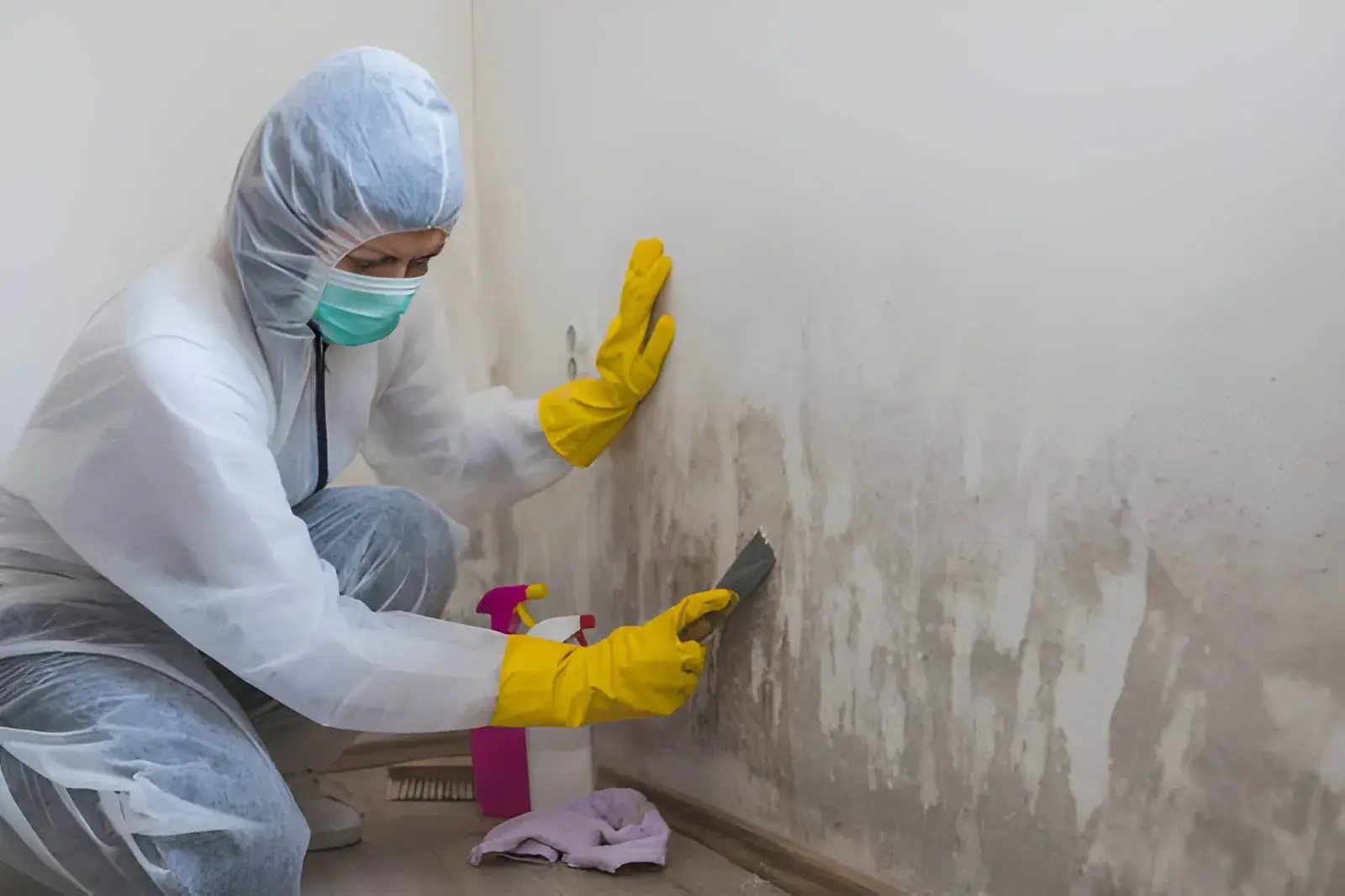
We establish critical containment barriers using 6-mil poly sheeting and deploy negative air machines with HEPA filtration to isolate the work zone.
Contaminated porous materials are safely removed, structural elements are micro-cleaned with EPA-registered antimicrobials, and air quality is verified.
Discovering mold inside your Garden City home indicates an ongoing moisture intrusion that will continue degrading building materials and threatening your family's respiratory health until professionally eliminated. Surface scrubbing with household cleaners fails to eradicate root hyphae embedded in porous wood framing and concrete block, while disturbing active colonies releases millions of spores into the air. At X Response, our certified mold remediation technicians follow strict engineering controls to safely contain, remove, and sanitize mold infestations. Call now. Your team is standing by.
Why Garden City Homes Are Vulnerable to Mold
Mold growth in Garden City is driven by the community's flat topography, shallow water table, and severe seasonal humidity swings across Southeast Michigan. According to the United States Environmental Protection Agency, indoor relative humidity should be maintained below 60 percent, and ideally between 30 and 50 percent, to inhibit mold colonization on subterranean surfaces like basement walls and floor joists. In Garden City neighborhoods situated between the Middle and Lower Rouge River basins and along Tonquish Creek, outdoor summer humidity regularly runs high, and saturated clay soils exert continuous vapor pressure against subterranean basement walls, creating ideal conditions for rapid fungal colonization.
The single-family housing stock in Garden City consists predominantly of mid-century brick ranches, Cape Cods, and split-levels built between 1950 and 1970. Most of these residences feature full basements constructed with hollow concrete block or poured concrete walls. Over decades of ground settlement and seasonal freeze-thaw cycles, mortar joints develop micro-cracks. Moisture seeps through these porous blocks via capillary wicking, depositing white mineral efflorescence and keeping relative humidity inside closed basements elevated throughout the summer, fostering mold growth on drywall, subfloors, and wood floor joists.
Forced-air heating and cooling systems commonly found in Garden City homes accelerate the distribution of mold spores. Because furnaces, air conditioning evaporator coils, and main supply ducts are located in basements, fungal colonies developing near foundation walls, floor drains, or sump pump crocks easily contaminate the air return plenum. When the blower fan runs, microscopic spores of Aspergillus, Cladosporium, and toxic Stachybotrys chartarum circulate into upper bedrooms and living spaces, causing persistent musty odors and allergic respiratory reactions.
Public health agencies in Michigan, including the Michigan Department of Health and Human Services and the Wayne County Health Department, do not perform residential mold testing or certify remediation contractors. Homeowners in Garden City rely on certified environmental remediation professionals who adhere to national IICRC S520 standards to ensure that mold abatement is conducted safely, thoroughly, and with verifiable post-remediation clearance.
Tonquish Creek and Rouge River Basin High Water Table
Garden City's location within the central Wayne County drainage network results in groundwater levels that sit close to the surface during wet spring and summer months. Saturated clay soil creates constant moisture pressure against basement concrete slabs and foundation walls, driving vapor into living spaces.
Porous Concrete Block Mortar Joints and Efflorescence
Mid-century concrete block foundations feature hundreds of feet of mortar seams that absorb groundwater from surrounding clay soil. As water evaporates inward, it leaves behind white mineral salts and creates persistent damp microclimates that sustain mold growth behind finished drywall and wood paneling.
High Southeast Michigan Summer Humidity and Condensation
During Michigan summer months, warm humid air enters cool subterranean basements through windows and foundation drafts. When humid air contacts cool concrete floors, foundation walls, or cold water pipes, it condenses into liquid moisture, providing the water necessary for mold spores to germinate within 24 to 48 hours.
Furnace Plenum and Unsealed HVAC Duct Contamination
Sheet metal ductwork running through damp basements often has unsealed joints that draw in ambient basement air. When mold colonizes near basement floor drains or sump pits, running the central air conditioning or heating distributes airborne spores throughout the entire house.
Moisture Trapped Behind Finished Basement Paneling
Many older Garden City homes have basements that were finished in the 1970s and 1980s with wood paneling and fiberglass insulation placed directly against exterior block walls without proper vapor barriers. Moisture trapped inside these dark wall cavities allows massive mold colonies to thrive unseen until structural damage occurs.
Mold in Garden City is an active environmental hazard signaling a serious structural moisture imbalance. Our certified remediation process safely removes active fungal growth, cleanses indoor air, and eliminates the root moisture cause.
What Happens to Your Home While You Wait
24 to 48 Hours
Microscopic mold spores settle on damp drywall, carpet backing, or wood framing and begin germinating. Initial hyphal roots penetrate porous organic substrates, and a faint musty odor becomes noticeable in enclosed basement areas.
3 to 7 Days
Visible black, green, or white fungal colonies spread across surfaces. Mold feeds on cellulose in drywall paper and subflooring, causing surface discoloration, peeling paint, and softening of building materials.
1 to 2 Weeks
Colonies release millions of airborne spores and volatile organic compounds that spread through the HVAC ductwork. Household occupants with allergies, asthma, or respiratory sensitivities experience increased coughing, headaches, and eye irritation.
2 to 4 Weeks
Fungal hyphae penetrate deeply into structural wall studs, floor joists, and subflooring. Wood framing suffers surface softening and structural degradation. Saturated paneling, drywall, and carpeting become non-salvageable and require hazardous removal under containment.
1 Month and Beyond
Severe, entrenched structural mold infestation compromises indoor air quality and property value. Extensive structural demolition, subfloor replacement, and professional HVAC duct sanitization become mandatory, resulting in significant repair costs.
Do not let hidden mold compromise your family's health or damage your home's structure. Contact X Response now. Our Garden City team responds within 60 minutes.
How We Restore Mold-Affected Garden City Homes
Our mold remediation protocol strictly follows the IICRC S520 Standard for Professional Mold Remediation, ensuring complete, safe, and verifiable results.
Comprehensive Inspection and Thermal Moisture Mapping
Our certified inspectors conduct a meticulous visual survey using infrared thermal imaging cameras and calibrated moisture meters to locate hidden moisture reservoirs behind drywall, under flooring, and inside wall cavities without unnecessary demolition.
Containment and Negative Air Engineering
We erect critical containment barriers using 6-mil flame-retardant poly sheeting and zip-wall entry airlocks. Industrial HEPA-filtered negative air machines continuously exhaust air outside, creating negative pressure that prevents mold spores from escaping into unaffected rooms during remediation.
HEPA Air Scrubbing and Source Removal
Commercial air scrubbers equipped with hospital-grade HEPA filters run continuously to capture airborne spores and particulates. Saturated, non-restorable materials like moldy drywall, acoustic tiles, and carpet padding are carefully bagged in sealed containers and removed for safe disposal.
Structural Micro-Cleaning and Antimicrobial Treatment
All remaining structural framing, concrete block walls, and subfloors are thoroughly HEPA-vacuumed, hand-scoured with antimicrobial wash, and treated with EPA-registered botanical fungicidal solutions that eliminate mold hyphae and prevent spore regrowth.
Encapsulation, Dehumidification, and Clearance Testing
We apply specialized mold-resistant sealant coatings to exposed structural timbers to prevent future colonization. Industrial dehumidifiers dry the space to optimal relative humidity levels below 50 percent, and third-party post-remediation clearance testing verifies that indoor air quality is restored.
The X Response Difference
Choose the certified remediation team that prioritizes your family's health with proven scientific containment and permanent moisture solutions.
Insurance Claim Guidance for Garden City Homeowners
Navigating mold damage insurance claims in Michigan can be complicated, as coverage depends heavily on the root cause of the moisture intrusion. Standard homeowner policies frequently include strict caps on mold remediation coverage, ranging from $5,000 to $10,000, or exclude mold entirely unless it resulted directly from a covered peril, such as a sudden plumbing line rupture or an accidental appliance malfunction. Slow foundation seepage and ambient high humidity are typically excluded. We provide detailed, objective documentation that clearly connects the mold growth to its originating water source to assist your insurance carrier in evaluating your claim.
How X Response Helps
- Perform comprehensive diagnostic moisture mapping that documents the precise water source responsible for the fungal growth
- Compile itemized photographic and video evidence of all affected structural components, containment barriers, and personal property
- Generate transparent, line-item estimates utilizing standardized Xactimate insurance billing software
- Maintain strict environmental logs detailing containment setup, air scrubber run-times, and structural drying equipment usage
- Collaborate with your insurance adjuster to clarify the scope of necessary biohazard remediation versus standard structural repairs
X Response is a professional environmental mitigation contractor. We do not adjust insurance claims, interpret legal policy wording, or make coverage decisions. All claim approvals remain exclusively between the policyholder and their licensed insurance company.
Certified Restoration Specialists Serving Garden City
Our environmental remediation team serving Garden City brings specialized expertise in addressing the moisture and microbial challenges unique to Wayne County. They possess deep familiarity with mid-century concrete block basements, local water table dynamics near the Rouge River basin, and the effects of Michigan's extreme seasonal humidity shifts on indoor living environments.
Every project is supervised by a technician certified by the Institute of Inspection, Cleaning and Restoration Certification (IICRC) as an Applied Microbial Remediation Technician (AMRT) and Water Damage Restoration Technician (WRT). We utilize hospital-grade HEPA filtration systems, calibrated moisture diagnostic tools, and EPA-registered botanical antimicrobials, ensuring your Garden City home is returned to a clean, healthy state.
In Garden City, X Response works with H2O Pros, an independent local restoration partner serving Wayne County.