
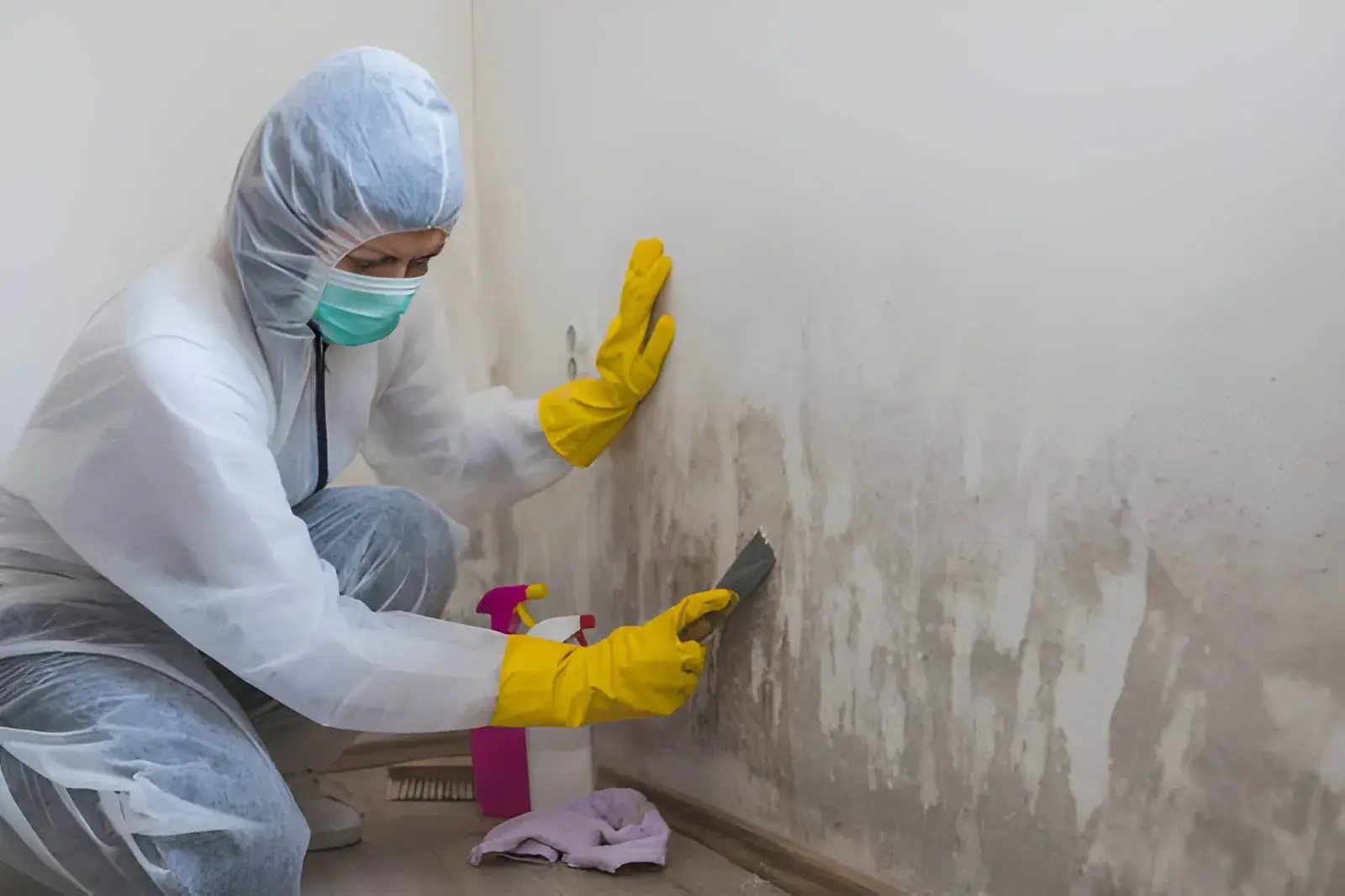
Mold Remediation in Goodlettsville, TN
Mold spreads quickly in Goodlettsville's humid climate. Early intervention prevents structural damage and protects your family's health. Our local team responds within 60 minutes.
What Happens When You Call
A real person answers, not a call center. We assess your mold concern, ask targeted questions about moisture history and symptoms, and begin coordinating your response immediately.
Your dedicated mold remediation team is dispatched from our local base serving Goodlettsville and the surrounding Davidson and Sumner County communities.
Team arrives with moisture meters, thermal imaging, air sampling equipment, and containment materials. Assessment begins immediately to determine the scope and source.
Moisture source identified, contamination scope mapped, remediation plan documented with clear timeline. You know exactly what comes next.
Mold does not wait for a convenient time. Once moisture conditions are right, colonization begins within 24 to 48 hours, and in Middle Tennessee's humid climate those conditions exist for months at a stretch. By the time you see visible growth or smell that unmistakable musty odor, the colony has already established itself behind the surfaces you can see. X Response exists for exactly this moment. When you reach out, your mold remediation team is mobilized within minutes. From that point forward, one team manages everything: assessment, containment, removal, and prevention. Call now. Your team is standing by.
Why Goodlettsville Homes Are Vulnerable to Mold
Goodlettsville sits in a climate zone that makes mold growth a near-certainty in any home where moisture goes unmanaged. Middle Tennessee summers regularly produce high relative humidity, with sustained periods where outdoor dew points run high for weeks at a time. Once relative humidity in an enclosed space exceeds 60 percent, mold colonization becomes possible. Above 70 percent, it becomes likely. In Goodlettsville's mid-century housing stock, the majority of homes were built with vented crawl spaces over bare earth, a construction approach that was once considered best practice for moisture management but has since been shown by the U.S. Department of Energy and independent research to actually increase moisture levels, mold growth, and structural deterioration compared to sealed crawl spaces in the same humid climate. The theory was that outdoor air circulating through the crawl space would carry moisture away. The reality in Middle Tennessee is that hot, humid summer air entering a cooler crawl space condenses on the cooler surfaces, including floor joists, ductwork, and insulation, creating exactly the conditions mold requires. U.S. Department of Energy Building America research found that unvented, conditioned crawl spaces reduced humidity by more than 20 percent compared with vented designs.
Goodlettsville's mold problem is compounded by its geography and development pattern. The city sits along Mansker Creek on clay-heavy soils that hold moisture against foundations rather than draining it away. Homes near the creek corridor and in low-lying areas of the Rivergate commercial zone have elevated groundwater that wicks upward through bare crawl space earth and presses against basement walls. The repeated flooding events along Mansker Creek, including the evacuations at the Grand Ole RV Resort in 2017, 2019, and 2024, leave behind saturated ground conditions that persist long after surface water recedes. Any home in the flood-affected areas that did not receive professional drying within 48 hours of water intrusion likely developed mold growth in concealed spaces. Add the city's dual-county split, which means different building code enforcement histories and different standards for crawl space construction across the Davidson and Sumner County portions, and Goodlettsville contains a wide range of crawl space conditions from fully encapsulated modern installations to completely unimproved original vented spaces with bare dirt floors.
Vented Crawl Spaces and the Humidity Trap
The majority of Goodlettsville homes built between the city's 1958 incorporation and the early 2000s feature vented crawl spaces, a construction method that invites outdoor air to circulate beneath the home through foundation vents. In Middle Tennessee's humid climate, this design does not remove moisture. It introduces it. When 85-degree air at high relative humidity enters a crawl space where surfaces sit at 65 to 70 degrees, the air cools below its dew point and condenses directly onto floor joists, ductwork, insulation, and any exposed wood. Research cited by the U.S. Department of Energy consistently shows that vented crawl spaces in humid climates maintain high humidity nearly year-round, well above the 60 percent threshold where mold colonization begins. In Goodlettsville, this means mold growth on crawl space framing is not exceptional. It is the default condition in any vented crawl space that has not been sealed and dehumidified. Homeowners often discover it only during a real estate inspection or when musty odors become impossible to ignore upstairs.
Clay Soils and Persistent Foundation Moisture
Goodlettsville's soils are predominantly clay-based, characteristic of the Highland Rim and Central Basin geology that underlies northern Davidson and southern Sumner Counties. Clay soil has two properties that drive mold risk: it sheds surface water rather than absorbing it, which causes flooding during storms, and it holds moisture against foundations for weeks or months after the rain stops. Unlike sandy or loamy soils that drain freely, clay retains water at saturation levels that keep the ground in contact with foundation walls and crawl space footings perpetually damp. That moisture wicks into concrete block, poured foundations, and any untreated wood in contact with the ground. In homes without vapor barriers, it evaporates upward from the bare earth floor of the crawl space, maintaining the humidity levels that feed mold colonies continuously. The problem is worst during the transition from spring to summer, when heavy spring rains saturate the clay and rising temperatures then create the ideal warm, wet conditions for explosive mold growth beneath the home.
Post-Flood Mold Colonization
Every time Mansker Creek floods along its path through Goodlettsville, the homes, businesses, and RV park properties affected face a 24 to 48 hour window before mold colonization begins on saturated materials. In Middle Tennessee's warm climate, that window tightens further during summer months when temperatures accelerate biological growth. The 2017, 2019, and 2024 flooding events at the Grand Ole RV Resort and the neighborhoods along Mansker Creek left properties soaked, and any that did not receive immediate professional drying and antimicrobial treatment likely developed mold in crawl spaces, behind baseboards, under flooring, and inside wall cavities. Post-flood mold often goes undetected for weeks because it begins in concealed spaces where water pooled longest: the backside of drywall at floor level, beneath floating floors, inside wall cavities at the lowest point, and across crawl space framing where floodwater lingered. By the time the homeowner sees it, the growth is well established.
HVAC Ductwork in Contaminated Crawl Spaces
Most Goodlettsville homes route their forced-air ductwork through the crawl space, placing the supply and return runs in the most moisture-laden, mold-vulnerable space in the building. When mold grows on crawl space framing and surfaces near the ductwork, spores become airborne in the enclosed space and enter the air stream through gaps in duct connections, deteriorated flex-duct joints, and the return plenum if it draws from the crawl space rather than being fully sealed. The HVAC system then distributes those spores throughout the living space every time it cycles, contaminating rooms that have no direct moisture problem. Homeowners experience this as unexplained allergy symptoms, persistent musty odor despite a clean living space, and visible mold appearing around supply registers where condensation forms during the cooling season. The ductwork does not cause the mold, but it becomes the primary distribution mechanism that turns a localized crawl space problem into a whole-home air quality issue.
Bathroom and Kitchen Moisture in Aging Housing
Beyond the crawl space, Goodlettsville's older homes along Long Hollow Pike and in the neighborhoods near Moss-Wright Park frequently lack adequate bathroom ventilation. Homes built in the 1960s and 1970s often have undersized exhaust fans that vent into the attic rather than to the exterior, or no exhaust ventilation at all. Every shower, bath, and cooking event adds moisture to the indoor air that has no mechanical pathway to the outside. In a climate already running high ambient humidity, this interior moisture load pushes bathroom walls, ceilings, and adjacent closets past the mold threshold repeatedly. The same homes often have minimal insulation and single-pane windows that create cold surfaces during winter where interior moisture condenses, producing visible mold on window frames, exterior wall corners, and closet walls that back against poorly insulated exterior surfaces.
These factors combine to make mold not just possible but probable in any Goodlettsville home where moisture goes unmanaged. The vented crawl spaces invite humidity in. The clay soils hold moisture against foundations year-round. Flooding events saturate materials that colonize within days. HVAC ductwork distributes spores from concealed spaces throughout the living area. And aging bathroom ventilation adds interior moisture that has nowhere to go. Effective mold remediation here means more than cleaning visible growth. It means identifying and correcting the moisture pathway that fed the colony so it does not return. A team that only scrubs surfaces without addressing the humidity source, the crawl space condition, or the HVAC distribution leaves you with clean walls today and new growth within months.
What Happens to Your Home While You Wait
24–48 Hours After Moisture Event
Mold spores, which are always present in outdoor air in Middle Tennessee, begin germinating on any surface that remains wet or above 60 percent humidity. In Goodlettsville's warm climate, this timeline compresses further during summer months. The initial colonization occurs on the surface of materials, at a stage where professional cleaning and drying can still save the substrate without removal.
3–7 Days
Visible mold colonies establish on drywall, wood framing, and organic materials. Hyphal networks penetrate below the surface into porous substrates. In crawl spaces with bare earth and vented foundations, growth spreads across joists and subfloor sheathing. Musty odor becomes detectable in the living space above as volatile organic compounds from the colony off-gas and rise through floor penetrations.
1–2 Weeks
Mold growth becomes extensive on untreated surfaces. Spore production increases and contamination enters the HVAC system if ductwork runs through the affected space. Indoor air quality degrades measurably. Allergic responses intensify in sensitive occupants. Materials that could have been cleaned in place at day three now require partial or full removal because hyphal penetration has compromised the substrate beyond surface treatment.
1–3 Months
Structural wood damage begins as mold enzymes break down cellulose in floor joists, sill plates, and subfloor sheathing. In Goodlettsville's crawl spaces, this stage produces visible sagging, soft spots in flooring above, and weakened connection points. The remediation scope expands from cleaning to structural repair. Indoor air quality is significantly impaired, and health-sensitive occupants may be experiencing chronic symptoms.
6 Months and Beyond
Severe structural compromise of crawl space framing. Floor systems may become unsafe. Mold has distributed throughout the HVAC system and established in multiple areas of the home. Full remediation at this stage involves extensive material removal, structural repair or replacement, complete HVAC decontamination, and whole-home air quality restoration. The cost and timeline of remediation at this stage are many times what they would have been with early intervention.
The longer mold grows unchecked, the deeper it penetrates and the more expensive remediation becomes. Contact X Response now. Our Goodlettsville team responds within 60 minutes to assess your situation and stop the progression before structural damage begins.
How We Restore Mold-Affected Goodlettsville Homes
From the moment our team arrives, every step follows established protocols for safe, effective mold remediation. Here is exactly what the process involves.
Inspection, Moisture Mapping, and Air Sampling
Our team arrives with professional moisture meters, thermal imaging cameras, and air sampling equipment to determine the full scope of mold growth and identify the moisture source feeding it. In Goodlettsville homes, that means a thorough crawl space inspection where most growth originates, checking for standing water, bare earth without vapor barriers, saturated insulation, and visible colonization on framing. We probe behind walls at floor level where post-flood growth hides, check around HVAC equipment and ductwork for condensation-driven colonies, and inspect bathroom and kitchen areas where ventilation is inadequate. Air sampling establishes baseline spore counts that document contamination levels before remediation begins. The moisture source is identified definitively, because removing visible mold without correcting the moisture condition guarantees regrowth.
Containment and Negative Pressure
Before any mold is disturbed, we establish engineering controls that prevent cross-contamination to unaffected areas of the home. Poly sheeting seals the work area from the rest of the living space. HEPA-filtered negative air machines create a pressure differential that ensures air flows into the containment zone rather than out of it, so disturbed spores cannot migrate to clean areas. For crawl space remediation, which is the most common scenario in Goodlettsville, we seal the crawl space access and any penetrations between the crawl space and living area, then establish negative pressure below the home. Workers enter the containment in personal protective equipment appropriate for the contamination level. These controls remain in place throughout the active removal phase.
Mold Removal and Material Disposition
Contaminated materials are treated differently depending on the substrate and depth of colonization. Non-porous surfaces like concrete and metal are cleaned with antimicrobial solutions and HEPA vacuumed. Semi-porous surfaces like wood framing are sanded or media-blasted to remove surface colonization, then treated with antimicrobial products that penetrate the wood grain. Porous materials that cannot be effectively cleaned, including drywall, insulation, carpet, and heavily colonized wood where structural integrity is compromised, are removed and disposed of according to Tennessee regulations. In Goodlettsville crawl spaces, the most common remediation involves removing contaminated insulation, treating floor joists and sill plates, and removing any organic debris on the crawl space floor. All removed material is bagged within the containment before transport to prevent spore release.
Moisture Source Correction
Removing the mold without correcting the moisture source is a temporary fix that guarantees regrowth. For Goodlettsville homes with vented crawl spaces, the most effective long-term solution is encapsulation: sealing foundation vents, installing a heavy-mil vapor barrier across the floor and up the walls, and placing a commercial dehumidifier sized to maintain crawl space humidity below 55 percent year-round. For homes where clay soil moisture is pressing against foundations, exterior drainage correction or interior drainage with a sump may be needed. For bathroom and kitchen moisture, proper exhaust ventilation to the exterior rather than the attic is specified. For post-flood mold, the correction may be as straightforward as completing a thorough structural drying that was never done properly after the original water event. We specify the moisture correction as part of the remediation plan and can perform it directly or coordinate with specialized contractors.
Post-Remediation Verification and Clearance
After remediation is complete and moisture corrections are in place, we conduct post-remediation verification to confirm success. That includes visual inspection of all treated areas, moisture readings to confirm the source has been effectively controlled, and post-remediation air sampling to compare spore counts against the pre-remediation baseline and outdoor ambient levels. Clearance is achieved when indoor spore counts are at or below outdoor levels and no visible growth remains. We provide a detailed remediation report including pre- and post-air sampling results, photos of all work performed, moisture readings, and documentation of the moisture correction installed. If clearance is not achieved on the first test, we identify and address the remaining issue before retesting.
The X Response Difference
When you contact X Response for mold remediation, you get a team that treats the problem completely: containment, removal, moisture correction, and verified clearance. One team, one standard, documented results.
Insurance Claim Guidance for Goodlettsville Homeowners
Mold coverage under Tennessee homeowner's policies is limited and heavily conditioned. Most standard policies cover mold remediation only when the mold resulted from a covered peril, typically sudden water damage like a burst pipe or appliance failure. If the mold grew due to long-term humidity, a maintenance failure, deferred repairs, or a pre-existing crawl space condition, most carriers exclude it entirely or cap coverage at a low sublimit, often $5,000 to $10,000. In Goodlettsville, where the most common mold scenario is crawl space growth from persistent humidity in a vented foundation, that means most claims will face coverage limitations unless the homeowner can demonstrate a specific covered water event that caused the conditions. Post-flood mold from a Mansker Creek overflow is generally covered only if you carry flood insurance. Understanding these limitations before you file helps you make informed decisions about the scope of remediation.
How X Response Helps
- Document the mold with professional photos, air sampling results, and a moisture assessment that identifies the source and timeline
- Establish the connection between the mold and a specific covered peril if one exists, because that connection determines coverage eligibility
- Identify your policy's mold sublimit and any conditions that apply, so you understand your financial exposure before work begins
- Provide the detailed documentation your carrier needs to evaluate the claim, including pre- and post-remediation air sampling
- Explain coverage limitations honestly before work begins so you can make informed decisions about remediation scope
X Response does not file claims on your behalf, adjust claims, or make coverage determinations. We provide documentation and guidance to help you make informed decisions about your property and your policy. Coverage decisions are made solely by your insurance carrier. Many mold remediation projects in Goodlettsville proceed as homeowner-funded maintenance rather than insurance claims due to policy limitations on mold coverage.
Certified Restoration Specialists Serving Goodlettsville
When you contact X Response for mold remediation in Goodlettsville, your team is drawn from certified professionals who work across both Davidson and Sumner Counties and understand the specific mold drivers here. They have remediated crawl spaces throughout Goodlettsville's mid-century housing stock where vented foundations and bare earth floors created conditions that made colonization inevitable. They have treated post-flood mold in homes near Mansker Creek where inadequate drying after water events allowed hidden growth to establish behind walls and beneath flooring. They have addressed HVAC contamination where crawl space mold distributed spores throughout living spaces via ductwork. They understand that Goodlettsville's climate, soils, construction era, and flooding history combine to make mold a persistent, recurring challenge rather than a one-time event, and they approach remediation accordingly: not just removing what is visible today, but correcting the conditions that will grow it again tomorrow.
Every technician on your team holds current mold remediation certification and carries the appropriate Tennessee state licensing for the work being performed. Equipment includes professional air sampling apparatus, HEPA-filtered negative air machines, commercial dehumidifiers, thermal imaging cameras for hidden moisture detection, and the full range of containment and PPE required for safe remediation at any contamination level. When your team arrives, they bring everything needed to assess, contain, and begin addressing your mold problem immediately.
In Goodlettsville, X Response works with Tennessee Water and Fire, an independent local restoration partner serving Davidson / Sumner County.
Mold Remediation FAQ for Goodlettsville Homeowners
Other Emergency Services in Goodlettsville

Water Damage Restoration
Burst pipes, storm flooding, standing water. We extract, dry, and restore before mold sets in.
Learn more
Fire Damage Restoration
Structural damage, soot, debris. We stabilize, clean, and rebuild what fire destroyed.
Learn more
Smoke Damage Restoration
Soot residue, chemical odors, HVAC contamination. We decontaminate surfaces, eliminate odors, and restore air quality.
Learn more
Sewage Cleanup
Sewer backups, contaminated water, biohazard. We extract, sanitize, and restore safely.
Learn more