
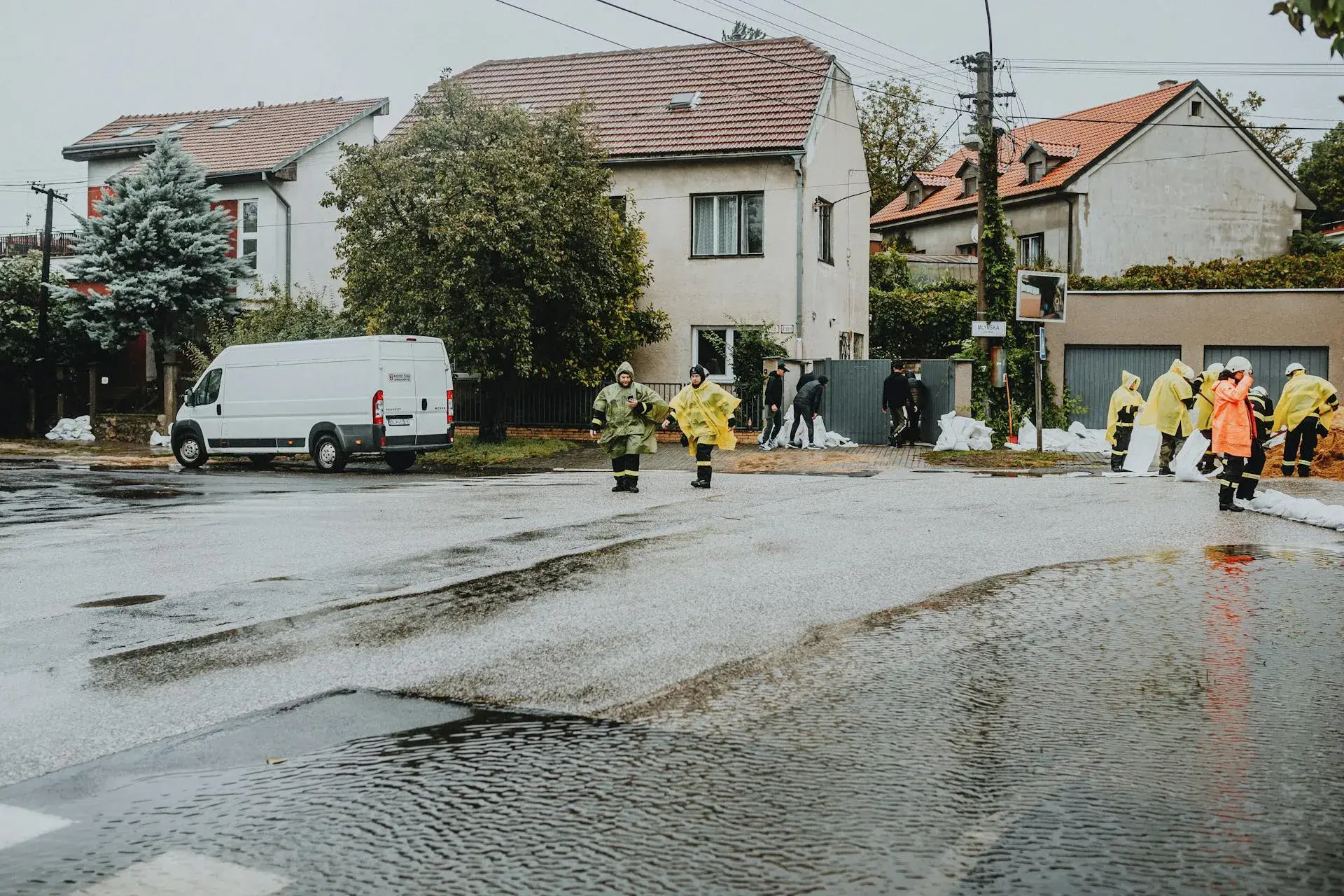
Sewage Cleanup in Goodlettsville, TN
Sewage contamination is a health emergency that worsens every hour. Our local team responds to Goodlettsville emergencies within 60 minutes with Category 3 extraction and decontamination equipment.
What Happens When You Call
A real person answers, not a call center. We assess the sewage contamination situation, determine the source and scope, and begin coordinating your emergency response immediately.
Your dedicated sewage cleanup team is dispatched from our local base serving Goodlettsville and the surrounding Davidson and Sumner County communities.
Team arrives with Category 3 extraction equipment, biohazard PPE, antimicrobial treatments, and containment materials. Emergency extraction begins immediately.
Sewage extracted, contaminated materials identified for removal, decontamination plan documented. You know exactly what comes next.
Raw sewage in your home is not a plumbing inconvenience. It is a biohazard emergency. Every surface it touches is contaminated with bacteria, viruses, and parasites that pose immediate health risks to anyone in the space. The longer it sits, the deeper it penetrates materials and the more extensive the demolition required. X Response exists for exactly this moment. When you reach out, your sewage cleanup team is mobilized within minutes and on site within the hour. From that point forward, one team manages everything: extraction, decontamination, demolition of unsalvageable materials, drying, and restoration. Call now. Your team is standing by.
Why Goodlettsville Homes Are Vulnerable to Sewage
Goodlettsville's sewage risk is defined by a problem that most residents do not think about until raw waste is flowing through their property: the city's dual-county split means its homes connect to two fundamentally different wastewater systems with different infrastructure ages, different maintenance histories, and different failure modes. The southern Davidson County portion of the city connects to Metro Nashville's wastewater collection system, the same aging network operating under the 2009 Clean Water Nashville consent decree after the federal government, the State of Tennessee, and Metro agreed to a $300 to $400 million program to eliminate unauthorized sanitary sewer overflows and control combined sewer overflows. That consent decree, extended to December 2031, exists precisely because Metro's system has a documented history of overflows, backups, and capacity failures during heavy rain. The northern Sumner County portion operates on a different system entirely, with many properties relying on individual septic systems, community grinder pump stations, or low-pressure sewer mains that connect to Sumner County's wastewater infrastructure.
In early 2025, residents of Goodlettsville's Magnolia Station neighborhood learned exactly how these system failures affect individual homes. NewsChannel 5 reported that sewage from Metro Nashville's pressurized sewer line was flowing backward into the neighborhood's grinder pump system, overwhelming the pumps that residents had installed at significant personal expense. At least 30,000 gallons of raw sewage was pumped out during one incident, and raw waste flowed onto the roadway for four to five days. Barbara DeLong, the 80-year-old president of the homeowners association, put a $4,000 emergency service on her credit card to address one backup because the sewage was flowing out of the system and across the road. The majority of the 18 residents at Magnolia Station are seniors. The cause remained under investigation, with the backflow source unclear, but the result was unmistakable: raw sewage from outside the neighborhood was entering homes that had done nothing wrong and whose own systems were functioning properly.
Metro Nashville's Aging Sewer Infrastructure
The Davidson County portion of Goodlettsville connects to Metro Nashville's wastewater collection system, which is operating under a federal consent decree specifically because it has a documented history of sanitary sewer overflows. The 2009 Clean Water Nashville agreement required Metro to invest $300 to $400 million in system improvements to eliminate unauthorized raw sewage discharges and control combined sewer overflows into the Cumberland River and its tributaries. The deadline has been extended to December 2031, which means the system is still being repaired and upgraded. For Goodlettsville homes in the Davidson County portion, this means connecting to a sewer main that can become overwhelmed during heavy rain events, particularly when inflow and infiltration from groundwater enters the system through aging pipe joints, cracked mains, and deteriorated manholes. When the system exceeds capacity, sewage has nowhere to go except backward through the connections into homes at the lowest elevations or with the weakest backflow prevention.
Grinder Pump Systems and Backflow Vulnerability
Many Goodlettsville properties, particularly in the northern Sumner County portion and in neighborhoods that sit below the gravity sewer elevation, rely on individual or community grinder pump systems to move wastewater from the home to the pressurized sewer main. These pumps grind solid waste and push it uphill through a small-diameter force main to the gravity system. The Magnolia Station incident in early 2025 revealed a critical vulnerability: when pressure in the receiving sewer main exceeds the pump's discharge pressure, flow reverses and sewage from the municipal system enters the homeowner's grinder pit. The residents had new, powerful grinder pumps, but the pumps could not overcome the backpressure from Metro's system during high-flow conditions. The result was raw sewage from other connections flowing backward into their property. This backflow vulnerability affects any grinder pump installation that connects to a pressurized system without adequate check valve protection or where check valves have deteriorated.
Storm-Driven Sewer Surcharging
Goodlettsville receives an average of approximately 47 inches of rainfall annually, distributed across frequent thunderstorm events in spring and summer and sustained frontal systems in winter. Every heavy rain event stresses both the Davidson County Metro system and the Sumner County system simultaneously. When rain intensity exceeds the capacity of storm drains, surface water enters the sanitary sewer through illicit connections, cracked manholes, and defective pipe joints, a problem known as inflow and infiltration. The combined flow exceeds pipe capacity, and the system surcharges: sewage rises in manholes, backs up through floor drains and the lowest fixtures in connected homes, and in severe cases overflows onto the ground surface. Homes near Mansker Creek face a compounding effect: the creek's flooding raises the water table, which increases groundwater infiltration into sewer mains in the creek corridor, which increases surcharging, which causes backups into homes that are simultaneously at risk of creek flooding from above and sewer backup from below.
Septic System Failures in Northern Goodlettsville
The Sumner County portion of Goodlettsville includes properties that rely on individual septic systems rather than municipal sewer connections. These on-site systems depend on proper soil percolation to treat and disperse wastewater through drain fields. Goodlettsville's clay-heavy soils are among the worst for septic performance: they percolate slowly even when dry and become essentially impermeable when saturated. During wet periods, which in Middle Tennessee can extend for weeks at a time in winter and spring, the drain field cannot accept effluent, the septic tank fills beyond capacity, and sewage either backs up into the home through the lowest drain or surfaces in the yard over the drain field. Older septic systems in northern Goodlettsville, some installed decades ago when the area was rural, may also be undersized for current household water use or have drain fields that have compacted and failed over time. These failures produce the same Category 3 contamination as a sewer backup but without any municipal system to bear responsibility.
The Dual-System Boundary and Accountability Gaps
Goodlettsville's split between Davidson and Sumner Counties creates a sewage infrastructure boundary that runs through the city. On one side, Metro Water Services operates the collection system and bears maintenance responsibility for the public mains. On the other, Sumner County utilities or individual property owners maintain their own systems. When a sewage backup occurs near this boundary, determining whose infrastructure failed and who bears cleanup responsibility can be genuinely unclear. The Magnolia Station residents experienced this directly: their grinder pumps were connected to Metro's pressurized line, but they lived in a community that was not clearly within Metro's standard service model. The backflow source remained a mystery, with Metro and the homeowners each pointing to the other's system. For homeowners caught in this gap, the sewage is in their home regardless of whose pipe failed, and the cleanup cannot wait for the accountability question to be resolved.
These factors combine to make sewage events in Goodlettsville more common and more complex than in cities served by a single, modern wastewater system. The aging Metro infrastructure backs up during heavy rain. Grinder pump systems are vulnerable to backflow from pressurized mains. Storm events simultaneously flood the creeks and surcharge the sewers. Septic systems in clay soils fail during wet periods. And the dual-county split creates accountability gaps when systems fail at the boundary. Effective sewage cleanup here means responding immediately regardless of the source, because Category 3 contamination does not wait for jurisdictional questions to be answered. It also means understanding the different failure mechanisms so the cleanup properly addresses the contamination pathway and does not leave hidden deposits that create long-term health risks.
What Happens to Your Home While You Wait
Within 1 Hour
Sewage spreads across flooring and wicks into porous materials at ground level. Every surface it contacts is immediately contaminated with bacteria, viruses, parasites, and other pathogens. In Goodlettsville homes with crawl spaces, sewage can flow through floor penetrations and pool on the vapor barrier or bare earth below, creating a contamination reservoir beneath the living space. The biohazard exposure risk to occupants is immediate and serious.
1–24 Hours
Contamination wicks upward through drywall, baseboards, and cabinet kick plates. Bacteria multiply rapidly in Middle Tennessee's warm conditions. Sewage saturates carpet padding against the subfloor where it cannot be seen from above. Odor intensifies as biological decomposition accelerates. If the backup entered through a floor drain or toilet, contamination may have spread through the drain waste system to other fixtures at the same elevation. Materials contacted by sewage for more than 24 hours generally cannot be decontaminated and must be removed.
24–48 Hours
Porous materials that contacted sewage are now considered non-restorable under IICRC guidelines. Drywall, carpet, padding, particle board, and unsealed wood that has been saturated with Category 3 water for this duration requires removal regardless of surface cleaning. Mold colonization begins on affected materials, compounding biological contamination with fungal growth. The demolition scope expands significantly with every hour past the 24-hour threshold.
48–72 Hours
Bacterial contamination has penetrated wall cavities, subfloor seams, and crawl space framing. Mold is actively growing on sewage-contacted surfaces. The HVAC system may have distributed airborne contaminants if it cycled during the event. What started as a cleanup becomes a combined sewage remediation and mold remediation project. Health risks to unprotected occupants are severe.
One Week and Beyond
Extensive biological contamination throughout affected areas. Structural materials compromised by sustained moisture and biological attack. Mold growth well established and potentially distributed through the home. The remediation scope at this point involves gutting affected areas to the framing, treating structural elements, and rebuilding from scratch. If sewage reached the crawl space and was not extracted, the subfloor system may be structurally compromised. Costs are many times what they would have been with immediate response.
Sewage contamination is one of the most time-sensitive emergencies in residential restoration. Every hour of delay expands the materials that must be removed rather than cleaned. Contact X Response now. Our Goodlettsville team responds within 60 minutes with Category 3 extraction and decontamination equipment.
How We Restore Sewage-Damaged Goodlettsville Homes
From the moment our team arrives, every step follows strict biohazard protocols designed to protect your family's health and restore your property safely. Here is exactly what the sewage cleanup process involves.
Source Control and Emergency Extraction
Our first action is stopping the sewage flow if it is still active. For sewer line backups, that may mean shutting off water to the home to prevent additional fixture use from feeding the backup. For grinder pump failures like those experienced at Magnolia Station, it means isolating the pump system and, if necessary, deploying emergency pumping to prevent further overflow. Once the source is controlled, we begin immediate extraction of all standing sewage and contaminated water using truck-mounted or portable pumps. In Goodlettsville homes with crawl spaces, we deploy submersible pumps beneath the home if sewage migrated through floor penetrations. Every gallon removed mechanically is a gallon of biohazardous material that does not continue contaminating your home. Extraction is the highest priority because it limits the contact time between sewage and building materials.
Contamination Assessment and Material Disposition
Once standing sewage is removed, our team maps the full contamination footprint using moisture meters, visual inspection, and knowledge of how sewage migrates through building assemblies. Under IICRC S500 guidelines, porous materials that have been saturated with Category 3 water for more than 24 hours are considered non-restorable: drywall, carpet, carpet padding, particle board subflooring, unsealed wood, and any insulation that contacted sewage. These materials are marked for removal. Semi-porous and non-porous materials that can be decontaminated are identified for cleaning. For Goodlettsville homes where the backup entered through a floor drain, we trace the contamination through the drain waste piping to identify all fixtures and areas that may have been affected beyond the visible overflow point.
Demolition and Removal of Contaminated Materials
All non-restorable materials are removed under containment to prevent cross-contamination to unaffected areas. Drywall is cut a minimum of 12 inches above the visible waterline to ensure all contaminated material is captured, because sewage wicks above the flood level. Carpet and padding are rolled and bagged. Cabinet kick plates, baseboards, and any trim that contacted sewage are removed. Contaminated insulation in crawl spaces is stripped from joists and bagged for disposal. All removed materials are treated as biohazardous waste and disposed of according to Tennessee regulations. The goal is removing every material that cannot be definitively decontaminated, leaving only structural elements and non-porous surfaces that can be treated in place.
Decontamination and Antimicrobial Treatment
Remaining structural surfaces, including wall framing exposed by drywall removal, subfloor sheathing, crawl space joists, and concrete or block foundations, are cleaned with biocide solutions and treated with EPA-registered antimicrobial products. These treatments kill bacteria and other pathogens on contact and provide residual protection during the drying phase. For Goodlettsville homes where sewage reached the crawl space, every surface the contaminated water touched is treated: vapor barrier, bare earth if no barrier exists, joists, sill plates, and any ductwork or utilities below the floor. HEPA air scrubbers run throughout the process to capture airborne particulate and biological material disturbed during demolition. The treated space is then dried using commercial dehumidifiers and air movers to reach target moisture levels before reconstruction begins.
Drying, Verification, and Reconstruction
Structural drying follows decontamination and typically takes three to five days in Middle Tennessee's humid climate. Daily moisture readings confirm progress toward the target dry standard. Once the structure passes moisture verification, a clearance assessment confirms that biological contamination has been eliminated and the space is safe for reconstruction. We then rebuild to match the original construction or upgrade to current code, including replacing drywall, insulation, flooring, trim, and any fixtures that were removed. For properties where the sewage backup was caused by a system vulnerability, such as an inadequate backflow preventer or a grinder pump connection issue, we recommend corrective measures to reduce the risk of recurrence. Completion documentation includes the full scope of work, before-and-after photos, moisture verification data, and decontamination records for your insurance claim.
The X Response Difference
When you contact X Response for sewage cleanup, you get a certified biohazard remediation team that treats the situation with the severity it demands. Full extraction, full decontamination, full documentation. One team, one standard, verified safe.
Insurance Claim Guidance for Goodlettsville Homeowners
Sewage backup coverage under Tennessee homeowner's policies depends on the specific endorsement your policy carries. Standard policies do not automatically cover sewer or drain backup; it requires a separate endorsement that many homeowners do not realize they need until a backup occurs. If you carry the endorsement, it typically covers cleanup and restoration from sewage that enters through your own drain or sewer connection. Coverage limits on sewer backup endorsements are often lower than your overall dwelling coverage, frequently capped between $5,000 and $25,000. In Goodlettsville, where a system failure in Metro's pressurized main can push sewage backward into your grinder pump as happened at Magnolia Station, the coverage question becomes more complex: your carrier may argue the backup originated from the municipal system rather than your own connection, which could affect which coverage section applies or whether you have recourse against the utility.
How X Response Helps
- Document all contamination with professional photos, contamination mapping, and a detailed scope showing which materials required removal and why
- Identify the backup source clearly, because coverage may differ depending on whether it originated from your own system, a municipal main, or a neighboring property
- Record the timeline precisely, because carrier evaluation of what materials are restorable versus non-restorable depends on sewage contact duration
- Align our remediation scope with IICRC S500 Category 3 guidelines so your documentation reflects industry-standard material disposition decisions
- Explain your sewer backup endorsement limits and conditions before work begins so you understand your coverage and out-of-pocket exposure
X Response does not file claims on your behalf, adjust claims, or make coverage determinations. We provide documentation and guidance to help you make informed decisions about your property and your policy. Coverage decisions are made solely by your insurance carrier. If your policy does not include a sewer backup endorsement, the full remediation cost is typically the homeowner's responsibility.
Certified Restoration Specialists Serving Goodlettsville
When you contact X Response for a sewage emergency in Goodlettsville, your team is drawn from certified professionals who work across both Davidson and Sumner Counties and understand the specific sewage risks here. They have responded to Metro sewer backups in the Davidson County portion where aging infrastructure surcharges during storms. They have addressed grinder pump failures and backflow events in neighborhoods that connect to pressurized mains. They have cleaned septic system overflows in the northern Sumner County portion where clay soils prevent proper drain field percolation. They understand that sewage cleanup is a biohazard operation, not a plumbing call, and they arrive equipped and trained to handle Category 3 contamination safely. They also understand Goodlettsville's dual-system complexity and can document the contamination source clearly for insurance purposes regardless of which jurisdiction's infrastructure may have contributed to the failure.
Every technician on your team holds current IICRC certification in water damage restoration with Category 3 contamination protocols and carries the appropriate Tennessee state licensing for biohazard remediation. Equipment includes truck-mounted extraction units, submersible crawl space pumps, HEPA-filtered negative air machines, EPA-registered biocide and antimicrobial treatments, and commercial drying equipment sized for Middle Tennessee's humidity. Personal protective equipment meets OSHA standards for sewage-contaminated environments. When your team arrives, they bring everything needed to begin protecting your family's health and your property immediately.
In Goodlettsville, X Response works with Tennessee Water and Fire, an independent local restoration partner serving Davidson / Sumner County.
Sewage Cleanup FAQ for Goodlettsville Homeowners
Other Emergency Services in Goodlettsville

Water Damage Restoration
Burst pipes, storm flooding, standing water. We extract, dry, and restore before mold sets in.
Learn more
Fire Damage Restoration
Structural damage, soot, debris. We stabilize, clean, and rebuild what fire destroyed.
Learn more
Smoke Damage Restoration
Soot residue, chemical odors, HVAC contamination. We decontaminate surfaces, eliminate odors, and restore air quality.
Learn more
Mold Remediation
Testing, containment, removal, prevention. We find the source, eliminate the growth, and stop it from returning.
Learn more