
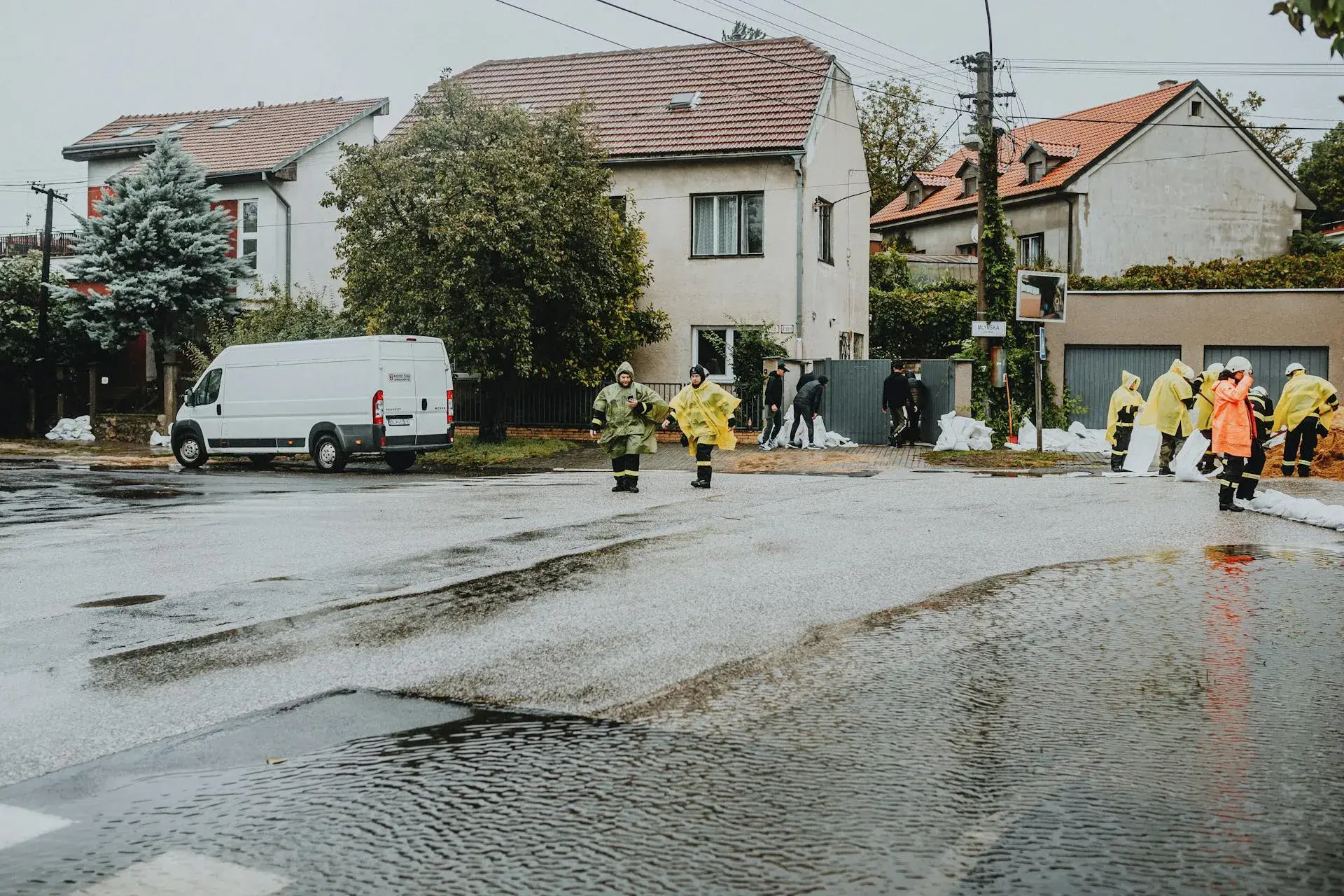
Sewage Cleanup in Riverview, FL
Sewage backups introduce severe pathogens into your home that multiply rapidly in Florida's heat. Our local Riverview team responds within 60 minutes to extract the biohazard and sanitize your property.
What Happens When You Call
A real person answers your call. We assess your location within Riverview, instruct you on immediate health and safety precautions, and dispatch an emergency response team.
Your dedicated restoration team is dispatched directly from our local base serving Hillsborough County, outfitted in full hazmat PPE.
The team arrives, establishes containment to protect unaffected areas, and begins emergency extraction of the raw sewage and contaminated water.
Biohazards are extracted, porous materials are safely removed, and aggressive sanitization begins before the Florida heat accelerates bacterial spread.
Raw sewage is backing up through your drains, contaminating everything it touches. In Riverview's sweltering climate, bacterial growth accelerates by the hour, turning a plumbing failure into a severe biohazard emergency. X Response exists for exactly this moment. When you reach out, your restoration team is mobilized down US-301 or Big Bend Road within minutes. We manage the entire mitigation process: Category 3 extraction, deep chemical sanitization, structural tear-out, and Hillsborough County permitting. Call now. Your team is standing by.
Why Riverview Homes Are Vulnerable to Sewage
Riverview's wastewater infrastructure faces a dual threat: rapid suburban development straining municipal lines, and thousands of older homes relying on aging septic systems. Hillsborough County's Septic-to-Sewer conversion program identifies multiple neighborhoods in Riverview as high priority for transitioning off aging drain fields to prevent sanitary overflows during the wet season. When a septic drain field fails, especially during Florida's summer thunderstorms when the ground is already saturated, the resulting sewage backup into the home is catastrophic. Whether you are on city sewer lines or a private septic tank, a backup pushes highly infectious pathogens directly into your living space.
When hurricanes or intense summer thunderstorms hit Hillsborough County, the massive influx of stormwater infiltrates the sanitary sewer lines. This hydraulic overload causes pressure to reverse, forcing raw, untreated sewage back up into the floor drains, sinks, and toilets of homes in low-lying areas. When a backup breaches your home, it brings severe biohazards, E. coli, Hepatitis, and rotavirus, into contact with your floors and walls. In Florida's subtropical heat, these bacteria multiply exponentially, requiring immediate, specialized biohazard protocols rather than standard water extraction.
Stormwater Infiltration and Overload
Riverview's intense summer thunderstorms dump massive volumes of rain in minutes. Because many older Hillsborough County neighborhoods have aging pipes with cracks and root intrusions, this stormwater infiltrates the sanitary sewer. The resulting overload forces raw sewage backward into residential plumbing.
Failing Septic Systems
Many older homes in Riverview still utilize septic tanks. During periods of heavy, continuous rain, the drain fields become saturated and fail. With nowhere for the wastewater to go, it backs up directly into the home's bathtubs and showers.
Florida's Heat and Bacterial Growth
Sewage is classified as Category 3 (Black Water) because it is grossly contaminated with pathogens. In Riverview's 90-degree summer heat and high humidity, bacteria and viruses in the standing sewage multiply at terrifying rates. A small backup can become a lethal biological hazard in less than 12 hours.
Porous Material Contamination
Unlike clean water floods, sewage permanently ruins any porous material it touches. Carpet, pad, drywall, and baseboards cannot be salvaged if contaminated by Category 3 water. They must be aggressively demolished, bagged as biohazards, and legally disposed of.
Slab-on-Grade Spread
A sewage backup on a modern slab-on-grade foundation means the biohazard immediately spreads across the living area floor. As it spreads, it wicks up into the drywall of every wall it touches, requiring massive tear-outs of the lower walls across multiple rooms.
These factors compound each other. Failing septic systems or overwhelmed municipal lines push the sewage into homes, the oppressive heat accelerates the pathogens, and the slab-on-grade construction spreads the biohazard. Effective sewage cleanup in Riverview demands a team trained specifically in hazmat protocols, who can simultaneously handle aggressive tear-outs, deep chemical sanitization, and complex Hillsborough County health code compliance.
What Happens to Your Home While You Wait
Within Minutes
Raw sewage spreads across the floor, immediately contaminating porous materials like carpets, rugs, and drywall with millions of infectious bacteria and viruses. The foul odor permeates the Riverview home.
1-12 Hours
Florida's heat accelerates bacterial growth exponentially. Pathogens penetrate deeply into the subfloor and wall cavities. Anything porous that has touched the sewage is now permanently ruined and must be discarded.
12-24 Hours
Mold spores begin to mix with the bacterial contamination, creating a dual biological hazard fueled by Hillsborough County's ambient humidity. The indoor air becomes dangerous to breathe.
24-48 Hours
The structural integrity of contaminated drywall fails. The biohazard spreads to unaffected areas via cross-contamination or through the HVAC system if left running. The home is strictly uninhabitable.
One Week and Beyond
Severe rot, explosive mold growth, and deep bacterial contamination require massive demolition. The property requires extensive clearance testing by the Florida Department of Health or private assessors before reconstruction can legally begin.
When dealing with raw sewage in Florida, delaying response by even a few hours turns a cleanup into a major demolition. Contact X Response now. Our Riverview team responds within 60 minutes.
How We Restore Sewage-Damaged Riverview Homes
From the moment our hazmat-equipped team arrives in your Riverview neighborhood, every step prioritizes the health and safety of your family. Here is exactly what the Category 3 biohazard cleanup process involves.
Containment and PPE
We arrive in full Personal Protective Equipment (PPE). Our first action is to establish critical containment zones and negative air pressure to isolate the biohazard, ensuring pathogens do not spread into clean areas of your Hillsborough County home.
Biohazard Extraction
We use specialized, dedicated extraction equipment to remove the raw sewage, solid waste, and contaminated water. This equipment is strictly designated for Category 3 use to prevent cross-contamination from other jobs.
Aggressive Demolition
All porous materials that touched the sewage, including drywall, insulation, carpet, and baseboards, are carefully demolished, double-bagged in 6-mil plastic, and disposed of according to Florida biohazard regulations. No porous material can be saved.
Deep Chemical Sanitization
We power-wash and scrub the remaining structural framing with EPA-registered, hospital-grade biocides. We then apply antimicrobial sealants to lock out any residual odors and prevent mold growth in Riverview's humid climate.
Dehumidification and Clearance
Once the structure is sanitized, we deploy Florida-rated commercial dehumidifiers to dry the framing. We do not begin the rebuild process until the area is completely dry, odor-free, and verified safe.
The X Response Difference
When you contact X Response, you get a dedicated Riverview restoration team that manages everything, from hazmat extraction and deep sanitization to final reconstruction compliant with Hillsborough County codes.
Insurance Claim Guidance for Riverview Homeowners
Sewage backup claims require specific coverage endorsements in Florida. Standard homeowner's policies often exclude 'water backup and sump overflow' unless you have explicitly purchased that endorsement. If the backup was caused by a city main line failure or a failed personal septic tank, liability and coverage can be notoriously difficult to navigate. Proper documentation meeting Florida Department of Financial Services standards is essential to secure coverage under your specific endorsements.
How X Response Helps
- Document the exact source of the backup (internal plumbing, septic failure, or municipal sewer line) with professional photos
- Provide detailed proof of Category 3 contamination to justify the mandatory demolition of porous materials
- Ensure all biohazard disposal complies strictly with Florida Department of Health and environmental regulations
- Align our remediation scope with your specific 'water backup' policy endorsement for efficient processing
- Maintain strict containment and air quality logs to prove the necessity of the mitigation techniques used
X Response does not file claims on your behalf, adjust claims, or make coverage determinations. We provide documentation and guidance to help you make informed decisions about your property and your policy. Coverage decisions are made solely by your insurance carrier.
Certified Restoration Specialists Serving Riverview
When you contact X Response for a sewage backup emergency in Riverview, your restoration team is drawn from certified professionals who work across Hillsborough County and understand the severe health risks of Category 3 water in a subtropical climate. They know how to safely navigate the biohazards, how to combat the rapid bacterial multiplication fueled by Florida's heat, and how to safely handle tear-outs without spreading pathogens. This is a local team with deep biohazard expertise.
Every technician holds current IICRC certification in Water Damage Restoration (WRT) and Applied Microbial Remediation (AMRT). Equipment is commercial-grade, strictly segmented for biohazard use, and maintained to manufacturer specifications. When your local team arrives, they bring everything needed to begin mitigation immediately, from hazmat suits to hospital-grade biocides.
In Riverview, X Response works with Dry Out Daddy Restoration, an independent local restoration partner serving Hillsborough County.
Sewage Cleanup FAQ for Riverview Homeowners
Other Emergency Services in Riverview

Water Damage Restoration
Burst pipes, storm flooding, standing water. We extract, dry, and restore before mold sets in.
Learn more
Fire Damage Restoration
Structural damage, soot, debris. We stabilize, clean, and rebuild what fire destroyed.
Learn more
Smoke Damage Restoration
Soot residue, chemical odors, HVAC contamination. We decontaminate surfaces, eliminate odors, and restore air quality.
Learn more
Mold Remediation
Testing, containment, removal, prevention. We find the source, eliminate the growth, and stop it from returning.
Learn more