
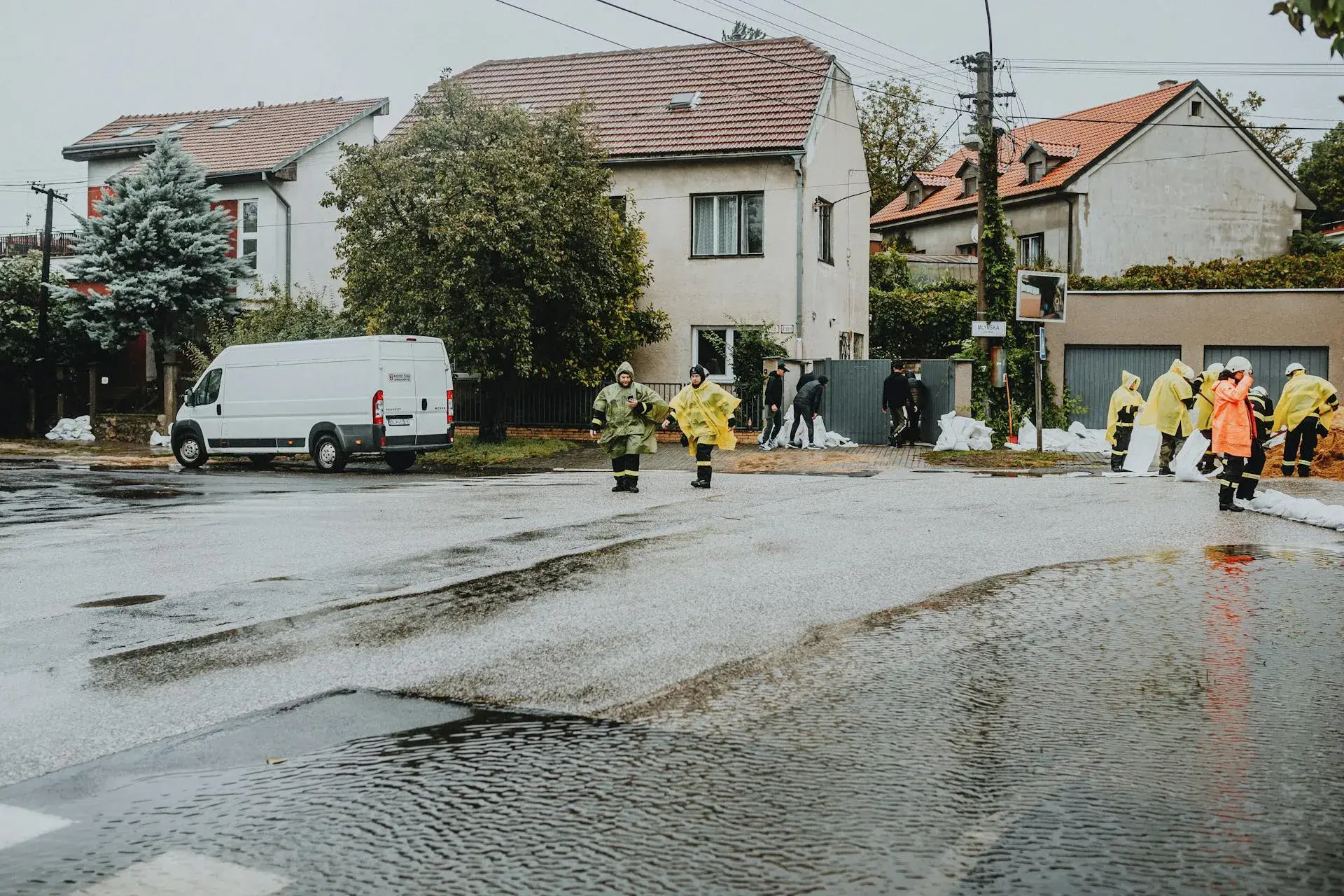
Sewage Cleanup in Old Hickory, TN
Sewage contamination creates an immediate health hazard that worsens with every hour of exposure. Our local team responds to Old Hickory emergencies within 60 minutes.
What Happens When You Call
A real person answers, not a call center. We assess your sewage situation, determine the contamination scope, and begin coordinating your response immediately.
Your dedicated sewage cleanup team is dispatched from our local base serving Old Hickory and the surrounding Davidson County communities.
Team arrives with extraction equipment, personal protective gear, antimicrobial agents, and containment materials. Emergency extraction and safety protocols begin immediately.
Sewage extracted, contaminated materials identified for removal, decontamination underway. You know exactly what comes next.
Sewage in your home is not a maintenance problem. It is a health emergency. Category 3 water carries bacteria, viruses, parasites, and chemical contaminants that pose immediate risk to anyone in the structure. X Response exists for exactly this moment. When you reach out, your sewage cleanup team is mobilized within minutes and on site within the hour. From that point forward, one team manages everything: extraction, decontamination, material removal, drying, and documentation. You are never left guessing about the next step. Call now. Your team is standing by.
Why Old Hickory Homes Are Vulnerable to Sewage
Old Hickory's sewage risk is tied directly to the aging infrastructure of Metro Nashville's sewer system and the community's position in a river bend where hydraulic pressure during storms pushes contaminated water backward through the system. Metro Water Services, which serves Old Hickory as part of Davidson County, entered a federal consent decree in 2007 after the U.S. Department of Justice and EPA found the system was discharging more than 200 million gallons of untreated sewage annually into the Cumberland River and its tributaries through sanitary sewer overflows and combined sewer overflows. The consent decree, amended to extend compliance deadlines to December 2031, commits Metro to a multi-hundred-million-dollar program of sewer line rehabilitation, capacity upgrades, and overflow reduction. For Old Hickory homeowners, this means the infrastructure serving their community has documented capacity and condition problems that the city is working to resolve over a timeline stretching years into the future. Until those upgrades reach the eastern Davidson County lines that serve Hadley Bend, the risk of sewer backup during heavy rain remains elevated.
The community's geography amplifies the infrastructure problem. Old Hickory sits at a low point in the Cumberland River's Hadley Bend meander. During heavy rain, stormwater overwhelms both the sanitary sewer mains and the storm drainage, creating conditions where sewage cannot flow downhill to the treatment plant because the receiving system is already at capacity. The result is sewage backing up through the lowest entry points in the system: floor drains, basement fixtures, shower drains, and toilet connections at the lowest elevation in the home. In the Village's 1918-era homes with crawl space foundations, sewage can also surface through the ground or enter through deteriorating lateral connections that run from the home to the main line. The Cumberland River's proximity keeps the hydraulic baseline high, so even moderate rain events can create enough groundwater pressure to infiltrate the sewer mains and reduce their available capacity, a condition called inflow and infiltration that the consent decree specifically targets.
The 2007 Federal Consent Decree and System Capacity
In October 2007, Metro Nashville entered a consent decree with the U.S. Department of Justice, EPA, and the Tennessee Department of Environment and Conservation after years of documented sewer overflows. The investigation found that Metro's system was experiencing sanitary sewer overflows from capacity limitations and deteriorated pipes, and that the combined sewer system serving the oldest parts of Davidson County was discharging untreated sewage during rain events. The settlement, initially estimated at $300 to $400 million, requires Metro to eliminate unauthorized overflows of untreated sewage and control combined sewer overflows. The decree has been amended and the compliance deadline extended to December 2031. For Old Hickory, which sits in the eastern portion of the system far from the downtown combined sewer area, the relevant risk is sanitary sewer overflow from capacity limitations and pipe deterioration rather than combined sewer overflow. The lines serving Hadley Bend carry both sewage and the groundwater that infiltrates through aging joints, leaving less capacity for actual wastewater during storms.
Hydraulic Backpressure in the River Bend
Sewer systems rely on gravity. Sewage flows downhill through progressively larger mains until it reaches a treatment plant or a pump station that lifts it to the next segment. Old Hickory's position at the bottom of a river bend means its sewer mains run at low elevation relative to the surrounding system. During heavy rain, when stormwater infiltrates the system and downstream mains reach capacity, the sewage in Old Hickory's local lines has nowhere to go. It backs up through the path of least resistance, which is typically the lowest fixture in the nearest home. Floor drains in basements and crawl space cleanouts are the most common entry points. Homes built at the lowest elevations in the Hadley Bend meander face the most hydraulic pressure and experience backup first, but any home served by a sewer main that sits at or below the hydraulic grade line during a storm event is vulnerable.
Aging Sewer Laterals in Century-Old Housing
The sewer lateral is the pipe connecting a home to the city's main line. In Old Hickory's Village, these laterals were originally installed during or shortly after the 1918 construction era. They are typically clay tile or early concrete, materials that crack, separate at joints, and develop root intrusion over a century of use. A deteriorated lateral creates two problems: it allows groundwater to infiltrate the sewer system (contributing to the capacity problem the consent decree addresses), and it allows sewage to leak out of the pipe and into the surrounding soil. When the main line surcharges during a storm, the weakest point in the lateral can fail entirely, releasing sewage into the yard or crawl space rather than through an interior fixture. These lateral failures are particularly common in the Village where the original pipes have never been replaced and where tree roots from mature landscaping seek the moisture inside the pipes.
Crawl Space Contamination from Sewer Events
In Old Hickory's crawl space homes, sewage backup or lateral failure can introduce contaminated water into the space beneath the living area. Unlike a basement backup where the contamination is visible and contained by concrete walls, a crawl space event puts sewage directly onto exposed soil, against wood framing, on vapor barriers, and in contact with HVAC ductwork and plumbing lines. The alluvial clay soil holds the contamination rather than allowing it to drain. The warm, enclosed crawl space provides ideal conditions for bacteria to remain active for extended periods. And the natural airflow from crawl space to living space means pathogens, volatile compounds, and odor migrate upward into the occupied home. A sewage event in a crawl space is often worse than a basement backup in terms of health impact and remediation complexity because the contamination reaches more structural surfaces and persists longer in the enclosed, unventilated space.
Cumberland River Flood-Borne Sewage
When the Cumberland River rises into Old Hickory's low-lying areas during a dam-discharge event or major flood, the floodwater carries sewage with it. Every sanitary sewer manhole that the rising river submerges becomes a two-way connection: river water forces itself into the sewer main through the manhole, mixing with sewage, and the combined flow exits the system wherever the hydraulic pressure finds an outlet. During the May 2010 flood, when the Corps discharged at 102,000 cubic feet per second through Old Hickory Dam, river water inundated portions of Hadley Bend. That floodwater was not clean surface water. It was contaminated by submerged sewer infrastructure, agricultural runoff from upstream, and every pollutant source between Cordell Hull Dam and Old Hickory Dam along 97 miles of reservoir. Any home that took river flooding during that event or any future high-water event faced Category 3 contamination regardless of whether sewage visibly backed up through interior fixtures.
These factors layer together in Old Hickory. An aging sewer system under a federal consent decree for overflow violations serves a community at the hydraulic low point of a river bend, connected by century-old laterals that crack and fail, sitting above crawl spaces where contamination persists in soil and on framing. When the Cumberland rises, it carries sewage from the submerged infrastructure throughout the flood zone. Effective sewage cleanup here means treating the contamination at its full extent, not just mopping visible sewage off a floor. It requires understanding Category 3 water handling, structural decontamination, crawl space remediation, and the specific health protocols that raw sewage exposure demands.
What Happens to Your Home While You Wait
Within 1 Hour
Sewage spreads across flooring and begins soaking into porous materials. Bacteria, viruses, and parasites in the raw waste are active and pose immediate health risk through skin contact, inhalation of bioaerosols, and contact with contaminated surfaces. In Old Hickory's crawl space homes, sewage entering below the living space saturates the vapor barrier, pools on clay soil, and contacts floor joists and subfloor sheathing. The contamination is immediately hazardous. Do not attempt cleanup without proper protection.
1–24 Hours
Bacterial populations multiply rapidly in the warm, nutrient-rich environment that sewage creates. Drywall and carpet absorb contaminated water and become permanently compromised. In Middle Tennessee's warm climate, the biological load intensifies faster than in cooler regions. Gases including hydrogen sulfide and methane accumulate in enclosed spaces like crawl spaces, creating both health and explosion hazards. Materials that contact sewage for more than a few hours are typically unsalvageable and must be removed rather than cleaned.
24–48 Hours
Mold colonization begins on any surface that remains damp, accelerated by the organic nutrients sewage deposits on building materials. The sewage residue provides a richer food source than clean water alone, so colonization is faster and more aggressive. Health hazards intensify as bacterial colonies mature and airborne pathogen concentrations increase. The scope of material removal expands as contamination wicks upward through porous materials and migrates through gaps in the building envelope.
48–72 Hours
Structural materials begin degrading from sustained contamination. Subfloor sheathing softens, floor joists absorb contaminated moisture deeply, and the chemical compounds in sewage attack wood fibers. The health hazard extends throughout the home as bioaerosols distribute through natural air movement and HVAC systems. The line between cleanup and rebuild shifts as more materials are compromised beyond salvage. Insurance claim costs escalate sharply.
One Week and Beyond
Extensive structural contamination, active mold growth on all affected surfaces, severe health hazard throughout the structure. Materials that contacted sewage are permanently compromised and must be removed. The home may be uninhabitable until full remediation and reconstruction are complete. What started as a sewer backup cleanup becomes a Category 3 remediation, demolition, and rebuild project. Cost and timeline multiply at each stage of delay.
Sewage contamination is a health emergency that compounds rapidly. Every hour of delay increases both the health risk and the restoration cost. Contact X Response now. Our Old Hickory team responds within 60 minutes with full Category 3 equipment and protocols.
How We Restore Sewage-Damaged Old Hickory Homes
From the moment our team arrives, every step follows strict Category 3 water handling protocols. Here is exactly what the sewage cleanup process involves.
Safety Assessment and Contamination Mapping
Our team arrives in full personal protective equipment appropriate for Category 3 water exposure. Before any extraction begins, we assess the structure for safety hazards: standing sewage depth, gas accumulation in enclosed spaces, electrical hazards from submerged outlets or panels, and structural stability. We map the contamination boundary, identifying every surface and material that sewage contacted or that contaminated moisture reached through wicking. In Old Hickory's crawl space homes, we inspect below the structure to determine whether sewage entered the crawl space through backup, lateral failure, or groundwater infiltration. The contamination map drives every subsequent decision about what to extract, what to remove, and what to decontaminate.
Sewage Extraction and Material Removal
Standing sewage is extracted using professional equipment rated for contaminated water. Pumps, hoses, and extraction units are dedicated to Category 3 use and do not cross-contaminate with clean-water equipment. Once standing waste is removed, we identify and remove all porous materials that contacted sewage: carpet, pad, drywall below the contamination line, insulation, and any organic material that absorbed contaminated water. These materials cannot be decontaminated and must be disposed of as contaminated waste. In crawl spaces, we remove contaminated vapor barriers, saturated insulation, and any soil or debris that holds sewage residue. Non-porous materials like concrete, metal, and sealed surfaces can be cleaned and decontaminated rather than removed.
Decontamination and Antimicrobial Treatment
After extraction and material removal, all remaining surfaces receive professional decontamination. We apply EPA-registered antimicrobial and biocide treatments to every surface within the contamination boundary. For Old Hickory's crawl space homes, that means treating exposed floor joists, sill plates, subfloor sheathing from below, foundation walls, and any structural element the sewage contacted. We do not spray a single product and walk away. Treatment is applied at concentrations and dwell times specified by the manufacturer for Category 3 decontamination, then verified by visual inspection and, where warranted, surface testing. The goal is eliminating the pathogen load, not masking it.
Structural Drying
Once decontamination is complete, the structure must be dried to prevent mold colonization on the newly exposed surfaces. Structural wood that retained integrity after sewage contact still holds moisture that mold will exploit. We position commercial dehumidifiers and air movers throughout the affected area, including crawl spaces, and monitor moisture content daily. Old Hickory's humid climate and the proximity of the river and lake slow natural drying significantly, making mechanical dehumidification essential. We dry until all affected materials reach their target moisture content, not until they feel dry to the touch. Meters verify what hands cannot.
Verification, Documentation, and Completion
Final inspection confirms that all contaminated materials have been removed, all surfaces within the contamination boundary have been treated, moisture readings are at acceptable levels, and no residual odor indicates missed contamination. We provide completion documentation including contamination maps, photos of all phases, moisture readings, antimicrobial application records, and a detailed scope of work. This record supports your insurance claim and documents that your home has been professionally restored to a habitable condition. If any area fails our quality check, we continue work until it passes.
The X Response Difference
When you contact X Response for sewage cleanup, you get a remediation team that treats sewage as the biohazard it is. Full Category 3 protocols, documented results, verified completion.
Insurance Claim Guidance for Old Hickory Homeowners
Sewage backup coverage in Tennessee depends on your policy's specific endorsements. Standard homeowner's policies do not automatically cover sewer and drain backup; it typically requires an optional endorsement that many homeowners do not add until after their first event. If you have the endorsement, coverage usually applies to cleanup, material removal, and restoration of the affected area, though limits vary by carrier and policy. If the sewage entered your home because of a Cumberland River flood event that overwhelmed the sewer system, the damage may fall under flood insurance rather than your homeowner's policy, which creates a different coverage pathway entirely. The distinction between sewer backup (covered by endorsement) and flood damage (covered by flood policy) can be ambiguous when both happen simultaneously during a major rain event.
How X Response Helps
- Document all sewage contamination with professional photos, contamination maps, and a detailed scope of work from day one
- Identify the sewage source clearly, whether backup through interior fixtures, lateral failure, or flood-borne contamination, because it determines which coverage applies
- Prepare documentation that distinguishes sewer backup damage from flood damage if both occurred during the same event
- Align our remediation scope with standard insurance coverage categories and common endorsement limits so your adjuster can process the claim efficiently
- Explain your policy's sewer backup endorsement limits and any sublimits that cap coverage below your actual restoration cost
X Response does not file claims on your behalf, adjust claims, or make coverage determinations. We provide documentation and guidance to help you make informed decisions about your property and your policy. Coverage decisions are made solely by your insurance carrier.
Certified Restoration Specialists Serving Old Hickory
When you contact X Response for sewage cleanup in Old Hickory, your remediation team is drawn from certified professionals who work across Davidson County and understand Category 3 water handling in this specific community. They know how the sewer system serving Hadley Bend behaves during storms, how century-old laterals fail under hydraulic pressure, and how sewage contamination in crawl spaces requires a different approach than a basement backup in a modern home. They have handled sewer backup events in the Village's original DuPont housing, lateral failures in the older pipe network, and river-flood contamination along the low-lying sections of the bend. This is not a crew that treats sewage like dirty water. It is a biohazard remediation team with specific training, proper protective equipment, and the decontamination protocols that raw sewage exposure requires.
Every technician on your team holds current IICRC certification in water damage restoration with specific training in Category 3 contaminated water handling. They carry appropriate Tennessee state licensing and follow OSHA-compliant safety protocols for biohazard exposure. Equipment includes dedicated Category 3 extraction systems, EPA-registered antimicrobial agents, commercial dehumidification, HEPA air scrubbers, and personal protective equipment appropriate for raw sewage environments. When your team arrives, they bring everything needed to begin safe extraction and decontamination immediately.
In Old Hickory, X Response works with Tennessee Water and Fire, an independent local restoration partner serving Davidson County.
Sewage Cleanup FAQ for Old Hickory Homeowners
Other Emergency Services in Old Hickory

Water Damage Restoration
Burst pipes, storm flooding, standing water. We extract, dry, and restore before mold sets in.
Learn more
Fire Damage Restoration
Structural damage, soot, debris. We stabilize, clean, and rebuild what fire destroyed.
Learn more
Smoke Damage Restoration
Soot residue, chemical odors, HVAC contamination. We decontaminate surfaces, eliminate odors, and restore air quality.
Learn more
Mold Remediation
Testing, containment, removal, prevention. We find the source, eliminate the growth, and stop it from returning.
Learn moreNearby Service Areas
Also serving nearby: