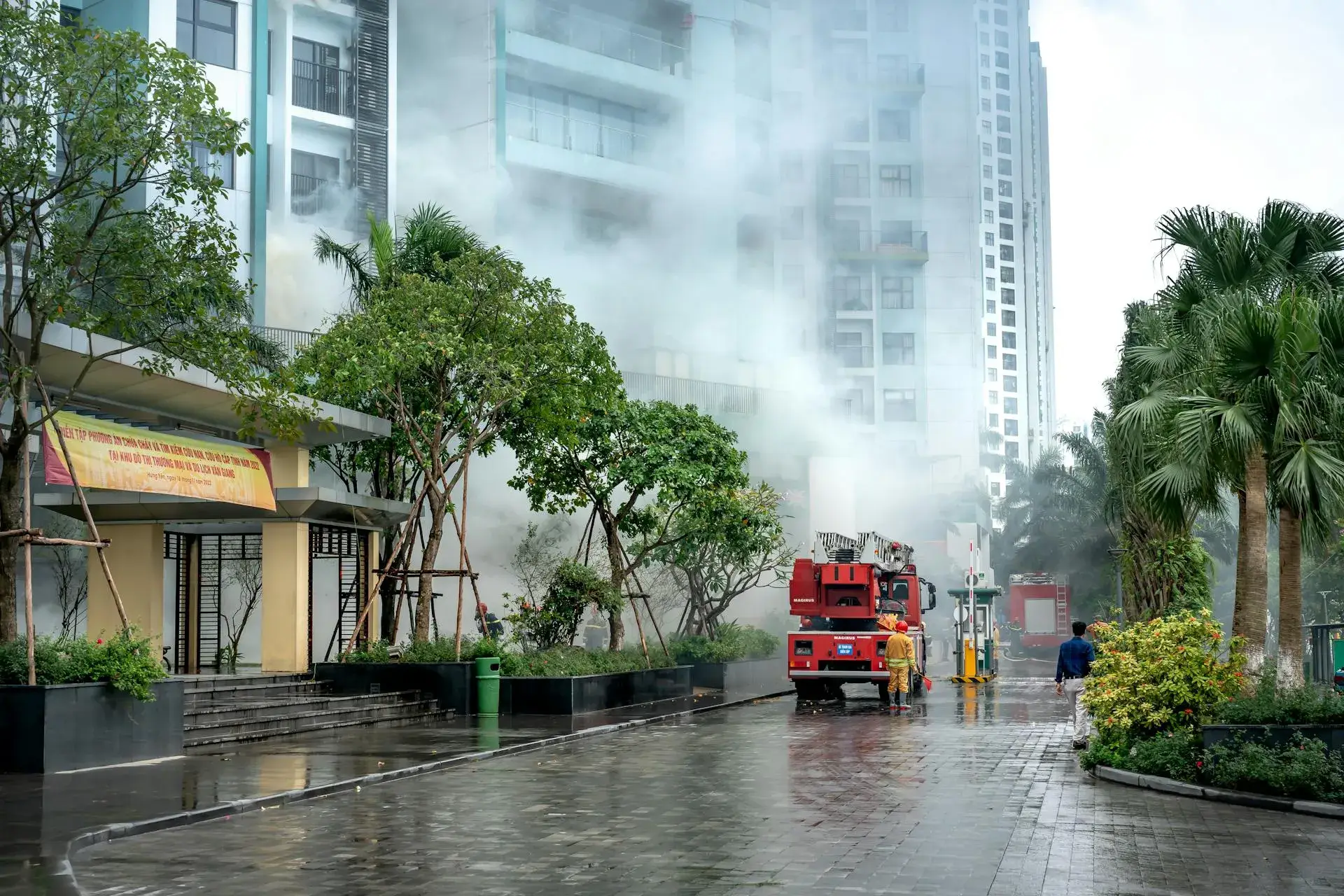
Smoke damage restoration specialist decontaminating soot residue inside a residential property
Teams Active in Hillsborough County

Smoke Damage Restoration in Brandon, FL

Every hour that smoke residue sits on surfaces, acidic compounds bond deeper into materials and volatile odor molecules penetrate further into your home's structure. Our local team responds within 60 minutes.

60-Min Response IICRC Certified Insurance Guidance Serving Hillsborough County

What Happens When You Call

You Call

A real person answers, not a call center. We assess your smoke damage situation, identify the likely source and residue type, and begin coordinating your response immediately.

15 Minutes

Your dedicated restoration team is dispatched from our local base serving Brandon and the surrounding Hillsborough County communities.

45–60 Minutes

Team arrives with HEPA air scrubbers, professional cleaning equipment, thermal foggers, and hydroxyl generators. Assessment and initial air quality stabilization begin immediately.

Same Day

Damage scope mapped, cleaning protocol determined based on residue type, restoration plan documented. You know exactly what comes next and the timeline involved.

Smoke damage does not stop when the visible haze clears. Residue continues reacting with surfaces, odor compounds migrate deeper into materials, and fine particulate settles into HVAC systems where it recirculates through your home with every cooling cycle. X Response exists for exactly this situation. When you reach out, your restoration team is mobilized within minutes and on site within the hour. From that point forward, one team manages everything: surface cleaning, odor elimination, air quality restoration, and contents recovery. Call now. Your team is standing by.

Why Brandon Homes Are Vulnerable to Smoke Damage

Brandon is an unincorporated community of over 114,000 residents in Hillsborough County, Florida, where smoke damage originates from multiple distinct sources that each leave different residue types and require different restoration approaches. On October 3, 2023, the Environmental Protection Commission of Hillsborough County issued an Air Pollution Advisory due to elevated levels of fine particulate matter from Canadian wildfire smoke, with Tampa Bay area air quality reaching unhealthy levels for sensitive groups. This event demonstrated how atmospheric smoke from distant sources infiltrates homes through HVAC systems, open windows, and building envelope gaps, depositing fine particulate on interior surfaces and within ductwork. Brandon's dense suburban housing stock, where homes run air conditioning continuously and HVAC systems cycle air from outdoors through return intakes positioned near ground level, made the community particularly susceptible to indoor air quality degradation during the wildfire smoke event. But wildfire smoke infiltration represents only one category of smoke damage that Brandon homeowners face.

Structure fires in Brandon's multi-family housing generate the most severe smoke damage events in the community. The May 2024 Russellwood Condominiums fire and the April 2024 Hamptons at Brandon Condominiums fire each displaced dozens of residents and spread smoke contamination well beyond the units where fire occurred. In multi-family buildings, smoke migrates through shared attic spaces, HVAC plenums, plumbing chases, and gaps around electrical penetrations to reach units several doors removed from the fire origin. Residents in these adjacent units often discover smoke damage days or weeks later as odors emerge from wall cavities, ductwork, and soft furnishings that absorbed smoke compounds during the event. Beyond structure fires, Brandon residents contend with furnace puffback incidents when older heating systems malfunction during the brief Florida winter, kitchen fires that distribute protein-based smoke through the entire home via the HVAC system, and electrical fires that produce acrid plastic smoke from burning wire insulation within wall cavities. Each source creates a different residue type with distinct cleaning requirements.

Wildfire Smoke Infiltration Through HVAC Systems

Brandon homes run central air conditioning for approximately eight to nine months of the year, with the system cycling conditioned air continuously through supply and return ductwork. Return air intakes pull from the interior, but the system also draws outdoor air through building envelope gaps, soffit vents, and the air handler cabinet itself. When atmospheric smoke events occur, such as the October 2023 Canadian wildfire smoke that triggered the Hillsborough County Air Pollution Advisory, these systems pull smoke-laden outdoor air directly into the home and distribute it through every supply register. Fine particulate matter below 2.5 micrometers passes through standard residential HVAC filters and deposits throughout the duct system and on interior surfaces. The result is a thin, distributed layer of particulate across every surface the system serves, with heavier accumulation near supply registers. Standard residential filters rated MERV 8 or below cannot capture wildfire smoke particles, and most Brandon homes were built with filter racks sized for basic filtration rather than the high-efficiency media needed during smoke events.

Multi-Family Smoke Migration Pathways

Brandon's condominium and apartment complexes contain dozens of potential smoke migration pathways between units. Shared attic spaces above ceiling assemblies allow smoke to travel the full length of a building above the living space. Plumbing risers create vertical channels from ground floor to roof. Electrical panel rooms and utility chases connect multiple units with minimal fire-stopping between floors. HVAC systems in some older complexes share return air plenums that distribute smoke from one unit's fire to every connected space. During the Russellwood fire in May 2024, smoke contaminated units throughout the building far beyond where flames reached because these concealed pathways allowed migration during the fire event and continued offgassing from contaminated structural materials afterward. Restoring smoke damage in a multi-family setting requires tracing every migration pathway and treating each affected space, including those inside wall cavities and above ceilings that residents cannot see.

Protein and Grease Smoke from Kitchen Fires

Kitchen fires are among the most common sources of smoke damage in residential Brandon. These fires produce protein-based smoke residue that is nearly invisible when deposited on surfaces but produces an intensely unpleasant odor that worsens over time, particularly when surfaces are heated. Protein smoke deposits an oily, amber-tinted film that resists standard cleaning methods and requires specialized enzymatic or solvent-based treatments. Because Brandon homes run central AC continuously, kitchen fire smoke is drawn into the return system within minutes of ignition and distributed to every room the HVAC serves. The smoke deposits inside ductwork, on evaporator coils, and in the filter cabinet where it continues offgassing with every system cycle. Residents often notice the smell is worst when the AC kicks on, which indicates duct contamination. Restoration from protein smoke requires cleaning every surface in every room the system serves plus decontaminating or replacing the ductwork itself.

Puffback Events from Heating Systems

Although Florida's winter is brief, Brandon homes have heating systems that engage during cold fronts from December through February. Many homes use heat pump systems that reverse the AC cycle, while older homes may retain gas furnace units or oil-fired systems installed when the home was built in the 1970s and 1980s. Puffback events occur when combustion gases fail to exhaust properly and instead blow soot back through the heat exchanger and into the supply ductwork. The result is a sudden, explosive distribution of fine soot throughout the entire home in a single event. Residents return to find a fine black film on every surface in rooms served by the supply ducts. Puffback soot is extremely fine, oily, and penetrates deep into porous materials on contact. Because the event distributes contamination instantly to every room, the entire home requires professional restoration even though the failure occurred in a single mechanical component. These events typically occur on the first cold night of the season when the heating system fires for the first time in months.

Continuous AC Operation and Recirculation

The fundamental difference between smoke damage restoration in Brandon and in temperate climates is the role of the air conditioning system. In a Northern home that experiences a fire in winter, the HVAC may be off or cycling minimally, limiting smoke distribution through ductwork. In Brandon, the system runs continuously from March through November and intermittently the remaining months. This means any smoke event, whether from a structure fire, a kitchen incident, or an atmospheric infiltration event, is immediately distributed through the entire conditioned space via the duct network. It also means that contaminated ductwork continues recontaminating cleaned surfaces every time the system cycles after the initial event. Restoration that addresses surfaces but not the HVAC system fails in this climate because the source of continuing contamination remains active. Every smoke damage restoration project in Brandon must include the ductwork, the evaporator coil, the filter cabinet, and often the air handler itself as part of the scope.

These smoke damage sources converge in Brandon to create a community where indoor air quality threats come from structure fires in dense multi-family housing, atmospheric wildfire smoke events that penetrate HVAC systems, kitchen fires distributed through continuous AC operation, and seasonal heating malfunctions. Each source deposits different residue types that require distinct cleaning protocols. The common factor is that Brandon's climate and construction style, with year-round AC operation and tight building envelopes designed to keep humid air out, transforms the HVAC system into both a distribution pathway and a continuing contamination source that must be addressed for any smoke restoration to succeed.

What Happens to Your Home While You Wait

Within 1 Hour

Smoke particles settle on all exposed surfaces. Acidic soot begins reacting with metals, causing tarnishing on fixtures, hardware, and appliances. The HVAC system, running continuously in Brandon's climate, pulls smoke particles into the return duct and distributes them to every room through supply registers. Fine particulate deposits on evaporator coils and begins accumulating in the filter and duct lining.

1–24 Hours

Soot acids etch chrome, brass, and stainless steel surfaces. Smoke residue absorbs into porous materials including drywall, ceiling texture, fabric, and carpet fibers. Odor compounds penetrate deeper into soft furnishings and begin bonding at the molecular level. Plastic surfaces yellow from exposure. Without intervention, the HVAC system continues recirculating contaminated air and depositing additional particulate with each cycle.

24–48 Hours

Smoke residue becomes increasingly difficult to remove from porous surfaces as chemical bonding progresses. Metals develop permanent pitting where soot acids have concentrated. Odor compounds migrate into wall cavities, insulation, and structural wood where they become extremely difficult to neutralize. Fabrics that were cleanable on day one may require replacement as smoke compounds set permanently in the fibers.

48–72 Hours

Surface damage transitions from cleanable to permanent on many material types. Grout, natural stone, and unfinished wood absorb smoke compounds to a depth that surface cleaning cannot reach. Odor becomes embedded in the building structure rather than residing on surfaces. HVAC contamination is now systemic, with soot coating the interior of ductwork, the evaporator coil, and the blower assembly. Professional restoration scope and cost increase substantially.

One Week and Beyond

Smoke odor permeates the entire building envelope. Structural wood, concrete, and insulation hold odor compounds that require specialized treatment to neutralize. Surface staining becomes permanent on most materials. Contents that could have been professionally cleaned now require replacement. The HVAC system requires extensive decontamination or component replacement rather than simple cleaning. What started as a targeted cleaning project becomes a comprehensive restoration with demolition, treatment, and reconstruction components.

Smoke damage in Brandon progresses faster than in drier climates because humidity keeps acidic residue reactive on surfaces longer, and continuous AC operation distributes contamination throughout the structure with every cycle. Contact X Response now. The earlier intervention begins, the more of your home and belongings can be saved.

How We Restore Smoke-Damaged Brandon Homes

Smoke damage restoration follows a systematic protocol tailored to the specific residue type and distribution pattern. Here is exactly how we approach each phase.

Source Identification and Damage Assessment

Our team arrives with particulate monitoring equipment and professional assessment tools to determine the smoke source, residue type, and distribution extent. Different smoke sources produce dramatically different residues: wildfire smoke deposits fine mineral particulate, structure fires produce complex char and soot, kitchen fires leave oily protein residue, and puffback events distribute fuel-oil soot. Each type requires a different cleaning chemistry and technique. We map the distribution pattern through your home, test surfaces for residue type, inspect the HVAC system for internal contamination, and document the full scope with photos and written findings. This assessment drives the restoration plan and provides your insurance carrier the evidence needed to support the claim.

Air Quality Stabilization

HEPA air scrubbers are deployed immediately to begin filtering airborne particulate from the indoor environment. These commercial units cycle the entire air volume multiple times per hour, capturing particles down to 0.3 micrometers. The HVAC system is shut down to stop it from redistributing contamination during the restoration process. Negative air pressure is established in the most contaminated areas to prevent migration to cleaner spaces. In Brandon, where homes rely on AC for comfort, we position temporary cooling where possible while keeping the contaminated central system offline. Air quality stabilization continues throughout the project until final testing confirms particulate and odor levels have returned to acceptable ranges.

Surface Cleaning and Soot Removal

Every contaminated surface receives appropriate treatment based on the residue type identified during assessment. Dry smoke soot is removed first with chemical sponges and HEPA vacuuming to prevent smearing. Wet or oily residues require solvent-based cleaning agents applied with professional technique to lift residue without driving it deeper into porous materials. Protein smoke from kitchen fires demands enzymatic cleaners that break down organic compounds. We work systematically room by room, starting from the furthest point from the source and working inward, so cross-contamination does not compromise already-cleaned spaces. Ceilings are cleaned before walls, walls before floors. Every surface the HVAC system's supply registers reached must be treated, even in rooms that appear unaffected.

HVAC Decontamination

In Brandon, where AC runs continuously and distributes smoke to every room it serves, HVAC decontamination is not optional. We inspect the ductwork interior with camera equipment to assess contamination level. Depending on severity, the system receives either professional mechanical cleaning with negative-pressure containment or full duct replacement for systems where contamination has penetrated the duct lining material. The evaporator coil is cleaned with approved solvents that remove deposited particulate and oily residue. The blower assembly, filter cabinet, and air handler housing are decontaminated. New high-efficiency filtration is installed. The system is not restarted until all interior surfaces are clean, preventing recontamination from residual duct deposits that cleaning may not have fully addressed.

Odor Elimination and Verification

Smoke odor requires active treatment beyond surface cleaning because volatile compounds absorb into porous structural materials at a molecular level. We deploy hydroxyl generators that produce hydroxyl radicals, which break down odor molecules through oxidation without the harmful byproducts of ozone treatment. For severe odor penetration into structural wood and concrete, thermal fogging with appropriate odor counteractants reaches into material pores and cracks that liquid treatments cannot access. Treatment continues until multiple verification checks on successive days confirm that odor levels remain below detection threshold. This is critical because temperature and humidity fluctuations can release embedded compounds that testing on a single day might miss. We do not consider the project complete until the home passes verification under conditions that stress-test the treatment results.

The X Response Difference

Typical Experience A cleaning company wipes down visible surfaces but leaves contaminated ductwork in place. The AC redistributes smoke residue to freshly cleaned surfaces within hours, and the odor returns.
X Response We treat the HVAC system as part of every smoke damage project because in Brandon's climate it is both the primary distribution pathway and the ongoing contamination source. Surfaces and ducts are addressed together.
Typical Experience Ozone machines are placed and the house is sealed for 48 hours. When you return, the chemical smell masks the smoke temporarily, but the odor returns within weeks as embedded compounds continue offgassing.
X Response Hydroxyl-based odor treatment breaks down smoke compounds at the molecular level without creating harmful byproducts. We verify results across multiple days to confirm elimination rather than masking.
Typical Experience One cleaning approach is applied to every surface regardless of the smoke source. Kitchen fire residue gets the same treatment as wildfire particulate, and neither responds properly.
X Response We identify residue type during assessment and apply source-specific chemistry: enzymatic cleaners for protein smoke, solvent-based agents for oily residue, dry methods for char soot. The right approach for the actual contamination.
Typical Experience The job is declared complete based on visual appearance. Odor returns when humidity rises or the house warms up because embedded compounds were never addressed.
X Response Completion requires verified odor elimination across multiple days under varying conditions. We test when the house is warm and humid because that is when residual compounds release. No sign-off until verification passes.

When you contact X Response for smoke damage in Brandon, you get a team that addresses every contamination pathway: surfaces, HVAC, contents, and embedded structural odor as an integrated restoration rather than isolated tasks.

Insurance Claim Guidance for Brandon Homeowners

Smoke damage insurance claims in Florida depend on the source of the smoke and the extent of contamination. Smoke damage from a structure fire is covered under standard homeowner's policies as part of the fire loss, regardless of whether the fire occurred in your unit or an adjacent space. Smoke infiltration from external sources, including neighbor's fires, wildfire smoke events like the October 2023 Canadian smoke that reached Hillsborough County, and nearby industrial incidents, often falls under a different coverage determination. Some policies include this under the 'all perils' provision while others exclude environmental contamination. For condominium owners, the interaction between the master HOA policy covering common areas and individual unit-owner policies adds complexity. Clear documentation of the smoke source, distribution pattern, and restoration scope is essential for efficient claim processing.

How X Response Helps

  • Document the smoke source and date of event with photographic evidence establishing when contamination occurred
  • Map the full distribution of smoke residue through the property, including HVAC contamination that extends beyond visibly affected areas
  • Inventory all affected contents with descriptions, photos, and professional assessment of whether each item can be restored or requires replacement
  • Provide air quality testing results that demonstrate the contamination level and post-restoration improvement
  • Document the HVAC system condition to support inclusion of duct cleaning or replacement in the restoration scope

X Response does not file claims on your behalf, adjust claims, or make coverage determinations. We provide documentation and professional scope of work to support your claim process. Coverage decisions are made solely by your insurance carrier based on your specific policy language.

Certified Restoration Specialists Serving Brandon

When you contact X Response for smoke damage in Brandon, your restoration team brings specialized expertise in identifying residue types, tracing distribution pathways through HVAC systems and building assemblies, and applying source-specific cleaning protocols. They have worked through wildfire smoke infiltration events that contaminated entire neighborhoods, multi-family structure fires where smoke migrated through shared building cavities to units well beyond the fire zone, and the kitchen fires and puffback events that affect individual homes on a weekly basis throughout Hillsborough County. They understand how Brandon's continuous AC operation transforms the ductwork into a distribution and storage system for smoke contamination, and they build HVAC decontamination into every project scope from the initial assessment.

Every technician on your team holds current IICRC certification in fire and smoke restoration. Equipment includes commercial HEPA air scrubbers rated for the air volume in typical Brandon homes, hydroxyl generators for molecular odor elimination, thermal foggers for penetrating structural materials, duct inspection cameras, and the full range of cleaning chemistry for every residue type from protein smoke to wildfire particulate. The team carries air quality monitoring equipment to establish baseline contamination levels and verify restoration results. From assessment through final odor verification, one team manages the entire project with consistent standards and accountability.

In Brandon, X Response works with Dry Out Daddy Restoration, an independent local restoration partner serving Hillsborough County.

IICRC Certified
Licensed & Insured
24/7 Availability
Serving Hillsborough County
EPA Lead-Safe

Smoke Damage Restoration FAQ for Brandon Homeowners

Nearby Service Areas

Also serving nearby:

Smoke Damage Gets Worse Every Minute

Your Brandon restoration team is standing by. Free assessment. No obligation.

Available 24/7 · IICRC Certified · Insurance guidance included

Call Now Get Help Now Text Us