
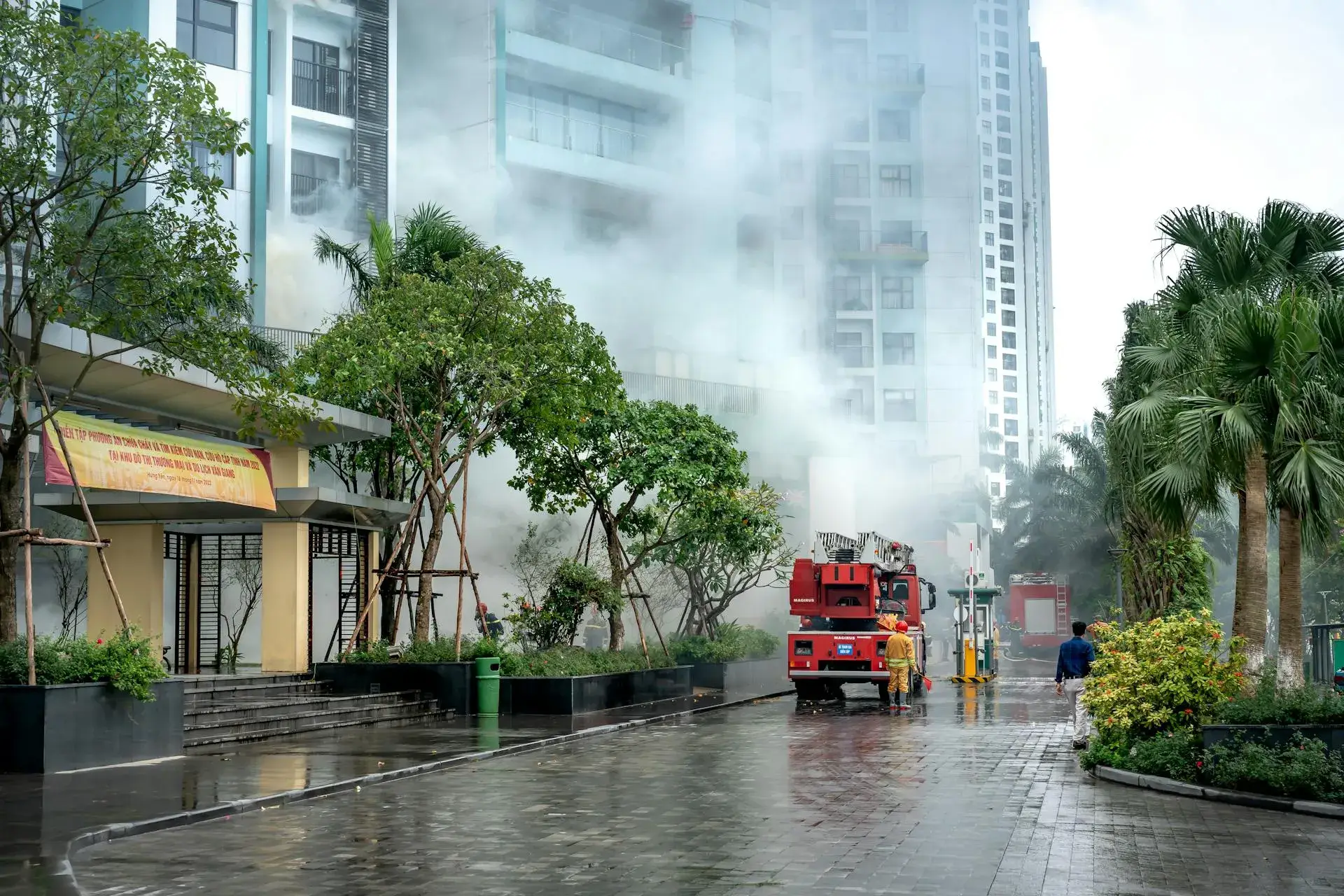
Smoke Damage Restoration in Austell, GA
Smoke residue acidifies and bonds to surfaces by the hour. The longer it sits, the more permanent the damage becomes. Our local team responds to Austell emergencies within 60 minutes.
What Happens When You Call
A real person answers, not a call center. We assess your situation, ask the right questions, and begin coordinating your response immediately.
Your dedicated restoration team is dispatched from our local base serving Austell and the surrounding southwest Cobb County communities.
Team arrives with HEPA air scrubbers, soot removal equipment, thermal foggers, and air quality testing tools. Emergency mitigation begins immediately.
Immediate hazards addressed, soot stabilized to prevent further bonding, air scrubbers running, restoration plan documented. You know exactly what comes next.
Smoke damage does not wait for a convenient time to address it. Whether it came from a structure fire next door, a wildfire smoke event that infiltrated your building envelope, or a furnace puffback that coated your interior with oily soot, the residue is chemically active right now. Soot acidifies, metals corrode, fabrics stain permanently, and odor drives deeper into materials by the hour. X Response exists for exactly this moment. When you reach out, your restoration team is mobilized within minutes and on site within the hour. Call now. Your team is standing by.
Why Austell Homes Are Vulnerable to Smoke Damage
Austell's smoke damage risk comes from three distinct sources that make the city unusually exposed compared to other southwest Cobb County communities. The first is structural fire smoke from the city's own commercial and residential fires. The July 2026 overnight fire that destroyed the Silk World warehouse on Veterans Memorial Highway sent a thick column of black smoke over the highway corridor, depositing particulate across neighboring businesses and residences downwind. The October 2025 Eagles Chapel Church fire burned for 19 hours, producing an extended smoke exposure that affected the surrounding Clay Road neighborhood. When fires of that scale occur in Austell's compact geography, the smoke does not stay confined to the property of origin. It infiltrates HVAC systems, deposits on exterior surfaces, and enters buildings through every gap in the envelope.
The second source is wildfire and regional smoke events. In April 2026, the Georgia Department of Public Health issued a statewide advisory as wildfire smoke spread across Georgia, and Cobb County experienced a Code Orange air quality alert with AQI levels between 101 and 150. The alert warned sensitive groups to limit prolonged outdoor exertion, but for buildings in Austell, the damage was already happening: wildfire particulate (PM2.5) entered structures through HVAC intakes, open windows, door seals, and any penetration in the building envelope. The 2025 State of the Air report from the American Lung Association gave metro Atlanta a failing grade for short-term spikes in particle pollution, confirming that these events are not anomalies but a recurring pattern that Austell property owners must plan for.
Regional Wildfire Smoke Infiltration
Austell sits in the western arc of metro Atlanta, directly in the path of smoke that drifts south and east from North Georgia wildfires and southeast from Alabama and Tennessee fires carried by prevailing winds. In April 2026, wildfire smoke triggered a Code Orange air quality alert across Cobb County, with AQI levels between 101 and 150 indicating unhealthy conditions for sensitive groups. The Georgia Department of Public Health issued a statewide advisory. For Austell buildings, the threat is not just outdoor air quality but infiltration: PM2.5 particulate from wildfire smoke is small enough to pass through standard HVAC filters, settle on interior surfaces, embed in soft furnishings, and contaminate ductwork. Older buildings along the Veterans Memorial Highway corridor and in Austell's historic core have looser building envelopes that admit more outdoor air, making them particularly vulnerable to wildfire smoke infiltration events.
Structure Fire Smoke Migration in a Compact City
Austell covers just 5.7 square miles, and its commercial corridors, residential neighborhoods, and industrial properties sit close together. When a structure fire occurs, the smoke plume affects a disproportionate share of the city simply because there is limited distance between the fire and neighboring properties. The July 2026 Silk World warehouse fire on Veterans Memorial Highway demonstrated this: a single commercial fire sent smoke across the entire highway corridor, affecting businesses and residences that were not involved in the fire itself. In Austell's tighter geography, a fire at one property routinely creates smoke damage claims at multiple surrounding properties, particularly when the fire burns for hours and wind carries the plume across neighborhoods.
Furnace Puffbacks in Older Heating Systems
Many homes in Austell's older neighborhoods were built with oil-fired or older gas furnaces that can produce puffbacks, sudden misfires that expel soot and combustion byproducts back into the home through the supply registers. A puffback coats walls, ceilings, furnishings, and the interior of the entire duct system with a fine, oily soot that is difficult to clean without specialized chemistry and equipment. The residue is greasy rather than dry, bonds quickly to surfaces, and distributes through every room connected to the forced-air system. Puffbacks are most common at the beginning of heating season in October and November when systems fire up after months of dormancy, and in Austell's older housing stock where furnaces have not been replaced or regularly serviced.
Neighbor and Adjacent-Property Smoke Exposure
Smoke damage in Austell frequently affects properties that had no fire on their own premises. A fire at one home in a close-set neighborhood sends smoke into adjacent homes through shared attic spaces, party walls, and HVAC systems that draw from contaminated outdoor air. A commercial fire along Veterans Memorial Highway deposits soot on the facades, parking areas, and rooftop HVAC units of every neighboring business. Property owners discover the damage when they find soot on surfaces, smell smoke in their interior spaces, or notice their HVAC system distributing odor throughout the building. The damage is real and insurable even though their own property never burned, but it requires professional documentation to demonstrate the connection to the originating fire for insurance purposes.
HVAC Distribution of Smoke Throughout Buildings
Forced-air HVAC systems are the primary mechanism by which smoke damage spreads beyond the room or area of origin. In Austell homes and commercial buildings, the return air pulls smoke-contaminated air into the duct system and distributes it to every register in the building. Soot deposits inside ductwork, on the evaporator coil, and in the air handler itself, then continues to release particulate and odor every time the system runs, long after the original smoke event has ended. Standard residential filters (MERV 8 to 10) do not capture the fine particulate from either wildfire smoke or structure fire smoke. Cleaning the visible surfaces without addressing the HVAC system means the building continues to re-contaminate itself from within.
These factors create a smoke damage environment specific to Austell: recurring wildfire smoke infiltration events that contaminate building interiors, structure fires in a compact city where smoke travels quickly to neighboring properties, furnace puffbacks in older heating systems, and HVAC distribution that spreads contamination throughout buildings long after the event ends. Effective smoke damage restoration here requires identifying the smoke source (wildfire particulate, synthetic structure fire soot, protein kitchen soot, or oily puffback residue), matching cleaning chemistry to the residue type, addressing the HVAC system as a contamination vector, and verifying air quality rather than relying on subjective smell tests.
What Happens to Your Home While You Wait
Within 1 Hour
Fresh soot sits loosely on surfaces and can be removed with proper technique. Smoke odor is present but has not yet driven deep into porous materials. Acidic residue from synthetic materials begins reacting with metal finishes, appliance surfaces, and chrome fixtures. This is the optimal window for intervention: professional cleaning at this stage prevents permanent damage to most surfaces and significantly reduces the overall restoration scope.
1–24 Hours
Soot begins bonding to surfaces through chemical adhesion rather than just sitting on them. Acidic residue pits chrome, etches glass, and stains grout and natural stone. Smoke odor migrates into wall cavities, insulation, carpet padding, and upholstered furniture. HVAC systems that have run since the event have distributed contamination to every room in the building. What was removable with dry cleaning methods at one hour now requires wet chemistry and more aggressive techniques.
24–48 Hours
Permanent staining occurs on porous surfaces that have not been cleaned. Metal corrosion becomes visible. Smoke odor saturates soft materials to the point where some require replacement rather than cleaning. Carpet padding absorbs odor that professional cleaning cannot reverse. Drywall and paint absorb residue that bleeds back through fresh coats unless sealed with specialized primers. The scope of replacement materials versus cleanable materials shifts significantly against you.
48–72 Hours
Corrosion damages electronics, appliances, and metal fixtures beyond repair. Smoke odor has penetrated the building envelope itself, embedding in insulation, framing, and concealed cavities. Standard cleaning methods are no longer sufficient for odor elimination; thermal fogging, ozone, or hydroxyl treatment becomes necessary. The project transforms from surface cleaning into deep structural decontamination.
One Week and Beyond
Smoke residue has bonded permanently to most unprotected surfaces. Odor elimination requires aggressive treatment of concealed spaces including wall cavities, attic insulation, and crawl space framing. Electronics exposed to acidic residue fail. HVAC systems require full cleaning or component replacement. What could have been a professional cleaning job in the first hours becomes extensive material replacement and odor treatment measured in weeks rather than days.
The window between a cleanable property and one that requires material replacement is measured in hours after smoke exposure. Contact X Response now. Our Austell team responds within 60 minutes.
How We Restore Smoke-Damaged Austell Homes
From the moment our team arrives, every step is documented, measured, and verified. Here is exactly what smoke damage restoration involves for Austell properties.
Smoke Source Identification and Assessment
Different smoke sources produce different residue chemistry, and effective restoration begins with identifying exactly what type of smoke affected your property. Wildfire smoke deposits fine PM2.5 particulate that penetrates deep into building materials. Structure fire smoke from synthetic materials produces acidic soot that corrodes metals and permanently stains surfaces. Kitchen fire smoke creates sticky protein residue that bonds aggressively. Furnace puffbacks produce oily, greasy soot that smears if cleaned incorrectly. Our team identifies the source, maps the extent of contamination through every room including concealed spaces, and documents everything with photos, air quality readings, and a written scope that supports your insurance claim from the first hour.
HEPA Air Filtration and Containment
Before cleaning begins, we establish HEPA-filtered air scrubbers to capture airborne particulate and prevent cross-contamination between cleaned and uncleaned areas. In Austell properties where wildfire smoke has infiltrated through the HVAC system, we isolate the duct system to prevent it from redistributing contamination during the cleaning process. For structure fire smoke that entered from outside, we seal the infiltration points to prevent ongoing entry. The goal is to stabilize the environment so that cleaning permanently reduces contamination rather than just moving it from one surface to another.
Surface Cleaning and Soot Removal
Each surface in your property is cleaned using the method and chemistry matched to the specific soot type present. Dry sponge techniques remove loose particulate without grinding it into surfaces. Wet cleaning with alkaline agents breaks down protein soot from cooking fires. Solvent-based cleaning addresses oily puffback residue. Acidic synthetic soot requires neutralizing agents before mechanical removal. Our technicians work systematically through the structure, cleaning from top to bottom, from back to front, so contamination moves toward the exit rather than being redistributed. Hard surfaces, soft goods, structural members, and finishes each receive appropriate treatment.
Odor Elimination
Smoke odor persists because residue remains in concealed spaces that surface cleaning cannot reach: wall cavities, insulation batts, crawl space framing, carpet padding, and HVAC ductwork interiors. We use thermal fogging to reach concealed cavities with odor-neutralizing agents that follow the same path smoke originally traveled. Hydroxyl generators provide continuous odor treatment in occupied spaces. For severe contamination in unoccupied areas, ozone treatment provides molecular-level destruction of odor compounds. HVAC ductwork is cleaned or sealed depending on contamination level. The goal is verified elimination confirmed by post-treatment air quality testing, not temporary masking that fades when generators are removed.
Verification and Completion
Before the job is considered complete, we verify results through air quality testing, visual inspection for residual soot or staining, and odor assessment of every room including concealed spaces accessed through HVAC registers and attic entries. If any area fails our quality standard, we identify the contamination source and retreat until verification confirms the standard is met. Final documentation includes before-and-after photos, air quality readings, a detailed scope of completed work, and the evidence your insurance company needs to process the claim.
The X Response Difference
When you contact X Response for smoke damage in Austell, you get a team that understands smoke chemistry, identifies the source, matches methods to the residue, and verifies results through testing rather than guessing. One team from assessment through verified completion.
Insurance Claim Guidance for Austell Homeowners
Smoke damage insurance claims in Georgia depend on the source and circumstances of the smoke exposure. Smoke damage from a fire on your own property is typically covered under the fire damage section of your homeowner's or commercial policy. Smoke damage from a neighbor's fire or a nearby commercial fire is also covered under most policies as a covered peril, even though your property did not burn. Wildfire smoke infiltration is more complex: some carriers cover it as wind-driven particulate under the wind/hail section, while others treat it as an air quality event that falls outside standard coverage. Furnace puffbacks are typically covered as a sudden mechanical failure. In all cases, professional documentation connecting the smoke exposure to a covered event is essential for claim approval.
How X Response Helps
- Document the smoke source and establish the causal connection to a covered peril with professional assessment and air quality data
- Map the full extent of contamination including concealed spaces, HVAC systems, and secondary areas that smoke reached beyond the obvious affected rooms
- Photograph and catalog all affected contents including soft goods, electronics, and materials that require cleaning or replacement
- Provide air quality testing results that demonstrate contamination levels before and after restoration, giving your adjuster objective data
- Separate restoration categories (cleaning, replacement, odor treatment, HVAC) so your adjuster can process each under the appropriate coverage section
X Response does not file claims on your behalf, adjust claims, or make coverage determinations. We provide documentation and guidance to help you make informed decisions about your property and your policy. Coverage decisions are made solely by your insurance carrier.
Certified Restoration Specialists Serving Austell
When you contact X Response for smoke damage in Austell, your restoration team is drawn from certified professionals who work across southwest Cobb County and understand the specific smoke challenges properties face here. They have cleaned wildfire particulate from buildings after Code Orange events, restored commercial properties along Veterans Memorial Highway after neighboring business fires, addressed puffback contamination in older Austell homes, and managed the secondary smoke damage that reaches surrounding properties when a large structure like Eagles Chapel Church burns for hours. They know how Cobb County's humidity interacts with soot chemistry to accelerate bonding and corrosion, and they understand the HVAC configurations common to both Austell's older housing stock and its newer construction.
Every technician holds current IICRC certification in fire and smoke restoration and carries the appropriate Georgia state licensing. Equipment includes HEPA air scrubbers, thermal foggers, hydroxyl generators, ozone equipment for unoccupied treatment, air quality testing instruments, and the full range of cleaning chemistry needed to address every smoke residue type. When your team arrives, they bring everything needed to begin stabilization immediately, because in smoke damage restoration, every hour of delay translates directly into more aggressive and more expensive treatment methods.
In Austell, X Response works with Atlanta's Best Restoration, an independent local restoration partner serving Cobb County.
Smoke Damage Restoration FAQ for Austell Homeowners
Other Emergency Services in Austell

Water Damage Restoration
Burst pipes, storm flooding, standing water. We extract, dry, and restore before mold sets in.
Learn more
Fire Damage Restoration
Structural damage, soot, debris. We stabilize, clean, and rebuild what fire destroyed.
Learn more
Mold Remediation
Testing, containment, removal, prevention. We find the source, eliminate the growth, and stop it from returning.
Learn more
Sewage Cleanup
Sewer backups, contaminated water, biohazard. We extract, sanitize, and restore safely.
Learn more