
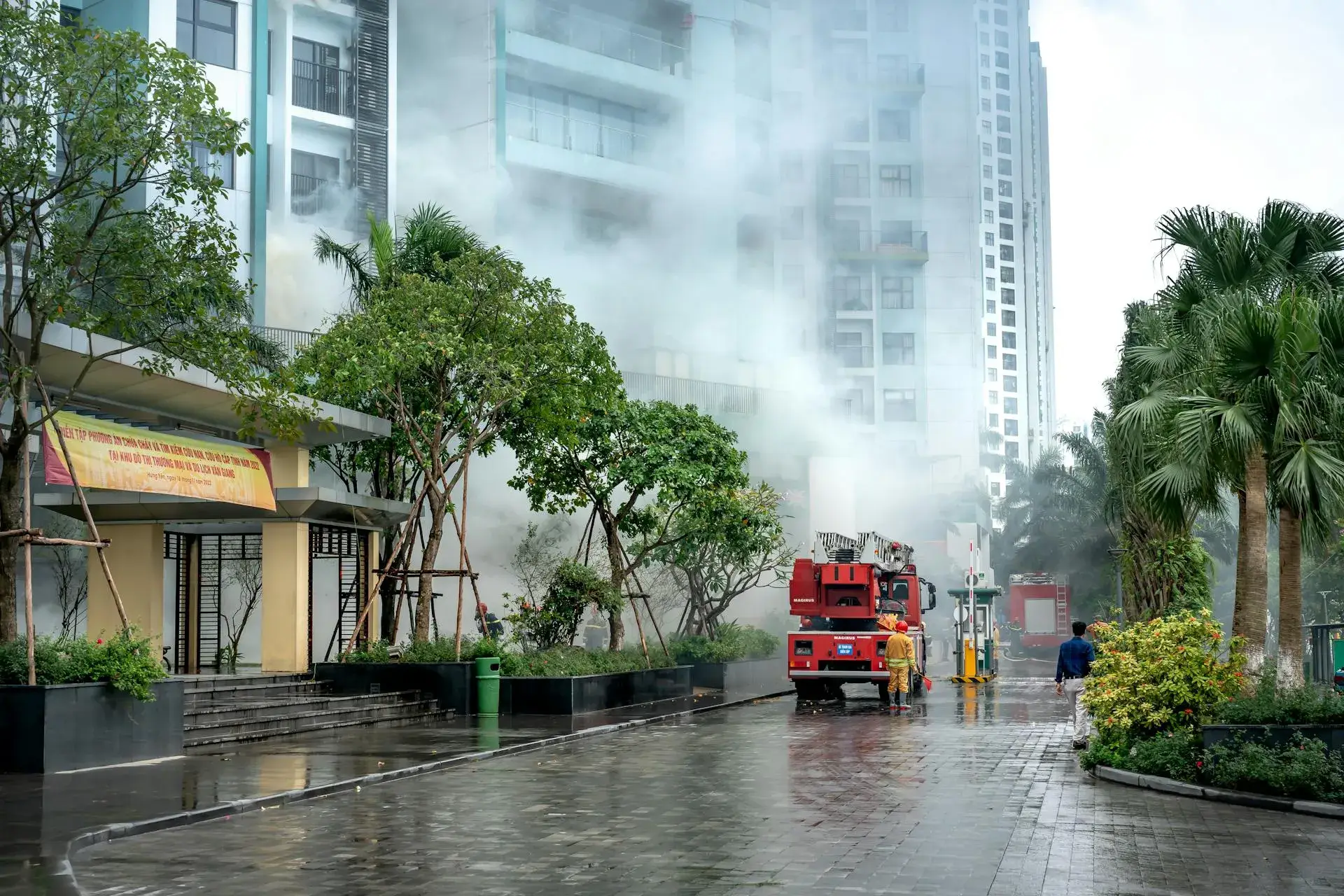
Smoke Damage Restoration in Mission, KS
Acidic smoke particulates penetrate forced-air HVAC ducts and mid-century framing within hours. Our Mission restoration team arrives within 60 minutes.
What Happens When You Call
Your emergency call connects immediately with our Johnson County response coordinator who evaluates soot type and dispatches specialists to Mission.
Technicians arrive within 60 minutes, seal off unaffected living areas, and establish negative air pressure containment zones.
Industrial HEPA air scrubbers equipped with activated carbon filters begin capturing airborne combustion particles and volatile organic compounds.
Our team performs precision soot removal on all architectural surfaces, decontaminates forced-air HVAC ductwork, and executes molecular deodorization.
Smoke damage represents a pervasive chemical hazard that extends far beyond the physical boundaries of a fire. Microscopic soot particles, volatile organic compounds, and corrosive aerosols travel through wall cavities, ceiling plenums, and forced-air heating systems, embedding acrid odors deep into residential finishes. X Response provides specialized emergency smoke remediation across Mission. We deploy industrial HEPA air filtration equipment, chemical sponge systems, and thermal deodorization technology to halt chemical corrosion and restore pristine indoor air quality. Call our Mission smoke restoration team now.
Why Mission Homes Are Vulnerable to Smoke Damage
Mission features a dense residential topography situated along the Rock Creek corridor and the Johnson Drive spine in northern Johnson County. The city's residential neighborhoods, including Mission Highlands, Milhaven Estates, Countryside, and the streets surrounding Broadmoor Park, primarily consist of classic mid-century ranch houses, Cape Cod cottages, and post-war split-levels built during the 1950s and 1960s. These homes commonly utilize centralized forced-air heating and cooling systems installed with sheet metal supply ducts and unlined panned joist returns in basement ceilings. When a kitchen fire, electrical short, or localized furnace malfunction occurs, combustion smoke and acidic soot particles are drawn rapidly into the return ductwork, pressurizing the distribution system and dispersing fine carbon contaminants across every room in the house within minutes.
The Johnson County Department of Health and Environment monitors regional air quality and seasonal agricultural smoke drift across Mission, advising residents to seal return air plenums and replace HVAC filtration when particulate levels elevate. While regional spring agricultural burning across the Flint Hills periodically elevates ambient outdoor particulate levels, indoor structural smoke contains concentrated chemical hazards. Household fires consume modern synthetic materials, including polyurethane foam cushioning, polyester carpeting, laminated cabinetry, and appliance plastics. This synthetic combustion generates dense, greasy soot containing hydrochloric, hydrocyanic, and sulfuric acids that chemically etch architectural glass, tarnish metallic fixtures, and permanently stain painted surfaces in Mission homes unless systematically neutralized by certified technicians.
Panned Joist Return Air Ducts and Smoke Distribution
Many mid-century homes in Mission utilize panned joist spaces, where sheet metal is nailed directly across floor joists to create return air runs without airtight duct liners. When combustion occurs, hot smoke penetrates subfloor cracks and is pulled into the heating system. The unsealed wood framing inside the return cavity absorbs pungent smoke residues, which continually re-contaminate household air every time the central furnace or air conditioning fan operates.
Synthetic Material Combustion and Oily Soot Adhesion
Modern home furnishings, foam mattresses, and electronics generate oily, high-particulate soot that bonds tenaciously to interior finishes. In Mission properties, attempting to wash these synthetic deposits with household liquid cleaners smears the greasy residue into porous drywall, leaving indelible dark streaks. Restoration requires specialized vulcanized rubber chem-sponges and polar solvent cleaners that physically capture dry soot before any wet cleaning is attempted.
Thermophoresis Along Exterior Stud Lines
During winter months in Johnson County, sharp outdoor temperature drops create steep thermal differentials between indoor air and cold exterior wall studs. Under the principle of thermophoresis, airborne smoke particles are propelled toward colder surfaces, depositing distinct vertical dark bands along exterior wall studs, ceiling joists, and window framing. These patterns require detailed chemical sponge treatment and stain-blocking primer application before repainting.
Attic Insulation Contamination and Odor Seepage
In Mission's mid-century ranches, ceiling drywall transitions into loose-fill cellulose or fiberglass attic insulation. Rising hot smoke penetrates attic access scuttles, recessed light fixtures, and plumbing vents, settling into the porous insulation layer. Saturated attic insulation becomes a persistent reservoir of acrid smoke odor, slowly off-gasing back into living quarters during hot Kansas summers unless thoroughly extracted and replaced.
Corrosion of Mid-Century Electrical and Mechanical Systems
The acidic nature of combustion soot causes microscopic corrosion on electrical contact points, circuit breaker panels, furnace controls, and copper piping. In homes with original or partially updated wiring, soot-induced corrosion can lead to intermittent electrical shorts, equipment failure, and elevated secondary fire hazards. Comprehensive decontamination requires HEPA vacuuming, contact cleaning, and testing by qualified restoration professionals.
Remediating smoke damage in Mission properties requires advanced equipment, chemical precision, and detailed craftsmanship. Our certified restoration technicians eliminate microscopic soot, neutralize structural odors, and restore clean, safe indoor air quality.
What Happens to Your Home While You Wait
Within Minutes
Airborne soot particles settle on all horizontal surfaces. Acidic chemical residues begin yellowing plastics, discoloring window blinds, and penetrating porous wall paint. Acrid smoke odors saturate draperies, upholstered furniture, and clothing.
1–24 Hours
Corrosive chemical soot etches glass mirrors, marble countertops, and polished brass fixtures. Drywall absorbs gaseous combustion products deep into its gypsum core. Uncleaned electronic circuit boards experience micro-corrosion from acidic deposits.
24–48 Hours
Soot stains become permanently bonded to painted surfaces, wooden cabinetry, and porous grout lines. Bare metal finishes suffer pitting and permanent discoloration. Smoke odors trapped inside forced-air ductwork intensify throughout the home.
48–72 Hours
Synthetic soot permanently degrades vinyl flooring, appliance finishes, and architectural millwork. Restoration scopes expand from surface cleaning to extensive material replacement and aggressive structural encapsulations.
One Week and Beyond
Acidic soot etching becomes irreversible, requiring total replacement of fixtures, glass, and cabinets. Structural framing suffers permanent chemical discoloration, and smoke odors become permanently embedded in unsealed lumber.
Immediate intervention prevents chemical etching and permanent structural odor. Contact X Response immediately for emergency smoke restoration in Mission.
How We Restore Smoke-Damaged Mission Homes
Our IICRC-certified smoke restoration workflow restores indoor air quality, cleans structural surfaces, and permanently eliminates odors in Mission homes.
Diagnostic Soot Mapping and Air Quality Evaluation
We inspect the entire property to determine the soot category (wet, dry, protein, or oily synthetic) and assess the depth of smoke penetration into HVAC systems, wall cavities, and attic insulation across your Mission home.
Negative Air Containment and HEPA Filtration
We install heavy polyethylene isolation barriers and operate commercial HEPA air scrubbers with activated carbon and potassium permanganate filters to capture airborne soot and gaseous VOCs, preventing cross-contamination.
Dry Chemical Soot Removal and Surface Cleaning
Technicians utilize dry vulcanized chemical sponges to lift carbon particles from delicate surfaces, wallpaper, and drywall without smearing, followed by specialized alkaline detergents to dissolve stubborn greasy soot films.
HVAC System Decontamination and Duct Encapsulation
We clean all supply trunks, return ducts, and blower assemblies using high-powered vacuum collection and rotating mechanical brushes, applying EPA-registered antimicrobial encapsulants to seal duct interiors.
Molecular Odor Neutralization and Hydroxyl Fogging
We deploy industrial hydroxyl generators and thermal foggers to penetrate structural framing, concrete slabs, and drywall, dismantling volatile odor compounds at the molecular level without damaging sensitive interior finishes.
The X Response Difference
Restoring indoor air quality and eliminating soot requires certified chemical techniques. Trust X Response for professional smoke mitigation in Mission.
Insurance Claim Guidance for Mission Homeowners
Smoke damage claims in Mission involve technical assessments to prove the extent of hidden soot contamination and particulate penetration under Kansas property insurance policies. Smoke and soot residues from covered fire events are eligible for professional cleaning, duct decontamination, and structural deodorization. Insurance carriers require detailed documentation proving that surface cleaning alone cannot remedy porous materials or ductwork. We provide your insurance adjuster with comprehensive photographic evidence, soot testing results, and Xactimate line-item estimates.
How X Response Helps
- Comprehensive photographic documentation and tape-lift soot sampling proving chemical contamination boundaries
- Itemized Xactimate estimates adhering to standardized insurance pricing guidelines for Johnson County
- Detailed inventories of personal contents categorized as salvageable versus total loss due to smoke permeation
- HVAC inspection reports detailing ductwork contamination and certifying the necessity of mechanical cleaning
- Direct coordination with insurance adjusters to ensure all required deodorization procedures are approved
X Response provides professional damage assessments, soot cleanup, and deodorization documentation. We do not act as public insurance adjusters or settle insurance claims. Homeowners should verify specific policy terms and coverages with their insurance provider.
Certified Restoration Specialists Serving Mission
Our smoke restoration specialists hold premier certifications from the Institute of Inspection, Cleaning and Restoration Certification (IICRC), including Fire and Smoke Restoration Technician (FSRT) and Odor Control Technician (OCT). Serving Mission, Roeland Park, and Fairway, our team brings exceptional dedication and scientific expertise to restoring fire- and smoke-affected properties.
We operate fully equipped emergency service units stocked with industrial HEPA air scrubbers, hydroxyl generators, thermal foggers, and specialized surface cleaning neutralizers. We prioritize indoor air safety, transparent communication, and meticulous workmanship throughout every restoration project.
In Mission, X Response works with Best Option Restoration, an independent local restoration partner serving Johnson County.
Smoke Damage Restoration FAQ for Mission Homeowners
Other Emergency Services in Mission

Water Damage Restoration
Burst pipes, storm flooding, standing water. We extract, dry, and restore before mold sets in.
Learn more
Fire Damage Restoration
Structural damage, soot, debris. We stabilize, clean, and rebuild what fire destroyed.
Learn more
Mold Remediation
Testing, containment, removal, prevention. We find the source, eliminate the growth, and stop it from returning.
Learn more
Sewage Cleanup
Sewer backups, contaminated water, biohazard. We extract, sanitize, and restore safely.
Learn moreNearby Service Areas
Also serving nearby: