
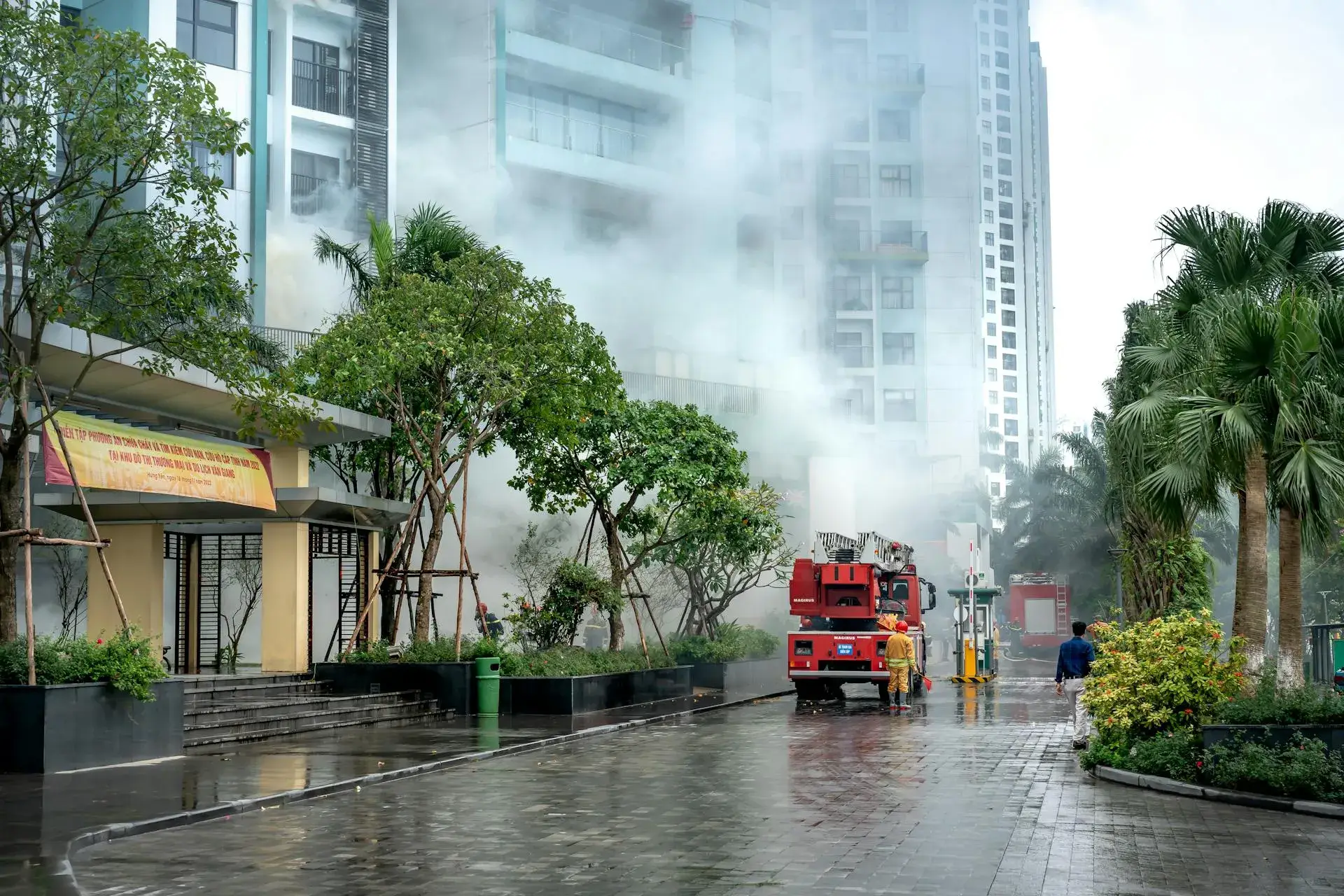
Smoke Damage Restoration in Belton, MO
Acidic combustion residues and airborne smoke particles penetrate structural cavities immediately. Our Belton smoke mitigation crew arrives on scene within 60 minutes.
What Happens When You Call
Your emergency call connects directly with an experienced smoke restoration supervisor who evaluates soot classification, checks air quality risks, and dispatches our Cass County crew.
Our mobile remediation unit arrives at your Belton residence within 60 minutes, immediately deploying commercial HEPA air scrubbers to trap hazardous airborne particles and volatile organic compounds.
Technicians conduct comprehensive surface testing to identify soot chemistry, distinguishing between acidic wet smoke, dry timber soot, and invisible protein residues.
Specialized chemical dry sponges, ultrasonic wash systems, and hydroxyl generators are mobilized to decontaminate surfaces and neutralize embedded odors permanently.
Pervasive smoke and soot contamination require immediate scientific neutralization to stop chemical etching, permanent fabric staining, and deep odor penetration throughout Cass County residences. Whether your home suffers from dense smoke generated during a basement furnace malfunction along North Scott Avenue, synthetic chemical soot from a kitchen fire near Missouri Route 58, or furnace puff-back particulate off Markey Parkway, X Response delivers certified, comprehensive restoration. A dedicated local restoration manager guides your property from initial air filtration through certified odor clearance. Call our 24/7 emergency line now for immediate response.
Why Belton Homes Are Vulnerable to Smoke Damage
The Belton Fire Department operates Fire Station 2 headquarters at 16300 N. Mullen Road and Station 1 at 223 Main Street. While professional fire suppression teams contain emergency incidents swiftly across Belton's neighborhoods, airborne combustion residues and microscopic soot particles disperse far beyond the immediate fire origin. Driven by intense thermal expansion and pressure differentials, toxic combustion aerosols migrate through unsealed floor cavities, attic bypasses, and vertical utility chases, leaving caustic chemical films across rooms untouched by active flame.
The architectural design of Belton homes directly dictates how soot and smoke disperse within the building envelope. Developed extensively through mid-century and late twentieth-century expansions, most residences are single-family ranches, split-levels, and multi-tier residences equipped with central forced-air heating and cooling equipment situated in full basements. Supply and return ductwork traverses throughout floor joist spaces and central wall chases. When an electrical fire, kitchen flare-up, or furnace puff-back occurs, the forced-air blower draws dense smoke into return plenums, rapidly distributing corrosive soot into every bedroom, closet, and ceiling assembly. Furthermore, the open stairwells characteristic of Belton split-levels act as natural thermal chimneys, channeling buoyant smoke plumes upward where high summer humidity or winter heating cycles drive volatile aromatic compounds deep into porous drywall, cellulose insulation, and structural framing.
Central Forced-Air HVAC Ductwork Contamination
Virtually all mid-century and modern homes in Belton utilize basement-level forced-air furnaces and air conditioning systems. Operating HVAC equipment circulates microscopic soot particles throughout supply ductwork, coating metallic trunk lines and blowing contaminated particulate into remote rooms.
Thermal Buoyancy in Split-Level Architecture
The split-level home designs common along Mullen Road and Cambridge Road feature open stairwells and multi-tiered ceiling configurations. Rising thermal currents draw heavy combustion gases and greasy soot up into upper-level bedrooms, depositing thick residues on horizontal surfaces.
Wet Soot Residues from Synthetic Materials
Modern home contents, including polyurethane foam mattresses, polyester upholstery, and synthetic carpeting, burn with low oxygen, generating sticky, smear-prone wet soot. This greasy residue resists conventional cleaning and permanently discolors paint if scrubbed improperly.
High Midwestern Humidity and Odor Adsorption
Summer relative humidity in Cass County often exceeds 75 percent. Saturated indoor air causes building materials to expand their pores, allowing vaporized smoke molecules to penetrate deep into subfloors, timber framing, and porous plaster.
Corrosive Acidic Attack on Metal and Glass
Combustion of household polyvinyl chloride (PVC) plumbing and electrical wiring produces hydrochloric acid vapors. Within 24 hours, these acidic residues cause irreversible pitting, tarnishing, and corrosion on brass fixtures, appliance control panels, and double-pane window glass.
Smoke damage restoration in Belton demands detailed understanding of local architectural framing, forced-air mechanical systems, and soot chemistry. From electrical smoke near Main Street to furnace malfunctions along Route 58, X Response delivers permanent, certified decontamination.
What Happens to Your Home While You Wait
Within Minutes
Airborne soot particles settle across all horizontal surfaces, including countertops, furnishings, and flooring. Acidic smoke aerosol begins chemically reacting with porous materials, causing immediate yellowing of white plastics and painted drywall.
1–24 Hours
Fine soot particles penetrate unfinished wood trim, drywall paper, and grout lines. Unprotected metal fixtures, including brass door knobs and aluminum window frames, begin tarnishing and pitting as acid residues activate.
24–48 Hours
Soot bonds tenaciously with painted surfaces, cabinet finishes, and vinyl flooring. Fiberglass HVAC filters saturate with toxic carbon particulate, while lingering odors absorb deeply into upholstered furniture and clothing fibers.
48–72 Hours
Corrosive chemical soot causes permanent etching of glass window panes, glazed ceramic tile, and kitchen appliance housings. Odor compounds become entrenched within structural framing timbers, necessitating advanced thermal fogging.
One Week and Beyond
Prolonged exposure allows acidic residues to permanently discolor finishes and corrode electrical circuits. Lingering smoke compounds absorb deep into wall framing and subflooring, requiring extensive structural removal and specialized thermal fogging.
Immediate professional intervention stops progressive chemical etching and prevents irreversible staining. Contact X Response immediately for 24/7 emergency dispatch across Belton.
How We Restore Smoke-Damaged Belton Homes
Our smoke remediation process follows the ANSI/IICRC S540 Standard for Trauma and Fire and Smoke Damage Restoration, utilizing scientific aerosol neutralization and particulate capture.
Air Scrubbing and HEPA Filtration Deployment
Within 60 minutes of arrival, our team installs industrial commercial air scrubbers equipped with multi-stage HEPA and activated carbon filtration. These units circulate room air continuously, capturing 99.97 percent of suspended soot particles down to 0.3 microns.
Soot Residue Testing and Chemical Characterization
We test surfaces throughout your Belton property to identify soot type: dry timber soot, greasy synthetic soot, or protein grease. Determining exact chemical composition guides our selection of specialized cleaning agents to avoid setting stains.
Specialized Surface Decontamination
Technicians clean walls, ceilings, and millwork using vulcanized natural rubber chemical sponges that lift dry soot without water. Greasy residues are treated with targeted alkaline detergents and ionic emulsifiers to break chemical bonds.
HVAC Mechanical System Decontamination
We clean and sanitize supply trunk lines, return ductwork, evaporator coils, and blower wheels using high-powered negative-air vacuums and rotary mechanical brushing, preventing recontamination of living spaces.
Thermal Fogging and Hydroxyl Odor Neutralization
To eliminate stubborn odors embedded in structural framing and insulation, we deploy thermal aerosol foggers and industrial hydroxyl generators that replicate high-heat conditions and neutralize odor molecules at the molecular level.
The X Response Difference
When smoke and soot infiltrate your Belton property, trust X Response for scientific particulate extraction, complete HVAC decontamination, and guaranteed odor elimination.
Insurance Claim Guidance for Belton Homeowners
Smoke damage claims in Belton require comprehensive technical documentation to satisfy Missouri insurance claim protocols. While smoke and soot damage are typically covered under standard homeowners policies as part of a fire loss, adjusters require technical evidence to authorize complete HVAC decontamination, extensive textile dry-cleaning, and thermal deodorization. Hidden soot migration inside enclosed wall cavities, attic insulation, and ductwork can lead to claim disputes if not documented promptly. Our experienced project managers provide detailed soot particle mapping, chemical test swab results, and standardized Xactimate line-item estimates to justify complete remediation.
How X Response Helps
- Conduct thorough photographic and microscopic soot-swab documentation of affected surfaces throughout the building envelope
- Document airborne volatile organic compounds and particulate concentrations to demonstrate the necessity of HEPA filtration
- Provide comprehensive inspection reports of central HVAC ductwork and air handling equipment
- Compile itemized textile and personal contents inventories for off-site dry-cleaning and restoration
- Prepare standardized Xactimate estimates aligned with Missouri regional pricing guidelines for direct adjuster billing
X Response is an independent emergency disaster restoration contractor. We are not licensed insurance adjusters, public adjusters, or legal professionals. We provide objective technical documentation and professional mitigation services to assist your claim.
Certified Restoration Specialists Serving Belton
Our smoke restoration specialists serving Belton bring extensive technical knowledge and dedication to Cass County homeowners. Whether addressing furnace puff-backs in mid-century ranch homes near North Scott Avenue, electrical fire smoke in split-levels near Cambridge Road, or commercial contamination along Interstate 49, our crews understand the physical and chemical behavior of smoke aerosols in Midwestern climates. We treat your property and possessions with meticulous care, working quickly to eliminate caustic residues and health risks.
Every project technician holds active certification through the Institute of Inspection, Cleaning and Restoration Certification (IICRC), including Fire and Smoke Damage Restoration Technician (FSRT) and Odor Control Technician (OCT) credentials. We operate commercial-grade mobile remediation units outfitted with HEPA air filtration systems, thermal aerosol foggers, and molecular hydroxyl generators. Our dedication to scientific restoration protocols ensures your home is returned to a clean, fresh, and odor-free environment.
In Belton, X Response works with Best Option Restoration, an independent local restoration partner serving Cass County.
Smoke Damage Restoration FAQ for Belton Homeowners
Other Emergency Services in Belton

Water Damage Restoration
Burst pipes, storm flooding, standing water. We extract, dry, and restore before mold sets in.
Learn more
Fire Damage Restoration
Structural damage, soot, debris. We stabilize, clean, and rebuild what fire destroyed.
Learn more
Mold Remediation
Testing, containment, removal, prevention. We find the source, eliminate the growth, and stop it from returning.
Learn more
Sewage Cleanup
Sewer backups, contaminated water, biohazard. We extract, sanitize, and restore safely.
Learn more