
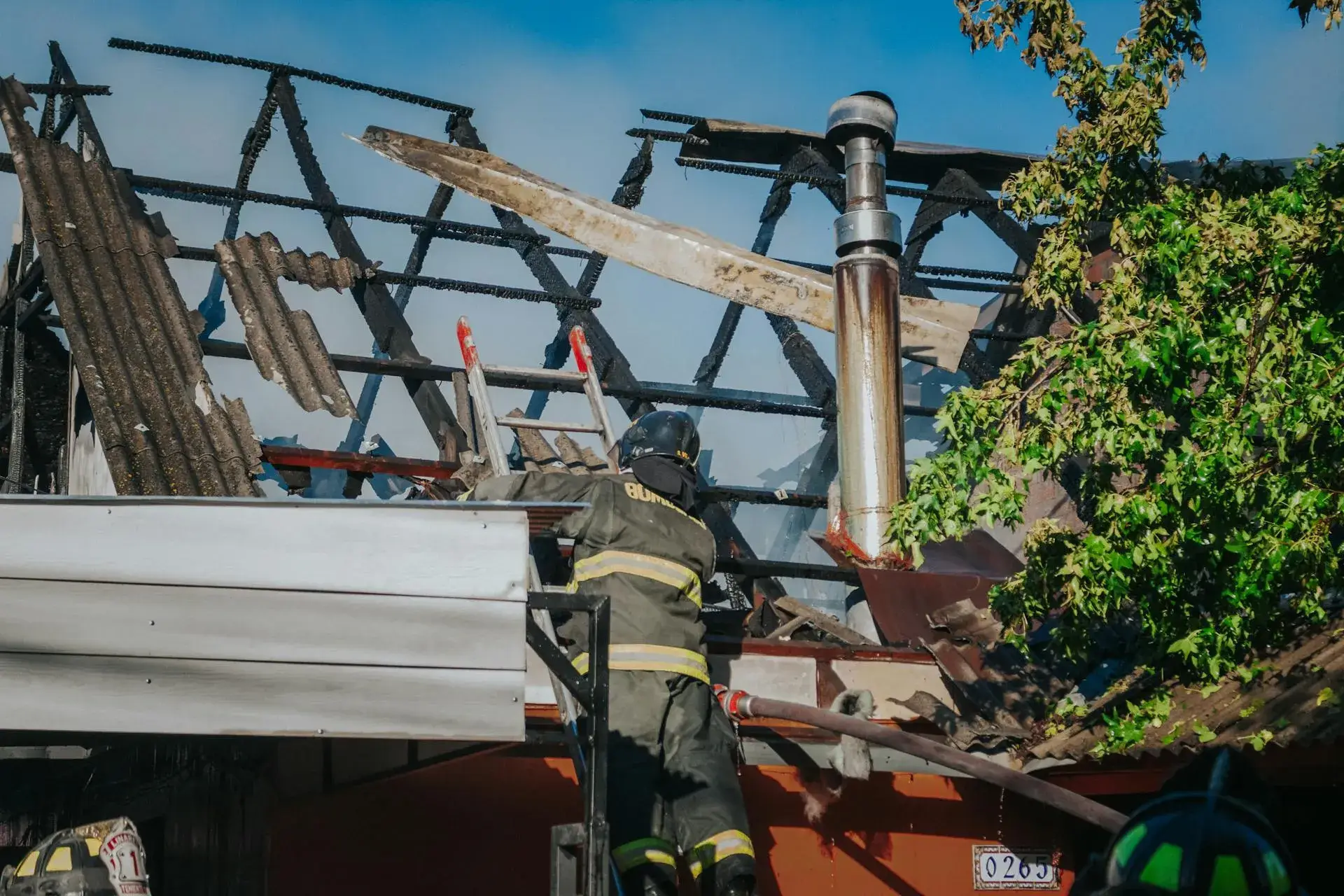
Fire Damage Restoration in Belton, MO
Acidic soot residues and suppression water compromise structural framing immediately. Our Belton emergency fire recovery team arrives on scene within 60 minutes.
What Happens When You Call
Your call connects immediately with an experienced disaster recovery manager who assesses structural safety, dispatches emergency crews, and coordinates directly with local fire marshals.
Our specialized emergency team arrives at your Belton property within 60 minutes, securing the perimeter with heavy plywood board-up, perimeter fencing, and structural roof tarping.
Crews extract thousands of gallons of firefighting water left behind during suppression, deploying thermal cameras to locate hidden water pockets within wall cavities.
Technicians stabilize structural assemblies, remove charred building materials, and apply specialized sealants to encapsulate lingering thermal residues.
Rapid emergency response following a residential or commercial fire is essential to prevent irreversible chemical etching, structural collapse, and widespread secondary water damage across Cass County properties. Whether your structure suffers from an electrical fire in an older residence near Old Town Belton, a kitchen grease blaze near Missouri Route 58, or a utility-room fire off Markey Parkway, X Response provides immediate, certified mitigation. A dedicated local restoration coordinator oversees your project from emergency board-up through complete structural reconstruction. Call our 24/7 emergency line now for immediate dispatch.
Why Belton Homes Are Vulnerable to Fire Damage
The Belton Fire Department provides emergency fire suppression and rescue operations, operating Station 1 on Main Street and Station 2 headquarters on Mullen Road. Serving approximately 24,000 residents across northern Cass County, the department's dedicated career crews respond rapidly to residential structure fires, vehicular blazes, and commercial emergencies along major arterials including Interstate 49 and Route 58. During high-intensity residential fire attacks, fire crews deploy high-pressure attack hose lines discharging hundreds of gallons of water per minute to knock down active fire fronts. While aggressive fire suppression saves lives and prevents adjacent structures from catching fire, it introduces thousands of gallons of standing water into attics, wall assemblies, and basements, leaving homeowners to navigate fire charring and severe post-fire water saturation simultaneously.
Belton's architectural landscape presents distinct structural recovery challenges depending on neighborhood age and construction style. In older neighborhoods surrounding historic Main Street and North Scott Avenue, homes constructed during the mid-twentieth century frequently feature older electrical services, balloon framing, or lack adequate draft stopping between floors, allowing fire and combustion gases to migrate rapidly into attics. In newer subdivisions along Mullen Road, Cambridge Road, and Markey Parkway, homes feature modern dimensional framing, engineered wood I-joists, and synthetic insulation that burn intensely at elevated temperatures. The combustion of modern synthetic furnishings, vinyl siding, and foam insulation releases corrosive hydrochloric and hydrocyanic acid aerosols that settle as oily, toxic soot across unaffected rooms. Unchecked, this acidic soot permanently corrodes metallic plumbing fixtures, etches window glass, and ruins appliances within 48 hours.
High-Volume Fire Suppression Water Saturation
Firefighting operations discharge thousands of gallons of water into attics and living levels. Water cascades through floor assemblies into finished basements, saturating subfloors, drywall, and insulation, creating severe structural collapse and mold hazards.
Aging Electrical Panels and Branch Circuit Overloads
Subdivisions constructed during the 1960s and 1970s often feature original electrical panels and branch circuits. Modern electronic demands and high-wattage space heaters during winter cold snaps strain these circuits, causing electrical arcing inside enclosed wall cavities.
Acidic Soot from Synthetic Building Materials
Combustion of modern synthetic carpeting, plastic laminates, and vinyl siding produces highly acidic chemical soot. Within hours, these corrosive residues permanently etch double-pane window glass, pit bathroom porcelain, and corrode brass plumbing fixtures.
Winter Heating Appliance Equipment Failures
Severe Midwestern winter freezes cause homeowners to push aging forced-air furnaces beyond design capacity or use unmonitored portable space heaters. Furnace heat exchanger cracks and electrical space heater overloads represent leading causes of winter residential fires in Belton.
Split-Level Architectural Thermal Spread
Split-level and raised-ranch floor plans prevalent in northern Cass County feature interconnected floor levels and open staircases. Buoyant smoke plumes and superheated combustion gases rise quickly, depositing heavy synthetic residues across upper living quarters even when flames remain localized.
Recovering from a structure fire in Belton requires comprehensive knowledge of local construction styles, post-suppression moisture dynamics, and soot chemistry. X Response delivers certified expertise to stabilize, clean, and rebuild your property safely.
What Happens to Your Home While You Wait
Within Minutes
Superheated soot and toxic gases spread throughout the building, settling on all horizontal surfaces. Acidic aerosols react with porous surfaces, causing immediate yellowing of plastics and discoloration of painted drywall.
1–24 Hours
Acidic chemical soot penetrates unfinished wood, porous stone, and grout lines. Metal door hardware and electrical conduits begin pitting and tarnishing. Standing suppression water soaks subflooring, triggering immediate wood fiber swelling and drywall softening.
24–48 Hours
Acidic combustion residues bond indelibly with ceramic fixtures, countertops, and glass. Wood finishes begin blistering and permanently staining. Saturated drywall ceilings under fire-damaged attics sag and threaten catastrophic collapse.
48–72 Hours
Chemical soot corrosion causes irreversible etching of metallic finishes and appliance housings. Microbial fungal spores activate in damp structural materials, introducing active mold contamination alongside smoke odors.
One Week and Beyond
Prolonged exposure to soot and standing suppression water leads to structural degradation of framing lumber. Pervasive chemical odors permeate deep into wall framing and subflooring, requiring extensive structural removal and specialized thermal fogging.
Immediate structural stabilization and acidic residue mitigation are essential to stop permanent chemical corrosion. Contact X Response immediately for 24/7 emergency dispatch across Belton.
How We Restore Fire-Damaged Belton Homes
Our fire restoration protocols adhere strictly to the ANSI/IICRC S540 Standard for Trauma and Fire and Smoke Damage Restoration, combining emergency structural stabilization with advanced chemical decontamination.
Emergency Site Securing and Structural Board-Up
Within 60 minutes of your call, our team secures compromised windows, doors, and breached roofs with structural plywood and heavy-duty weatherproofing tarps to guard against weather intrusion and unauthorized entry.
High-Volume Suppression Water Extraction
Using industrial submersible pumps and commercial truck-mounted extraction equipment, we remove standing firefighting water from basements, crawl spaces, and living areas before structural rot sets in.
Charred Material Demolition and Shoring
Our certified technicians safely remove non-salvageable structural framing, collapsed drywall, and soaked insulation. Temporary load-bearing shoring is erected where primary framing lumber has been compromised.
Specialized Soot Removal and Chemical Washing
We apply targeted chemical neutralizers, dry-chem sponges, and HEPA air filtration to remove oily, acidic soot deposits from architectural surfaces, preventing permanent etching of tile, porcelain, and glass.
Thermal Deodorization and Encapsulation
Technicians deploy thermal aerosol foggers and hydroxyl generators to neutralize embedded combustion odors at the molecular level, followed by applying specialized odor-counteractant sealants to exposed framing lumber.
The X Response Difference
When fire threatens your Belton home or business, depend on X Response for rapid structural securing, certified soot remediation, and comprehensive reconstruction.
Insurance Claim Guidance for Belton Homeowners
Filing an insurance claim for structural fire damage in Belton requires comprehensive technical documentation to satisfy Missouri property coverage requirements. Fire damage claims involve multiple complex coverage components, including dwelling repair, other structures, contents replacement, and loss of use. Fire suppression efforts often cause severe secondary water damage, which adjusters must evaluate under the primary fire peril. Our experienced project managers provide meticulous room-by-room photographic inventories, thermal imaging moisture maps, and standardized Xactimate line-item estimates to ensure every aspect of your loss is thoroughly documented and submitted for timely adjuster review.
How X Response Helps
- Conduct thorough initial photo and 3D imaging documentation of all fire, smoke, and suppression water damage before demolition
- Coordinate on-site inspections directly with your insurance adjuster and local Cass County fire marshals
- Provide detailed structural moisture mapping logs confirming the necessity of emergency water extraction and dehumidification
- Compile itemized personal property contents inventories (non-salvageable vs. restorable) with detailed condition notes
- Prepare accurate, transparent estimates using insurance-standard Xactimate pricing databases for rapid claim approval
X Response is an independent emergency disaster restoration contractor. We are not licensed insurance adjusters, public adjusters, or legal professionals. We provide objective technical documentation and professional mitigation services to assist your claim.
Certified Restoration Specialists Serving Belton
Our fire damage restoration team serving Belton brings decades of combined disaster recovery experience to Cass County. From ranch homes along North Scott Avenue to modern two-story properties near Markey Parkway and commercial facilities along Interstate 49, our technicians understand the distinct construction framing, insulation assemblies, and building materials of the Kansas City metropolitan area. We arrive on scene equipped to handle every phase of recovery, communicating clearly and providing steady leadership during an overwhelming crisis.
Every crew leader maintains active certification through the Institute of Inspection, Cleaning and Restoration Certification (IICRC), including Fire and Smoke Damage Restoration Technician (FSRT) and Applied Structural Drying (ASD) credentials. Our specialized response units carry commercial soot-removal equipment, industrial HEPA air scrubbers, hydroxyl generators, and emergency board-up supplies. We take pride in restoring safety and peace of mind to Belton families through disciplined, certified restoration craftsmanship.
In Belton, X Response works with Best Option Restoration, an independent local restoration partner serving Cass County.
Fire Damage Restoration FAQ for Belton Homeowners
Other Emergency Services in Belton

Water Damage Restoration
Burst pipes, storm flooding, standing water. We extract, dry, and restore before mold sets in.
Learn more
Smoke Damage Restoration
Soot residue, chemical odors, HVAC contamination. We decontaminate surfaces, eliminate odors, and restore air quality.
Learn more
Mold Remediation
Testing, containment, removal, prevention. We find the source, eliminate the growth, and stop it from returning.
Learn more
Sewage Cleanup
Sewer backups, contaminated water, biohazard. We extract, sanitize, and restore safely.
Learn more