
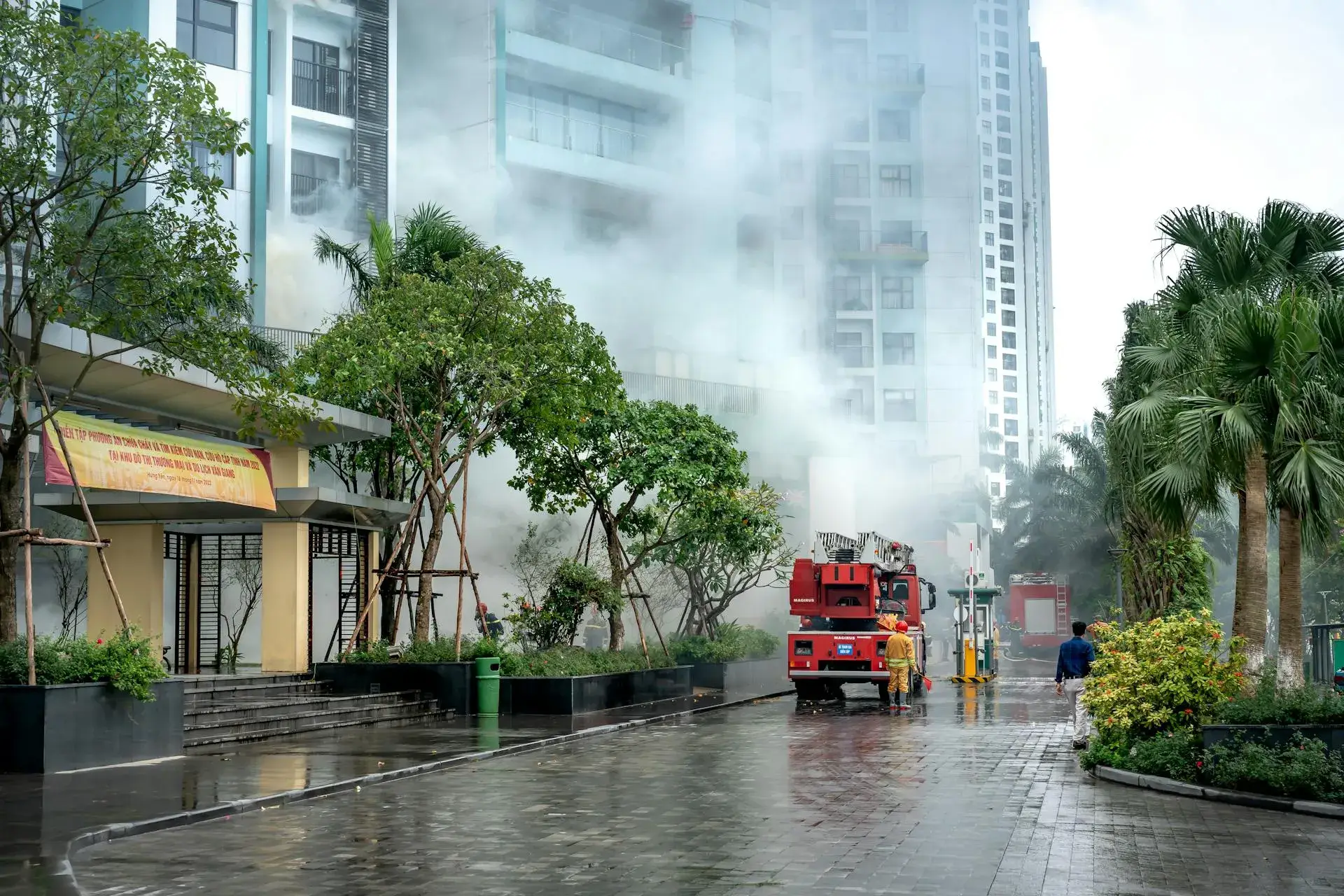
Smoke Damage Restoration in Smithville, MO
Acidic smoke particles and volatile organic compounds penetrate porous building assemblies within hours. Our Smithville smoke remediation specialists arrive within 60 minutes.
What Happens When You Call
Your inquiry connects directly with an experienced smoke restoration coordinator who assesses soot chemistry, odor severity, and structural impact.
Our Clay County emergency unit arrives at your Smithville property within 60 minutes equipped with HEPA air scrubbers, chemical dry sponges, and thermal foggers.
Technicians seal HVAC supply lines to isolate cross-contamination and establish continuous HEPA air scrubbing to eliminate airborne particulate matter.
Surfaces are decontaminated using specialized chemical solutions, while framing timbers are treated with hydroxyl generators to eliminate odors.
Decisive, scientific smoke damage restoration is essential to halt progressive chemical corrosion, clear toxic volatile organic compounds, and permanently eradicate pungent odors across Smithville properties. Whether your structure faces invisible protein residue from a kitchen grease fire in a residential subdivision off 169 Highway, heavy synthetic soot from an electrical failure, or pervasive smoke migration in a historic commercial building near Bridge Street, X Response delivers certified, clinical decontamination. An experienced indoor environmental specialist directs your recovery from air scrubbing through molecular odor destruction. Contact our 24/7 emergency dispatch line now for immediate response.
Why Smithville Homes Are Vulnerable to Smoke Damage
The Downtown Smithville Historic District encompasses thirty contributing buildings in the central business district developed between about 1868 and 1964. Characterized by Gothic Revival and Classical Revival architecture, these historic properties feature original brick facades, dimensional timber joists, lath and plaster walls, and heart-pine tongue-and-groove subflooring. When a fire occurs within or adjacent to these older structures, smoke behavior is governed by chimney-effect convection. Buoyant, heated combustion gases rise rapidly through vertical architectural voids, chases, and old dumbwaiter shafts, depositing corrosive soot into attic rafters and interstitial cavities far from the fire's origin. Microscopic soot particles penetrate deep into porous historic plaster and exposed brick mortar, where lingering smoke odors resist standard surface cleaning and require specialized thermal deodorization.
In contrast, newer residential construction throughout Smithville, including subdivisions near Smithville Lake and along U.S. Route 169, presents distinctly modern smoke hazards. Modern home furnishings, synthetic carpet backings, vinyl plank flooring, and consumer electronics produce complex synthetic and oily wet soot when burned at high temperatures. These petroleum-based residues carry high electrical conductivity and intense acidity, capable of etching window glass, pitting polished stone, and short-circuiting sensitive appliance circuit boards within hours. Furthermore, central HVAC systems distribute volatile organic compounds (VOCs) across entire floor plans in minutes, coating air ducts, cooling coils, and return plenums with toxic residues that recontaminate living spaces every time the furnace or air conditioner cycles on.
Chimney-Effect Smoke Travel in Historic Buildings
Historic downtown architecture lacking modern draft stops allows buoyant smoke gases to migrate through interior wall voids, saturating lath and plaster assemblies with acrid odors.
Synthetic Soot Acidity in Modern Homes
Combustion of synthetic upholstery, plastics, and electronics in contemporary residences generates corrosive black soot that permanently etches chrome, glass, and quartz within 48 hours.
Central HVAC System Cross-Contamination
Forced-air heating and air conditioning networks pull airborne smoke particles into supply ducts, coating duct linings and blowing persistent odors throughout unaffected rooms.
Pungent Protein Kitchen Smoke Residues
Kitchen grease and protein fires produce almost invisible, highly pungent amber films that adhere tenaciously to cabinetry, drywall, and appliances, requiring enzymatic cleaners.
Midwestern Humidity and Odor Reactivation
High summer relative humidity across Clay County causes porous framing lumber and drywall to absorb moisture vapor, reactivating trapped smoke odor compounds years after an incident.
Eradicating smoke damage in Smithville demands sophisticated chemical knowledge, advanced air filtration equipment, and deep understanding of both historic and modern architecture. From historic landmarks to modern lakeside homes, X Response provides certified, 24/7 smoke restoration.
What Happens to Your Home While You Wait
Within Minutes
Heated smoke particles settle on cooler exterior walls and ceilings, depositing chemical films. Plastics, fiberglass fixtures, and porous drywall begin absorbing microscopic soot particles.
1–24 Hours
Acidic soot begins chemically interacting with metallic finishes, causing yellowing and pitting on chrome plumbing fixtures, brass hardware, and painted trim.
24–48 Hours
Soot residues permanently stain painted wall surfaces, light-colored fabrics, and porous stone countertops. Household appliances and sensitive consumer electronics suffer internal corrosion.
48–72 Hours
Acidic combustion byproducts permanently etch glass windows and mirror surfaces. Unsealed timber framing absorbs volatile smoke compounds deeply, making deodorization complex.
One Week and Beyond
Severe chemical corrosion permanently destroys circuit boards, structural metals, and fine finishes. Porous wall assemblies must be completely replaced due to pervasive odor saturation.
Immediate intervention within the first 24 hours prevents irreversible chemical etching and saves finishes. Call X Response immediately for certified, 24/7 smoke cleanup in Smithville.
How We Restore Smoke-Damaged Smithville Homes
Our smoke mitigation protocols adhere strictly to the ANSI/IICRC S520 and S540 standards alongside IICRC Fire and Smoke Restoration guidelines, deploying chemical soot removal, HEPA filtration, and molecular odor neutralization.
Diagnostic Soot Analysis and Air Scrubbing Isolation
Our certified specialists arrive at your Smithville location within 60 minutes. We identify soot types (dry, oily, protein) and immediately place commercial HEPA air scrubbers to capture airborne particulate matter.
Chemical Dry-Sponge Decontamination
Technicians utilize vulcanized natural rubber dry-cleaning sponges to lift soot from ceilings, drywall, and delicate surfaces without smearing or embedding oily residues into porous finishes.
Targeted Aqueous and Alkaline Cleaning
For oily and synthetic soot residues, we apply specialized EPA-registered alkaline detergents and degreasers to break down petroleum bonds on cabinetry, tile, and structural components.
HVAC System Decontamination and Sanitization
We inspect, clean, and sanitize your entire heating and cooling network using high-velocity rotary brushes, HEPA vacuums, and antimicrobial encapsulants to prevent odor recirculation.
Molecular Odor Counteraction and Encapsulation
We utilize industrial hydroxyl generators, ozone chambers, and thermal fogging equipment to destroy volatile organic odor compounds at the molecular level, sealing treated timbers with shellac primers.
The X Response Difference
When smoke contaminates your Smithville home or business, depend on X Response for clinical soot removal, advanced molecular deodorization, and complete claim support.
Insurance Claim Guidance for Smithville Homeowners
Submitting an insurance claim for smoke and soot damage in Smithville requires precise technical documentation proving that particulate contamination and odor penetration have compromised your property under Missouri insurance guidelines. While standard homeowners and commercial policies cover losses stemming from smoke, adjusters frequently attempt to limit claims to superficial paint touch-ups rather than authorizing comprehensive duct cleaning, structural encapsulation, or soft-goods restoration. In Smithville, where both historic masonry construction and modern multi-level floor plans present distinct smoke distribution challenges, proving the depth of smoke penetration into unconditioned attics, HVAC systems, and wall cavities is essential for full claim authorization. Our team provides comprehensive particle testing, dated thermal scans, and line-item Xactimate estimates adhering to regional carrier standards.
How X Response Helps
- Conduct thorough photographic and forensic particulate testing documenting soot distribution and surface chemical etching
- Compile detailed non-destructive testing logs identifying smoke migration paths inside wall cavities and HVAC ductwork
- Prepare standardized Xactimate estimates detailing complete HEPA air scrubbing, chemical cleaning, and thermal deodorization
- Maintain comprehensive equipment operational logs justifying hydroxyl, ozone, and containment deployment
- Coordinate directly with your insurance company adjuster to validate comprehensive smoke remediation scopes
X Response is an independent emergency disaster recovery contractor. We are not licensed insurance adjusters, public adjusters, or attorneys. We provide objective technical documentation and certified smoke restoration services to assist your insurance claim.
Certified Restoration Specialists Serving Smithville
Our smoke restoration and indoor air quality specialists serving Smithville bring extensive technical proficiency and regional expertise across Clay and Platte counties. Having decontaminated historic properties in downtown Smithville, modern suburban homes along 169 Highway, and lakeside residential retreats, our technicians understand the distinct challenges of smoke behavior in Midwestern architecture. We approach every smoke restoration project with precision, clear communication, and dedicated craftsmanship to restore a clean, odor-free indoor environment.
Every project supervisor holds active certification with the Institute of Inspection, Cleaning and Restoration Certification (IICRC) as a Fire and Smoke Restoration Technician (FSRT) and Odor Control Technician (OCT). Our service vehicles are equipped with commercial HEPA air filtration equipment, hydroxyl generators, and specialized chemical decontamination agents. Adhering strictly to ANSI/IICRC standards, we deliver permanent, verifiable smoke and odor eradication.
In Smithville, X Response works with Best Option Restoration, an independent local restoration partner serving Clay County.
Smoke Damage Restoration FAQ for Smithville Homeowners
Other Emergency Services in Smithville
Water Damage Restoration
Burst pipes, storm flooding, standing water. We extract, dry, and restore before mold sets in.
Learn more
Fire Damage Restoration
Structural damage, soot, debris. We stabilize, clean, and rebuild what fire destroyed.
Learn more
Mold Remediation
Testing, containment, removal, prevention. We find the source, eliminate the growth, and stop it from returning.
Learn more
Sewage Cleanup
Sewer backups, contaminated water, biohazard. We extract, sanitize, and restore safely.
Learn moreNearby Service Areas
Also serving nearby: