
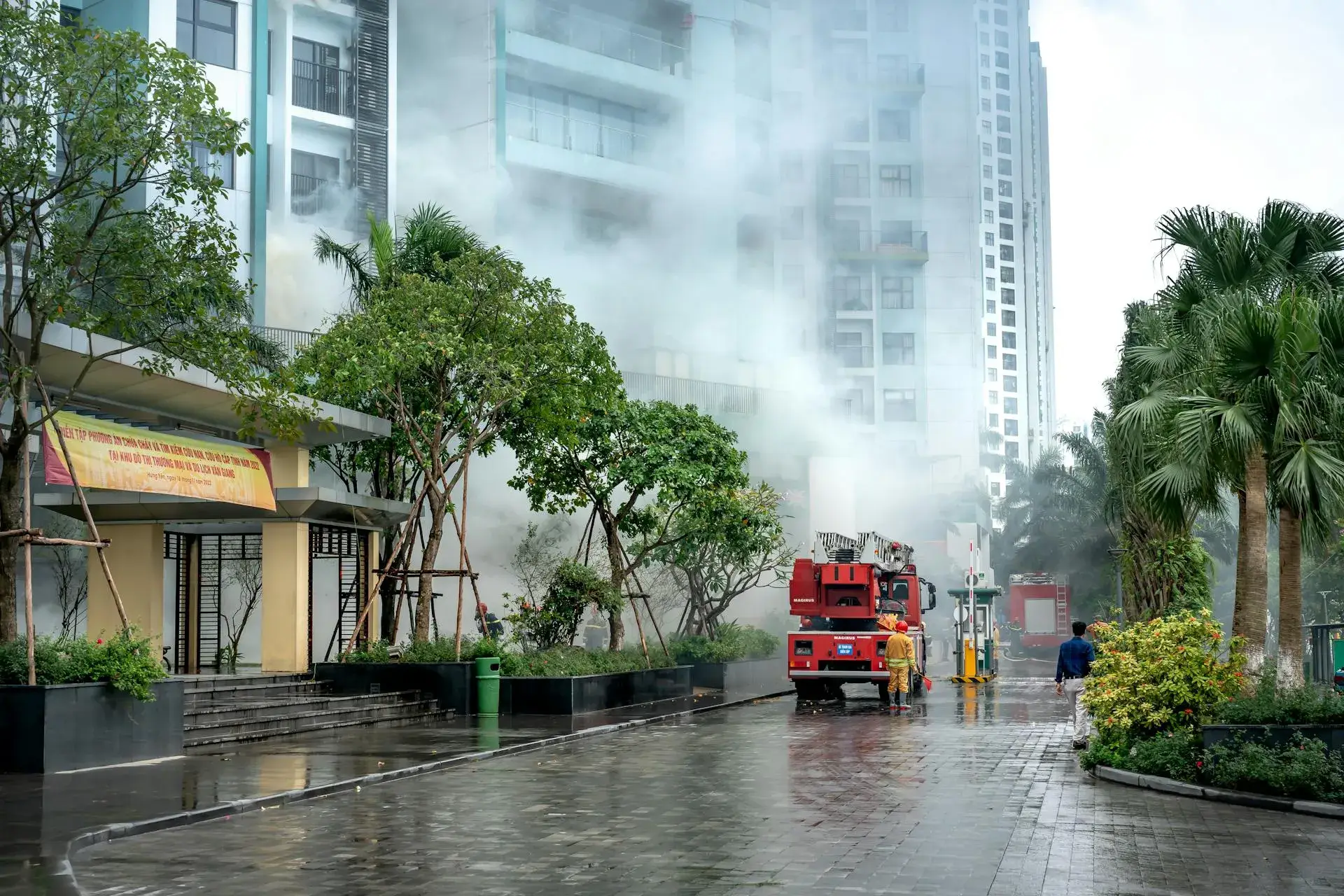
Smoke Damage Restoration in New Castle, PA
Microscopic smoke particulates and toxic chemical aerosols penetrate deep into drywall, insulation, and HVAC systems within hours of a combustion event. Our certified restoration specialists deploy across New Castle within 60 minutes to neutralize odors and eliminate hazardous soot.
What Happens When You Call
Direct emergency dispatch connects you to an experienced smoke restoration coordinator who assesses the combustion source and deploys our specialized field team immediately.
Our certified remediation crew arrives on site in New Castle within 60 minutes, establishing HEPA air filtration and inspecting soot distribution across all living spaces.
Technicians analyze soot chemistry, distinguishing between oily wet smoke, dry carbon residues, and protein films, and execute precision surface decontamination.
Industrial thermal foggers, hydroxyl generators, and HEPA air scrubbers operate continuously, neutralizing volatile organic compounds and deep-seated odors down to the molecular level.
Whether caused by a structural fire, a severe furnace puffback, or heavy regional wildfire smoke, combustion residues infiltrate every corner of a home. Microscopic soot particles settle into carpet fibers, adhere to painted walls, and circulate through ventilation ducts, emitting hazardous odors and causing persistent eye and lung irritation. X Response delivers an organized, scientifically grounded smoke remediation process that eliminates both visible soot and microscopic airborne contaminants. No masking perfumes, no lingering odors, and no half-measures. Our local technicians arrive equipped with commercial air scrubbers, HEPA vacuums, and molecular deodorization technology. Call now. Your team is standing by.
Why New Castle Homes Are Vulnerable to Smoke Damage
New Castle, Pennsylvania, the county seat of Lawrence County, is home to 21,926 residents and occupies a unique geographic basin at the confluence of the Shenango River and Neshannock Creek. Nestled within steep river valleys where terrain ascends rapidly from 758 feet downtown to over 1,200 feet along the North Hill, New Castle frequently experiences atmospheric temperature inversions. During stagnant weather patterns, cool air settles into the river basin beneath warmer upper-level air, trapping smoke, fine combustion particulates, and airborne contaminants close to the ground. According to the U.S. Environmental Protection Agency AirNow program, fine particulate matter from smoke creates Code Red conditions when the Air Quality Index exceeds 150, necessitating professional particulate filtration and air washing to protect respiratory health. This atmospheric dynamic was dramatically demonstrated across western Pennsylvania during regional wildfire smoke events, when heavy particulate plumes pooled within the Shenango Valley, infiltrating residential buildings and straining HVAC filtration systems.
Beyond regional atmospheric events, New Castle properties face localized smoke damage hazards stemming from the city's aging architectural infrastructure and heating equipment. In historic residential neighborhoods such as the North Hill Historic District, Croton, and Mahoningtown, many older residences rely on aging oil-fired or gas-converted hydronic boilers. During winter cold spells, delayed ignition in older burner assemblies can trigger sudden furnace puffbacks, dispersing dense, greasy carbon soot throughout basements, living areas, and duct chases within seconds. Furthermore, the prevalence of older multi-story homes featuring tall ceilings, balloon framing, and lath-and-plaster walls allows smoke from kitchen flare-ups or electrical fires to migrate vertically through interior chases. Scented protein residues from cooking fires bond tenaciously with porous plaster and unsealed woodwork, requiring specialized chemical degreasers and enzyme deodorization treatments.
River Basin Inversions and Stagnant Smoke Accumulation
New Castle's valley topography at the junction of the Shenango River and Neshannock Creek creates microclimatic temperature inversions that trap atmospheric smoke and fine particulate aerosols within low-lying neighborhoods, preventing natural air dispersion and forcing contaminants into residential building envelopes.
Heating Boiler Puffbacks and Greasy Carbon Soot
Many older homes across Lawrence County utilize vintage heating boilers. Delayed burner ignition results in forceful combustion puffbacks, propelling oily carbon soot through return air vents, floor penetrations, and interior living quarters, coating walls, furniture, and appliances with a stubborn sticky film.
Porous Historic Plaster and Woodwork Absorption
Homes in the North Hill Historic District feature original plaster walls, horsehair lath, and extensive ornamental woodwork. These porous organic materials readily absorb airborne smoke chemicals, locking in acrid combustion smells that cannot be remedied by ordinary household cleaning or surface painting.
Pungent Protein Smoke from Kitchen Flare-Ups
Protein fires resulting from burned meat or overheated cooking oils produce an invisible, greasy aerosol that coats kitchen cabinetry, ceiling fixtures, and surrounding rooms. While barely noticeable visually, protein residues emit a rancid odor that intensifies with indoor humidity and heat.
Eliminating smoke damage in New Castle requires specialized soot chemistry identification, thorough physical cleaning, and professional molecular deodorization. Effective restoration restores indoor air quality while protecting your property value.
What Happens to Your Home While You Wait
Within Hours
Microscopic soot particles and volatile chemical vapors migrate through airflow currents, settling onto painted walls, textured ceilings, and upholstery. Acidic soot begins reacting with moisture in the atmosphere, starting the tarnishing process on polished brass, chrome, and aluminum finishes.
1 to 24 Hours
Acidic combustion residues yellow porous plastics, fiberglass fixtures, and porous vinyl window frames. Soot particles work their way deep into carpets, curtains, and bedding. HVAC air handling units draw soot throughout the entire duct distribution system, contaminating unburned rooms.
24 to 48 Hours
Chemical soot bonds chemically with paint coatings, hardwood finishes, and porous grout lines, converting temporary surface film into permanent staining. Unprotected metal components in appliances and electronic devices experience initial pitting and corrosive deterioration.
48 to 72 Hours
Smoke odors penetrate deeply into structural framing lumber, subflooring assemblies, and attic insulation. Routine household cleaners prove ineffective, often smearing greasy soot further into wall pores and creating permanent dark streaks.
One Week and Beyond
Prolonged exposure to soot and chemical aerosols causes permanent etching of glass windowpanes and bathroom ceramics. Smoke odors become permanently embedded within structural timbers and lath assemblies, requiring aggressive thermal fogging, ozone or hydroxyl treatment, and odor-barrier encapsulation.
Fast professional intervention prevents soot from bonding permanently with your home surfaces. Contact X Response now for 24/7 certified smoke remediation across Lawrence County.
How We Restore Smoke-Damaged New Castle Homes
Effective smoke damage restoration demands scientific rigor, appropriate chemical cleaning agents, and high-efficiency particulate air filtration. Here is our systematic recovery procedure.
Air Quality Assessment and Site Containment
Upon arriving at your New Castle property, our certified technicians establish critical containment barriers using plastic sheeting and negative air pressure machines to prevent soot from spreading to unaffected areas. We evaluate indoor particulate concentrations and inspect the entire ventilation system.
Continuous HEPA Air Scrubbing
We deploy industrial air scrubbers equipped with three-stage filtration, including pre-filters, activated carbon adsorption phases, and true HEPA filters capable of capturing 99.97 percent of particles down to 0.3 microns. This rapidly purges airborne toxins and smoke aerosols from the living environment.
Surface-Specific Soot Decontamination
Our technicians select chemical cleaning techniques based on the exact type of soot present. We utilize dry vulcanized natural rubber sponges for dry carbon deposits, alkaline degreasing solutions for oily furnace puffback residue, and specialized enzyme cleaners for protein smoke films.
HVAC System and Ductwork Decontamination
We thoroughly clean and decontaminate supply and return duct runs, blower assemblies, and evaporator coils. Removing soot accumulations from ventilation conduits prevents contaminants from continually recirculating through your home when the heating or air conditioning system operates.
Molecular Odor Elimination and Encapsulation
To permanently eradicate deep-seated smoke odors, we perform thermal fogging using solvent-based deodorizing agents that penetrate porous building assemblies along the exact pathways traveled by smoke. For stubborn residues, we apply professional odor-blocking shellac primers to seal structural studs and subfloors.
The X Response Difference
X Response delivers certified, comprehensive smoke restoration throughout Lawrence County, guaranteeing clean indoor air and permanent odor removal.
Insurance Claim Guidance for New Castle Homeowners
Navigating an insurance claim for smoke and soot damage in Pennsylvania requires comprehensive physical documentation and technical evidence. Most standard homeowner insurance policies cover sudden and accidental smoke damage resulting from residential fires, kitchen flare-ups, and furnace puffback malfunctions. However, disputes frequently arise over whether soft goods, structural insulation, and ductwork can be cleaned or require complete replacement. Providing clear photographic proof, chemical soot classification, and detailed itemized scopes from a certified restoration professional ensures your claim is evaluated accurately.
How X Response Helps
- Document all visible soot patterns, furnace puffback fallout, and structural discoloration with high-resolution timestamped photography.
- Retain damaged furnace components or appliance parts that caused the smoke incident for inspection by your insurance adjuster.
- Include HVAC duct inspection reports and indoor particulate evaluations to substantiate the need for complete ventilation cleaning.
- Compile an itemized list of affected textiles, draperies, upholstered furniture, and personal belongings requiring professional restoration.
- Submit standardized Xactimate line-item restoration estimates that adhere to Pennsylvania insurance industry billing standards.
X Response provides objective damage documentation, environmental assessments, and certified restoration estimates. We do not act as public adjusters or make coverage decisions; final claim settlements remain the authority of your insurance carrier.
Certified Restoration Specialists Serving New Castle
When smoke or soot impacts your New Castle property, X Response connects you with experienced disaster restoration professionals who understand the distinctive architecture of Lawrence County. From historic Victorian residences on the North Hill to mid-century ranches along Wilmington Road, our technicians know how smoke moves through local structures and how different building materials react to heat and combustion chemicals. We are locally based and ready to respond immediately.
Every crew member holds professional certification from the IICRC in Fire and Smoke Restoration (FSRT) and Odor Control (OCT). Operating high-performance HEPA air scrubbers, thermal foggers, and industrial ultrasonic cleaning systems, our teams bring the advanced tools and practical experience required to restore your home to pristine condition safely and efficiently.
In New Castle, X Response works with Restoworks Disaster Restoration, an independent local restoration partner serving Lawrence County.
Smoke Damage Restoration FAQ for New Castle Homeowners
Other Emergency Services in New Castle

Water Damage Restoration
Burst pipes, storm flooding, standing water. We extract, dry, and restore before mold sets in.
Learn more
Fire Damage Restoration
Structural damage, soot, debris. We stabilize, clean, and rebuild what fire destroyed.
Learn more
Mold Remediation
Testing, containment, removal, prevention. We find the source, eliminate the growth, and stop it from returning.
Learn moreNearby Service Areas
Also serving nearby: