
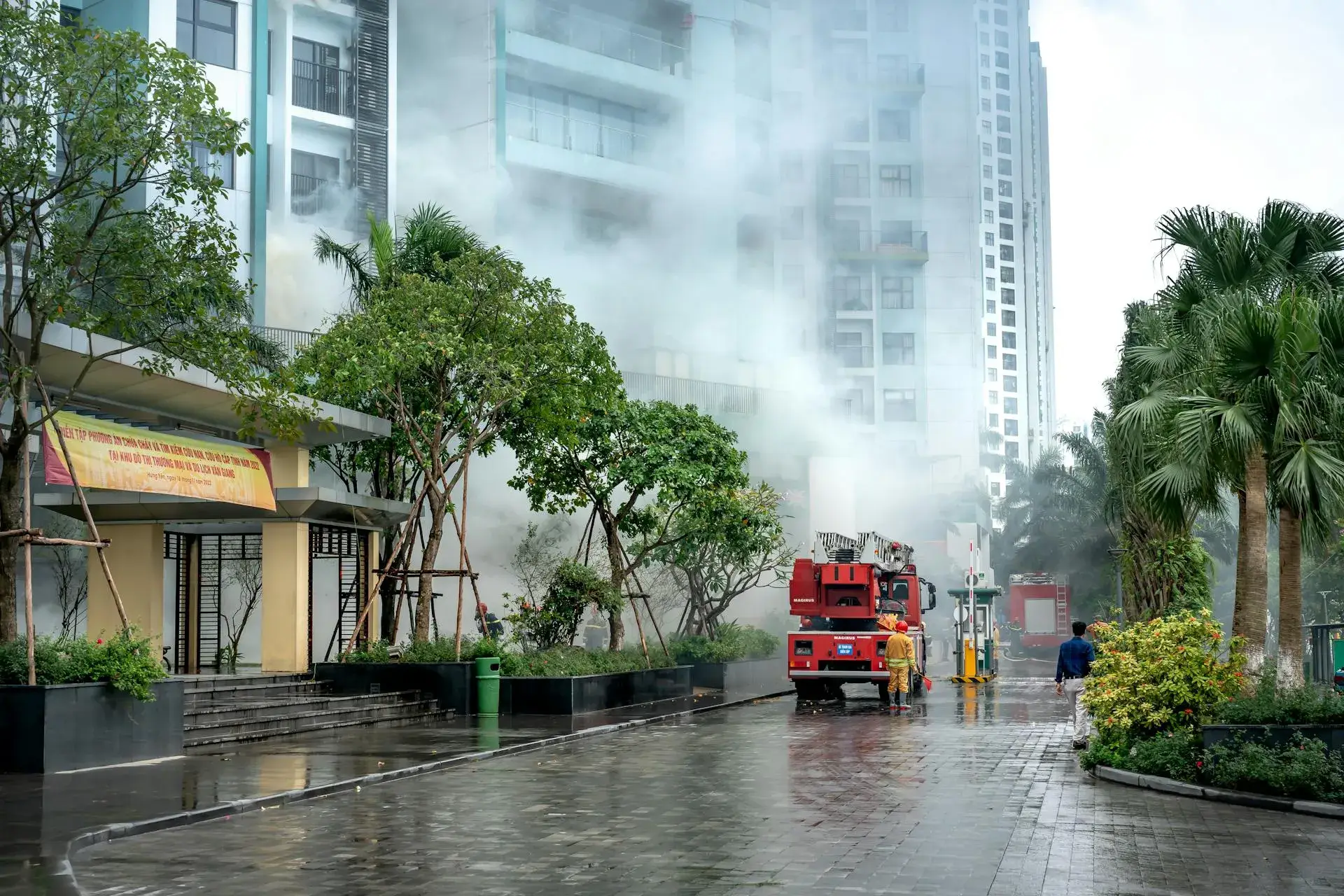
Smoke Damage Restoration in Pittsburgh, PA
Smoke residue is acidic and begins corroding surfaces within hours. Our local team responds to smoke damage emergencies across Allegheny County to stop soot from causing permanent damage to your home and belongings.
What Happens When You Call
A real person answers, not a call center. We assess your situation, ask the right questions, and begin coordinating your response immediately.
Your dedicated restoration team is dispatched from our local base serving Pittsburgh and surrounding Allegheny County communities.
Team arrives with HEPA air scrubbers, thermal fogging equipment, and professional cleaning supplies. Smoke damage assessment begins immediately.
Soot residue cataloged, deodorization plan established, air quality testing scheduled. You know exactly what comes next.
Smoke has invaded your home and every surface feels contaminated. X Response exists for exactly this moment. When you reach out, your restoration team is mobilized within minutes. From that point forward, one team manages everything: soot removal, deodorization, HVAC cleaning, and insurance documentation. You are never left guessing about the next step. Call now. Your team is standing by.
Why Pittsburgh Homes Are Vulnerable to Smoke Damage
Pittsburgh's unique housing density creates smoke damage scenarios rarely seen in suburban communities. Pittsburgh's dense row house neighborhoods in areas like Lawrenceville, Bloomfield, and the South Side mean that smoke from a single structural fire can infiltrate multiple connected units through shared walls and attic spaces, contaminating homes that sustained no direct flame contact. Fine smoke particles migrate through electrical conduit penetrations, plumbing chases, and gaps in fire-stopping materials between units. Homeowners in adjacent properties often discover pervasive smoke odor and soot contamination days after a neighboring fire, requiring professional assessment and remediation even though their own home was never exposed to flames.
Beyond fire-related smoke, Pittsburgh residents face air quality challenges from regional sources. The city's industrial heritage and proximity to active industrial operations mean that particulate matter from external sources can infiltrate homes through HVAC systems, especially during temperature inversions that trap pollutants in the river valleys. Whether the smoke originates from a neighboring structure fire, a kitchen incident, or external environmental sources, the restoration approach requires identifying the specific type of residue and applying cleaning and deodorization methods matched to that contaminant.
Row House Smoke Migration
Shared wall construction allows smoke to travel between connected homes through wall cavities, attic spaces, and utility penetrations. Homeowners in adjacent units may discover soot deposits on surfaces and persistent odor even though their property had no direct fire exposure. Thorough assessment must evaluate the full path of smoke travel.
HVAC Cross-Contamination
Central heating and cooling systems pull smoke particles through return vents and distribute them throughout the entire home. If the HVAC system runs during or after smoke exposure, soot and odor compounds deposit inside ductwork, on coils, and in the air handler, re-contaminating the home every time the system operates.
Protein and Wet Smoke Residue
Kitchen fires and slow-smoldering fires produce protein-based and wet smoke residues that are exceptionally difficult to remove. These residues leave a nearly invisible film that produces persistent, nauseating odors. Standard cleaning methods are ineffective, requiring specialized enzymatic cleaners and professional deodorization techniques.
Porous Material Absorption
Smoke odor compounds penetrate deeply into porous materials like upholstery, carpet, drapery, and unfinished wood. In older Pittsburgh homes with plaster walls and original hardwood trim, smoke can absorb into materials that are architecturally significant and difficult to replace, requiring careful restoration rather than demolition.
These factors make smoke damage in Pittsburgh particularly complex, often affecting homes beyond the fire origin and requiring specialized detection, cleaning, and deodorization to fully eliminate residue and odor.
What Happens to Your Home While You Wait
Within 1 Hour
Acidic soot begins bonding to metal, glass, and finished surfaces. Chrome fixtures, appliances, and electronics start to corrode. Immediate surface protection and ventilation can prevent permanent etching on these materials.
1 to 24 Hours
Soot residue penetrates deeper into porous surfaces like fabric, carpet, and wood. Smoke odor compounds begin bonding to wall paint, ceiling texture, and drapery at a molecular level. The longer residue sits, the more aggressive the cleaning methods required.
24 to 48 Hours
HVAC systems that operated during or after the event have distributed soot and odor throughout the home. Ductwork, coils, and filters are contaminated. Walls and ceilings show visible yellowing or discoloration from soot migration.
48 to 72 Hours
Smoke odor becomes deeply embedded in insulation, wall cavities, and structural wood. Surface cleaning alone will no longer eliminate the smell. Professional deodorization using thermal fogging or hydroxyl generation becomes necessary.
One Week and Beyond
Permanent staining and corrosion damage to electronics, metal fixtures, and finished surfaces. Smoke odor is fully bonded into structural materials and cannot be removed without sealing or replacement. Health impacts from poor indoor air quality compound.
Smoke damage gets harder and more expensive to fix with every passing hour. Contact X Response now. Our team begins professional decontamination immediately.
How We Restore Smoke-Damaged Pittsburgh Homes
From the moment our team arrives in Pittsburgh, every step is documented, measured, and verified. Here is exactly what the smoke damage restoration process involves.
Smoke Damage Assessment and Air Quality Testing
Our team evaluates the type of smoke residue present, the extent of contamination, and the affected areas. We test air quality to establish baseline particulate and VOC levels. Every finding is documented with photos and detailed notes for insurance purposes.
HEPA Air Scrubbing and Ventilation
Industrial HEPA air scrubbers are positioned throughout the affected area to capture airborne smoke particles. Negative air pressure is established to prevent cross-contamination to unaffected spaces. Fresh air exchange rates are managed to accelerate the removal of airborne contaminants.
Surface Cleaning and Residue Removal
Every surface is cleaned using techniques matched to the specific type of smoke residue. Dry soot is removed with HEPA-filtered vacuums and dry chemical sponges. Wet smoke residue requires specialized solvents. Protein residue demands enzymatic cleaners. Hard surfaces, walls, and ceilings are cleaned systematically.
Professional Deodorization
Thermal fogging heats deodorizing agents into a fine fog that follows the same pathways smoke originally traveled, reaching behind walls and inside structural cavities. Hydroxyl generators break down odor molecules at the molecular level. For severe contamination, surfaces may be sealed with shellac-based primers before repainting.
HVAC Cleaning and Final Verification
All ductwork is cleaned, filters replaced, and the air handler and coil assemblies decontaminated. A final air quality test confirms that particulate levels and VOC concentrations have returned to safe levels. A walkthrough with you ensures everything meets our standards and yours.
The X Response Difference
When you contact X Response, you get a dedicated smoke damage restoration team that eliminates contamination at its source across Allegheny County.
Insurance Claim Guidance for Pittsburgh Homeowners
Insurance coverage for smoke damage depends on the source of the smoke and your specific policy language. Standard homeowner's policies generally cover smoke damage under fire coverage, but disputes can arise over whether a fire needed to occur on the insured property. Smoke impingement from neighboring structures, kitchen fires, and external sources each present different coverage scenarios.
How X Response Helps
- Document all smoke and soot contamination with timestamped photos and air quality test results.
- Identify the smoke source and residue type to establish the scope and cause of contamination.
- Prepare a detailed cleaning and deodorization scope of work aligned with IICRC S700 standards.
- Structure our documentation to support your claim for both structural cleaning and content restoration.
- Explain how your policy's fire and smoke coverage applies to your specific situation before you file.
X Response does not file claims on your behalf or make coverage determinations. We provide documentation to help you make informed decisions. Coverage decisions are made solely by your insurance carrier.
Certified Restoration Specialists Serving Pittsburgh
When you contact X Response for a smoke damage emergency in Pittsburgh, your restoration team consists of certified professionals who specialize in smoke and soot decontamination. They understand the unique challenges of Pittsburgh's housing density, including row house smoke migration and HVAC cross-contamination. This is a local team, positioned and ready to respond immediately.
Every technician holds current IICRC certification in fire and smoke restoration. We use professional-grade thermal fogging systems, hydroxyl generators, HEPA air scrubbers, and specialized cleaning agents to permanently eliminate smoke contamination from your home.
In Pittsburgh, X Response works with Restoworks Disaster Restoration, an independent local restoration partner serving Allegheny County.
Smoke Damage Restoration FAQ for Pittsburgh Homeowners
Other Emergency Services in Pittsburgh

Water Damage Restoration
Burst pipes, storm flooding, standing water. We extract, dry, and restore before mold sets in.
Learn more
Fire Damage Restoration
Structural damage, soot, debris. We stabilize, clean, and rebuild what fire destroyed.
Learn more
Mold Remediation
Testing, containment, removal, prevention. We find the source, eliminate the growth, and stop it from returning.
Learn more