
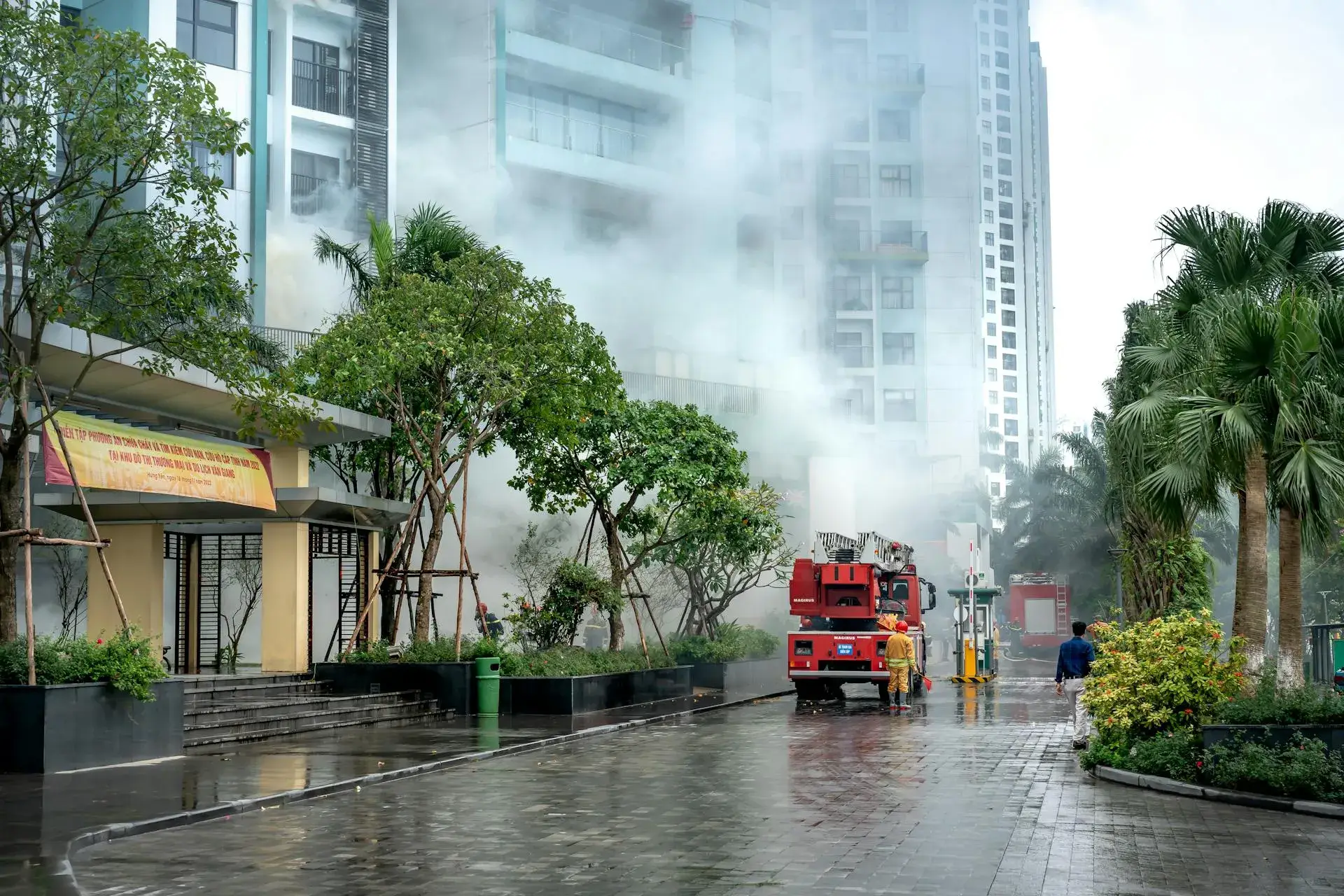
Smoke Damage Restoration in Erie, PA
Microscopic smoke particles and volatile organic compounds bond to drywall, furnishings, and ductwork within hours of combustion. Our certified Erie smoke remediation specialists arrive in 60 minutes to neutralize corrosive soot and eliminate odors permanently.
What Happens When You Call
Direct emergency dispatch mobilizes our specialized Erie smoke mitigation unit within minutes, gathering details on fuel sources and HVAC contamination.
Technicians arrive on site within 60 minutes to isolate ventilation systems, establish negative air pressure containment, and test soot chemical composition.
We capture airborne particulates using industrial HEPA air scrubbers and chemically sponge acidic soot from walls, ceilings, and delicate surfaces.
Our team deploys thermal fogging and hydroxyl generators to permanently neutralize odor molecules embedded in framing, followed by full HVAC duct cleaning.
Smoke damage is deceptive. Long after flames are extinguished or a heating system puffback occurs, microscopic soot particles and corrosive chemical gases continue degrading your home. They settle behind baseboards, coat ventilation ducts, and penetrate deep into soft furnishings. X Response stops this invisible destruction in its tracks. Our local certified specialists deploy advanced filtration, chemical neutralization, and molecular deodorization to restore clean, healthy indoor air. Call now. Your team is standing by.
Why Erie Homes Are Vulnerable to Smoke Damage
Erie, Pennsylvania, situated along the southern shoreline of Lake Erie in Erie County, experiences unique atmospheric and geographic conditions that complicate indoor smoke contamination. With a population of 94,831 and lakefront bluffs rising over 150 feet above the water, the local microclimate frequently generates strong nighttime temperature inversions and marine boundary layers. During these atmospheric events, cool air blowing across Lake Erie traps low-hanging air masses near ground level. According to the U.S. Environmental Protection Agency AirNow program, an Air Quality Index value over 150 represents Code Red conditions where fine particulate smoke penetrates HVAC systems and indoor environments. This vulnerability was dramatically demonstrated on June 28, 2023, when the Pennsylvania Department of Environmental Protection declared a statewide Code Red Air Quality Action Day due to Canadian wildfire plumes, causing heavy fine particulate matter (PM2.5) to settle across Erie County homes and businesses.
In addition to regional wildfire smoke infiltration, Erie homeowners frequently confront severe indoor smoke damage from residential structure fires, heating system puffbacks, and localized electrical failures. Erie's long, sub-freezing winters require forced-air heating systems, boilers, and wood stoves to operate continuously for months. In older residences throughout downtown Erie, Little Italy, and the East Side, oil-fired furnace malfunctions often trigger sudden puffbacks, dispersing greasy, microscopic carbon soot through entire duct networks in seconds. When synthetic household materials burn, they release corrosive polycyclic aromatic hydrocarbons and acidic vapors that bond tightly to gypsum wallboard, hardwood trim, and window glazing. Effective smoke restoration in Erie requires targeted chemical sponges, molecular counteractants, and specialized negative-pressure containment rather than mere surface wiping.
Lake Erie Atmospheric Inversions and Air Trapping
The temperature differential between Lake Erie and the mainland frequently creates dense inversion caps over the city. When residential structure fires or regional wildfires produce heavy smoke, this atmospheric barrier prevents upward dispersion, pushing particulate plumes horizontally into neighborhood homes and trapping lingering odors indoors.
Winter Heating System Puffbacks and Oil Soot
Prolonged winter cold forces oil and gas furnaces to cycle constantly. Ignition delays in older burners create small explosions inside combustion chambers, known as puffbacks. This forces oily, black soot backwards through air ducts, coating every room in an oily, difficult-to-clean carbon film.
Convection Updrafts in Multi-Story Historic Residences
Older two- and three-story Victorian and Craftsman homes across Erie feature central open stairwells and high ceilings. Superheated smoke naturally rises via thermal convection, depositing heavy soot layers along upper hallways, attic floor joists, and roof trusses while leaving lower floors with deceptive, invisible residue.
Synthetic Material Combustion and Acidic Chemical Soot
Modern home furnishings contain high proportions of synthetic polymers, polyurethane foam, and vinyl. Burning synthetics creates corrosive chemical soot containing sulfur and nitrogen oxides that chemically react with indoor humidity, etching chrome faucets, pitting appliances, and permanently discoloring painted wood.
Smoke damage requires immediate professional intervention to prevent acidic soot from permanently damaging finishes and building assemblies throughout Erie. Our certified technicians utilize industrial technology to eliminate smoke at the molecular level.
What Happens to Your Home While You Wait
Within Minutes
Airborne soot particles spread throughout living spaces, settling on cool exterior walls and window glass. Highly porous materials like curtains, clothing, and upholstered furniture absorb volatile smoke odors, while white plastics and porous finishes begin to yellow from acidic chemical contact.
1 to 24 Hours
Acidic residues begin permanently staining porous surfaces. Bathroom tile grout, marble countertops, and unpainted woodwork absorb corrosive soot, causing discoloration that standard household cleaning cannot reverse. Metals, including brass door handles and stainless steel appliances, begin pitting.
24 to 48 Hours
Soot particles chemically bond with painted drywall and wood finishes, making non-destructive cleaning significantly more difficult. Synthetic carpet fibers absorb yellow oily stains, and HVAC air ducts accumulate heavy particulate deposits that recirculate odors whenever the fan runs.
48 to 72 Hours
Corrosion on electronics, silver, and copper piping accelerates. Porous wallboard and ceiling tiles become saturated with volatile organic compounds, requiring aggressive chemical encapsulation or complete removal. Soot odors become deeply embedded in wall framing and subfloors.
One Week and Beyond
Untreated smoke residues harden into a permanent lacquer-like coating on walls, cabinetry, and flooring. What could have been cleaned non-destructively now requires complete drywall replacement, structural timber soda blasting, and extensive specialty reconstruction.
The longer soot and smoke residue remain on your Erie property, the higher the risk of permanent chemical staining and odor penetration. Contact X Response now for rapid 60-minute emergency arrival.
How We Restore Smoke-Damaged Erie Homes
Eliminating smoke damage from an Erie residence requires an exact, multi-stage protocol combining physical particulate removal, chemical neutralization, and atmospheric purification.
Emergency Assessment and Air Quality Containment
Our certified technicians arrive in Erie, inspect the affected areas, and isolate the HVAC system to prevent soot migration. We seal off unaffected rooms with plastic vapor barriers and establish negative air pressure using industrial HEPA air filtration machines.
Dry Chemical Soot Removal
Before introducing any liquid cleaners, we use specialized vulcanized rubber chemical sponges and HEPA-filtered vacuums to mechanically lift dry soot particles from walls, ceilings, and wood trim. Applying liquids too early smears carbon soot and drives it deeper into porous surfaces.
Targeted Surface Washing and Degreasing
Once loose particles are removed, we apply specialized chemical degreasers and alkaline cleaning solutions tailored to the specific soot type, whether greasy protein residue or oily furnace puffback carbon. Every surface is cleaned, rinsed, and prepped for deodorization.
Molecular Odor Neutralization
We deploy industrial hydroxyl generators and thermal foggers that emit micron-sized deodorizing vapors. These vapor droplets penetrate porous wallboard, framing, and upholstery just like smoke did, chemically neutralizing odor molecules at the molecular level without masking agents.
Complete HVAC Cleaning and Encapsulation
We clean all supply and return ductwork using rotary brush systems and HEPA vacuums, removing settled soot that could recontaminate your home. Exposed framing in attics or crawlspaces is sealed with specialized odor-barrier shellac to lock in any trace combustion odors permanently.
The X Response Difference
Choose X Response for scientifically proven, certified smoke and soot remediation throughout Erie County.
Insurance Claim Guidance for Erie Homeowners
Smoke damage claims in Pennsylvania frequently involve complex evaluations of both structural assemblies and personal contents. Standard homeowner property insurance generally covers smoke and soot damage resulting from residential fires, electrical malfunctions, and furnace puffbacks. Because microscopic smoke particles travel into areas completely untouched by flames, adjusters require clear, documented evidence demonstrating the full extent of soot migration and odor penetration. X Response provides the technical documentation and itemized scopes necessary to substantiate your claim.
How X Response Helps
- Conduct white-towel and chemical sponge wipe tests across ceiling corners, closets, and air vents to prove smoke migration.
- Document all heating system puffback damage with detailed mechanical reports and fire department incident summaries.
- Create exhaustive contents loss inventories, itemizing damaged soft goods, clothing, and electronics for professional cleaning or replacement.
- Structure all repair and cleaning estimates using standard insurance industry software formatted for Pennsylvania claims.
- Provide certification of completed HVAC duct decontamination and thermal deodorization for adjuster sign-off.
X Response works alongside property owners and insurance carriers to deliver rigorous technical documentation. We do not act as public adjusters and do not settle claims; final insurance coverage decisions are determined solely by your insurer.
Certified Restoration Specialists Serving Erie
Our Erie smoke restoration team consists of certified specialists credentialed through the Institute of Inspection, Cleaning and Restoration Certification (IICRC) in Fire and Smoke Damage Restoration (FSRT) and Odor Control (OCT). Operating throughout Erie County, our technicians have extensive experience handling everything from minor kitchen flare-ups to full-scale post-fire soot decontamination in both historic and contemporary residences.
We equip our response units with top-tier industrial technology, including HEPA 500 air scrubbers, thermal foggers, hydroxyl generators, and specialized duct-cleaning equipment. When smoke compromises your indoor living environment, our local professionals respond promptly, restoring clean air and peace of mind.
In Erie, X Response works with Restoworks Disaster Restoration, an independent local restoration partner serving Erie County.
Smoke Damage Restoration FAQ for Erie Homeowners
Other Emergency Services in Erie

Water Damage Restoration
Burst pipes, storm flooding, standing water. We extract, dry, and restore before mold sets in.
Learn more
Fire Damage Restoration
Structural damage, soot, debris. We stabilize, clean, and rebuild what fire destroyed.
Learn more
Mold Remediation
Testing, containment, removal, prevention. We find the source, eliminate the growth, and stop it from returning.
Learn moreNearby Service Areas
Also serving nearby: