

Water Damage Restoration in Arlington Heights, IL
Every hour of standing water in your basement increases structural damage and mold risk. Our local team responds to Arlington Heights emergencies within 60 minutes.
What Happens When You Call
A real person answers, not a call center. We assess your situation, ask the right questions, and begin coordinating your response immediately.
Your dedicated restoration team is dispatched from our local base serving Arlington Heights and the surrounding Northwest suburbs.
Team arrives with industrial extractors, commercial dehumidifiers, and moisture detection equipment. Emergency mitigation begins in your basement.
Water extracted, drying equipment placed and calibrated, restoration plan documented. You know exactly what comes next.
Your basement is taking on water and you need it handled now. Not tomorrow, not after a callback queue. X Response exists for exactly this moment. When you reach out, your restoration team is mobilized within minutes and on site within the hour. From that point forward, one team manages everything: extraction, drying, documentation, and insurance guidance. You are never left wondering what happens next. Call now. Your team is standing by.
Why Arlington Heights Homes Are Vulnerable to Water Damage
Arlington Heights sits about 25 miles northwest of downtown Chicago in northwest Cook County, the largest village in the region's northwest corridor and home to roughly 77,000 residents. It is a fundamentally different kind of suburb than the older lakefront communities to the east. Incorporated in 1887 as a small farming and rail town, Arlington Heights stayed modest until the postwar boom. Then it exploded. The village grew from about 8,700 residents in 1950 to nearly 65,000 by 1970, a roughly 750 percent jump in twenty years, as Chicago families poured into new subdivisions of ranches, split-levels, and Cape Cods built on what had been flat prairie farmland. That building era defines the housing stock today, and it shapes exactly how water damage happens here. These are not century-old masonry homes. They are mid-century single-family houses with full basements, sitting low and level on heavy clay soil, almost all of them depending on a sump pump to stay dry.
The land itself is the starting point. Arlington Heights occupies flat, former-prairie terrain in the Des Plaines River watershed, ground that drains slowly because the soil beneath it is dense glacial clay rather than sand or gravel. Water does not soak away. It sits, saturates, and presses against foundation walls. To keep basements habitable on this kind of ground, nearly every home relies on a sump pump running in a pit below the slab, pumping groundwater away before it can rise through the floor. That single piece of equipment is the difference between a dry basement and a flooded one, and when it fails or loses power during a storm, the result is fast and predictable. Layered on top of the soil is a sewer network that changes character block by block: most of the village is served by separate sanitary and storm sewers, but the older downtown core still runs on a combined sewer that carries sewage and stormwater in one pipe, which is why the Metropolitan Water Reclamation District maintains a combined sewer overflow notification plan for that area. Understanding which system serves a given home is central to diagnosing a basement flood here.
Flat Prairie Terrain and Heavy Clay Soil
Arlington Heights was built on flat former farmland underlain by dense glacial clay. Unlike sandy or gravelly soil, clay holds water rather than letting it drain away, so rainfall and snowmelt saturate the ground and press against foundation walls through hydrostatic pressure. With little natural slope to carry water off, low-lying yards and basements become collection points. This is the underlying reason so many homes here flood from the ground up rather than from a single dramatic event, and it is why drainage and pumping matter more in this village than in communities built on better-draining ground.
A Sewer System That Changes Block by Block
Most of Arlington Heights is served by separate sanitary and storm sewers, which keep household waste and rainwater in different pipes. But the older downtown core still runs on a combined sewer that carries both in one pipe, and during heavy rain that system can surcharge and push water back up through basement floor drains. The village participates in a Metropolitan Water Reclamation District combined sewer overflow notification plan for this area. Two homes a few blocks apart can flood for entirely different reasons, which is why diagnosing the actual water source is the first step in any restoration here.
Near-Universal Dependence on Sump Pumps
On clay soil with a high water table, the sump pump is the single piece of equipment keeping most Arlington Heights basements dry. It runs in a pit below the slab, pumping groundwater away before it rises through the floor. When a pump fails from age, a stuck float, or a power outage during the exact storm that demands it most, the basement can take on water within hours. Homes without a battery backup are especially exposed, because the heaviest rain often arrives with the wind and lightning that knock out power. A failed sump pump is one of the most common water emergencies we respond to in this village.
Postwar Housing Stock and Aging Infrastructure
The homes that filled Arlington Heights during the 1950s and 1960s boom are now sixty to seventy years old. Original sump pumps, water heaters, supply lines, and drain tile installed during construction are well past their service life, and clay or cast iron sewer laterals from that era are prime targets for tree root intrusion and collapse. The village has run an overhead sewer rebate program for years, reimbursing 75 percent of the cost of converting basement plumbing to an overhead system up to a set limit, precisely because aging infrastructure and basement backups are a long-standing issue across these neighborhoods.
Harsh Winters, Frozen Pipes, and Ice Dams
Arlington Heights winters are cold, snowy, and windy, with stretches of subzero temperatures during Arctic outbreaks. Pipes running through exterior walls, unheated garages, and uninsulated basement perimeters are vulnerable to freezing, and a single burst supply line can release hundreds of gallons before anyone shuts the water off. Ice dams form when attic heat melts roof snow that refreezes at the eaves, forcing water back under the shingles and into wall and ceiling cavities. On the long, low rooflines common to mid-century homes here, ice dams are a recurring winter source of interior water damage.
Intense Storms Overwhelming the System
The storms that hit the Chicago area are arriving with more intensity, dropping more rain in fewer hours than drainage systems were designed to handle. The July 2, 2023 event broke the daily rainfall record at nearby O'Hare and prompted a Cook County disaster proclamation, with flooded basements reported across the region. When that much water falls at once, sump pumps cannot keep pace, storm sewers surcharge, surface water pools against foundations and window wells, and basements take on water regardless of how diligent a homeowner has been about maintenance. The village's investment in larger downtown sewers, including a recent multimillion-dollar stormwater project, reflects how seriously local flooding is taken here.
These factors compound each other. Clay soil holds water against the foundation, a sump pump fails at the height of a downpour, and a finished basement floods within hours. Or a January cold snap bursts a pipe in an exterior wall while the family is away, and by evening the lower level has sustained catastrophic damage. In the older downtown, a combined sewer surcharges during the same storm and pushes contaminated water up through floor drains. Professional restoration in Arlington Heights requires understanding clay-soil hydrology, sump pump systems, and the village's split sewer geography, not just how to dry modern drywall. It is a fundamentally different job than drying a slab home in Florida or a crawl space in Georgia.
What Happens to Your Home While You Wait
Within 1 Hour
Water spreads across the basement floor and begins wicking into drywall, baseboards, and any belongings stored at ground level. Carpet padding absorbs water like a sponge and holds it against the slab. If the basement is finished, the bottom of every wall starts drawing moisture upward.
1–24 Hours
Drywall saturates upward through capillary action, often reaching 12 to 18 inches above the visible water line. Laminate flooring delaminates. Particle board furniture swells and breaks down. Metal framing and fasteners begin to corrode. Musty odors develop as bacteria multiply in the warm, wet environment.
24–48 Hours
Mold colonization begins behind wet drywall, inside wall cavities, and beneath carpet padding. In a finished basement with insulation between the studs, mold can establish in hidden spaces that are impossible to see without opening the wall. Drywall loses structural integrity and starts to sag.
48–72 Hours
Mold spreads to basement HVAC ductwork and can distribute spores to upper floors through the forced-air system. Contamination moves well beyond the original wet area. Restoration scope and cost climb as more materials require removal rather than drying in place.
One Week and Beyond
Extensive mold growth throughout basement wall cavities. If a sewer backup from the downtown combined system was involved, biological contamination makes the space hazardous. What started as a water extraction job becomes a full mold remediation, demolition, and rebuild project. Insurance claims grow more complex and more likely to be contested at this stage.
The difference between drying your basement in place and gutting it to the studs is often just a few hours of response time. Contact X Response now. Our Arlington Heights team responds within 60 minutes.
How We Restore Water-Damaged Arlington Heights Homes
From the moment our team arrives, every step is documented, measured, and verified. Here is exactly what the restoration process involves.
Emergency Assessment and Documentation
Our team arrives with thermal imaging cameras and professional moisture meters to map the full extent of water intrusion. We trace the source first, because a sump pump failure, a frozen pipe burst, foundation seepage through clay, and a downtown sewer backup each call for a different response. We check the sump pit and pump, the foundation perimeter, wall cavities, and the slab. We document everything with photos, moisture readings, and a written scope of work. This documentation guides the restoration plan and provides the evidence your insurance company needs to process your claim.
Water Extraction
Standing water is removed using truck-mounted and portable extraction units capable of pulling hundreds of gallons per hour. For basements with carpet, we extract from the carpet and pad separately, because pad holds many times its weight in water against the slab. Hard-surface floors require weighted extraction along the perimeter where water pools against foundation walls. If a combined sewer backup is the source, extraction is handled as contaminated water with the appropriate containment and disposal. Every gallon removed mechanically is a gallon that does not need to be evaporated, which shortens the drying timeline significantly.
Structural Drying and Dehumidification
This is the longest and most critical phase. We deploy commercial dehumidifiers and high-velocity air movers in a calculated pattern designed to create airflow across all wet surfaces. Arlington Heights basements present a specific drying challenge because they sit below grade in clay soil that keeps the surrounding ground damp, so moisture is constantly trying to migrate back in. Where drywall has absorbed water, we make strategic flood cuts to expose the wall cavity and allow airflow behind the wall. Our team returns daily to take moisture readings, reposition equipment, and verify progress. Equipment stays until meters confirm the structure has reached its dry standard.
Antimicrobial Treatment and Mold Prevention
Once surfaces are dry, we apply EPA-registered antimicrobial treatments to all affected areas. In basements where flood cuts were made, this includes treating the exposed wall cavity, studs, and the back side of any remaining drywall. HEPA air scrubbers run throughout the project to capture airborne spores and maintain indoor air quality. For homes where a combined sewer backup was involved, antimicrobial treatment is more extensive and covers every surface that contacted contaminated water. Illinois law requires sellers to disclose known mold issues, so thorough prevention and documentation protect both your health and your property value.
Quality Verification and Completion
Before we consider the job complete, a final inspection verifies that all moisture readings have returned to acceptable levels, all treated areas are clean and dry, and the scope of work has been fully executed. We provide you with completion documentation including before-and-after photos, final moisture readings, and a summary of all work performed. This record supports your insurance claim and gives you a clear account of what was done. If any area does not pass our quality check, we keep working until it does.
The X Response Difference
When you contact X Response, you get a dedicated restoration team that manages everything, from emergency mitigation through insurance documentation to final quality verification. One team, one point of contact, one standard of work from start to finish.
Insurance Claim Guidance for Arlington Heights Homeowners
Water damage insurance claims in Illinois turn almost entirely on the source of the water. Standard homeowner's policies cover sudden and accidental events such as burst pipes, appliance failures, and ice dam leaks. However, the two most common causes of basement flooding in Arlington Heights, sump pump failure and sewer or drain backup, are not covered under a standard policy. They require a separate water backup and sump overflow endorsement. Because nearly every home in the village depends on a sump pump and the older downtown is served by a combined sewer that can surcharge, many residents carry this coverage, though some do not realize they need it until the basement floods. Flood damage from rising surface water falls outside both, requiring a separate NFIP or private flood policy entirely.
How X Response Helps
- Document all damage with professional photos, moisture readings, and a detailed scope of work from day one
- Identify the water source clearly, which determines which coverage applies under your policy
- Align our restoration scope with standard insurance coverage categories so your adjuster can process the claim efficiently
- Explain your policy's likely coverage before you file, so you understand your options and potential out-of-pocket exposure
- Guide you on timing: when to file, what to include, and what to expect from the process
X Response does not file claims on your behalf, adjust claims, or make coverage determinations. We provide documentation and guidance to help you make informed decisions about your property and your policy. Coverage decisions are made solely by your insurance carrier.
Certified Restoration Specialists Serving Arlington Heights
When you contact X Response for a water damage emergency in Arlington Heights, your restoration team is drawn from certified professionals who work throughout the Northwest suburbs and northwest Cook County and understand the specific challenges of restoring homes in this area. They know how clay soil holds water against a foundation and why a failed sump pump floods a basement so quickly. They know how the downtown combined sewer surcharges during a storm and pushes water up through floor drains. They have worked through the aftermath of sump pump failures, frozen pipe bursts, and sewer backups across communities like Arlington Heights, Mount Prospect, and Palatine. This is not a crew dispatched from downtown Chicago. It is a local team with local knowledge, operating under national quality standards.
Every technician on your team holds current IICRC certification in water damage restoration and carries the appropriate Illinois state licensing for the work being performed. Equipment is commercial-grade and maintained to manufacturer specifications. When your team arrives, they bring everything needed to begin mitigation immediately, including basement-specific extraction tools, commercial dehumidifiers sized for below-grade environments, and containment equipment for contaminated water from sewer backups.
In Arlington Heights, X Response works with Scene Cleaners, an independent local restoration partner serving Cook County County.
Water Damage Restoration FAQ for Arlington Heights Homeowners
Other Emergency Services in Arlington Heights
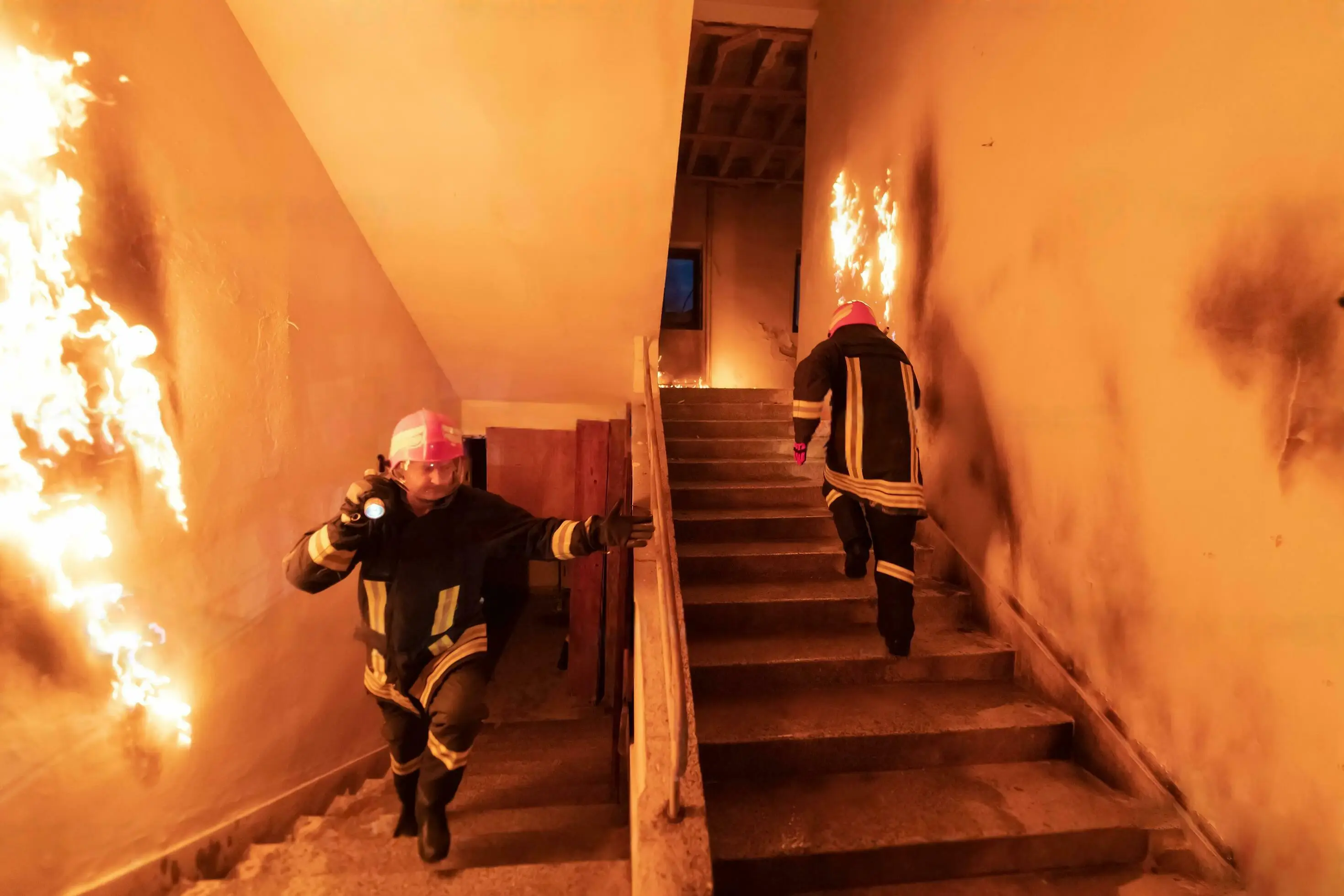
Fire Damage Restoration
Structural damage, soot, debris. We stabilize, clean, and rebuild what fire destroyed.
Learn more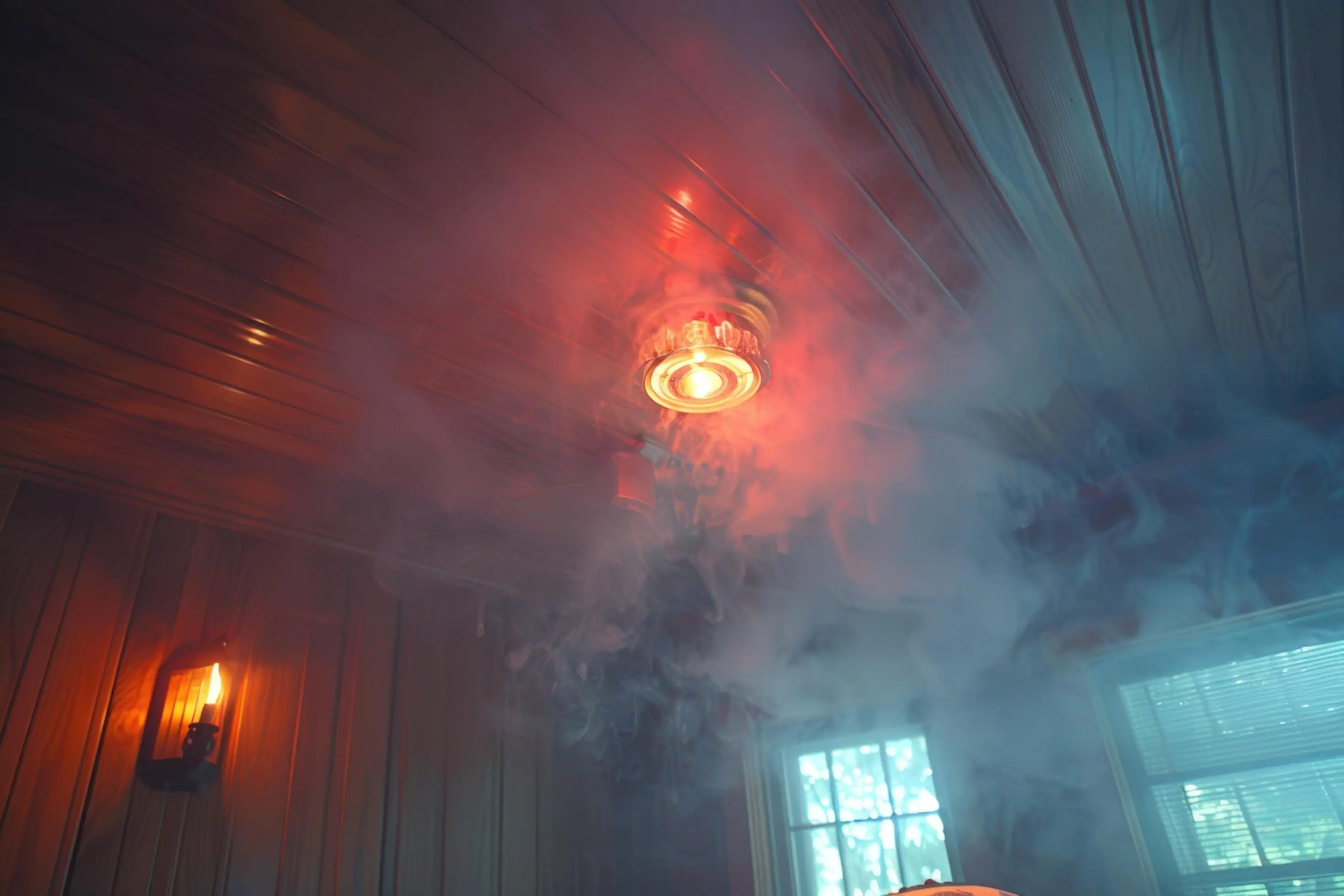
Smoke Damage Restoration
Soot residue, chemical odors, HVAC contamination. We decontaminate surfaces, eliminate odors, and restore air quality.
Learn more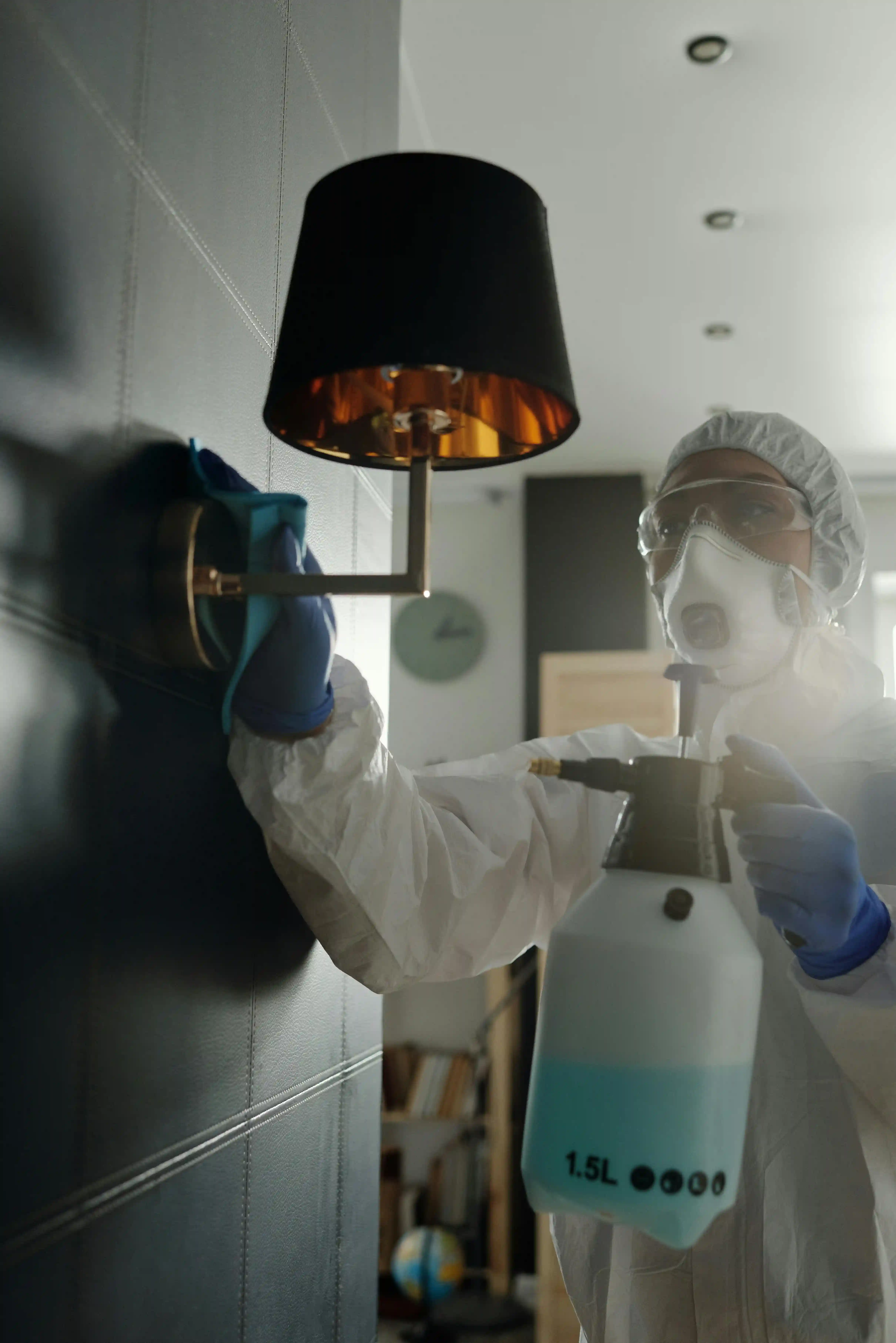
Mold Remediation
Testing, containment, removal, prevention. We find the source, eliminate the growth, and stop it from returning.
Learn more
Sewage Cleanup
Sewer backups, contaminated water, biohazard. We extract, sanitize, and restore safely.
Learn more