
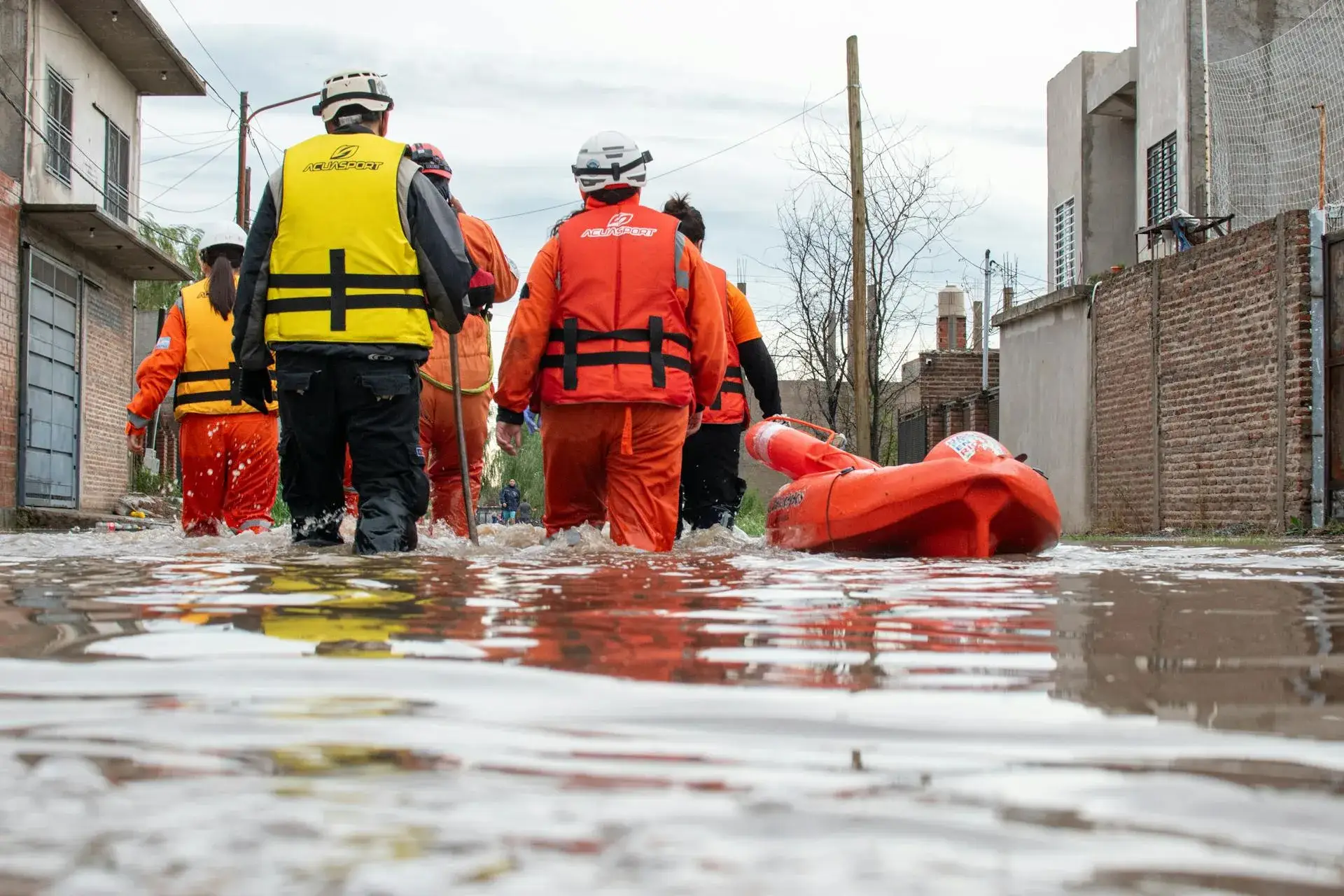
Water Damage Restoration in Mount Prospect, IL
Every hour of standing water deepens structural damage and mold risk. Our local team responds to Mount Prospect emergencies within 60 minutes.
What Happens When You Call
A real person answers, not a call center. We assess your situation, ask the right questions, and begin coordinating your response immediately.
Your dedicated restoration team is dispatched from our local base serving Mount Prospect and the surrounding northwest Cook County communities.
Team arrives with industrial extractors, commercial dehumidifiers, and moisture detection equipment. Emergency mitigation begins immediately.
Water extracted, drying equipment placed and calibrated, restoration plan documented. You know exactly what comes next.
Water is moving through your property and you need it stopped now. Not after a callback queue, not tomorrow morning. X Response exists for exactly this moment. When you reach out, your restoration team is mobilized within minutes and on site within the hour. From that point forward, one team manages everything: extraction, drying, documentation, and insurance guidance. You are never left guessing about the next step. Call now. Your team is standing by.
Why Mount Prospect Homes Are Vulnerable to Water Damage
Mount Prospect sits in northwest Cook County, roughly 20 miles from downtown Chicago and about 4 miles north of O'Hare International Airport. The village straddles Elk Grove and Wheeling Townships, with a 2020 Census population of 56,852. Its western boundary runs along the Des Plaines River, a waterway that has shaped the community's relationship with flooding for more than a century. The river drains a large watershed that extends into Lake County and southern Wisconsin, collecting runoff from hundreds of square miles of developed suburban land before passing through Mount Prospect on its way south. When heavy or sustained rainfall pushes the river above its banks, the neighborhoods west of River Road and south of Central Road face direct flood exposure. That vulnerability prompted one of the largest federal flood-control investments in suburban Cook County: Levee 37.
Levee 37, also known as the Mount Prospect/Prospect Heights Levee, is a $36 million U.S. Army Corps of Engineers project completed in September 2015 after decades of planning, environmental review, and construction. The levee runs between Palatine Road and Euclid Avenue on the west side of the Des Plaines River, protecting more than 600 existing homes and dozens of businesses in Mount Prospect and Prospect Heights. Officials estimate it saves more than $3 million annually in avoided flood damage. But the levee solved one problem and exposed another: by preventing the Des Plaines River from flooding into the neighborhoods, it also blocked local stormwater from draining out. Heavy rain that once sheet-flowed toward the river now pools behind the levee, flooding streets, parks, and basements from the interior. That interior drainage problem drives the village's ongoing stormwater partnership with the Metropolitan Water Reclamation District of Greater Chicago.
Levee 37 Interior Drainage and Trapped Stormwater
Levee 37 successfully prevents the Des Plaines River from overflowing into the neighborhoods west of River Road, but it creates a secondary flooding mechanism. During heavy rain, local stormwater that would historically have drained toward the river is now trapped on the neighborhood side of the levee. Streets flood, park land saturates, and water backs into basements through foundation walls, window wells, and floor drains. The MWRD partnered with the village beginning in 2021 to build underground stormwater detention beneath Aspen Trails Park and Burning Bush Trails Park, providing over 5.5 million gallons of combined detention capacity and flood relief for approximately 132 structures within the Levee 37 interior drainage area. Those improvements help, but they do not eliminate the problem entirely during extreme rainfall, and homes outside the direct project footprint remain exposed to interior ponding.
Des Plaines River Corridor Flooding
The Des Plaines River collects drainage from a watershed extending from southeastern Wisconsin through Lake County and into Cook County. Mount Prospect's western edge borders the river directly, and before Levee 37's completion in 2015, homes and businesses along River Road flooded repeatedly during high-water events. The levee now provides protection up to its design capacity, but properties north of Palatine Road and south of Euclid Avenue sit outside the levee's coverage. The river's flood response is driven by regional rainfall rather than strictly local storms, meaning it can rise even when Mount Prospect itself receives moderate precipitation. The MWRD monitors flows and manages the Gloria Alitto Majewski Reservoir, a 350-million-gallon TARP facility on the Upper Des Plaines Tunnel System serving Mount Prospect, Arlington Heights, and Des Plaines across 11 square miles, which captures combined sewage and stormwater during heavy rain to reduce both sewer backups and river flooding.
Combined Sewer System and Basement Backups
Much of Mount Prospect's older housing stock connects to a combined sewer system that carries both sanitary sewage and stormwater in the same pipe. During heavy rain, the volume of water entering the system can exceed pipe capacity, causing sewage-contaminated water to back up through basement floor drains, laundry sinks, and other low fixtures. The village maintains a dedicated informational page on combined sewer overflows and recommends overhead sewers and backwater valves as protective measures, but many homes built in the 1950s and 1960s predate those retrofits. When the combined system overwhelms, the resulting basement flooding is not clean water. It carries sewage, bacteria, and debris that require professional extraction, antimicrobial treatment, and often demolition of affected materials rather than simple drying.
1950s and 1960s Housing Stock
Mount Prospect's population exploded during the 1950s, growing 370 percent in that decade alone as post-war suburban development filled former farmland with single-family homes. Most of these homes were built with full basements, many below the water table during spring snowmelt and heavy rain seasons. Foundation waterproofing technology of that era relied on exterior tar coatings and clay tile drains that deteriorate over 60 to 70 years. Many homes now experience hydrostatic pressure pushing water through cracks in poured-concrete or block foundations, particularly during sustained wet periods when the shallow water table rises. The basements that functioned adequately for decades begin admitting water as the original waterproofing fails, and the clay soils common in the area hold moisture against the foundation rather than draining it away.
Spring Snowmelt and Freeze-Thaw Cycles
Mount Prospect's northern Illinois climate delivers significant snowfall from November through March, and the spring thaw adds a sustained water-loading period that does not exist in warmer regions. When temperatures rise above freezing after weeks of accumulated snow, the melt enters the ground gradually but persistently, raising the water table and saturating the soil around basement foundations. If a warm rain event coincides with active snowmelt, the combined water volume overwhelms storm drains, saturates the ground, and enters basements both through foundation cracks from below and through overwhelmed combined sewers from within. The freeze-thaw cycle itself damages foundation walls over time, opening hairline cracks that grow wider each winter, creating new entry points for water that did not exist when the home was built.
These factors interact with each other. The Levee 37 interior drainage problem traps local stormwater behind the levee during the same storms that push the Des Plaines River high. The combined sewer system overwhelms because it was sized for a smaller, less developed community. The 1950s basements sit below the water table with deteriorating waterproofing. And the northern Illinois climate delivers both intense summer thunderstorms and spring snowmelt cycles that load the system repeatedly throughout the year. Effective water damage restoration in Mount Prospect means understanding whether the water came from a backed-up combined sewer, interior ponding behind the levee, a rising water table during snowmelt, or a plumbing failure inside the home, because each source determines the contamination level, the drying strategy, and the materials that can be saved versus those that must be removed.
What Happens to Your Home While You Wait
Within 1 Hour
Water spreads across basement floors, wicks into drywall and baseboards, and saturates carpet padding against the concrete slab. In Mount Prospect homes with finished basements, it moves beneath laminate and engineered flooring, pooling against the subfloor membrane. In homes near the Levee 37 interior drainage area, water may continue entering through foundation walls and floor drains as long as the exterior ponding persists. Standing water begins absorbing into porous concrete and the base of wood-framed partition walls. The damage you cannot yet see is already underway.
1–24 Hours
Drywall wicks moisture upward from the floor line. Wood baseboards and door casings swell. If the water source is a combined sewer backup, bacteria and organic contaminants are spreading through every material the water touches. Musty odors develop as microbial activity begins in warm, enclosed basement spaces. Particleboard shelving, storage boxes, and furnishings in contact with the floor absorb water and begin to deteriorate. Metal fasteners and electrical junction boxes at or below the water line begin corroding.
24–48 Hours
Mold colonization begins in hidden spaces behind finished basement walls, beneath flooring, and in the seams between drywall panels. Cook County's summer humidity slows natural evaporation and accelerates biological growth compared to drier climates. Drywall loses structural integrity and begins to sag or crumble at the base. Wood framing at the sill plate level, where partition walls meet the concrete slab, swells and begins stressing fasteners. What began as a drying job starts crossing into demolition territory.
48–72 Hours
Mold spreads into HVAC ductwork running through basement ceiling cavities and distributes spores throughout the home via the forced-air heating system. Contamination moves well beyond the original wet area. Engineered wood flooring delaminates. Particleboard subfloor panels swell and lose structural capacity. If the water was sewage-contaminated, pathogenic bacteria have colonized porous materials that cannot be disinfected and must be removed. Restoration scope and cost climb sharply.
48 Hours–One Week
Extensive mold growth through wall cavities, behind vinyl-covered basement panels, and across ceiling joists. Structural wood at connection points begins to decay. Metal ductwork develops condensation and corrosion. Odors permeate soft furnishings, carpet, and upholstered materials throughout the home as spores travel through the HVAC system. What started as a water extraction job becomes full mold remediation, demolition, and rebuild. Insurance claims grow more complex and contested.
One Week and Beyond
Widespread biological contamination requiring gut-level demolition of finished basement spaces. Foundation integrity questions arise if water has been pooling against exterior walls for extended periods. The scope of restoration expands to include not just the basement but any connected space where moisture or mold has traveled through the HVAC system or wall cavities. Costs multiply and insurance disputes intensify as carriers question whether timely mitigation could have limited the damage.
The difference between drying your basement in place and gutting it to bare concrete is often measured in hours of response time. Contact X Response now. Our Mount Prospect team responds within 60 minutes.
How We Restore Water-Damaged Mount Prospect Homes
From the moment our team arrives, every step is documented, measured, and verified. Here is exactly what the restoration process involves for Mount Prospect properties.
Emergency Assessment and Documentation
Our team arrives with thermal imaging cameras and professional moisture meters to map the full extent of water intrusion. In Mount Prospect homes, that means inspecting finished and unfinished basement areas, checking behind wall panels and beneath flooring, probing the sill plate where wood framing meets the concrete foundation, and assessing whether water entered from interior plumbing, a sewer backup, foundation seepage, or surface ponding from the Levee 37 interior drainage area. The source determines the contamination category and the entire downstream restoration strategy. Everything is documented with photos, moisture readings, and a written scope of work that guides the restoration and gives your insurance company the evidence it needs from day one.
Water Extraction
Standing water is removed using truck-mounted and portable extraction units capable of pulling hundreds of gallons per hour. For Mount Prospect basements, we deploy submersible pumps for deep standing water and weighted extraction tools that pull moisture from carpet and pad systems without requiring immediate removal where materials are salvageable. If flooding is ongoing because interior ponding continues or the combined sewer remains surcharged, we establish temporary pumping to manage the active intrusion while extraction continues in the structure. For sewer-contaminated water, extraction protocols include immediate containment and contaminated-material handling procedures that clean-water events do not require. Every gallon removed mechanically is a gallon that does not need to be evaporated, shortening the drying timeline substantially.
Structural Drying and Dehumidification
This is the longest and most critical phase. We position commercial dehumidifiers and high-velocity air movers in a calculated pattern that drives airflow across every wet surface and pulls moisture from materials faster than the ambient Cook County air allows naturally. Northern Illinois humidity during summer months slows evaporation and makes mechanical dehumidification essential rather than optional. We dry concrete slabs, foundation walls, wood framing, subfloor membranes, and wall cavities directly, returning daily to take moisture readings and reposition equipment until meters confirm the structure has reached its dry standard. For homes with finished basements where removed drywall exposes wall cavities, we dry the framing and insulation before any reconstruction begins. For larger affected areas, we scale equipment proportionally and monitor multiple zones simultaneously.
Antimicrobial Treatment and Contamination Control
Once surfaces are dry, we apply EPA-registered antimicrobial treatments to all affected areas. In Mount Prospect, the combined sewer system means that many basement floods involve Category 3 (grossly contaminated) water that carries sewage, bacteria, and pathogens. For those events, antimicrobial treatment is not optional but required, and porous materials that contacted contaminated water, including carpet, pad, drywall below the flood line, and insulation, must be removed rather than treated in place. For clean-water events from supply-line failures or appliance malfunctions, treatment prevents secondary mold growth during the drying period. HEPA air scrubbers run throughout the project to capture airborne particulates and spores and protect indoor air quality while the structure dries.
Quality Verification and Completion
Before we consider the job complete, a final inspection verifies that all moisture readings have returned to acceptable levels, every treated area is clean and dry, and the scope of work has been fully executed. We hand you completion documentation including before-and-after photos, final moisture readings, and a summary of all work performed. That record supports your insurance claim and gives you a clear account of what was done. If any area does not pass our quality check, we keep working until it does. There is no partial completion.
The X Response Difference
When you contact X Response, you get a dedicated restoration team that manages everything, from emergency mitigation through insurance documentation to final quality verification. One team, one point of contact, one standard of work from start to finish.
Insurance Claim Guidance for Mount Prospect Homeowners
Water damage insurance claims in Illinois turn on the source of the water and whether you carry the right endorsements. Standard homeowner's policies cover sudden and accidental events like burst pipes, failed water heaters, and appliance line ruptures. Flood damage from rising surface water, including Des Plaines River overflow and ponding from overwhelmed storm drains, is not covered under a standard policy and requires separate flood insurance through the National Flood Insurance Program or a private carrier. Sewer and drain backup, one of the most common sources of basement flooding in Mount Prospect because of the combined sewer system, typically requires its own endorsement that many homeowners do not realize they need until water is already on the floor. Many Mount Prospect homes within the Levee 37 protection zone were reclassified out of high-risk flood zones after the levee's completion, and owners dropped their flood coverage, leaving a gap if interior ponding occurs.
How X Response Helps
- Document all damage with professional photos, moisture readings, and a detailed scope of work from day one
- Identify the water source clearly, as combined sewer backup, surface flooding, and plumbing failure each trigger different coverage under Illinois policies
- Prepare documentation that meets Village of Mount Prospect and Cook County requirements so your claim is complete
- Align our restoration scope with standard insurance coverage categories so your adjuster can process the claim efficiently
- Explain your policy's likely coverage before you file, so you understand your options and potential out-of-pocket exposure
X Response does not file claims on your behalf, adjust claims, or make coverage determinations. We provide documentation and guidance to help you make informed decisions about your property and your policy. Coverage decisions are made solely by your insurance carrier.
Certified Restoration Specialists Serving Mount Prospect
When you contact X Response for a water damage emergency in Mount Prospect, your restoration team is drawn from certified professionals who work across northwest Cook County and understand the specific challenges of restoring properties here. They know how the Levee 37 interior drainage area behaves during heavy rain, how the combined sewer system responds when storms overwhelm its capacity, and how the 1950s and 1960s basements throughout the village admit water through deteriorating foundations that newer construction does not. They have worked through interior-ponding events near the River Trails parks, sewer backups in the older neighborhoods east of Route 83, and appliance failures in the multi-family complexes along Golf Road. This is not a crew dispatched from hours away with no local context. It is a local team with local expertise, operating under national quality standards.
Every technician on your team holds current IICRC certification in water damage restoration and carries the appropriate Illinois state licensing for the work being performed. Equipment is commercial-grade and maintained to manufacturer specifications. When your team arrives, they bring everything needed to begin mitigation immediately, including basement extraction tools, commercial dehumidifiers sized for the volume of typical Mount Prospect homes, thermal imaging equipment to map hidden moisture behind finished basement walls, and the documentation tools to build your insurance file from the first hour on site.
In Mount Prospect, X Response works with Scene Cleaners, an independent local restoration partner serving Cook County.
Water Damage Restoration FAQ for Mount Prospect Homeowners
Other Emergency Services in Mount Prospect
Fire Damage Restoration
Structural damage, soot, debris. We stabilize, clean, and rebuild what fire destroyed.
Learn more
Smoke Damage Restoration
Soot residue, chemical odors, HVAC contamination. We decontaminate surfaces, eliminate odors, and restore air quality.
Learn more
Mold Remediation
Testing, containment, removal, prevention. We find the source, eliminate the growth, and stop it from returning.
Learn more
Sewage Cleanup
Sewer backups, contaminated water, biohazard. We extract, sanitize, and restore safely.
Learn moreNearby Service Areas
Also serving nearby: