
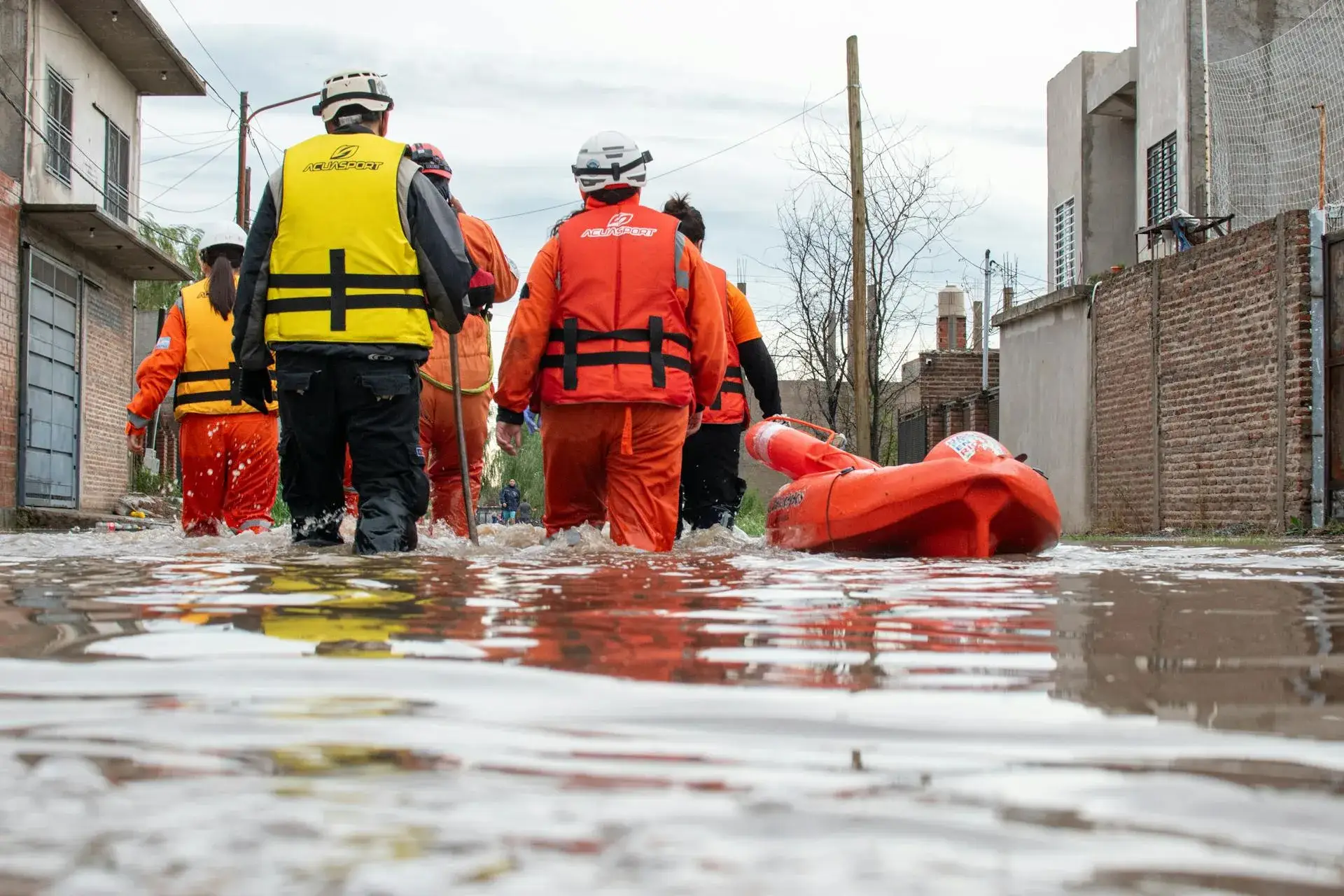
Water Damage Restoration in League City, TX
Every hour of standing water deepens structural damage and mold risk. Our local team responds to League City emergencies within 60 minutes.
What Happens When You Call
A real person answers, not a call center. We assess your situation, ask the right questions, and begin coordinating your response immediately.
Your dedicated restoration team is dispatched from our local base serving League City and the surrounding Galveston County communities.
Team arrives with industrial extractors, commercial dehumidifiers, and moisture detection equipment. Emergency mitigation begins immediately.
Water extracted, drying equipment placed and calibrated, restoration plan documented. You know exactly what comes next.
Water is moving through your home and you need it stopped now. Not after a callback queue, not tomorrow morning. X Response exists for exactly this moment. When you reach out, your restoration team is mobilized within minutes and on site within the hour. From that point forward, one team manages everything: extraction, drying, documentation, and insurance guidance. You are never left guessing about the next step. Call now. Your team is standing by.
Why League City Homes Are Vulnerable to Water Damage
League City is a city of approximately 120,000 residents primarily in Galveston County, Texas, situated between Clear Creek to the north and Dickinson Bayou to the south, with Clear Lake and Galveston Bay forming the eastern horizon. The city sits on the flat Gulf Coastal Plain at roughly 25 feet above sea level, with virtually no natural gradient to move stormwater away from developed areas. Clear Creek is the dominant drainage feature, collecting runoff from a 260-square-mile watershed that extends through Harris, Brazoria, and Galveston counties before emptying into Clear Lake. Dickinson Bayou drains the southern portions of the city through a similarly flat landscape. Gum Bayou, Magnolia Creek, and several unnamed drainage channels carry neighborhood runoff toward these two primary outlets. When any of these waterways exceeds capacity, the flat terrain provides nowhere for floodwater to go except laterally into homes and businesses.
The U.S. Army Corps of Engineers Galveston District is conducting a Section 205 Flood Risk Management feasibility study for League City near FM 270 to identify alternatives that could mitigate the flood risk to human health, safety, damage to public and private properties, local infrastructure, and public utilities along Clear Creek. The study reflects decades of documented flooding along the creek. Hurricane Harvey dropped approximately 50 inches of rain directly on League City over five days in August 2017, producing a 500-year flood event on Clear Creek that sent water into neighborhoods across the city. Post-Harvey drainage studies identified 26 projects at an estimated cost of $120 million to address neighborhood-level flooding, and the city is now spending over $50 million on drainage improvements including $31 million in fiscal year 2025-26 alone. In 2022, League City and Galveston County coordinated with more than a dozen entities to complete Phase 1 of the Lower Clear Creek and Dickinson Bayou project, which Congress included in the Water Resource Development Act signed into law in 2024.
Clear Creek Watershed and Regional Flood Risk
Clear Creek drains a 260-square-mile watershed that extends far upstream through Harris and Brazoria counties before reaching League City. This means that heavy rainfall anywhere in the upper watershed, including areas as far west as Pearland and Friendswood, sends floodwater downstream toward League City even if rain over the city itself is moderate. The creek's channel through League City was sized decades ago for far less upstream development. As the upper watershed has urbanized, peak flows have increased beyond the channel's designed capacity. The Army Corps of Engineers authorized the Clear Creek Flood Risk Management Project under the Bipartisan Budget Act of 2018, recognizing the watershed-scale flood risk. For League City homeowners along the creek corridor near FM 270, FM 518, and the older neighborhoods between Clear Creek and Clear Lake, flooding occurs not just during direct storm events but whenever sustained rainfall upstream overwhelms the creek's capacity to convey water to the bay.
Dickinson Bayou and Southern League City Flooding
Dickinson Bayou runs along and through the southern portions of League City before draining into Dickinson Bay and ultimately Galveston Bay. The bayou sits at an even lower elevation than Clear Creek and drains through marshy coastal terrain with minimal natural slope. During major storm events, the bayou cannot discharge into the bay fast enough because Galveston Bay itself is elevated by storm surge and onshore winds. This creates a double-bind for southern League City neighborhoods: water cannot drain south because the bayou is at capacity, and it cannot drain north because Clear Creek is simultaneously flooding. Neighborhoods in the Bay Ridge, Hidden Lakes, Whispering Lakes, and Lakes of South Shore areas experience repetitive flooding from this dual-basin problem. The city is deepening detention ponds and installing dedicated pump stations in these areas to mechanically move stormwater into Gum Bayou after major events.
Storm Surge and Tidal Influence from Galveston Bay
League City's eastern boundary approaches Clear Lake, which connects directly to Galveston Bay and ultimately the Gulf of Mexico. During tropical storms and hurricanes, storm surge pushes water from the Gulf into the bay system, raising water levels in Clear Lake, Clear Creek, and every connected bayou and drainage channel. This surge prevents normal gravity drainage from functioning because the outfall elevation is higher than the water trying to discharge. Hurricane Ike in 2008 drove significant storm surge up Clear Creek and into League City from the bay side, flooding homes not from rainfall but from bay water backing into the drainage network. Hurricane Harvey combined both mechanisms simultaneously: record rainfall from above and elevated bay levels preventing discharge below. Any tropical system that approaches the upper Texas coast creates this dual flood threat for League City, regardless of whether the storm makes direct landfall in Galveston County.
Slab-on-Grade Construction on Coastal Clay Soils
League City's residential construction uses slab-on-grade foundations built on Beaumont Formation clay overlain by coastal alluvial deposits. The clay has extremely low permeability and expands significantly when saturated, creating the same foundation stress and water intrusion pathways seen throughout the Gulf Coast. However, League City's proximity to the bay adds a dimension not present in inland communities: the water table sits permanently close to the surface due to the coastal geography, and saltwater intrusion during storm surge events introduces chlorides that accelerate corrosion of rebar, plumbing connections, and metal components within the slab. After flooding recedes, the clay holds brackish water against foundations for extended periods. Homes that flood during a hurricane event face not only standard freshwater restoration challenges but also the added complexity of salt contamination in the slab, framing connections, and mechanical systems.
Rapid Growth Outpacing Drainage Infrastructure
League City grew from approximately 45,000 residents in 2000 to over 120,000 today, nearly tripling its population in two decades. Subdivisions built during this growth period, including South Shore Harbor, Tuscan Lakes, Magnolia Creek, and the developments along League City Parkway, converted prairie and ranchland into impervious surfaces that shed rainfall directly into drainage channels designed for a less developed landscape. The 26 drainage projects identified post-Harvey at $120 million in total cost reflect the gap between the current infrastructure and what the developed city actually needs. Until those projects reach completion, many of these newer subdivisions flood during sustained rainfall events that would not have threatened the homes when they were originally built, because upstream development has since altered the runoff volume and timing reaching their drainage channels.
Water damage in League City arrives from multiple directions simultaneously. Clear Creek flooding from upstream rainfall combines with Dickinson Bayou backup from the south. Storm surge from Galveston Bay prevents normal drainage during tropical events. Coastal clay soils hold water against foundations indefinitely. And rapid growth has outpaced the drainage infrastructure's ability to convey the runoff that developed land now produces. Effective restoration requires a team that understands Clear Creek's watershed-scale behavior, the tidal influence on drainage, the salt contamination risks from storm surge events, and the particular challenges of drying slab-on-grade coastal homes where the water table never drops far below the foundation.
What Happens to Your Home While You Wait
Within 1 Hour
Water spreads across flooring and wicks into drywall from floor level. In League City's slab-on-grade homes, there is no basement or crawl space to contain the spread. Water contacts every wall, cabinet toe kick, and built-in at ground level simultaneously. If the source is storm surge or bayou overflow, the water carries sediment, organic debris, and potentially brackish contamination from the bay system that introduces immediate Category 3 concerns.
1–24 Hours
Drywall wicks moisture upward steadily in League City's warm, humid environment. Wood baseboards and door casings swell and separate from walls. Particleboard cabinet bases absorb water and begin losing structural integrity. League City's high coastal humidity prevents meaningful natural evaporation, keeping materials saturated far longer than homeowners expect. If floodwater carried salt from bay intrusion, the salt remains in the material as water evaporates, drawing moisture from humid air indefinitely through hygroscopic action.
24–48 Hours
Mold colonization begins on drywall paper facing, behind baseboards, and beneath flooring materials. League City's year-round warmth and coastal humidity compress the colonization window to 24 hours or less during summer months. Visible mold appears on surfaces that remained wet. Salt-contaminated materials from storm surge are particularly vulnerable because the hygroscopic salt keeps them damp even as surrounding air moves toward equilibrium, creating permanent mold substrate conditions.
48–72 Hours
Mold spreads into HVAC ductwork and the forced-air system distributes spores throughout the home. Contamination reaches rooms that never contacted water directly. In homes where storm surge introduced bay water, corrosion begins on metal fasteners, HVAC components, and electrical connections from salt residue. Restoration scope expands significantly as both biological and corrosive damage progress simultaneously.
One Week and Beyond
Extensive mold colonization through wall cavities, beneath remaining flooring, and in HVAC systems. Structural framing at slab connections absorbs moisture and develops wood decay organisms. Salt-damaged metal components require replacement rather than cleaning. What began as a water extraction project becomes a combined mold remediation, structural repair, and corrosion abatement project with significantly higher cost and complexity.
In League City's coastal climate, standing water triggers biological and corrosive damage faster than inland communities experience. Contact X Response now. Our League City team responds within 60 minutes.
How We Restore Water-Damaged League City Homes
From the moment our team arrives, every step is documented, measured, and verified. Here is exactly what the restoration process involves for League City homes.
Emergency Assessment and Documentation
Our team arrives with thermal imaging cameras and professional moisture meters to map the full extent of water intrusion. In League City, we immediately determine whether the water source is clean (supply line), gray (appliance), or contaminated (bayou overflow, storm surge, or sewer backup), because the contamination category dictates the entire protocol. For homes near Clear Creek or Dickinson Bayou, creek-level flood events produce Category 3 water that requires all contacted porous materials to be removed. We document everything with photos, moisture readings, and a written scope of work that supports your insurance claim from day one.
Water Extraction
Standing water is removed using truck-mounted and portable extraction units. For League City slab homes with no gravity drainage, we use weighted extraction tools on carpet and squeegee systems on hard surfaces. During active flooding when Clear Creek or Dickinson Bayou remains elevated, we establish temporary pumping to manage ongoing intrusion while interior extraction proceeds. For storm surge events that introduced bay water, extraction addresses not just volume but contamination: we capture and document the water source for insurance purposes and immediately transition to Category 3 protocols when surge-related contamination is present.
Structural Drying and Dehumidification
This is the longest and most critical phase. Commercial LGR dehumidifiers and high-velocity air movers are positioned to drive airflow across every wet surface. League City's coastal humidity, regularly running high with bay-influence pushing it higher during onshore flow, makes mechanical dehumidification essential. Opening windows introduces salt-laden, moisture-saturated air that prevents drying and introduces additional corrosion risk to exposed framing. For homes that experienced storm surge, salt residue in materials creates hygroscopic conditions that resist drying unless the salt is first removed through cleaning. We monitor moisture levels daily with pin meters and adjust equipment placement until readings confirm the structure has reached dry standard.
Antimicrobial Treatment and Contamination Control
Once surfaces reach target moisture levels, EPA-registered antimicrobial treatments are applied to all affected areas. League City's compressed 24-hour mold colonization window during warm months means antimicrobial treatment is not optional. For storm surge events, salt residue removal precedes antimicrobial application because salt trapped in materials will continue drawing moisture from ambient air indefinitely, creating conditions where mold can colonize even after the structure appears dry. HEPA air scrubbers run throughout the project to maintain indoor air quality while the structure dries and materials are treated.
Quality Verification and Completion
Before we consider the job complete, final inspection confirms all moisture readings have returned to acceptable levels, every treated area is clean and dry, and the scope of work has been fully executed. For League City homes that experienced storm surge or bayou flooding, clearance includes testing for residual salt contamination in the slab and framing connections, because salt left in the structure will continue causing damage long after the water is gone. We provide completion documentation including before-and-after photos, final moisture readings, and a summary of all work performed for your insurance claim.
The X Response Difference
When you contact X Response, you get a dedicated restoration team that understands the unique challenges of coastal water damage restoration. One team, one point of contact, one standard of work from emergency response through final verification.
Insurance Claim Guidance for League City Homeowners
Water damage insurance in League City is more complex than inland communities because the proximity to Galveston Bay introduces multiple coverage categories that can apply to a single storm event. Standard homeowner's policies cover sudden plumbing failures and wind-driven rain entry. Flood damage from rising water, including Clear Creek overflow, Dickinson Bayou backup, and storm surge from the bay, requires separate flood insurance through the NFIP or a private carrier. Wind-driven rain that enters through storm damage to the roof or walls may fall under the windstorm coverage from the Texas Windstorm Insurance Association (TWIA) rather than the standard homeowner's policy. A single hurricane can produce all three damage types simultaneously in the same home, each covered by a different policy with different deductibles and processes.
How X Response Helps
- Determine the water source for each affected area: plumbing failure (homeowner's), rising water (flood policy), or wind-driven entry (TWIA windstorm)
- Document damage by category with professional photos and moisture readings that separate flood from wind from plumbing for each room
- Prepare documentation that meets both NFIP proof-of-loss requirements and standard homeowner's claim format
- Identify your TWIA windstorm deductible separately from your homeowner's deductible so you understand total out-of-pocket exposure
- Explain which coverage applies before you file, so you make informed decisions about each claim
X Response does not file claims on your behalf, adjust claims, or make coverage determinations. We provide documentation and guidance to help you make informed decisions about your property and your policy. Coverage decisions are made solely by your insurance carrier.
Certified Restoration Specialists Serving League City
When you contact X Response for a water damage emergency in League City, your restoration team is drawn from certified professionals who work across Galveston County and understand the specific challenges of coastal restoration. They know how Clear Creek behaves when upstream rainfall combines with elevated bay levels to produce flooding from both directions simultaneously. They understand the salt contamination risks when storm surge from Galveston Bay enters a home through the drainage network. They have worked through hurricane flooding along the Clear Creek corridor, Dickinson Bayou backup in the southern subdivisions, and the particular drying challenges created by League City's bay-influenced humidity that keeps materials saturated weeks longer than inland communities experience.
Every technician holds current IICRC certification in water damage restoration with specific training in Category 3 contamination protocols for storm surge events. Equipment includes commercial LGR dehumidifiers sized for coastal humidity conditions, truck-mounted extractors, thermal imaging cameras, and professional moisture monitoring systems. When your team arrives, they bring everything needed to begin mitigation immediately, configured for the specific conditions of League City's coastal environment.
In League City, X Response works with First Response Restoration, an independent local restoration partner serving Galveston County.
Water Damage Restoration FAQ for League City Homeowners
Other Emergency Services in League City

Fire Damage Restoration
Structural damage, soot, debris. We stabilize, clean, and rebuild what fire destroyed.
Learn more
Smoke Damage Restoration
Soot residue, chemical odors, HVAC contamination. We decontaminate surfaces, eliminate odors, and restore air quality.
Learn more
Mold Remediation
Testing, containment, removal, prevention. We find the source, eliminate the growth, and stop it from returning.
Learn more
Sewage Cleanup
Sewer backups, contaminated water, biohazard. We extract, sanitize, and restore safely.
Learn moreNearby Service Areas
Also serving nearby: