
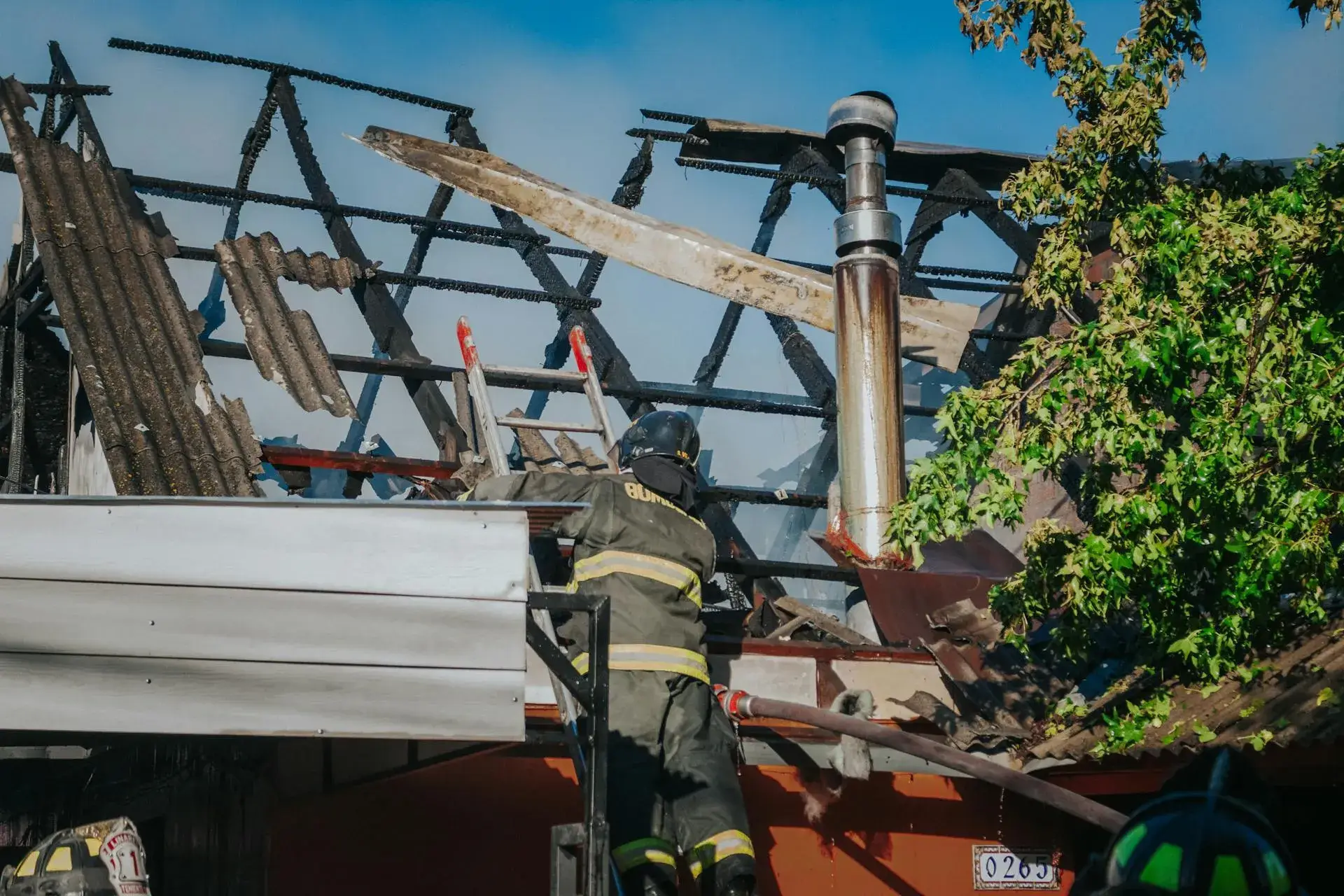
Fire Damage Restoration in Lake Mary, FL
Fire damage compounds every hour as soot corrodes surfaces, smoke odor penetrates deeper into materials, and exposed structures deteriorate from weather. Our Lake Mary team responds immediately to stabilize and begin restoration.
What Happens When You Call
A real person answers, not a call center. We assess your situation, determine immediate safety priorities, and begin coordinating your response.
Your dedicated restoration team is dispatched from our local base serving Lake Mary and the surrounding Seminole County communities.
Team arrives with board-up materials, industrial air scrubbers, and assessment equipment. Emergency stabilization begins immediately to prevent secondary damage.
Structure secured, damage assessed, restoration plan documented with insurance-ready detail. You know exactly what comes next and when.
A fire just changed everything about your home. You need someone there now, not just to stop the immediate damage from getting worse, but to take control of a situation that feels completely out of control. X Response exists for this moment. When you reach out, your restoration team mobilizes within minutes. From that first call, one team manages everything: securing the structure, removing soot and smoke residue, cleaning salvageable contents, and rebuilding what was lost. You are never left wondering what happens next. Call now. Your team is standing by.
Why Lake Mary Homes Are Vulnerable to Fire Damage
Lake Mary is a suburban city of approximately 16,800 residents in Seminole County, Florida, located within the Greater Orlando metropolitan area roughly 20 miles north of downtown Orlando. The city's residential landscape is predominantly single-family homes built during the growth period of the 1980s and 1990s, with newer construction along the International Parkway corridor and older original homes in the historic core near Big Lake Mary. In December 2025, a residential fire destroyed a 95-year-old Lake Mary woman's home just days before Christmas, consuming the structure so quickly that the family was unable to save personal belongings accumulated over a lifetime. The Lake Mary Fire Department responded but could not contain the fire before the home suffered complete structural collapse. That same year, in June 2025, a house fire on Short Street displaced a family of four, with Lake Mary and Seminole County fire crews responding to extinguish flames that had reached the attic before discovery.
Lake Mary's fire risk profile reflects both its housing characteristics and its growth patterns. The city averages approximately 80 fire incidents per year according to data compiled between 2003 and 2017, ranging from structure fires and vehicle fires to brush fires along the wooded edges of the community. In early 2026, a fire at the Pebble Creek apartments on February 27 during stairwell repairs ignited materials and produced smoke that penetrated multiple residential units. The damage assessment that followed revealed 540 code violations and structural deficiencies severe enough that Seminole County officials condemned 85 units as unsafe for occupancy, displacing dozens of families. The incident demonstrated how fire in multi-family housing creates cascading damage: smoke migrated through shared wall assemblies and HVAC systems into units far from the origin, affecting residents who never saw flames but whose homes were rendered uninhabitable by smoke contamination and the structural failures the fire exposed.
1980s and 1990s Construction Materials and Fire Spread
The majority of Lake Mary's housing stock was built during the 1980s and 1990s when the Orlando metro area expanded rapidly northward. Construction from this era commonly used engineered wood trusses, oriented strand board (OSB) sheathing, and vinyl siding, all of which are more susceptible to rapid fire progression than older solid-lumber framing. Engineered trusses use lightweight wood members connected by metal gusset plates that lose structural integrity quickly under heat, creating collapse risk within minutes of fire reaching the attic space. Vinyl siding melts and provides no fire resistance to external exposure from a neighbor's fire or landscape ignition. Many homes from this period also have polybutylene plumbing that melts in fire conditions, releasing water that creates secondary water damage throughout the structure even in rooms the fire itself did not reach. These construction characteristics mean that fires in Lake Mary homes can progress from manageable to catastrophic in less time than older, heavier-built structures would allow.
Electrical System Aging and Ignition Risk
Homes built in the 1980s and early 1990s are now 30 to 45 years old, placing their original electrical systems at or beyond their designed service life. Aluminum wiring, which was common in Florida homes built during the 1970s and into the early 1980s, creates elevated fire risk at connection points where the softer aluminum expands and contracts with thermal cycling, loosening connections over time. Even homes with copper wiring from this era may have original circuit breaker panels approaching failure, degraded outlet receptacles, and wiring insulation that has become brittle from decades of Florida heat in unconditioned attic spaces. The December 2025 fire that destroyed the 95-year-old resident's home illustrates how older Lake Mary homes with original electrical systems are at heightened risk. Kitchen and bathroom GFCI requirements and arc-fault circuit interrupter (AFCI) protection that modern codes mandate were not required when most of Lake Mary's homes were built.
Attached Garage Fires and Vehicle Ignition
Lake Mary's residential design overwhelmingly features attached garages that share a common wall with the living space. Garages concentrate fire ignition sources: stored chemicals, lawn equipment with fuel, electrical panels, water heaters, dryers, and increasingly, electric vehicle charging equipment. In 2025, a fire near East Lake Mary Boulevard was linked to a potential electric vehicle battery failure, with the blaze causing severe damage to the garage and second story of the home before firefighters could contain it. The shared wall between garage and living space is typically the weakest fire separation in residential construction. Building code requires a fire-rated assembly at this wall, but homes from the 1980s and 1990s were built to less stringent separation standards than current code demands. When a garage fire breaches this barrier, it enters the conditioned living space where smoke and heat spread rapidly through the open floor plans common in Lake Mary's suburban homes.
Kitchen Fires in Florida's Year-Round Cooking Climate
Cooking fires remain the leading cause of residential fires nationally, and Lake Mary is no exception. Florida's climate encourages year-round cooking at home, and the open-concept kitchen layouts prevalent in Lake Mary's 1990s and 2000s-era homes allow cooking fires to spread smoke and heat rapidly through connected living spaces without the compartmentalization that older, room-by-room floor plans provided. Grease fires that ignite on a cooktop can reach overhead cabinetry within seconds and spread into the range hood ductwork that penetrates the ceiling into the attic space. Once fire reaches the attic in Lake Mary's truss-roofed homes, it travels horizontally along the roof structure with minimal resistance. The combination of open floor plans, lightweight roof trusses, and vinyl exterior materials means a kitchen fire that goes uncontrolled for even a few minutes can involve the entire roof structure before fire crews arrive.
Lightning Strike Ignition
Central Florida is the lightning capital of the United States, with Seminole County experiencing an average of 80 to 100 thunderstorm days per year concentrated between May and September. Lightning strikes to residential structures cause attic fires, electrical system damage, and ignition of roofing materials. Lake Mary's predominantly shingled roofs provide fuel once a strike generates sufficient heat at the point of contact. A lightning strike can smolder in roof decking or attic insulation for hours before producing visible flame, meaning homeowners may not discover the fire until it has established itself throughout the attic space. The tall pine trees common throughout Lake Mary's older neighborhoods also attract strikes that can side-flash to nearby structures or ignite landscape materials adjacent to homes. Fire damage from lightning strikes often combines structural fire damage, extensive electrical system destruction throughout the home, and water damage from firefighting operations that flood the interior.
Lake Mary's fire damage profile is shaped by an aging housing stock built with lightweight construction materials, electrical systems approaching end of life, the prevalence of attached garages, open floor plans that allow rapid fire and smoke spread, and one of the highest lightning strike frequencies in the nation. Effective fire damage restoration here requires understanding the construction era of the affected home, because the materials, assembly methods, and code standards of the 1980s and 1990s determine how smoke penetrates, how soot deposits, and how quickly structural integrity is compromised.
What Happens to Your Home While You Wait
Immediately After
Once flames are extinguished, the damage clock starts on secondary deterioration. Acidic soot begins corroding metal surfaces, appliances, and electronics. Smoke residue penetrates porous materials. The roof or wall breaches created by the fire and firefighting operations expose the interior to Seminole County's subtropical humidity and afternoon thunderstorms. In Lake Mary's climate, an unsecured fire-damaged structure can sustain more water damage from a single afternoon storm than the fire itself caused in some rooms.
24–72 Hours
Soot chemistry becomes increasingly difficult to remove as it bonds with surfaces through chemical reactions accelerated by Florida's heat and humidity. Acidic smoke residue etches glass, corrodes copper plumbing joints, and permanently stains marble, granite, and painted surfaces if not neutralized. Protein-based soot from kitchen fires becomes nearly impossible to remove from textured ceilings and porous stone after 48 hours. Humidity entering through fire-damaged openings begins saturating wall cavities and initiating mold growth in areas the fire never touched.
One Week
Mold colonization is underway in water-damaged areas created by firefighting operations and weather exposure through the compromised building envelope. Structural steel connectors that held roof trusses and wall framing together corrode in the combined presence of moisture, acidic soot, and Seminole County's warm air. Salvageable soft goods like clothing, upholstery, and bedding become permanently smoke-damaged as odor molecules continue migrating deeper into fabric fibers. Electronics that might have been saved with immediate cleaning suffer permanent circuit board corrosion.
Two Weeks and Beyond
The window for cost-effective restoration narrows significantly. Materials that could have been cleaned and saved now require replacement. Smoke odor has penetrated deep into the building's structural wood, concrete slab, and HVAC ductwork. Mold remediation becomes necessary in addition to fire restoration, compounding scope and cost. Insurance carriers may question whether damage beyond the original fire scope resulted from delayed mitigation rather than the fire event itself, potentially reducing coverage.
In Lake Mary's heat and humidity, fire damage compounds faster than in drier climates. Every day without stabilization, soot removal, and moisture control adds scope, cost, and complexity. Contact X Response now. Our team secures and stabilizes your property within hours.
How We Restore Fire-Damaged Lake Mary Homes
Fire damage restoration requires a methodical approach that addresses structural safety, smoke and soot contamination, water damage from firefighting, and content salvage in a specific sequence. Here is exactly what the process involves.
Emergency Stabilization and Board-Up
Our first priority is securing the structure against further damage. Fire frequently compromises roofing, windows, and exterior walls, leaving the interior exposed to Seminole County's afternoon thunderstorms and subtropical humidity. We board openings, tarp damaged roof sections, and establish temporary weather protection before secondary water damage can begin. If the fire department cut ventilation holes or broke windows during suppression, those openings become our immediate focus. We also assess structural stability, identifying compromised trusses, load-bearing walls, and floor systems that may present collapse risk before crews can safely enter the interior for restoration work.
Damage Assessment and Scope Documentation
With the structure secured, our team conducts a detailed room-by-room assessment documenting the extent of fire, smoke, soot, and water damage. We use thermal imaging to identify hidden hot spots that may still be smoldering in wall cavities or attic insulation. We map smoke migration patterns, which in Lake Mary's HVAC-dependent homes typically follow the air conditioning ductwork into every room the system serves regardless of fire proximity. The assessment produces a comprehensive scope of work with photos, measurements, and material identification that drives the restoration plan and provides your insurance carrier the documentation it needs to process your claim efficiently.
Water Removal and Drying
Firefighting operations introduce hundreds to thousands of gallons of water into a structure, and in Lake Mary's high-humidity environment, that water must be removed immediately to prevent mold colonization in areas the fire never touched. We extract standing water, set up commercial dehumidifiers and air movers in water-affected zones, and begin drying operations concurrent with other restoration activities. The water used in fire suppression often mixes with soot, ash, and melted materials, creating contaminated slurry that requires specialized extraction and disposal. For homes where firefighters pulled ceiling material to access attic fires, water from hose operations saturates insulation and upper wall cavities where it remains trapped without mechanical removal.
Soot and Smoke Removal
Once the structure is dry and stable, professional soot and smoke removal begins. Different fire types produce different soot chemistries that require specific cleaning agents and techniques. A kitchen grease fire produces protein-based soot that requires enzyme treatments. An electrical fire produces synthetic soot with petroleum compounds. A structure fire involving wood framing produces alkaline ash residue. Our team identifies the soot type in each area and applies the appropriate combination of dry sponging, chemical cleaning, and abrasive methods to remove residue without driving it deeper into surfaces. HEPA air scrubbers run continuously during this phase, and we use hydroxyl generators for odor treatment that neutralizes smoke molecules embedded in structural materials rather than masking them with fragrance.
Structural Repair and Reconstruction
With contamination removed, reconstruction begins. In Lake Mary homes, this typically involves replacing fire-damaged roof trusses, wall framing, sheathing, and finish materials. We match existing architectural details, floor plans, and material specifications so the repaired area integrates with the undamaged portions of the home. For homes built in the 1980s and 1990s, reconstruction often incorporates code-required upgrades including enhanced fire separation at attached garages, arc-fault circuit interrupter protection, and smoke detector placement to current standards. Reconstruction is documented throughout with progress photos and material specifications that complete your insurance claim file and give you a permanent record of the work performed.
The X Response Difference
When you contact X Response after a fire in Lake Mary, you get a single dedicated team that manages every aspect of restoration from emergency stabilization through final reconstruction. No gaps between trades, no dropped communication, no secondary damage from delayed action.
Insurance Claim Guidance for Lake Mary Homeowners
Fire damage insurance claims in Florida are typically covered under the dwelling and personal property sections of a standard homeowner's policy, including damage from the fire itself, smoke and soot contamination, water damage from firefighting operations, and additional living expenses while your home is uninhabitable. However, the claims process for fire damage is more complex than most homeowners expect because it involves multiple coverage categories, potential disputes over pre-existing conditions versus fire-caused damage, and decisions about repair versus replacement that significantly affect your settlement. The December 2025 fire that destroyed a Lake Mary home entirely illustrates the total-loss scenario, while the 2026 Pebble Creek apartments incident shows how smoke damage alone can render units uninhabitable even without direct flame contact.
How X Response Helps
- Document all fire, smoke, soot, and water damage with professional photos, thermal imaging, and detailed scope of work from the first day of restoration
- Catalog damaged personal property with descriptions, conditions, and replacement cost estimates organized by room and coverage category
- Separate fire damage from any pre-existing conditions so your adjuster can clearly identify what the fire event caused
- Provide a reconstruction scope with material specifications and code-upgrade requirements that supports a complete settlement
- Document additional living expenses eligibility when smoke or structural damage makes your home uninhabitable during restoration
X Response does not file claims on your behalf, adjust claims, or make coverage determinations. We provide documentation and guidance to help you make informed decisions about your property and your policy. Coverage decisions are made solely by your insurance carrier.
Certified Restoration Specialists Serving Lake Mary
When you contact X Response after a fire in Lake Mary, your restoration team is drawn from certified professionals who work across Seminole County and understand the specific challenges of restoring fire-damaged homes in this community. They know how Lake Mary's 1980s and 1990s construction responds to fire, how quickly smoke migrates through the forced-air HVAC systems these homes depend on year-round, and how Seminole County's humidity turns firefighting water damage into mold contamination within days if not addressed immediately. They have restored homes from kitchen fires that remained contained to one room, attic fires from lightning strikes that damaged the entire roof structure, and total losses where only the foundation remained. This is not a crew dispatched from hours away. It is a local team with local expertise operating under national quality standards.
Every technician on your team holds current IICRC certification in fire and smoke restoration (FSRT) and carries the appropriate Florida state licensing for structural repair. Equipment is commercial-grade and maintained to manufacturer specifications. When your team arrives, they bring everything needed to begin stabilization immediately: board-up materials, industrial HEPA air scrubbers, hydroxyl generators for odor neutralization, thermal imaging cameras to locate hidden hot spots, and the structural assessment expertise to determine which areas are safe to enter and which require engineering evaluation before restoration work begins.
In Lake Mary, X Response works with Hugo Fire and Water, an independent local restoration partner serving Seminole County.
Fire Damage Restoration FAQ for Lake Mary Homeowners
Other Emergency Services in Lake Mary

Water Damage Restoration
Burst pipes, storm flooding, standing water. We extract, dry, and restore before mold sets in.
Learn more
Smoke Damage Restoration
Soot residue, chemical odors, HVAC contamination. We decontaminate surfaces, eliminate odors, and restore air quality.
Learn more
Mold Remediation
Testing, containment, removal, prevention. We find the source, eliminate the growth, and stop it from returning.
Learn more
Sewage Cleanup
Sewer backups, contaminated water, biohazard. We extract, sanitize, and restore safely.
Learn more