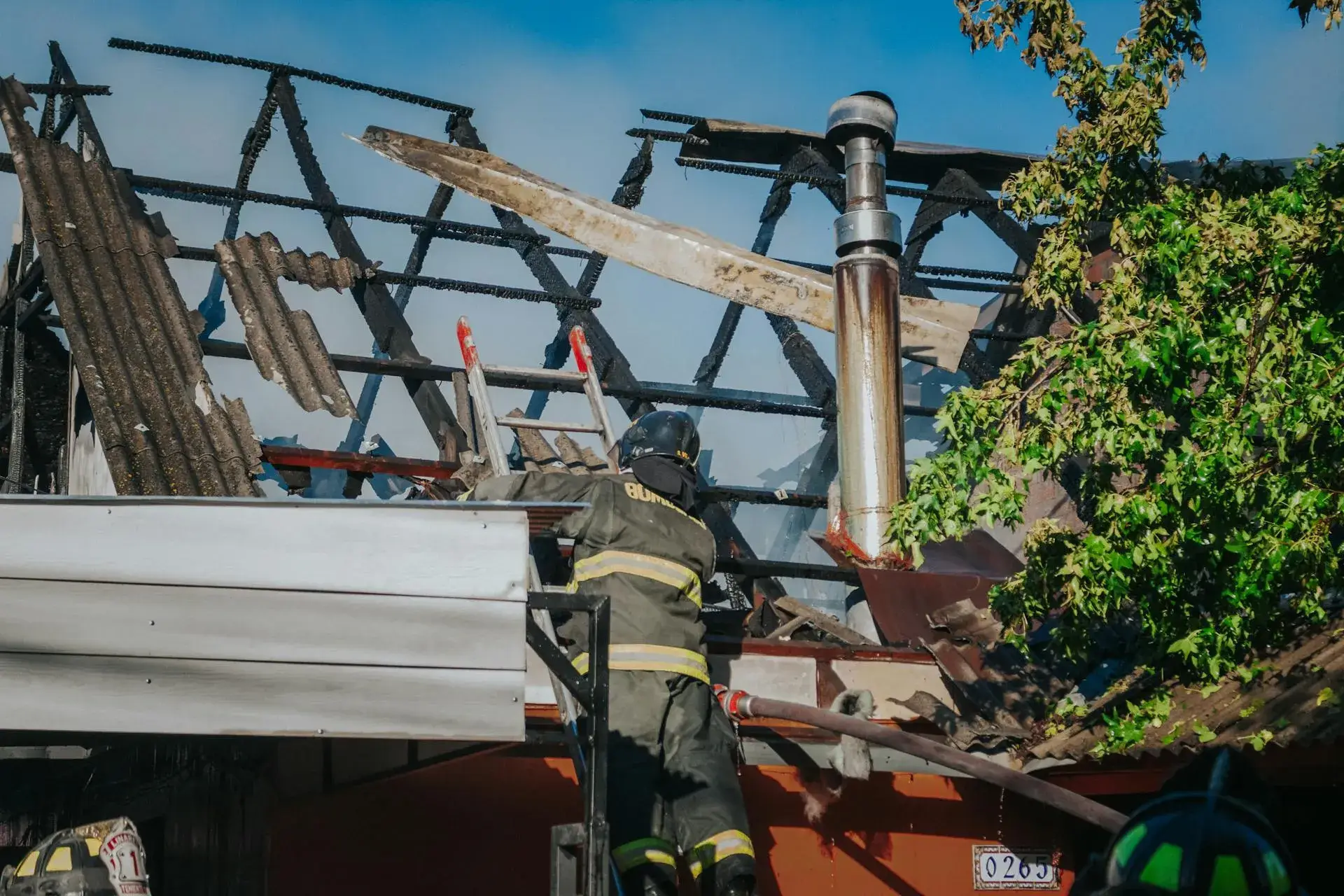
Professional fire damage restoration crew assessing and cleaning a fire-damaged residential property
Teams Active in Volusia County

Fire Damage Restoration in Deltona, FL

Soot and smoke residue begin etching into surfaces within hours of a fire. Our local team responds to Deltona emergencies for immediate board-up, stabilization, and restoration.

60-Min Response IICRC Certified Insurance Guidance Serving Volusia County

What Happens When You Call

You Call

A real person answers. We assess the situation, confirm the fire department has cleared the structure, and begin coordinating your emergency response immediately.

15 Minutes

Your dedicated restoration team is dispatched from our local base serving the Deltona and greater Volusia County area with board-up materials and stabilization equipment.

45–60 Minutes

Team arrives on site. Emergency board-up begins on exposed openings. Tarps are placed over roof damage to prevent weather intrusion. The property is secured against further loss.

Same Day

Property fully secured, initial damage assessment documented with photos and notes, and a preliminary restoration plan outlined. You know what comes next.

Your home just went through a fire and you need someone to take control of the situation right now. Not tomorrow, not after a series of phone transfers. When you reach out to X Response, your restoration team is mobilized within minutes. From that point forward, one team manages everything: board-up, soot removal, structural assessment, content salvage, and insurance documentation. You are never left wondering what happens next. Call now. Your team is standing by.

Why Deltona Properties Face Elevated Fire Risk

Deltona was developed as a planned community beginning in 1962, and the majority of its housing stock was built between the mid-1960s and early 1990s. That construction era matters for fire risk because it coincides with the widespread use of aluminum wiring, Federal Pacific electrical panels, and building materials that predate modern fire codes. The city's nearly 94,000 residents live in a mix of original Mackle Brothers-era homes and newer construction, but the older neighborhoods carry significantly higher fire risk due to aging electrical infrastructure that was never designed for today's power demands.

Beyond structural fire risk, Deltona sits adjacent to thousands of acres of undeveloped scrubland and state forest. The Tiger Bay State Forest borders the city to the east, and Volusia County regularly issues burn bans during dry season when drought conditions elevate wildfire risk across the region. In early 2026, brush fires along I-95 in Volusia County burned 20 vehicles and scorched multiple acres, while a wildfire in the Tiger Bay State Forest destroyed over 200 acres in a single event.

Aluminum Wiring in 1960s–1970s Homes

Thousands of Deltona homes built between 1965 and the late 1970s contain aluminum electrical wiring. Aluminum expands and contracts more than copper at connection points, creating loose connections that overheat over time. This wiring is a documented precursor to electrical fires and remains present in many original Deltona homes that have not been rewired.

Federal Pacific Electrical Panels

Many older Deltona homes still have Federal Pacific Electric (FPE) Stab-Lok breaker panels, which independent research has linked to an estimated 2,000 to 2,800 residential fires per year nationwide. These panels have a documented failure rate where breakers do not trip during overcurrent events, allowing wiring to overheat to the point of ignition. Some Florida insurers now refuse to cover homes with these panels.

Wildfire Exposure from Adjacent Forests

Deltona borders the Tiger Bay State Forest and thousands of acres of undeveloped scrubland. During dry season, Volusia County regularly issues burn bans as drought conditions elevate wildfire risk. In February 2026, a wildfire in Tiger Bay destroyed over 200 acres, and brush fires along I-95 burned 20 vehicles. Properties on Deltona's eastern and southern edges face direct wildfire exposure during these events.

Overloaded Electrical Systems in Older Homes

Homes built in the 1960s and 1970s were designed for 100-amp electrical service with minimal outlets per room. Today's homeowners run air conditioning systems, multiple appliances, electronics, and sometimes EV chargers on infrastructure that was never designed for this load. Extension cord overuse and overloaded circuits are common in Deltona's older neighborhoods, creating persistent fire ignition risk.

Dry Season and Drought Conditions

Central Florida's dry season from November through May creates conditions where vegetation becomes highly flammable. Volusia County's FEMA National Risk Index rates the county's wildfire risk as "Relatively High" compared to the rest of the United States. When drought indices rise, the county enacts burn bans, but embers from distant brush fires can still travel into residential areas and ignite landscaping, fences, and exterior structures.

These factors create a compounding risk profile. An older home with aluminum wiring and a Federal Pacific panel sits on a lot bordered by dry scrub vegetation during a drought year. An electrical failure ignites inside the wall cavity while embers from a nearby brush fire threaten the exterior. Professional fire damage restoration in Deltona must account for both structural fire damage and the secondary effects of smoke, soot, and water from suppression efforts that follow.

What Happens to Your Property After a Fire

Within Hours

Acidic soot residue begins etching into glass, metal fixtures, and painted surfaces. Smoke particles penetrate deeper into porous materials with each passing hour. Unsecured openings allow weather, animals, and unauthorized entry.

24–48 Hours

Soot permanently discolors grout, natural stone, and fiberglass surfaces. Metal fixtures and appliances begin corroding beyond restoration. Water from fire suppression saturates drywall and framing, creating conditions for mold growth in Florida's humidity.

3–7 Days

Mold colonizes water-damaged materials behind walls and under flooring. Soot residue becomes increasingly difficult to remove from wood, upholstery, and textiles. Smoke odor compounds bond permanently to building materials. Restoration scope expands significantly.

1–2 Weeks

Corrosion damages HVAC components, electrical wiring, and plumbing fixtures throughout the structure. Smoke contamination spreads through ductwork to unaffected areas. Items that could have been cleaned now require replacement. Insurance claims become more complex.

One Month and Beyond

Structural wood weakens from prolonged moisture exposure. Extensive mold remediation required in addition to fire restoration. Salvageable contents are now total losses. What started as a restoration project becomes a near-complete reconstruction. Costs multiply accordingly.

The difference between restoring your home and rebuilding it often comes down to how quickly professional stabilization begins after the fire is out. Contact X Response now. Our Deltona team responds within 60 minutes.

How We Restore Fire-Damaged Deltona Homes

From emergency board-up through final reconstruction, every step is documented, coordinated, and verified. Here is exactly what the restoration process involves.

Emergency Board-Up and Stabilization

The first priority is securing the property against further damage. Our team boards up broken windows and doors, tarps damaged roof sections to prevent rain intrusion, and installs temporary fencing if the structure has significant exterior damage. In Deltona's climate, an unsecured fire-damaged property can sustain severe secondary water damage from afternoon thunderstorms within hours. Emergency board-up is also a requirement for most insurance policies, which mandate that homeowners mitigate further loss.

Damage Assessment and Safety Evaluation

Once the property is secured, our specialists conduct a comprehensive assessment of all four types of fire damage: structural integrity, smoke and soot penetration, water damage from suppression, and secondary exposure risks. This includes thermal imaging to identify heat-compromised framing, air quality testing for toxic particulates, and a room-by-room evaluation of every surface and system. For Deltona's concrete block homes, we assess whether the CMU walls have been compromised by heat exposure, which can cause spalling and loss of structural capacity. The assessment produces a detailed scope of work that drives both the restoration plan and your insurance documentation.

Soot and Smoke Residue Removal

Soot removal must happen before any reconstruction begins. Our team uses dry sponges, HEPA vacuums, and chemical soot removers matched to the specific soot type present. Dry soot from fast-burning wood fires requires different techniques than wet, sticky soot from slow-burning synthetic materials. We clean all affected surfaces including walls, ceilings, cabinetry, and structural members. HEPA air scrubbers run continuously during this phase to capture airborne particulates. For Deltona homes with textured stucco ceilings or popcorn finishes common in the era, specialized techniques prevent driving soot deeper into the texture.

Odor Elimination and Air Quality Restoration

Smoke odor penetrates every porous material in the structure and cannot be masked with deodorizers. We use thermal fogging, ozone treatment, and hydroxyl generators to neutralize odor compounds at the molecular level. The HVAC system is fully decontaminated, including ductwork cleaning and filter replacement, because smoke particles travel through the entire air handling system during a fire. In Deltona homes where the HVAC runs nearly year-round due to the climate, contaminated ductwork will redistribute smoke odor indefinitely if not properly cleaned.

Structural Repair and Reconstruction

Once cleaning and decontamination are complete, reconstruction begins. This includes replacing fire-damaged framing, drywall, flooring, roofing, and electrical systems. For older Deltona homes, this phase often includes bringing electrical systems up to current Florida Building Code, replacing the aluminum wiring or outdated panels that may have contributed to the fire in the first place. We coordinate all trades, from framing and electrical to painting and finish work, so you deal with one team rather than managing multiple contractors yourself.

The X Response Difference

Typical Experience You call, get transferred to a dispatcher, and wait for someone to call you back. Meanwhile your property sits unsecured and exposed to the elements.
X Response A real person answers your call. Your restoration team is dispatched within minutes with board-up materials. The property is secured the same day.
Typical Experience One company does the board-up, another does the cleaning, a third handles reconstruction. You coordinate between all of them.
X Response One team manages the entire project from emergency stabilization through final reconstruction. Same point of contact, every phase.
Typical Experience The restoration company finishes and hands you a stack of paperwork. You navigate the insurance claim alone during one of the most stressful periods of your life.
X Response We document everything from day one with your claim in mind. Damage assessment, scope of work, progress photos, all formatted for your adjuster. We guide you through the process before you file.
Typical Experience Reconstruction finishes and the crew disappears. If smoke odor returns in a few weeks, you are starting over with a new company.
X Response Final quality inspection with air quality verification. Completion documentation with before-and-after evidence. Post-restoration follow-up to confirm odor elimination holds.

Fire damage restoration is one of the most complex recovery processes a homeowner will face. When you contact X Response, you get a dedicated team that manages every phase, from the moment the fire department clears the structure through the final coat of paint. One team, one standard of work, one point of accountability from start to finish.

Insurance Claim Guidance for Deltona Homeowners

Fire damage insurance claims in Florida are among the most complex property claims to navigate. Most homeowner's policies cover fire damage including structural repairs, content restoration, and additional living expenses (ALE) during displacement. However, complications arise frequently: arson investigations can delay claim processing, code upgrade requirements for older Deltona homes add costs that may not be fully covered under standard policies, and disputes over content valuation are common when personal belongings are destroyed. Florida's shifting insurance market, with Citizens Property Insurance covering an increasing share of Volusia County homeowners, adds another layer of complexity.

How X Response Helps

  • Document all fire, smoke, soot, and water damage with professional photos, air quality readings, and a detailed scope of work from day one
  • Provide a comprehensive damage assessment that covers all four types of fire damage, not just the visible charring
  • Align our restoration scope with standard insurance coverage categories so your adjuster can process the claim efficiently
  • Explain your policy's likely coverage for structural repairs, content loss, code upgrades, and additional living expenses before you file
  • Guide you on timing, documentation requirements, and what to expect from the claims process

X Response does not file claims on your behalf, adjust claims, or make coverage determinations. We provide documentation and guidance to help you make informed decisions about your property and your policy. Coverage decisions are made solely by your insurance carrier.

Certified Restoration Specialists Serving Deltona

When you contact X Response for a fire damage emergency in Deltona, your restoration team is drawn from certified professionals who work in Volusia County and understand the specific challenges of restoring fire-damaged homes in this area. They know concrete block construction and how heat affects CMU walls differently than wood framing. They understand the electrical issues common in Deltona's older housing stock. They have experience with both structural fire damage and wildfire smoke exposure from brush fires in the surrounding forest areas.

Every technician on your team holds current IICRC certification in fire and smoke restoration (FSRT) and carries the appropriate Florida state licensing for the work being performed. Equipment includes thermal imaging cameras for identifying hidden heat damage, HEPA air scrubbers for particulate control, ozone generators and thermal foggers for odor elimination, and full reconstruction capabilities. When your team arrives, they bring everything needed to begin stabilization immediately.

IICRC FSRT Certified
Licensed & Insured
24/7 Availability
Serving Volusia County
EPA Lead-Safe

Fire Damage Restoration FAQ, Deltona, FL

Nearby Cities We Serve

Also serving nearby: Sanford Orange City DeBary DeLand Daytona Beach

Fire Damage Gets Worse Every Hour

Your Deltona restoration team is standing by. Free assessment, no obligation, and we guide you through the insurance process from day one. The sooner we secure and stabilize your property, the more we can save.

Call Now Get Help Now Text Us