
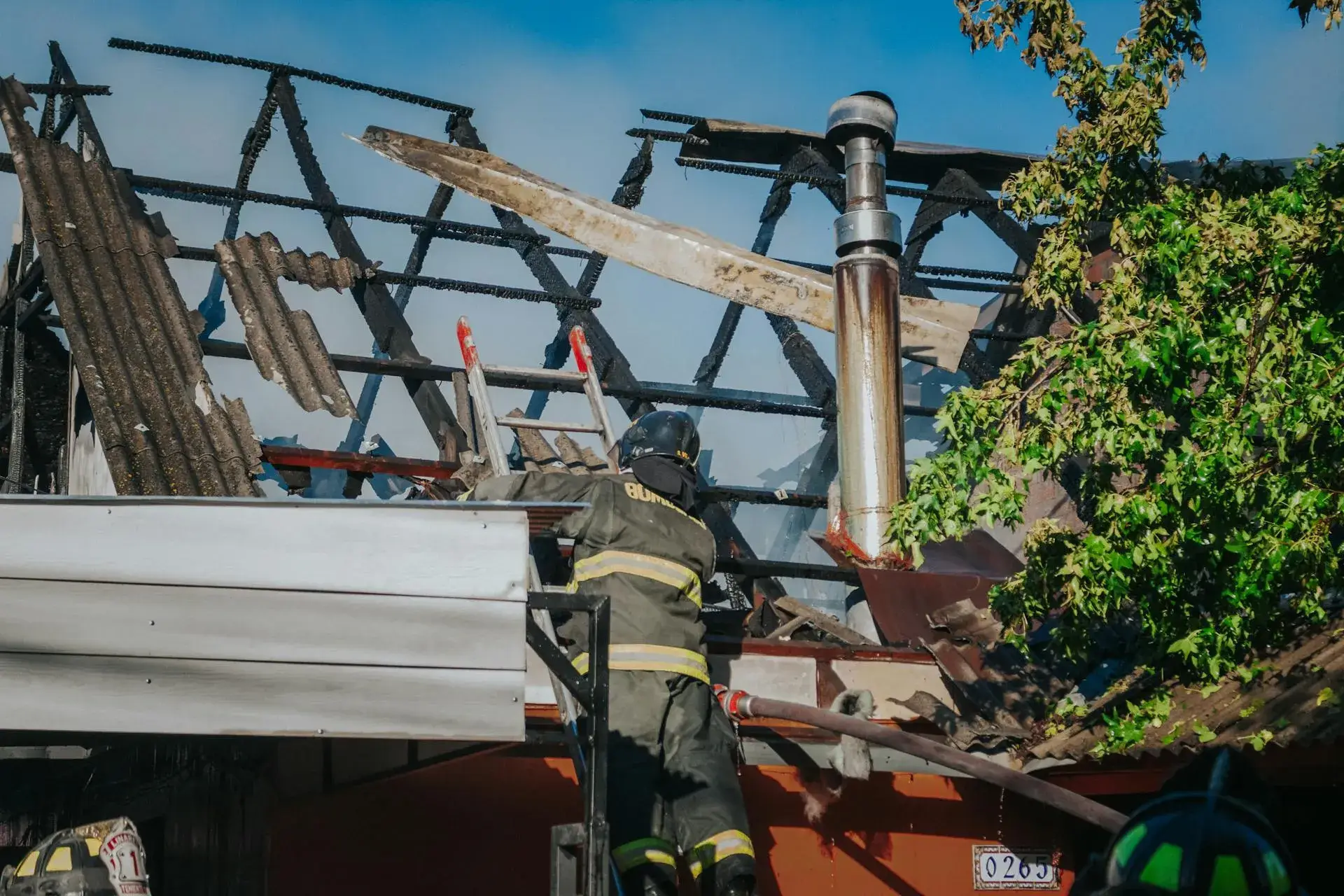
Fire Damage Restoration in Buffalo Grove, IL
Fire damage compounds every hour as soot penetrates deeper into materials and acidic residues etch surfaces permanently. Our local team responds to Buffalo Grove emergencies within 60 minutes.
What Happens When You Call
A real person answers, not a call center. We assess your situation, ask the right questions, and begin coordinating your emergency response immediately.
Your dedicated restoration team is dispatched from our local base serving Buffalo Grove and the surrounding northwest suburban communities.
Team arrives with board-up materials, structural assessment tools, and smoke damage mitigation equipment. Emergency stabilization begins immediately.
Property secured, initial soot and smoke containment established, restoration plan documented. You know exactly what comes next.
A fire just happened and your property is in chaos. The flames are out, but the damage is still actively worsening as soot, smoke residue, and moisture from suppression efforts penetrate deeper into every material they contact. X Response exists for exactly this moment. When you reach out, your restoration team is mobilized within minutes and on site within the hour. From that point forward, one team manages everything: stabilization, cleaning, structural assessment, and insurance coordination. Call now. Your team is standing by.
Why Buffalo Grove Homes Are Vulnerable to Fire Damage
Buffalo Grove is a village of 43,212 residents straddling the Lake County and Cook County border approximately 35 miles northwest of downtown Chicago. Incorporated in 1958, it grew rapidly through the 1960s, 1970s, and 1980s with a mix of single-family homes, townhome developments, and condominium complexes. The Le Parc community alone, a complex of two-story townhome buildings along Le Parc Circle, has experienced multiple significant fire events including a 3-alarm fire on March 8, 2025 that destroyed a six-unit building and caused nearly $1 million in damage, and a 2017 fire in the same complex that injured a firefighter and killed two pets. These incidents illustrate a pattern specific to Buffalo Grove's attached-housing inventory: fire that starts in one unit travels through shared structural cavities, void spaces between floors, and party walls into adjacent units before occupants or firefighters can isolate it.
On March 8, 2025, a 3-alarm fire at 321 Le Parc Circle in Buffalo Grove destroyed a six-unit townhome building, caused an estimated $950,000 to $1 million in damage, displaced all residents from the six units, and required mutual aid from surrounding departments after the fire traveled through walls and void spaces between the first and second floors before the roof collapsed approximately 20 minutes after crews arrived. First-arriving companies found light smoke and began investigation, but the fire had already entered the wall cavities and was moving between floors through concealed voids. Within minutes the incident escalated to a Code 4 Working Fire. The roof collapse forced an evacuation of interior operations and a transition to exterior attack with multiple hose lines. The fire was fanned by strong winds that accelerated its spread through the building's interconnected structural cavities. No occupants were found in any of the six units, two cats were rescued, and one firefighter sustained a minor injury.
Townhome Fire Spread Through Shared Structural Cavities
Buffalo Grove's substantial townhome inventory, built primarily in the 1970s and 1980s, shares a construction characteristic that defines fire behavior in these buildings: continuous void spaces between floors and above ceilings that connect multiple units through a single structural cavity. Party walls between units typically extend to the underside of the roof deck, but the floor and ceiling assemblies often contain horizontal channels that allow fire to travel laterally from one unit to the next without breaching a visible surface. The March 2025 Le Parc Circle fire demonstrated this pattern clearly. First responders found light smoke on arrival, but the fire had already entered the wall cavities and was moving between floors through void spaces. Within 20 minutes the roof collapsed, meaning the fire had traveled through the structural frame of six units while appearing contained from the exterior. For residents of Buffalo Grove's townhome communities, this means that a fire originating in a neighbor's unit can compromise your home's structure before you see flames or even heavy smoke in your own living space.
Wind-Driven Fire in Attached Housing
The March 2025 Le Parc Circle fire was explicitly fanned by strong winds that accelerated its spread. Buffalo Grove sits in the open terrain northwest of Chicago where wind speeds during weather events can exceed sustained levels that turn manageable fires into fast-moving structural emergencies. For attached townhome and condominium buildings, wind creates two compounding problems. First, it drives flames laterally along exterior surfaces, igniting siding, fascia, and soffit materials on adjacent units. Second, it creates pressure differentials that push combustion gases into wall cavities and attic spaces through every gap in the building envelope, feeding fire into concealed spaces where it spreads unseen. A fire that might remain contained to its unit of origin in calm conditions can engulf an entire building within minutes when wind pushes it through the structural connections between units.
Fire Suppression Water Damage
Every structure fire in Buffalo Grove produces a secondary damage event: water from fire suppression operations. A 3-alarm fire like the March 2025 Le Parc incident involves multiple hose lines flowing thousands of gallons per minute, each of which saturates the building structure, flows downward through floor assemblies, and pools in basement and ground-floor areas. For the units not directly burned, suppression water often causes more damage than the fire itself. Water penetrates through ceiling cavities, soaks insulation, saturates drywall, and floods electrical panels and mechanical equipment. In townhome buildings where multiple units share structural elements, suppression water from firefighting operations in one unit flows through the shared floor system into units that may have sustained no direct fire or smoke damage at all. The restoration of these units requires full water damage protocols in addition to smoke damage remediation.
Single-Family Home Fire Risk
While the attached-housing fires draw headlines because of their scale, Buffalo Grove's single-family homes face their own fire risks. The village's housing stock includes thousands of homes built in the 1960s and 1970s with electrical systems designed for the appliance loads of that era. Panels with Federal Pacific Stab-Lok breakers, aluminum branch wiring in some developments, and decades of homeowner additions that may not meet current electrical codes all contribute to electrical fire risk. A 2021 fire on Patton Drive in Buffalo Grove caused $150,000 in damage to a single-family home when fire traveled from an upstairs bathroom into the attic and through the roof, causing extensive damage to all three bedrooms and a bathroom on the second floor plus water and smoke damage throughout the first floor and basement. For single-family homeowners, a fire that starts in one area of the home produces smoke damage throughout the entire structure because the HVAC system distributes combustion byproducts to every room with a supply register.
Mutual Aid Response and Extended Operations
The Buffalo Grove Fire Department operates from two stations and maintains mutual aid agreements with surrounding departments through the Mutual Aid Box Alarm System (MABAS). When a fire escalates beyond an initial alarm assignment, as the March 2025 Le Parc Circle fire did when it went to 3 alarms, companies from Arlington Heights, Palatine, Wheeling, Long Grove, and other neighboring departments respond. While this mutual aid system ensures adequate firefighting resources arrive, it also means that during a major fire event, the initial response to a second simultaneous emergency elsewhere in Buffalo Grove may come from a station farther away. For homeowners experiencing a fire while mutual aid resources are committed to another incident, the time between the fire starting and suppression beginning may be slightly longer than typical. Those additional minutes of uncontrolled burning translate directly into more extensive structural damage, deeper smoke penetration, and a larger restoration scope.
Fire damage in Buffalo Grove presents differently depending on the structure type and the fire behavior. In attached townhome buildings, fire travels through shared structural cavities and affects multiple units from a single ignition point, making the damage boundary unclear and the restoration scope multi-unit by default. In single-family homes, the HVAC system distributes smoke throughout the house while the fire itself may remain localized. In both cases, suppression water creates a secondary damage layer that requires its own restoration protocol. And in all cases, soot and smoke residue begin chemically etching surfaces and penetrating porous materials from the moment the fire is extinguished, making rapid professional intervention the difference between cleaning and replacing.
What Happens to Your Home While You Wait
Within 1 Hour
Soot settles on every horizontal surface throughout the affected areas. Acidic smoke residues begin reacting with metals, causing tarnishing and pitting on fixtures, appliances, and exposed fasteners. In Buffalo Grove's townhome buildings, smoke has already migrated through shared wall cavities and ceiling plenums into adjacent units that may appear undamaged from the hallway. Synthetic materials throughout the home off-gas volatile compounds that compound the odor and contamination problem. Every minute that soot sits on a surface, it bonds more permanently to the material beneath it.
1–24 Hours
Smoke residue chemically bonds to painted surfaces, metal fixtures, and fabric materials. What could be cleaned with professional techniques in the first hour now requires more aggressive chemical treatments or may become permanent. Acidic soot etches chrome, brass, and aluminum surfaces. Smoke odor penetrates soft furnishings, carpet, drapes, and upholstered furniture at a molecular level. Fire suppression water saturates structural framing, insulation, and drywall, creating the conditions for secondary mold growth. In multi-unit buildings, water continues to migrate downward through floor assemblies into lower units.
24–48 Hours
Permanent discoloration sets in on porous surfaces that were not cleaned or sealed within the first day. Metal surfaces develop visible corrosion. Wood finishes yellow and may require stripping rather than cleaning. Smoke odor becomes deeply embedded in structural materials, including concrete, framing lumber, and subfloor systems. Suppression water standing in concealed cavities begins producing musty odors as bacterial growth starts. The distinction between what can be cleaned and what must be replaced shifts significantly toward replacement.
48–72 Hours
Mold growth begins on materials saturated by suppression water, compounding the fire damage with biological contamination. Smoke odor has fully permeated the HVAC system, ductwork, and insulation throughout the structure. Restoration costs increase substantially as more materials cross the threshold from salvageable to unsalvageable. In attached buildings, smoke that migrated into adjacent units through shared cavities has now bonded to surfaces in those units, expanding the restoration scope beyond the originally fire-damaged area.
One Week and Beyond
Extensive corrosion on metal surfaces and mechanical systems. Permanent smoke damage to wood, fabric, and painted surfaces throughout. Mold colonies established in suppression-water-saturated areas. HVAC systems contaminated beyond cleaning and requiring replacement. The restoration project scope approaches or exceeds a complete rebuild of affected areas. Insurance negotiations become more complex as the carrier evaluates what portion of the current damage was avoidable with earlier intervention.
The window for maximizing what can be saved after a fire is measured in hours, not days. Contact X Response now. Our Buffalo Grove team responds within 60 minutes to begin stabilization and prevent secondary damage from compounding your loss.
How We Restore Fire-Damaged Buffalo Grove Homes
Fire damage restoration involves far more than debris removal. From the moment our team arrives, every step is documented, sequenced, and verified. Here is exactly what the process involves for Buffalo Grove properties.
Emergency Stabilization and Board-Up
Our team arrives and immediately secures the property. In Buffalo Grove, that means boarding up windows and door openings compromised by fire or firefighter access, tarping roof sections where fire burned through or where ventilation cuts were made during suppression, and establishing weather protection to prevent rain from entering and compounding the water damage already present from suppression operations. For townhome buildings where fire affected multiple units, we coordinate board-up across all compromised units simultaneously and work with the HOA or property management to secure the entire structure. We also assess structural integrity to determine which areas are safe for restoration crews to enter and which require engineering evaluation before work begins.
Smoke and Soot Assessment
Different fires produce different types of soot depending on what burned. A kitchen fire burning food and grease produces sticky, protein-based residue that requires different cleaning chemistry than a fire burning synthetic materials like plastics, foam, and engineered wood products. An electrical fire in a wall cavity produces a fine, dry soot that penetrates deeply into porous materials. Our assessment identifies the soot type throughout the structure, maps the extent of smoke migration (including into adjacent townhome units through shared cavities), and determines which materials can be professionally cleaned, which require specialized treatment, and which must be removed and replaced. This assessment drives the entire restoration plan and the insurance documentation.
Structural Soot and Smoke Removal
Using specialized cleaning agents matched to the soot type identified during assessment, our team systematically removes smoke residue from every affected surface. We work from the top down and from the least damaged areas toward the most damaged to prevent recontamination. Hard surfaces are cleaned with appropriate chemical solvents. Porous surfaces like raw wood and concrete are treated with sealants after cleaning to encapsulate any residual odor. Contents including furniture, clothing, electronics, and documents are inventoried, categorized by restorability, and either cleaned on-site or transported to our facility for specialized treatment. HVAC systems are professionally cleaned or replaced depending on the contamination level, and all ductwork is addressed to prevent the system from redistributing smoke particulates after restoration.
Water Damage Remediation from Suppression
Fire suppression water creates its own damage layer that must be addressed with full water restoration protocols. We extract standing water, deploy structural drying equipment, and monitor moisture levels throughout the drying period. In Buffalo Grove townhome buildings where suppression water flowed through floor assemblies into lower units, we coordinate drying operations across multiple units simultaneously. This phase runs in parallel with smoke damage work in areas where both are present, requiring careful sequencing so that cleaning agents are not diluted by ongoing moisture and drying equipment does not redistribute soot particulates before they are removed. The goal is to prevent mold growth from fire suppression water while maintaining the conditions needed for effective smoke damage remediation.
Reconstruction and Completion
Once all smoke, soot, and moisture have been addressed, reconstruction begins. For partially damaged structures, this means replacing drywall, insulation, flooring, and trim in fire-affected areas while matching the existing finishes and materials in undamaged areas. For extensively damaged structures like the Le Parc units destroyed in March 2025, reconstruction may involve framing, roofing, mechanical systems, and complete interior finishing. Throughout reconstruction, we maintain documentation that your insurance carrier needs to process the structural claim, including detailed measurements, material specifications, and code-compliance upgrades required by current building standards that may differ from the original construction era. Final inspection confirms all work meets both our quality standards and the Village of Buffalo Grove building code requirements.
The X Response Difference
When you contact X Response after a fire in Buffalo Grove, you get a single restoration team that manages the entire process: securing the property, removing smoke damage, drying suppression water, and rebuilding what was lost. One team, one standard, one accountability from first call to final inspection.
Insurance Claim Guidance for Buffalo Grove Homeowners
Fire damage insurance claims in Illinois are typically covered under the dwelling and personal property sections of a standard homeowner's policy, but the claims process is far more complex than most homeowners expect. The total loss from a fire includes not just the visible structural damage but also smoke damage to areas the fire never reached, water damage from suppression operations, temporary living expenses while the home is uninhabitable, and the full replacement value of destroyed contents. In Buffalo Grove's townhome and condominium buildings, fire claims involve coordination between the unit owner's HO-6 policy and the building's master policy maintained by the HOA, with the dividing line between individual and common-element coverage depending on the association's governing documents. The March 2025 Le Parc Circle fire, which rendered all six units uninhabitable with nearly $1 million in total damage, illustrates how a single fire event generates multiple overlapping claims from individual unit owners, the HOA's master policy, and potentially affected adjacent buildings.
How X Response Helps
- Document all damage with professional photos, moisture readings, soot samples, and a detailed scope of work from the moment our team arrives
- Distinguish between direct fire damage, smoke migration damage, and suppression water damage, as each may be handled differently by your carrier
- For townhome and condo owners, identify the boundary between unit-owner and common-element damage to align with your HOA's master policy
- Prepare contents inventory documentation with pre-loss condition evidence to support personal property claims
- Coordinate with your carrier's preferred timeline while maintaining the urgency needed to prevent secondary damage from worsening
X Response does not file claims on your behalf, adjust claims, or make coverage determinations. We provide documentation and guidance to help you make informed decisions about your property and your policy. Coverage decisions are made solely by your insurance carrier.
Certified Restoration Specialists Serving Buffalo Grove
When you contact X Response after a fire in Buffalo Grove, your restoration team is drawn from certified professionals who understand the specific challenges of fire restoration in this community. They know how fire behaves in the attached townhome buildings that characterize much of Buffalo Grove's housing stock, how shared structural cavities allow flames and smoke to travel between units, and how the interaction between fire damage and suppression water damage requires coordinated remediation protocols. They have worked through multi-unit fire events in complexes like Le Parc, single-family structure fires in the original 1960s subdivisions, and kitchen fires in the condominium buildings along the village's major corridors. They understand the Village of Buffalo Grove's building code requirements for reconstruction and the coordination required with the Buffalo Grove Fire Department for cause-and-origin documentation.
Every technician on your team holds current IICRC certification in fire and smoke restoration and carries the appropriate Illinois state licensing for the work being performed. Equipment includes commercial ozone generators, thermal foggers, HEPA air scrubbers, hydroxyl generators for odor neutralization, and the full complement of water damage restoration equipment needed to address suppression water simultaneously. When your team arrives, they bring everything needed to begin stabilization and mitigation immediately, eliminating the delays that allow secondary damage to compound your loss.
In Buffalo Grove, X Response works with Scene Cleaners, an independent local restoration partner serving Lake County.
Fire Damage Restoration FAQ for Buffalo Grove Homeowners
Other Emergency Services in Buffalo Grove
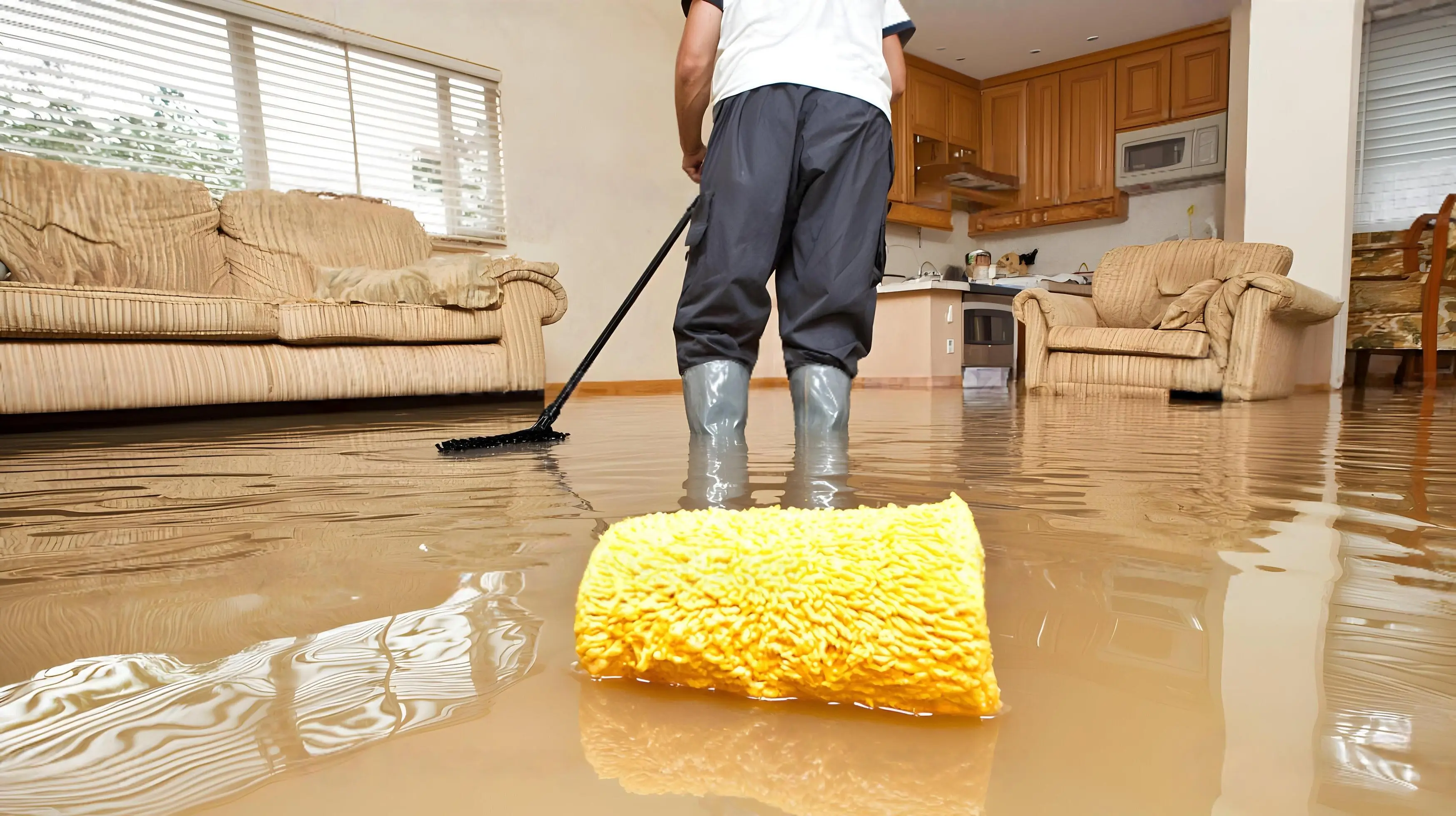
Water Damage Restoration
Burst pipes, storm flooding, standing water. We extract, dry, and restore before mold sets in.
Learn more
Smoke Damage Restoration
Soot residue, chemical odors, HVAC contamination. We decontaminate surfaces, eliminate odors, and restore air quality.
Learn more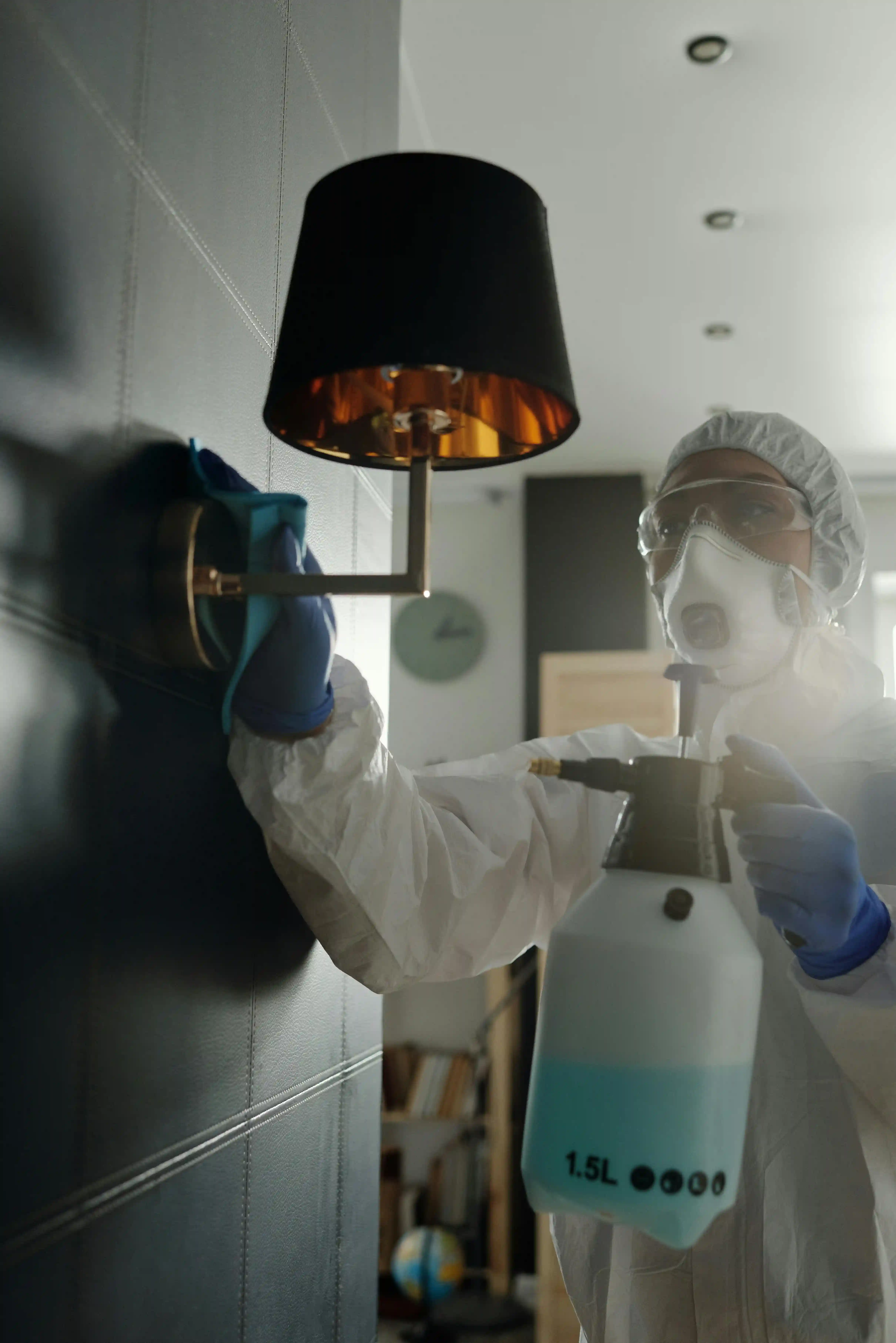
Mold Remediation
Testing, containment, removal, prevention. We find the source, eliminate the growth, and stop it from returning.
Learn more
Sewage Cleanup
Sewer backups, contaminated water, biohazard. We extract, sanitize, and restore safely.
Learn more