
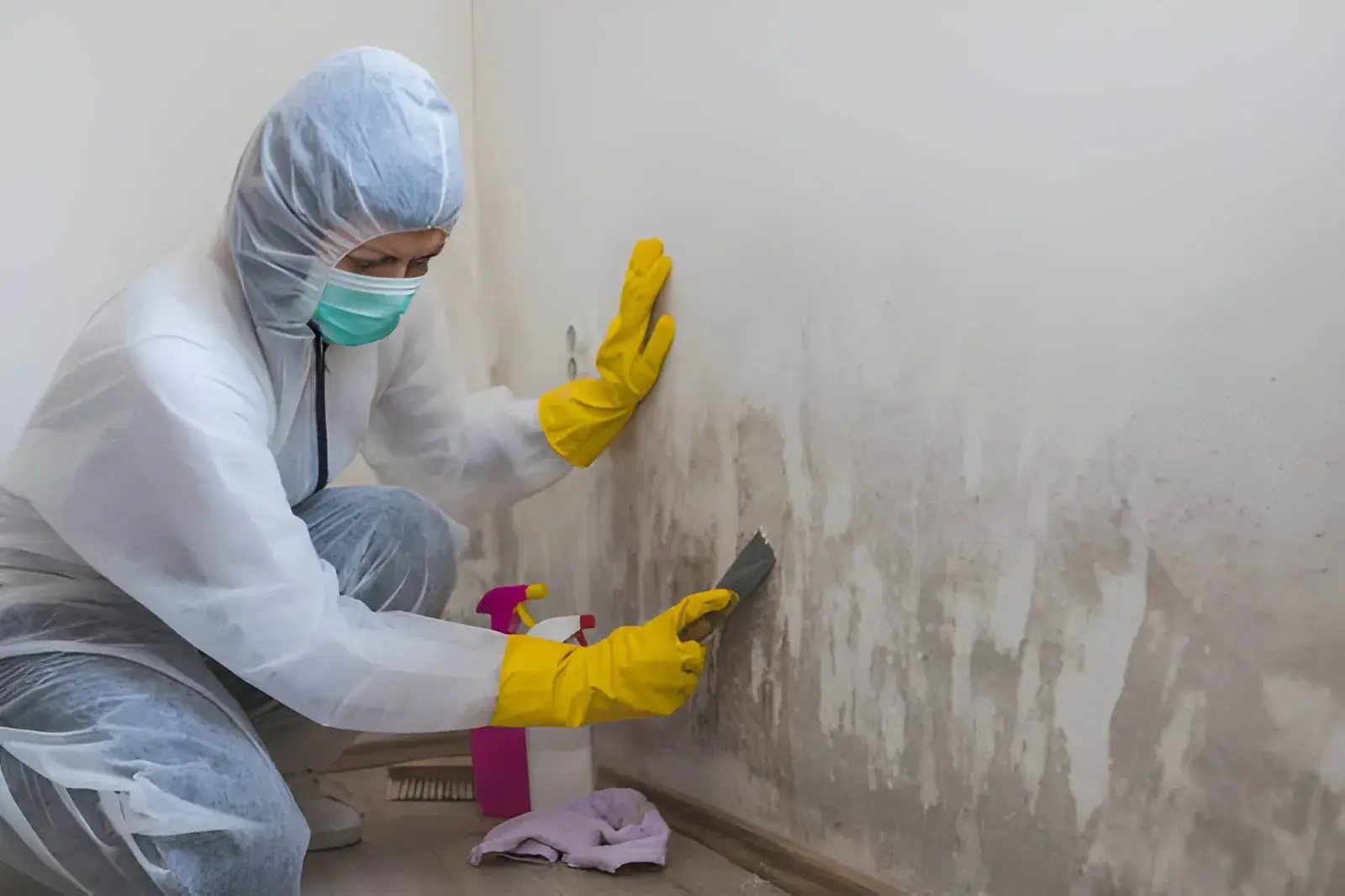
Mold Remediation in Buffalo Grove, IL
Mold doubles its coverage area every 24 to 48 hours in favorable conditions. Our local team responds to Buffalo Grove mold emergencies within 60 minutes.
What Happens When You Call
A real person answers, not a call center. We assess your mold situation, ask the right questions, and begin coordinating your response immediately.
Your dedicated remediation team is dispatched from our local base serving Buffalo Grove and the surrounding northwest suburban communities.
Team arrives with moisture detection equipment, air quality sampling tools, and containment materials. Assessment begins immediately to determine the scope and source.
Mold extent mapped, moisture source identified, containment established. You know exactly what the remediation involves, how long it takes, and what it costs.
You found mold in your home, or you smell something that tells you mold is growing somewhere you cannot see. Either way, the colony is actively expanding right now and will continue expanding until the moisture source is corrected and the growth is professionally removed. X Response exists for exactly this moment. When you reach out, your remediation team is mobilized within minutes and on site within the hour. From that point forward, one team manages everything: inspection, containment, removal, moisture correction, and verification. Call now. Your team is standing by.
Why Buffalo Grove Homes Are Vulnerable to Mold
Buffalo Grove sits in the northwest suburbs of Chicago, straddling the Lake County and Cook County border, with 43,212 residents spread across 9.6 square miles. Buffalo Grove's housing stock was built predominantly between the 1960s and 1980s with basement waterproofing systems designed for a 25-to-40-year lifespan that have now deteriorated, while the village's location along the Buffalo Creek corridor within the Des Plaines River watershed creates sustained elevated soil moisture conditions that drive hydrostatic pressure against aging foundation walls, producing the chronic moisture intrusion that supports mold colonization in concealed wall cavities and below-grade spaces. The vast majority of homes share similar construction characteristics: poured-concrete or block basements, perimeter drain tile systems designed for the era's standards, and foundation walls protected by asphalt-based damproofing coatings. Those waterproofing systems have now been in the ground for 40 to 60 years, well past their intended service life. The result is a community where chronic low-level moisture intrusion through foundation walls and floor-wall joints is endemic rather than exceptional, creating the sustained elevated humidity that mold requires to colonize and thrive in concealed spaces.
Buffalo Creek, the 11.2-mile tributary of the Des Plaines River that flows through the village, contributes directly to the moisture environment around foundations in its corridor. The creek and its associated water table maintain elevated soil moisture levels in adjacent neighborhoods year-round, not just during flood events. Properties within the Buffalo Creek corridor experience saturated soils during spring snowmelt, after summer storms, and during extended wet periods that keep the water table high against foundation walls for weeks at a time. The MWRD's Lower Des Plaines River Watershed, which encompasses Buffalo Grove, covers 491 square miles across three counties. The regional hydrology means that moisture conditions affecting Buffalo Grove foundations are driven not just by local rainfall but by watershed-wide groundwater levels that respond to precipitation patterns across the entire northwest suburban corridor.
Deteriorated Foundation Waterproofing in 1960s-1980s Homes
The waterproofing applied to Buffalo Grove's foundations during the original construction era was typically an asphalt-based damproofing coating, a tar-like material brush-applied or sprayed onto the exterior of the foundation wall before backfilling. This material was never designed to be permanent. It becomes brittle over time, cracks as the foundation settles, and eventually loses its ability to resist moisture penetration. After 40 to 60 years in the ground, exposed to freeze-thaw cycles, root intrusion, and soil chemistry, these coatings have failed across much of the village's housing stock. The perimeter drain tile systems installed at the same time face similar degradation: clay tiles crack, connections separate, and the gravel bed surrounding them fills with fine sediment that impedes drainage. The combined failure of both the waterproofing barrier and the drainage system means that groundwater reaches the interior surface of the foundation wall, where it either weeps visibly or, more commonly, maintains the wall at elevated moisture levels that support mold growth on the interior surface and within any insulation or finishing material attached to it.
The Buffalo Creek Corridor and Elevated Water Tables
Properties within Buffalo Grove's Buffalo Creek corridor face a moisture challenge beyond normal suburban basement conditions. The creek maintains a base water table level in adjacent soils that keeps the ground saturated to a higher elevation than neighborhoods farther from the waterway. During spring snowmelt and after significant rainfall, the water table rises further, pressing groundwater against foundation walls with hydrostatic pressure that exploits every crack, joint, and deteriorated waterproofing point. The MWRD's Buffalo Creek Reservoir, expanded in 2022, reduces peak flooding but does not lower the baseline water table between events. For homes along the corridor, the foundation is in contact with saturated or near-saturated soil for extended periods throughout the year. This chronic moisture contact does not produce dramatic flooding events but instead maintains the low-level moisture intrusion that mold needs to colonize. Homeowners may not notice a leak or standing water, but the humidity levels within their basement wall cavities remain elevated enough to support continuous mold growth behind finished surfaces where it cannot be seen until the colony is well established.
Finished Basements as Concealed Mold Environments
A significant portion of Buffalo Grove's homes have finished basements, either completed during original construction or added by homeowners during the 1980s and 1990s renovation period. The typical finishing approach of that era involved framing wood stud walls directly against or near the concrete foundation, installing fiberglass batt insulation in the stud cavities, covering with drywall, and carpeting the floor over the concrete slab. This assembly creates an ideal mold environment. The concrete wall slowly admits moisture from the exterior soil through its deteriorated waterproofing. That moisture reaches the interior face of the concrete, where it encounters the stud wall assembly. The fiberglass insulation absorbs and holds the moisture against the paper face of the drywall. The drywall paper becomes the food source. The enclosed cavity traps humidity. And the finished surface prevents the homeowner from seeing, smelling, or detecting the growth until it has colonized the entire wall cavity. By the time mold becomes visible at the baseboard line or produces a musty smell noticeable in the living space, the concealed growth behind the wall is typically extensive.
Clay Soils and Persistent Foundation Moisture
The soils throughout the Buffalo Grove area are predominantly clay-based glacial till deposited during the Wisconsin glaciation. Clay soil has two characteristics that compound mold risk in this community. First, it holds water for extended periods rather than allowing it to drain past the foundation. After a rain event, sandy soil drains within hours and the foundation dries relatively quickly. Clay soil retains moisture for days to weeks, maintaining continuous contact between wet soil and the foundation wall. Second, clay expands when wet and contracts when dry, creating cycles of lateral pressure against the foundation that open cracks and deteriorate waterproofing coatings over time. The seasonal expansion-contraction cycle means that even foundations that were sound a decade ago may now have developed the micro-cracks and coating failures that admit moisture. For mold, this persistent soil moisture means that the condition supporting growth is not episodic but continuous through much of the year, particularly from late fall through spring when the water table is naturally elevated.
Multi-Unit Buildings and Shared Moisture Problems
Buffalo Grove's townhome and condominium developments, built primarily in the 1970s and 1980s, face the same foundation-age issues as single-family homes but with additional complexity. In attached buildings, a moisture problem in one unit's foundation section can migrate through the shared slab and party-wall footings into adjacent units. Mold that colonizes in one unit's basement wall cavity can spread through structural connections into the neighboring unit's space without crossing a visible boundary. The governance structure of these buildings adds another layer: individual unit owners control their interior spaces, but the foundation and common structural elements typically belong to the homeowners association. A remediation project that requires exterior waterproofing repair or foundation drainage improvement becomes an association-level decision requiring board approval, engineering assessment, and special assessment funding, all of which takes time while the mold continues growing. For unit owners, this means that a mold problem in their basement may have a solution that lies partially or entirely in the association's jurisdiction rather than their own.
Mold in Buffalo Grove is fundamentally a moisture problem, and the moisture sources in this community are structural and environmental rather than accidental. The deteriorated waterproofing on 40-to-60-year-old foundations admits groundwater through every failed joint and crack. The clay soils hold that water against the wall for weeks at a time. The Buffalo Creek corridor maintains an elevated water table that keeps adjacent properties in chronic contact with saturated soil. And the finished basements installed over these aging foundations create concealed environments where mold can colonize extensively before anyone knows it is there. Effective remediation requires not just removing the visible mold but identifying and correcting the moisture pathway that feeds it. Without addressing the source, remediation becomes a temporary measure that the colony will eventually overcome.
What Happens to Your Home While You Wait
24–48 Hours After Moisture Exposure
Mold spores, which are always present in indoor and outdoor air, begin germinating on materials that have maintained surface moisture above 60% relative humidity for 24 to 48 hours. In Buffalo Grove basements where foundation moisture is chronic, this threshold is met continuously in concealed wall cavities during periods of elevated water table. Initial colonization is microscopic and invisible without magnification. No odor is detectable yet. At this stage, drying the material and removing the moisture source prevents colonization from progressing to visible growth.
3–7 Days
Mold colonies become visible as discoloration on affected materials. In concealed wall cavities, the growth spreads across the drywall paper face, fiberglass insulation, and any organic material in the assembly. The musty odor that mold produces becomes detectable in the immediate vicinity of the growth. In finished basements, this smell may be subtle and intermittent, stronger during humid weather when the growth is most active and less noticeable during dry periods. Remediation at this stage typically involves removing affected materials in the colonized area and correcting the moisture source.
2–4 Weeks
Established colonies produce large quantities of spores that become airborne and distribute through the living space, either through natural air movement or through the HVAC system. In Buffalo Grove homes with forced-air systems, spores from a basement colony circulate to every room with a return or supply register. Occupants may experience allergic reactions, respiratory irritation, or persistent cold-like symptoms. The colony has expanded beyond its original footprint and may have colonized multiple wall cavities or migrated along the sill plate to adjacent areas. Remediation scope increases significantly.
1–3 Months
Extensive colonization throughout the affected area. Structural materials including framing lumber and subfloor sheathing begin showing signs of decay as wood-destroying mold species break down the cellulose. Indoor air quality is measurably compromised. Occupants with asthma, immune sensitivities, or respiratory conditions may experience significant health impacts. The colony has likely spread to multiple rooms or areas if the moisture source is foundation-wide rather than localized. Remediation now involves extensive material removal, structural repair, and comprehensive moisture correction that may include exterior foundation work.
6 Months and Beyond
Severe structural damage to affected materials. Wood framing shows visible rot at connection points. Drywall and insulation are completely consumed in colonized areas. The remediation project approaches a gut renovation of affected spaces with potential structural repair requirements. In Buffalo Grove homes where the moisture source is chronic foundation failure, postponing remediation to this point means that the eventual cost includes not just mold removal but complete rebuilding of the finished basement, potential structural framing replacement, and the exterior waterproofing or drainage correction that should have been addressed at the beginning.
Mold grows continuously once established. Every week of delay expands the colony, deepens structural damage, and increases remediation cost. Contact X Response now. Our Buffalo Grove team assesses your situation within 60 minutes and provides a clear remediation plan the same day.
How We Restore Mold-Affected Buffalo Grove Homes
Professional mold remediation is a controlled process that safely removes contamination while protecting the rest of your home from cross-contamination. Here is exactly what the process involves for Buffalo Grove properties.
Inspection and Moisture Source Identification
Our team arrives with professional moisture meters, thermal imaging cameras, and air quality sampling equipment. We do not just find the mold; we find the water. In Buffalo Grove, that means checking foundation walls for moisture intrusion through deteriorated waterproofing, testing humidity levels in finished basement wall cavities using non-invasive moisture meters, checking sump pump systems and drain tile function, assessing Buffalo Creek corridor proximity and water table influence, and evaluating the HVAC system for condensation issues. We map the full extent of mold growth, including concealed areas behind finished walls that may harbor extensive colonies invisible from the living space. Air sampling may be conducted to establish baseline spore counts and identify the species present, which informs both the remediation protocol and any health considerations.
Containment and Worker Protection
Before any mold is disturbed, we establish engineering controls that prevent spores from spreading to unaffected areas of the home. Physical containment barriers (6-mil polyethylene sheeting) are installed to isolate the work area from the rest of the home. Negative air pressure is established using HEPA-filtered air machines that pull air from the contained area and exhaust it outside, ensuring that any spores released during removal flow away from occupied spaces rather than toward them. Workers wear appropriate respiratory protection and protective equipment. Supply and return registers within the containment zone are sealed to prevent the HVAC system from distributing disturbed spores. This containment stays in place throughout the remediation and is not removed until post-remediation verification confirms the work area is clean.
Mold Removal and Material Disposition
Within the contained area, affected materials are removed using techniques that minimize spore release. Porous materials colonized by mold, including drywall, insulation, carpet, carpet padding, and any organic material with visible growth, are removed and disposed of as contaminated waste. Semi-porous materials like wood framing are assessed individually: surface mold on structurally sound wood can be removed by sanding or media blasting and treated with antimicrobial agents. Wood with decay or deep penetration requires replacement. Non-porous materials like concrete foundation walls are cleaned with appropriate antimicrobial solutions and HEPA-vacuumed to remove residual spore material. Throughout removal, HEPA air scrubbers run continuously within the containment to capture airborne spores before they can settle on cleaned surfaces.
Moisture Source Correction
Removing mold without correcting the moisture source is temporary. In Buffalo Grove, moisture correction depends on the identified pathway. For foundation wall seepage through deteriorated waterproofing, solutions range from interior drainage systems with vapor barriers to exterior excavation and waterproofing replacement. For drain tile failure, repair or replacement of the perimeter drainage system restores the foundation's ability to shed groundwater. For sump pump inadequacy, upgraded pumps with battery backup prevent future failures during storm-related power outages. For condensation on cold foundation walls during summer humidity, dehumidification and insulation strategies reduce the dew-point condensation that feeds growth. We provide specific recommendations based on the identified moisture pathway and can coordinate with waterproofing contractors when exterior work is required.
Post-Remediation Verification and Clearance
After all mold is removed and moisture corrections are in place, we verify the work through visual inspection and, when appropriate, post-remediation air sampling. Visual inspection confirms that all visible mold has been removed, all affected materials have been properly disposed of, and the work area is clean. Air sampling compares post-remediation spore counts to baseline levels established before work began, verifying that airborne contamination has been reduced to normal background levels. Only after verification passes do we remove the containment barriers. Final documentation includes before-and-after photos, moisture readings confirming the source has been corrected, air quality data if sampled, and a written summary of all work performed. This documentation supports your insurance claim and provides a clear record of what was done.
The X Response Difference
When you contact X Response for mold in your Buffalo Grove home, you get a remediation team that treats mold as a moisture problem with a biological symptom. We find the water, stop it, remove the growth safely under containment, verify the result, and document everything. One team, one process, one accountable standard from inspection through clearance.
Insurance Claim Guidance for Buffalo Grove Homeowners
Mold insurance coverage in Illinois depends heavily on the cause of the moisture that produced the growth. Standard homeowner's policies cover mold that results from a sudden and accidental covered event, such as a burst pipe or appliance failure, where the mold grew because of water damage from that event. Mold that results from chronic moisture intrusion, such as deteriorated foundation waterproofing, ongoing condensation, or deferred maintenance, is typically excluded as a gradual or maintenance-related condition. For many Buffalo Grove homeowners, this distinction creates a challenge: the mold in their basement was caused by foundation waterproofing that deteriorated over decades, which most carriers classify as maintenance rather than a sudden event. However, if a specific triggering event can be documented, such as a sump pump failure during a storm that produced the moisture spike that initiated the growth, the claim may be viable under the sudden-and-accidental provision. The documentation matters enormously: what caused the water, when it happened, and why the mold grew determines coverage.
How X Response Helps
- Identify and document the specific moisture event or condition that caused the mold growth, distinguishing between sudden events (covered) and chronic conditions (typically excluded)
- Document the full extent of mold contamination with photos, moisture readings, and air quality data to establish the scope of damage
- Provide clear documentation connecting the mold to its moisture source, as carriers evaluate causation before coverage
- Prepare remediation scope documentation that separates mold removal costs from moisture correction costs, as carriers may cover the former but not the latter depending on causation
- Document pre-existing conditions and triggering events separately so your adjuster can evaluate each component against your policy language
X Response does not file claims on your behalf, adjust claims, or make coverage determinations. We provide documentation and guidance to help you make informed decisions about your property and your policy. Coverage decisions are made solely by your insurance carrier.
Certified Restoration Specialists Serving Buffalo Grove
When you contact X Response for mold remediation in Buffalo Grove, your team is drawn from certified professionals who understand the specific moisture dynamics of this community. They know how the 1960s-1980s foundation waterproofing systems in Buffalo Grove have aged, how the Buffalo Creek corridor maintains elevated water tables against adjacent properties, how the clay soils hold moisture against foundation walls for extended periods, and how finished basements create concealed environments where colonies grow extensively before detection. They have remediated mold in the original Kimball Hill-era construction in neighboring communities, the Le Parc and Cambridge townhome developments, and the single-family homes throughout the village's established neighborhoods. They understand the split-county jurisdiction that affects drainage standards and the multi-unit governance that complicates association-level moisture corrections.
Every technician on your team holds current IICRC certification in mold remediation and applied microbial remediation. Equipment includes professional moisture meters, thermal imaging cameras, HEPA air scrubbers, negative air machines, air sampling cassettes, and the full complement of containment materials and antimicrobial treatments required for safe, verified remediation. When your team arrives, they bring the diagnostic capability to find both the mold and its moisture source, and the remediation capability to address both under proper engineering controls.
In Buffalo Grove, X Response works with Scene Cleaners, an independent local restoration partner serving Lake County.
Mold Remediation FAQ for Buffalo Grove Homeowners
Other Emergency Services in Buffalo Grove

Water Damage Restoration
Burst pipes, storm flooding, standing water. We extract, dry, and restore before mold sets in.
Learn more
Fire Damage Restoration
Structural damage, soot, debris. We stabilize, clean, and rebuild what fire destroyed.
Learn more
Smoke Damage Restoration
Soot residue, chemical odors, HVAC contamination. We decontaminate surfaces, eliminate odors, and restore air quality.
Learn more
Sewage Cleanup
Sewer backups, contaminated water, biohazard. We extract, sanitize, and restore safely.
Learn more