
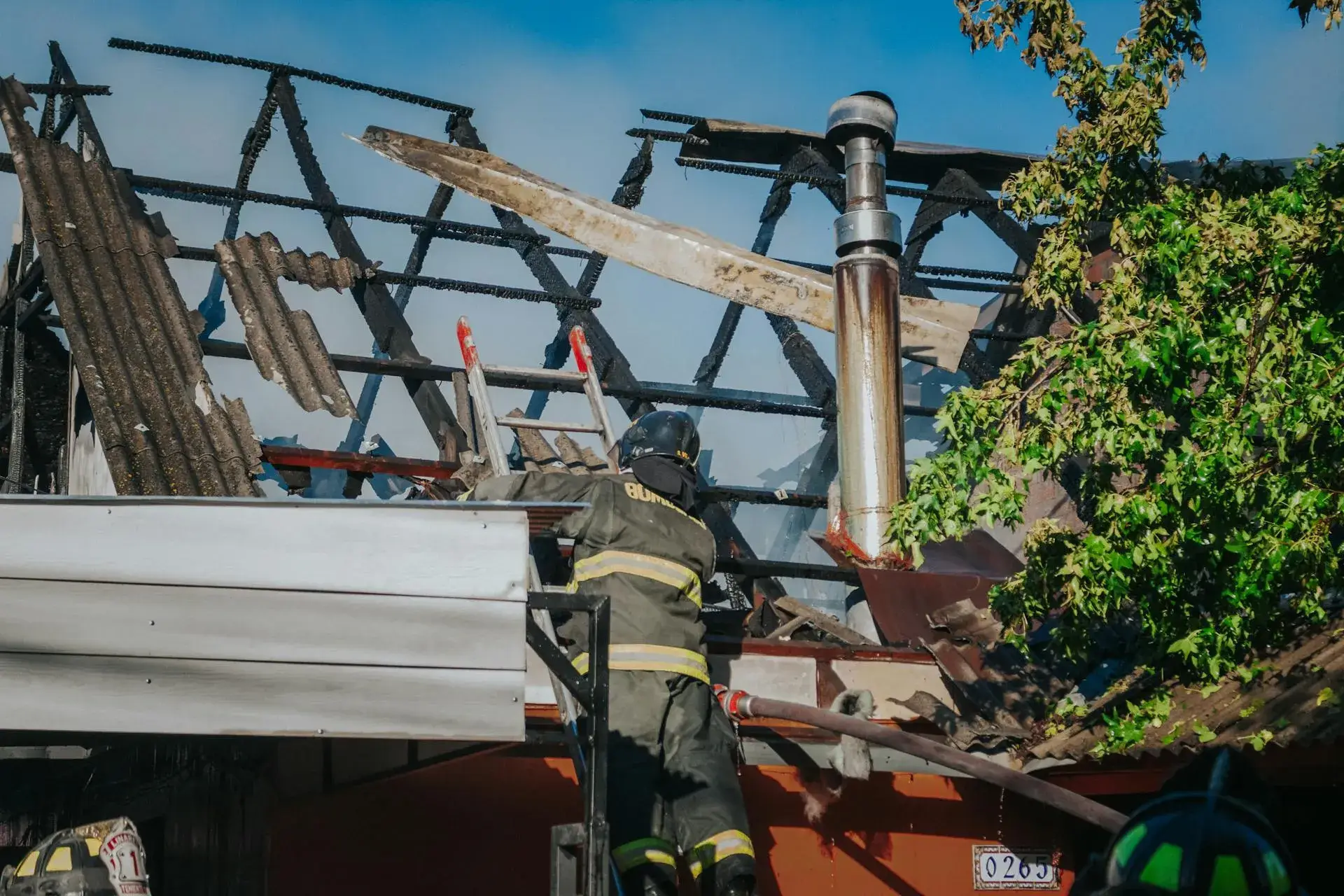
Fire Damage Restoration in Lisle, IL
Fire damage worsens every hour as soot corrodes surfaces and smoke penetrates deeper into your home's structure. Our local team responds to Lisle emergencies within 60 minutes.
What Happens When You Call
A real person answers, not a call center. We assess your situation, ask the right questions, and begin coordinating your response immediately.
Your dedicated restoration team is dispatched from our local base serving Lisle and the surrounding DuPage County communities.
Team arrives with board-up materials, HEPA filtration, soot removal equipment, and structural assessment tools. Emergency stabilization begins immediately.
Property secured, immediate threats addressed, restoration plan documented. You know exactly what comes next.
A fire just tore through part of your home and you need someone who knows what to do next. Not a claims hotline, not a callback queue. X Response exists for exactly this moment. When you reach out, your restoration team is mobilized within minutes and on site within the hour. From that point forward, one team manages everything: stabilization, smoke removal, structural repair, and insurance documentation. You are never left guessing about the next step. Call now. Your team is standing by.
Why Lisle Homes Are Vulnerable to Fire Damage
Lisle is a village of 24,223 residents in DuPage County, Illinois, covering approximately 6.5 square miles along the East Branch of the DuPage River about 25 miles west of downtown Chicago. Fire protection is provided by the Lisle-Woodridge Fire Protection District, which operates five fire stations across a 30-square-mile jurisdiction encompassing the Village of Lisle, 80 percent of the Village of Woodridge, and surrounding unincorporated areas of DuPage County. The district protects approximately 70,000 residents and maintains a professional staff of career firefighters and paramedics under Fire Chief Keith A. Krestan, who rose through all ranks within the organization before being appointed chief in April 2017. The district participates in the Mutual Aid Box Alarm System (MABAS) for automatic aid during working structure fires, providing and receiving mutual assistance from neighboring departments in Naperville, Downers Grove, Darien, and Woodridge.
On December 12, 2024, a roof fire broke out at the five-story Four Lakes Condominium complex at 6020 Oakwood Drive in unincorporated Lisle, displacing several families and injuring one firefighter before Lisle-Woodridge Fire District crews brought the blaze under control in approximately 50 minutes. A 911 caller reported the fire just after 7 a.m. and was instructed to activate the building's fire alarm to alert residents and begin evacuation. All occupants exited safely before firefighters arrived and located flames in the roof assembly of the multi-unit building. Six months earlier, on July 1, 2023, a natural gas explosion destroyed a single-family home at 4565 Ivanhoe Avenue in unincorporated Lisle, leveling the 3,200-square-foot structure valued at over $530,000. Lisle-Woodridge Fire District firefighters arrived within three minutes to find the house completely destroyed with an active gas-fed fire burning in the debris. No one was home at the time and no injuries occurred, but the explosion scattered debris across the block, closed the road for months, and demonstrated how gas-related incidents can obliterate a structure with no warning and damage surrounding properties through shockwave and projectile impact.
Multi-Family and Condominium Fire Risk Along the Route 53 Corridor
Lisle's development includes a significant concentration of multi-family residential properties along the Illinois Route 53 and Oakwood Drive corridors, including the Four Lakes Condominium and Rental Community where the December 2024 fire occurred. These complexes, many built in the 1970s and 1980s during Lisle's rapid growth phase, house hundreds of residents in mid-rise buildings with shared roof assemblies, common attic spaces, and interconnected utility systems. A fire that starts in one unit's roof section or attic space can spread horizontally through continuous truss assemblies and shared soffit cavities before detection, as the Four Lakes fire demonstrated when flames were found in the roof structure above multiple units. Multi-family fires create cascading displacement: even units with no direct fire damage become uninhabitable when shared utilities are shut off, common areas sustain water damage from suppression, and smoke infiltrates through HVAC systems and unsealed penetrations between units. The five-story construction at Four Lakes means that upper-floor fires challenge ladder-truck access and aerial operations, while roof fires require crews to work at elevation with limited structural support beneath them.
Natural Gas Infrastructure and Explosion Risk
Lisle's residential neighborhoods are served by Nicor Gas, with natural gas distribution mains running beneath streets and service lines branching to individual properties for heating, cooking, water heating, and clothes drying. The July 2023 explosion on Ivanhoe Avenue demonstrated the catastrophic potential when gas accumulates in a confined space and finds an ignition source. The DuPage County Sheriff's Office confirmed natural gas as the cause but did not identify a specific mechanism, noting no evidence of foul play. Gas explosions differ fundamentally from conventional structure fires: they destroy the building's structural integrity instantaneously rather than progressively, scatter debris over a wide radius, and can damage adjacent properties through shockwave pressure even when no fire spreads directly. For neighboring homes within the blast radius, the damage pattern includes shattered windows, shifted foundation walls, cracked drywall throughout the structure, and dislodged utility connections that create secondary leak risks. The Ivanhoe explosion closed the road for months while investigators and utility crews ensured the surrounding infrastructure was safe, demonstrating how a single-property gas event can affect an entire block's habitability and access.
Corporate Campus and Mixed-Use Fire Complexity
Lisle sits within the Illinois Technology and Research Corridor and hosts major corporate campuses including the Nuclear Regulatory Commission Region III headquarters, Navistar International, and multiple technology firms along Warrenville Road and the I-88 corridor. These commercial properties introduce fire scenarios that differ from purely residential incidents: larger building footprints, complex HVAC and electrical systems, chemical storage, server rooms with specialized suppression systems, and high-value contents that require specialized restoration. When a commercial fire generates a large smoke plume, residential properties downwind receive smoke exposure that deposits soot on exterior surfaces, infiltrates through HVAC intakes, and contaminates interiors without direct flame involvement. The mixing of corporate, multi-family, and single-family residential within Lisle's compact footprint means that a fire at any occupancy type can create restoration needs across multiple adjacent property types and ownership structures.
1960s and 1970s Residential Construction and Fire Behavior
The majority of Lisle's single-family residential structures were built during the 1960s and 1970s growth period that followed the village's 1956 incorporation and the construction of the East-West Tollway (I-88). These homes feature wood-frame construction with dimensional lumber or early engineered trusses, asphalt shingle roofing, and exterior finishes ranging from brick veneer to vinyl or aluminum siding. Interior layouts from this era typically include open-plan living areas connected to the kitchen, which reduces fire compartmentalization compared to older construction with more defined room separations. Attic spaces in homes of this vintage span the full footprint without fire-stopping walls, providing an unobstructed horizontal path for fire travel once flames breach the ceiling assembly. Garage-attached construction, which became standard during this period, creates a direct connection between the most common ignition location for residential fires (the garage, where stored chemicals, electrical equipment, and vehicles provide concentrated fuel) and the occupied living space. The Lisle-Woodridge Fire Protection District's fire prevention bureau enforces current building codes and conducts inspections, but existing construction predating modern fire-separation requirements retains the vulnerabilities inherent in its original design.
Lisle-Woodridge Fire District Response and Multi-Station Coverage
The Lisle-Woodridge Fire Protection District operates from five stations distributed across its 30-square-mile jurisdiction, providing coverage to Lisle, most of Woodridge, and unincorporated areas. This multi-station configuration positions apparatus throughout the district so that initial response times remain short across the entire coverage area. For confirmed working fires, MABAS automatic aid brings additional engine companies, truck companies, and command officers from neighboring districts within minutes. The December 2024 Four Lakes fire demonstrated the district's capacity to contain a roof fire on a five-story multi-family building within 50 minutes, preventing extension to adjacent units and limiting displacement to the directly affected families. However, the 30-square-mile service area means that multiple simultaneous calls can draw apparatus away from portions of Lisle, increasing response time for the second or third incident. The district's fire prevention bureau works proactively through business inspections, code enforcement, and public education to reduce fire occurrence, but when prevention fails, rapid response and aggressive interior attack remain the primary strategy for limiting fire spread in occupied structures.
These factors create a community where fire damage arrives in forms ranging from natural gas explosions that destroy structures instantaneously, to roof fires in multi-family complexes that displace dozens of residents, to progressive fires in single-family homes where aging construction allows flame spread through unprotected cavities. Effective fire damage restoration in Lisle requires understanding the structural systems common to 1960s and 1970s construction, the multi-family damage dynamics that affect both individual units and common elements, the secondary damage patterns created by gas explosions on adjacent properties, and the interaction between fire suppression water and the pre-existing flood vulnerabilities in a village built along the DuPage River corridor.
What Happens to Your Home While You Wait
Within 1 Hour
Active flames are extinguished but damage continues progressing. Soot particles, which are acidic, begin etching metal surfaces, discoloring plastics, and bonding to painted walls and ceilings throughout the home. The longer soot remains on a surface, the more difficult and costly it becomes to remove without damaging the underlying finish. Water from fire suppression pools in basements and low-lying areas of Lisle's homes, beginning its own damage cycle. Structural members heated during the fire may have lost load-bearing capacity without showing visible char. Windows and exterior openings broken during firefighting or ventilation leave the home exposed to weather and intrusion.
1–24 Hours
Acidic soot residue continues corroding metal fixtures, appliances, and electronics throughout the home. Smoke odor penetrates deeper into porous materials: upholstered furniture, carpet, drapery, clothing, and the paper facing of drywall. Humidity from suppression water combines with soot to form corrosive films on surfaces in rooms not directly damaged by flame. In Lisle homes with forced-air HVAC systems, every room connected to the ductwork now contains soot deposits that worsen with each hour the system runs or air circulates. Standing water from firefighting begins damaging flooring, subfloor materials, and lower wall sections through the same mechanisms as any water intrusion event. The combined fire-water damage trajectory accelerates when both processes proceed unchecked.
24–48 Hours
Permanent staining develops on surfaces where soot has been allowed to remain. Chrome and nickel fixtures pit and discolor irreversibly. Painted walls yellow and develop a sticky residue that standard cleaning cannot address. The boundary between salvageable and non-salvageable contents shifts dramatically: items that could have been professionally cleaned within the first day may now require replacement. Fire-suppression water that has pooled for over 24 hours creates secondary mold risk, particularly during warm months in DuPage County's humid climate. The home now experiences two concurrent damage processes: ongoing soot corrosion and active water damage from suppression.
48–72 Hours
Mold growth begins on wet materials in areas soaked by fire suppression water, especially in Lisle basements where water from upper-floor firefighting drains downward and collects. Soot damage becomes increasingly permanent on porous surfaces. Structural wood that was charred or heated during the fire absorbs moisture from suppression water and humidity, accelerating deterioration at fire-weakened connections. Smoke odor saturates insulation in wall and attic cavities, making it impossible to deodorize without removal. The scope of necessary restoration continues expanding as secondary damage compounds the original fire loss.
One Week and Beyond
Corrosion damage to mechanical systems, electrical components, and metal surfaces becomes irreversible. Mold growth from suppression water establishes throughout affected areas. Structural members show accelerated decay where fire damage and moisture intersect. Smoke odor has permeated every porous material in the home, including framing lumber, subfloor sheathing, and concrete surfaces. The cost difference between restoration performed within the first 24 hours and restoration attempted after a week can be measured in tens of thousands of dollars in additional materials, labor, and contents replacement.
Every hour of delay after a fire increases the permanent damage to your home and belongings. Contact X Response now. Our Lisle team responds within 60 minutes to begin stabilization and prevent secondary damage from compounding your loss.
How We Restore Fire-Damaged Lisle Homes
From the moment our team arrives, every step is documented, measured, and verified. Here is exactly what the fire damage restoration process involves for Lisle properties.
Emergency Stabilization and Board-Up
Our team secures the property immediately. Broken windows, compromised roofing, and openings created during firefighting or ventilation are boarded and tarped to prevent weather exposure, unauthorized entry, and further deterioration. In Lisle homes where roof fires have burned through the assembly or gas explosions have compromised structural walls, stabilization includes temporary structural shoring to prevent collapse of weakened framing above. We assess whether the structure is safe for interior work and identify any immediate hazards including weakened floors, hanging debris, exposed electrical, or gas leaks. The property is secured against both the elements and the secondary damage that begins the moment a fire-damaged structure is left open and unprotected.
Damage Assessment and Scope Documentation
Once the property is stabilized, our team conducts a comprehensive assessment of fire, smoke, soot, and water damage throughout the structure. We identify the fire's point of origin and trace the path of flame spread, smoke travel, and suppression-water flow to map every affected area. In Lisle's 1960s and 1970s homes, this means inspecting continuous attic spaces for hidden fire extension, checking wall cavities for travel between rooms, assessing electrical systems for heat damage, and documenting smoke penetration into ductwork and concealed spaces. For multi-family properties like the Four Lakes complex, we assess both individual-unit damage and common-element involvement that affects the entire building. Thermal imaging helps identify hot spots and hidden moisture from suppression water. Every finding is documented with photos, measurements, and a detailed scope of work that forms the foundation of your insurance claim.
Smoke and Soot Removal
Soot removal begins as soon as possible to prevent permanent surface damage. We use specialized techniques matched to each surface type: dry sponging for painted walls before wet cleaning, HEPA vacuuming for upholstery and textiles, chemical sponges for delicate finishes, and alkaline cleaners for heavy protein-based soot deposits from kitchen fires. Every surface in the smoke path receives attention, including walls, ceilings, trim, light fixtures, cabinet interiors, and closet contents in rooms far from the fire origin. HVAC ductwork is cleaned or replaced depending on the severity of smoke contamination. In Lisle homes where the forced-air system distributed combustion products through continuous attic plenums and into every room, comprehensive duct cleaning is essential to prevent re-contaminating cleaned spaces when the system operates.
Structural Repair and Reconstruction
Fire-damaged structural elements are removed and replaced to restore the home's integrity and safety. In Lisle homes where attic fires have burned through trusses, rafters, or roof sheathing, we rebuild these assemblies to current code standards, often improving fire separation in the process. Charred framing that has lost structural capacity is sistered or replaced. Fire-damaged electrical wiring is removed and replaced by licensed electricians, with panel upgrades when the scope of work triggers code requirements under Village of Lisle building regulations. Insulation contaminated by smoke is removed and replaced. The goal is to return the structure to pre-loss condition or better, meeting current building codes where the scope of work triggers code-upgrade requirements.
Deodorization and Air Quality Restoration
Smoke odor is the last element to resolve and requires targeted treatment beyond surface cleaning. We deploy thermal fogging, ozone generation, and hydroxyl generators depending on the severity and type of smoke odor present. In Lisle homes with forced-air HVAC systems, we treat the entire duct system and mechanical closet to eliminate residual odor sources. Wall cavities, attic insulation, and subfloor assemblies that absorbed smoke during the fire receive direct treatment or removal if saturation exceeds what deodorization can resolve. Air quality testing confirms that particulate levels and odor concentrations have returned to acceptable levels before we consider the project complete. The standard is a home that smells and tests clean, not one that merely looks clean while retaining embedded smoke residue in concealed spaces.
The X Response Difference
When you contact X Response after a fire, you get a single team that handles stabilization, cleaning, repair, and documentation from start to finish. One point of contact, one standard of work, one team that sees your project through to completion.
Insurance Claim Guidance for Lisle Homeowners
Fire damage insurance claims in Illinois are typically covered under standard homeowner's policies as a named peril, but the claims process is more complex than most homeowners expect. Your policy covers the structure, personal property (contents), additional living expenses if you cannot occupy the home, and liability. However, the insurer's assessment of 'actual cash value' versus 'replacement cost' determines how much you receive, and disputes over scope, depreciation, and pre-existing conditions are common on larger fire losses. In Lisle, where homes range from 1960s construction valued in the $300,000 to $500,000 range to multi-family condominiums with complex ownership and association policies, fire claims require thorough documentation from the first day to support the full scope of loss. For condominium owners in buildings like Four Lakes, the claims process splits between the association's master policy (which covers common elements and the building envelope) and the individual unit owner's HO-6 policy (which covers interior improvements, contents, and loss of use), creating coordination challenges that delay restoration if not managed proactively.
How X Response Helps
- Document all damage with professional photos, moisture readings for suppression-water areas, and a detailed scope of work from day one
- Identify and separate fire damage, smoke damage, soot corrosion, and water damage from suppression, as each component has different restoration requirements and cost implications
- Prepare documentation that meets Village of Lisle building department requirements for repair permits and code-triggered upgrades
- Align our restoration scope with standard insurance coverage categories so your adjuster can process the claim efficiently
- For condominium owners, coordinate documentation between your HO-6 policy and the association's master policy to prevent gaps in coverage
X Response does not file claims on your behalf, adjust claims, or make coverage determinations. We provide documentation and guidance to help you make informed decisions about your property and your policy. Coverage decisions are made solely by your insurance carrier.
Certified Restoration Specialists Serving Lisle
When you contact X Response for a fire damage emergency in Lisle, your restoration team is drawn from certified professionals who work across DuPage County's western suburbs and understand the specific challenges of restoring properties in this community. They know how the 1960s and 1970s construction common throughout Lisle behaves during and after a fire, where continuous attic cavities allow hidden fire extension, how the multi-family complexes along Route 53 create cascading displacement and shared-element damage, and how fire suppression water interacts with the pre-existing moisture challenges of a village built along the DuPage River floodplain. They have worked through roof fires in multi-story condominium buildings, kitchen fires in single-family homes, gas-related explosion events with blast-radius damage to adjacent properties, and electrical fires in aging panel systems. This is not a crew dispatched from hours away with no local context. It is a local team with local expertise, operating under national quality standards.
Every technician on your team holds current IICRC certification in fire and smoke restoration and carries the appropriate Illinois state licensing for the work being performed. Equipment is commercial-grade and maintained to manufacturer specifications. When your team arrives, they bring everything needed to begin stabilization immediately, including board-up materials for securing openings, structural shoring for compromised framing, HEPA air filtration to contain airborne particulates, professional soot-removal equipment matched to every surface type, thermal imaging for detecting hidden hot spots and moisture from suppression, and ozone and hydroxyl generation systems for deep odor neutralization in concealed structural cavities.
In Lisle, X Response works with Scene Cleaners, an independent local restoration partner serving DuPage County.
Fire Damage Restoration FAQ for Lisle Homeowners
Other Emergency Services in Lisle

Water Damage Restoration
Burst pipes, storm flooding, standing water. We extract, dry, and restore before mold sets in.
Learn more
Smoke Damage Restoration
Soot residue, chemical odors, HVAC contamination. We decontaminate surfaces, eliminate odors, and restore air quality.
Learn more
Mold Remediation
Testing, containment, removal, prevention. We find the source, eliminate the growth, and stop it from returning.
Learn more
Sewage Cleanup
Sewer backups, contaminated water, biohazard. We extract, sanitize, and restore safely.
Learn more