
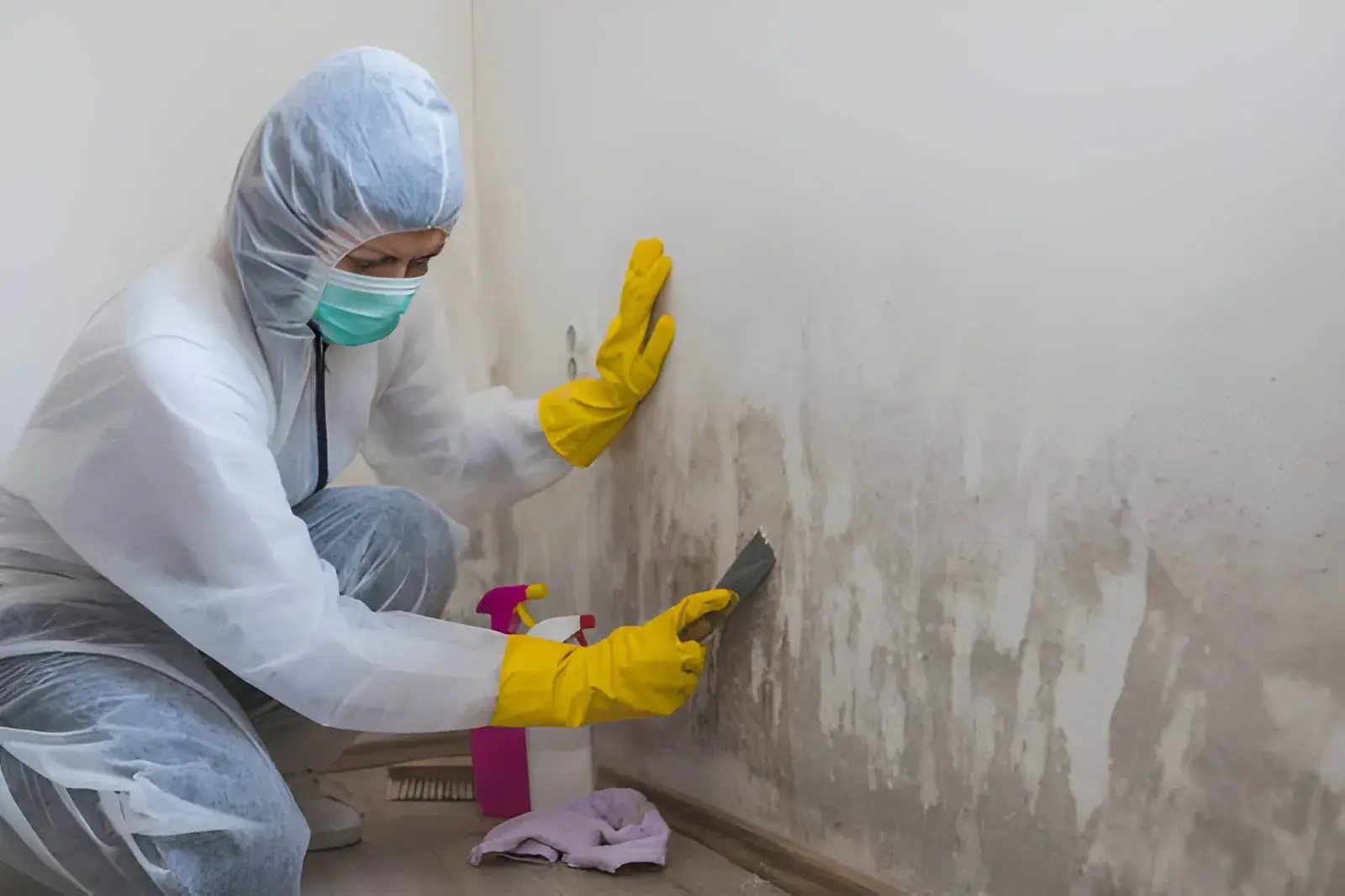
Mold Remediation in Lisle, IL
Mold spreads rapidly in Lisle's humid conditions, doubling its footprint every 24 to 48 hours. Our local team responds within 60 minutes to contain growth and protect your home.
What Happens When You Call
A real person answers, not a call center. We assess your situation, ask about moisture history and visible signs, and begin coordinating your response immediately.
Your dedicated remediation team is dispatched from our local base serving Lisle and the surrounding DuPage County communities.
Team arrives with moisture detection equipment, air sampling tools, containment materials, and HEPA filtration. Assessment begins immediately.
Mold extent mapped, moisture source identified, containment established, remediation plan documented. You know exactly what comes next.
You have found mold in your home, or you suspect it is there based on persistent musty odors, respiratory symptoms, or visible discoloration in a basement or bathroom. Whatever prompted your call, the situation will not improve on its own. Mold grows continuously once established, consuming the materials it colonizes and releasing spores that circulate through your home's air. X Response exists for exactly this moment. When you reach out, your remediation team is mobilized within minutes and on site within the hour. From that point forward, one team manages everything: inspection, containment, removal, and verification. Call now. Your team is standing by.
Why Lisle Homes Are Vulnerable to Mold
Lisle is a village of 24,223 residents in DuPage County, Illinois, located along the East Branch of the DuPage River approximately 25 miles west of downtown Chicago. The village's geography along the river corridor and its tributary St. Joseph Creek creates a persistent moisture environment that distinguishes Lisle from drier upland communities in the region. DuPage County's average relative humidity reaches 77 to 80 percent during July and August according to climate data from DuPage Airport (weather station serving Lisle), creating conditions where basement humidity routinely exceeds the 60 percent threshold at which mold spores germinate within 24 to 48 hours per EPA guidance. Morning humidity routinely exceeds 85 percent before daily solar heating reduces it. These ambient conditions mean that basements, crawl spaces, and below-grade living areas in Lisle homes maintain moisture levels well above safe thresholds throughout the warmest months of the year. The village's flood history compounds this chronic moisture environment: the April 2013 flood event that inundated basements along St. Joseph Creek and the East Branch corridor left behind saturated structural materials that became ideal mold incubation sites in homes where professional drying was delayed or incomplete.
DuPage County Health Department provides guidance on residential mold exposure but does not enforce remediation standards or license mold contractors in Illinois. The state lacks a mold-specific licensing requirement, meaning any contractor can advertise mold removal regardless of training or certification. For Lisle homeowners, this regulatory gap makes independent verification of contractor qualifications essential. Mold growth in Lisle homes follows predictable patterns driven by the village's specific building stock and moisture sources: post-flood colonization in basements along the river corridor, condensation-driven growth on basement walls during humid summers, hidden growth behind finished basement walls where moisture migrates through concrete foundations, and HVAC-distributed contamination where mold established in a basement return-air path sends spores throughout the home. Each pattern requires different inspection techniques and remediation approaches to resolve the problem at its source rather than merely cleaning visible growth while the underlying moisture condition persists.
The East Branch Corridor and Chronic Foundation Moisture
Lisle's residential neighborhoods along the East Branch of the DuPage River and St. Joseph Creek sit on clay-rich alluvial soils deposited by centuries of river flooding before development stabilized the corridor. These clay soils have poor drainage characteristics: they absorb water during wet periods and release it slowly over weeks, maintaining hydrostatic pressure against basement foundation walls long after rainfall ends and surface water recedes. For homes built in the 1960s and 1970s during Lisle's growth period, poured-concrete and concrete-block foundation walls allow moisture to migrate through the concrete matrix by capillary action, creating a perpetually damp surface on the interior face of below-grade walls. This is not visible water intrusion in most cases. It is a thin film of moisture that maintains relative humidity above 70 percent in the air layer immediately adjacent to the wall, creating ideal conditions for mold colonization on any organic material stored against or attached to the foundation: cardboard boxes, wood shelving, drywall paper facing, carpet backing, and even the dust that accumulates on wall surfaces. The proximity to the river means the water table fluctuates seasonally, with spring snowmelt and summer storms raising groundwater levels and increasing hydrostatic pressure against foundation walls precisely during the months when ambient humidity is already highest.
Post-Flood Mold in the April 2013 Aftermath
The April 2013 flood that devastated portions of Lisle left behind a secondary crisis that took months to fully manifest: widespread mold growth in homes where floodwater saturated structural materials. When seven feet of water stood in basements along Dumoulin Avenue and surrounding streets, it saturated drywall, wood framing, insulation, carpet, and stored contents. In homes where professional water extraction and drying did not begin within the critical 24-to-48-hour window, mold colonized every saturated organic surface. The scope was amplified by the flood's severity: many homeowners could not access their properties for days while water remained, could not find available restoration contractors during a county-wide emergency, or lacked insurance coverage for flood damage and attempted to dry their homes without professional equipment. Six houses on Dumoulin Street were ultimately abandoned after the flood, remaining vacant for years while DuPage County pursued federal buyout grants. These properties became open mold environments that affected air quality for neighboring homes downwind. The 2013 flood demonstrated that in a river-corridor community like Lisle, any major flood event generates a predictable secondary mold crisis in the weeks and months following, particularly during the warm, humid summer months that follow a spring flood.
Finished Basements and Concealed Mold Growth
Many of Lisle's homes feature finished basements with framed stud walls built against the concrete foundation, insulated with fiberglass batts, and covered with drywall. This finishing system creates a concealed cavity between the living space and the foundation wall where moisture migrates inward through the concrete, condenses on the cooler interior surface of the foundation, and saturates the back side of the insulation and drywall without any visible indication in the finished room. Mold colonizes the paper facing of drywall from the back side, the wood bottom plate of the stud wall sitting on the concrete slab, and the fiberglass insulation that holds moisture against the foundation. The homeowner sees nothing wrong until the colony grows large enough to produce visible discoloration through the drywall's painted face, or until the musty odor becomes strong enough to notice in the living space. By the time visible signs appear on the room side of a finished basement wall in Lisle, the mold colony behind it is typically extensive, often covering the full height and length of the affected wall section, requiring demolition of the finished wall to access and remediate the growth at its source.
HVAC-Distributed Mold Contamination
Lisle homes with forced-air HVAC systems typically draw return air from basement-level registers. When mold is present in the basement, whether on visible surfaces or concealed behind finished walls, the return-air pathway draws mold spores into the air handler, through the ductwork, and distributes them to every room served by the system. The evaporator coil in the air conditioning system provides a secondary colonization site: it maintains a cold, wet surface during cooling operation that collects airborne spores and provides ideal growing conditions in the condensate drain pan and on the coil fins. Once mold establishes on the evaporator coil, the system actively amplifies contamination by blowing air across a colonized surface and distributing spores throughout the home with every cooling cycle. Occupants experience allergic symptoms, respiratory irritation, and musty odor throughout the home without an obvious visible source. Air testing reveals elevated spore counts at registers, and surface sampling of the evaporator coil confirms active colonization. Remediation requires addressing both the original basement source and the HVAC system simultaneously, or the system will re-contaminate remediated areas within days of project completion.
Condominium and Multi-Family Mold Dynamics
Lisle's multi-family properties, including the Four Lakes complex and other condominium communities along the Route 53 corridor, create mold scenarios that differ from single-family situations. In multi-story buildings, a water intrusion event in one unit, whether from a plumbing failure, roof leak, or suppression water from a fire, can generate mold growth that affects adjacent units through shared wall cavities, ceiling-floor assemblies, and mechanical chases. The December 2024 Four Lakes roof fire and subsequent water damage from suppression created exactly this scenario: units below and adjacent to the fire location sustained water intrusion that, if not dried within the critical window, would generate mold growth in shared structural cavities accessible from multiple units. For condominium owners, mold remediation involves complex ownership and responsibility questions: growth on common elements (shared walls, corridors, mechanical rooms) falls to the association, while growth within individual units may be the owner's responsibility depending on the association's declaration and the moisture source. This split creates delays and coverage disputes that allow mold to continue spreading while parties negotiate responsibility.
These factors create a village where mold growth is driven by the intersection of a humid river-corridor climate, clay soils that maintain foundation moisture year-round, a flood history that periodically saturates structural materials, finished basements that conceal growth behind wall assemblies, and HVAC systems that distribute contamination through entire homes. Effective mold remediation in Lisle requires identifying the moisture source that sustains growth, not merely cleaning visible mold, because colonization will return within weeks if the underlying water or humidity condition persists. The remediation must address both the visible growth and the concealed reservoirs in wall cavities, on evaporator coils, and within ductwork that standard surface cleaning cannot reach.
What Happens to Your Home While You Wait
Within 24 Hours of Moisture Exposure
Mold spores, which are present in all indoor and outdoor air, require only moisture and an organic food source to germinate. Within 24 hours of a surface reaching and maintaining relative humidity above 60 percent or direct water contact, dormant spores begin germinating on any organic material: drywall paper, wood, carpet backing, dust, cardboard, and fabric. In Lisle's summer climate where ambient humidity reaches 77 to 80 percent, a basement with even minor water intrusion or inadequate dehumidification crosses the germination threshold immediately. The growth is not visible at this stage, but the biological process is underway at a cellular level. This is the critical intervention window: drying the affected area to below 50 percent relative humidity within the first 24 hours prevents colonization entirely.
24–48 Hours
Germinated spores develop into visible hyphae (thread-like filaments) that penetrate the surface of the colonized material. On drywall, hyphae grow into the paper facing. On wood, they penetrate the grain structure. The colony is now established and will not be eliminated by drying alone; the colonized material must be physically removed or treated. In concealed spaces like the back side of finished basement walls, this growth proceeds invisibly while the room-side surface shows nothing. The first faint musty odor may become detectable to sensitive occupants, though most people attribute it to general basement dampness rather than active mold growth.
48 Hours to One Week
The colony produces visible discoloration on the colonized surface: typically appearing as gray, green, or black spots or patches that grow outward from the point of initial germination. Sporulation begins, releasing reproductive spores into the air that travel through the home via natural air currents and HVAC distribution. Spore counts in the air increase measurably. Occupants with mold sensitivities begin experiencing symptoms: nasal congestion, eye irritation, throat irritation, and exacerbation of asthma. The colony's metabolic byproducts produce increasing musty or earthy odors that become noticeable throughout the basement or in rooms served by return air from the affected area.
One to Four Weeks
The mold colony expands across available surfaces, consuming the materials it colonizes and weakening their structural integrity. Drywall paper facing becomes soft and separates from the gypsum core. Wood surfaces develop surface decay as fungal enzymes break down cellulose. The affected area grows from isolated spots to confluent patches covering square feet of surface area. Secondary colonies establish at new locations where airborne spores have landed on suitable surfaces: inside HVAC ductwork, on the evaporator coil, in adjacent wall cavities, and on organic materials stored near the original growth. Remediation scope expands from a localized treatment to a multi-area project as the contamination spreads.
One Month and Beyond
Established mold colonies produce sustained elevated spore counts throughout the home, degrading indoor air quality continuously. Structural materials at the colonization site show progressive deterioration. The musty odor permeates soft furnishings, clothing, and stored contents throughout the home, not just in the affected area. Health effects for occupants may intensify, particularly for children, elderly residents, and anyone with respiratory conditions or immune compromise. Remediation at this stage requires extensive demolition of colonized materials, comprehensive air cleaning, HVAC decontamination, and potentially relocation of occupants during the work. The cost and scope difference between remediating a one-week colony and a one-month colony is substantial, often measured in thousands of dollars of additional demolition, air treatment, and material replacement.
Mold does not stop growing on its own. Every day of delay expands the colony, deepens material damage, increases airborne contamination, and raises remediation costs. Contact X Response now. Our Lisle team responds within 60 minutes to assess, contain, and begin remediation before the problem grows further.
How We Restore Mold-Affected Lisle Homes
From the moment our team arrives, every step is documented, measured, and verified. Here is exactly what the mold remediation process involves for Lisle properties.
Inspection, Testing, and Moisture Source Identification
Our team conducts a comprehensive inspection that goes beyond visible mold to identify the moisture source sustaining growth and the full extent of contamination, including concealed colonization behind walls and in HVAC systems. In Lisle homes, this means checking finished basement walls with moisture meters and thermal imaging to detect hidden moisture behind drywall, inspecting the gap between foundation walls and framed walls for concealed growth, examining evaporator coils and ductwork for HVAC colonization, and tracing moisture pathways from the foundation through the structure. We take air samples at multiple locations to compare indoor spore counts against outdoor baseline levels, establishing whether contamination has spread beyond the visually affected area. The moisture source, whether it is foundation migration from the clay soils along the river corridor, a plumbing leak, inadequate basement dehumidification, or residual moisture from a previous flood event, must be identified because remediation without source correction guarantees recurrence.
Containment and Air Quality Protection
Before any mold-affected material is disturbed, we establish containment barriers that isolate the work area from the rest of the home. Polyethylene sheeting sealed with tape creates a physical barrier, and negative air pressure maintained by HEPA-filtered air machines prevents spores released during remediation from migrating into unaffected areas. In Lisle homes where mold is behind finished basement walls, containment encompasses the entire affected section with access through controlled openings. The HVAC system serving the affected area is shut down and sealed at registers to prevent the forced-air system from distributing disturbed spores through the ductwork during demolition and removal. Workers enter and exit through a decontamination chamber that prevents carrying spores on clothing and equipment into clean areas of the home.
Mold Removal and Material Demolition
Colonized porous materials that cannot be adequately cleaned are removed and disposed of as contaminated waste: drywall, insulation, carpet, carpet pad, wood trim, and any organic material where mold has penetrated beyond the surface. In Lisle's finished basements, this typically means removing the lower section of drywall (and often the full height) along affected exterior walls, removing fiberglass insulation from the wall cavity, and inspecting the wood framing and foundation surface behind it. Non-porous surfaces like concrete foundation walls and structural framing are cleaned using HEPA vacuuming followed by wire brushing and antimicrobial treatment rather than removed. The extent of demolition is determined by the inspection findings: we remove what must be removed and preserve what can be effectively cleaned, minimizing unnecessary destruction while ensuring no colonized material remains in the structure.
HVAC Decontamination
If inspection identified mold on the evaporator coil, in ductwork, or in the air handler cabinet, the HVAC system is decontaminated as an integral part of the remediation. The evaporator coil is cleaned with approved biocidal agents and the condensate drain pan is treated and verified clear. Ductwork is cleaned using agitation and HEPA vacuum systems, with flex-duct sections replaced where cleaning cannot achieve adequate results. The system's blower housing and cabinet are cleaned and treated. A new high-MERV filter is installed. The system is not returned to operation until post-cleaning verification confirms that it will not re-contaminate the remediated living spaces. In Lisle homes where the HVAC drew return air through a mold-contaminated basement for weeks or months, comprehensive duct cleaning is essential to eliminate the system as an ongoing spore source.
Post-Remediation Verification and Moisture Control
After remediation is complete and before containment is removed, we conduct post-remediation verification: visual inspection confirms no remaining visible growth, moisture readings confirm all surfaces are below the threshold for re-colonization, and air sampling confirms that indoor spore counts have returned to or below outdoor baseline levels. This verification provides documented evidence that the remediation achieved its objective. We then address the moisture source to prevent recurrence: recommendations may include foundation waterproofing, sump pump installation or upgrade, dehumidifier placement sized for the space and Lisle's humidity levels, vapor barriers on foundation walls, or HVAC modifications to prevent condensation on cold surfaces. Mold remediation without moisture correction is temporary: growth will return within weeks to months if the conditions that supported the original colony persist.
The X Response Difference
When you contact X Response for mold remediation in Lisle, you get a team that treats the problem at its source: identifying the moisture condition, removing all colonized material including what is concealed, decontaminating the HVAC system, verifying results with independent air testing, and addressing the underlying moisture to prevent recurrence. One team, one scope, one verified outcome.
Insurance Claim Guidance for Lisle Homeowners
Mold insurance coverage in Illinois depends heavily on the cause of the moisture that led to mold growth. Standard homeowner's policies typically cover mold remediation when the mold results from a covered peril: a burst pipe, appliance failure, or other sudden and accidental water event that was properly mitigated but still led to mold despite reasonable efforts. However, mold resulting from chronic moisture conditions, deferred maintenance, or ongoing humidity problems is generally excluded as a maintenance issue rather than an insurable event. Many Illinois policies also contain specific mold sub-limits that cap remediation coverage at $5,000 to $10,000 regardless of the actual cost, which may be insufficient for extensive concealed growth in a finished basement requiring full demolition and rebuild. For Lisle homeowners whose mold traces back to the April 2013 flood or to chronic foundation moisture from the river-corridor geography, coverage depends on whether the original water event was covered, whether mitigation was timely, and whether the mold is classified as resulting from a sudden event or a long-term condition.
How X Response Helps
- Document the moisture source and its relationship to any covered peril, establishing the chain of causation between a covered event and resulting mold growth
- Provide professional air testing results and scope documentation that demonstrates the extent of contamination and the necessity of remediation work performed
- Identify whether your policy contains mold sub-limits and whether the scope can be documented as part of the covered water damage rather than a separate mold claim
- Prepare documentation that demonstrates timely response and reasonable mitigation efforts, countering carrier arguments that delay contributed to the mold condition
- Align our remediation scope with standard insurance coverage categories and document the causal relationship between moisture source and mold growth
X Response does not file claims on your behalf, adjust claims, or make coverage determinations. We provide documentation and guidance to help you make informed decisions about your property and your policy. Coverage decisions are made solely by your insurance carrier.
Certified Restoration Specialists Serving Lisle
When you contact X Response for mold remediation in Lisle, your team is drawn from certified professionals who work across DuPage County's western suburbs and understand the specific mold dynamics of this community. They know how the clay soils along the East Branch of the DuPage River maintain chronic foundation moisture, how finished basements in 1960s and 1970s construction conceal extensive growth behind wall assemblies, how post-flood moisture generates secondary mold crises in homes where professional drying was delayed, and how HVAC systems in Lisle homes amplify basement contamination into whole-house air quality problems. They have remediated concealed colonies behind finished basement walls, decontaminated evaporator coils colonized by years of condensate exposure, addressed post-flood mold in river-corridor properties, and resolved chronic growth in condominium units where shared moisture sources required coordination between multiple parties.
Every technician on your team holds current IICRC certification in mold remediation and applied microbial remediation, and carries the appropriate Illinois state licensing for the work being performed. Equipment includes professional moisture detection instruments (pin and pinless meters, thermal imaging cameras), air sampling pumps with calibrated cassettes for laboratory analysis, HEPA-filtered negative air machines for containment pressure, commercial dehumidifiers for post-remediation moisture control, and antimicrobial treatment systems for non-porous surface decontamination. When your team arrives, they bring the full capability needed to inspect, contain, remediate, and verify in a single mobilization rather than returning multiple times for equipment they should have brought initially.
In Lisle, X Response works with Scene Cleaners, an independent local restoration partner serving DuPage County.
Mold Remediation FAQ for Lisle Homeowners
Other Emergency Services in Lisle

Water Damage Restoration
Burst pipes, storm flooding, standing water. We extract, dry, and restore before mold sets in.
Learn more
Fire Damage Restoration
Structural damage, soot, debris. We stabilize, clean, and rebuild what fire destroyed.
Learn more
Smoke Damage Restoration
Soot residue, chemical odors, HVAC contamination. We decontaminate surfaces, eliminate odors, and restore air quality.
Learn more
Sewage Cleanup
Sewer backups, contaminated water, biohazard. We extract, sanitize, and restore safely.
Learn more