
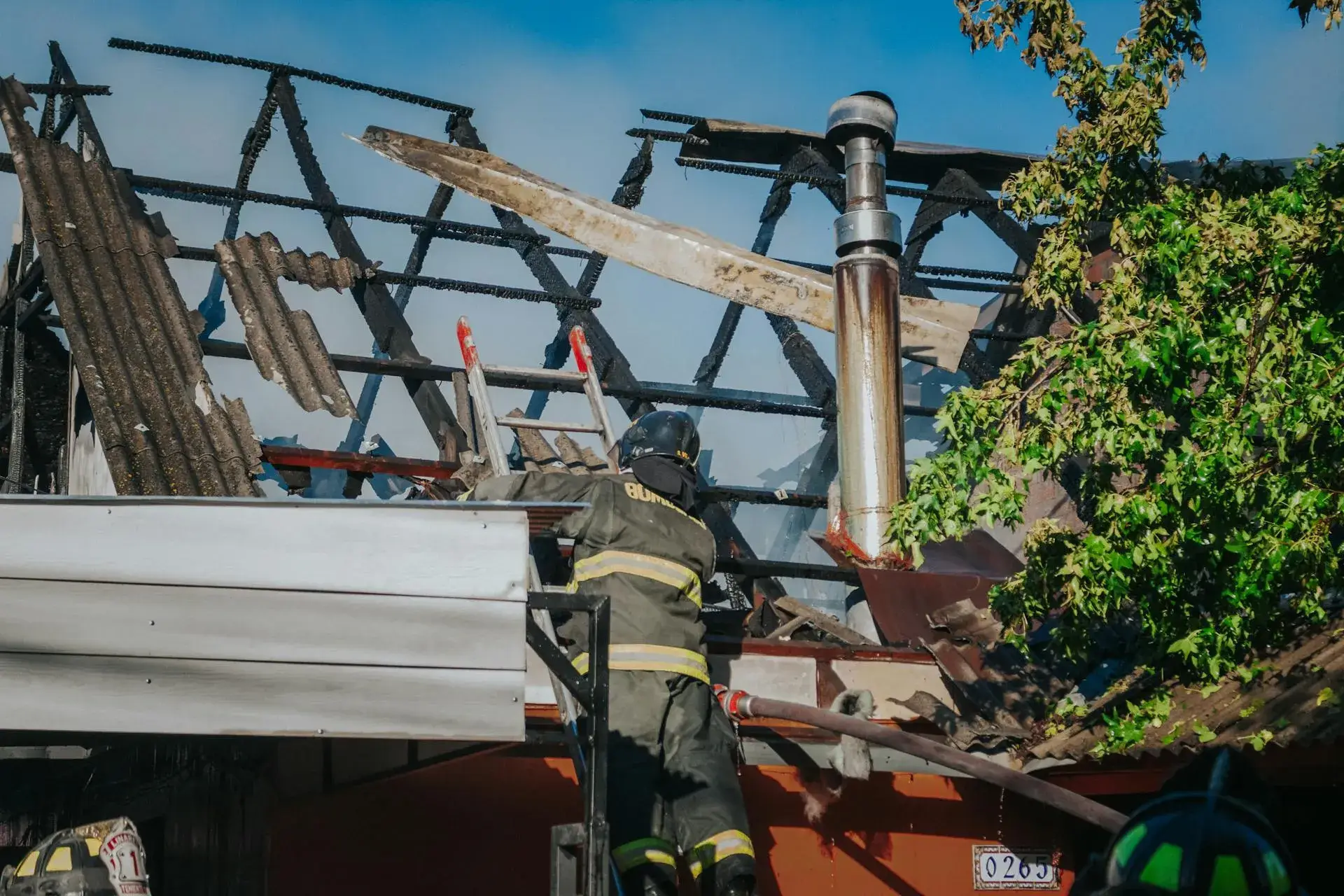
Fire Damage Restoration in Brownsburg, IN
Fire damage spreads through soot, char, and corrosive residues every hour you wait. Our local team responds to Brownsburg emergencies within 60 minutes to stabilize your property.
What Happens When You Call
A real person answers, not a call center. We assess your situation, ask the right questions, and begin coordinating your response immediately.
Your dedicated restoration team is dispatched from our local base serving Brownsburg and the surrounding Hendricks County communities.
Team arrives with board-up materials, structural assessment tools, and initial soot containment equipment. Emergency stabilization begins immediately.
Property secured, initial damage documented, restoration plan mapped. You know exactly what comes next and what your insurance needs.
Your home just experienced a fire and everything feels chaotic. You need someone to take control of the situation now, not after a callback queue, not next week. X Response exists for exactly this moment. When you reach out, your restoration team is mobilized within minutes and on site within the hour. From that point forward, one team manages everything: emergency stabilization, structural assessment, soot removal, odor elimination, and insurance documentation. Call now. Your team is standing by.
Why Brownsburg Homes Are Vulnerable to Fire Damage
Brownsburg is a rapidly growing community of approximately 34,000 residents in Hendricks County, Indiana, protected by the Brownsburg Fire Territory, which provides fire suppression, EMS, and rescue services across the town and surrounding areas. In August 2025, a significant early morning fire heavily damaged a home in the 10400 block of Ballard Drive in Brownsburg that also operated as the Clover Kids Preschool, and in August 2024, the Brownsburg Fire Territory responded to a house fire suspected to have been sparked by lightning during a severe thunderstorm. In March 2026, crews from Brownsburg, Avon, and Pittsboro responded to a house fire on Green Street, demonstrating the mutual aid response model that Hendricks County departments rely on for working structure fires. These incidents illustrate that fire damage is a persistent reality across Brownsburg's mix of housing types, from the older homes near the town center to the large subdivisions built during the town's rapid growth period.
Brownsburg's location in central Indiana places it in a severe weather corridor where more than 140 tornadoes have been confirmed within a 25-mile radius since 1950. Severe thunderstorms with lightning are a primary fire ignition source during the spring and summer storm season. The August 2024 lightning-strike house fire demonstrates this specific risk: a direct lightning hit to a residential structure can ignite attic insulation, roof materials, or enter through the electrical system and start fires in walls or at panel boxes. Storm-related fires compound restoration complexity because the same storm that ignites the fire often produces wind damage, water intrusion from driven rain, and power outages that delay detection.
Lightning and Severe Storm Fire Risk
Brownsburg sits in one of the most tornado-active corridors in Indiana, and the severe thunderstorms that produce tornadoes also generate frequent cloud-to-ground lightning. The August 2024 house fire in Brownsburg was suspected to have been started by a lightning strike during a severe storm. Lightning strikes homes directly, entering through the roof, antenna, or electrical service and igniting insulation, framing, or wiring inside walls. The fire can burn for minutes before detection because it starts in concealed spaces above the ceiling or inside wall cavities. By the time smoke reaches an interior detector, the fire has already compromised structural materials and spread through framing connections. Storm-related fires are particularly challenging because they often coincide with water damage from the same storm, creating a compound restoration scenario.
Rapid Growth Housing and Construction Risks
Brownsburg has more than doubled in population since 2000, producing thousands of new homes built across dozens of subdivisions. While these homes meet modern fire codes and include hardwired smoke detectors, they also feature construction elements that create specific fire scenarios: attached garages with stored flammables, multiple HVAC zones with extensive ductwork, gas fireplaces and water heaters, and complex electrical systems serving home offices and entertainment spaces. In newer subdivisions where homes are built on smaller lots with tighter spacing, radiant heat from a garage fire or exterior fire can damage neighboring structures through proximity alone. The May 2026 HVAC-related smoke event at Legacy Park Apartments demonstrates how mechanical system malfunctions create fire and smoke emergencies in multi-family housing.
Older Town Center and Home-Based Business Fire Risk
The August 2025 Ballard Drive fire that damaged both a home and the Clover Kids Preschool operating within it highlights a specific fire risk in communities like Brownsburg: home-based businesses that increase occupancy, electrical load, and ignition sources beyond what a residential structure was designed to accommodate. Older homes near the Brownsburg town center, built before the town's rapid growth period, have smaller electrical panels, aging wiring, and construction materials that predate modern fire-resistance standards. When these homes are adapted for business use with additional lighting, equipment, and occupancy, the fire risk profile changes significantly from the original residential design.
Winter Heating Fire Risk
Brownsburg's winters drive continuous furnace operation from November through March. Heating equipment is the second leading cause of home fires nationally per NFPA data. In Brownsburg's housing stock, which spans from older homes near the town center to homes built during the 1990s through 2020s growth period, the risk manifests differently by age. Older homes have aging furnaces, sometimes with components that have operated for 20 or more years. Newer homes have modern high-efficiency systems but often include gas fireplaces, heated garages, and supplemental heating in bonus rooms that introduce additional ignition sources. Space heaters used in garages, workshops, and bedrooms during cold snaps remain a common fire cause across all housing types.
Mutual Aid Response and Restoration Timing
The March 2026 Green Street fire required response from three departments: Brownsburg, Avon, and Pittsboro. This mutual aid model is standard for working structure fires in Hendricks County because no single town's fire territory maintains enough on-duty personnel to manage a fully involved residential fire alone. While this model provides effective fire suppression, it means that the total time from ignition through suppression and scene clearance can extend for hours, particularly for fires that reach a defensive stage. Every hour between fire suppression and professional restoration increases the permanent damage from soot bonding, smoke penetration, and suppression water. Starting restoration as quickly as possible after the scene is cleared is essential to minimizing total loss.
Fire damage restoration in Brownsburg requires understanding how fire behaves across the construction types present in this rapidly growing community: storm-related lightning fires that start in concealed attic spaces, residential fires in newer subdivisions with attached garages and complex mechanical systems, older homes near the town center adapted for business use, and heating-related fires during Indiana's cold winters. Effective restoration addresses fire damage as an integrated problem: structural char, smoke contamination, suppression water, and secondary mold risk.
What Happens to Your Home While You Wait
Within 1 Hour
Soot and smoke residues begin bonding to surfaces throughout the home. Acidic byproducts from burned materials start corroding metal fixtures and etching glass. The HVAC system distributes particulate to every room served. Early professional intervention at this stage prevents permanent staining on most surfaces.
1–24 Hours
Soot oxidizes and bonds more tightly. Metal tarnishes. Painted surfaces yellow. Smoke odor penetrates soft furnishings and upholstery. Suppression water that was not extracted begins its own damage cycle in Hendricks County's humid conditions.
24–48 Hours
Permanent staining sets on porous surfaces. Corrosion accelerates on appliances and fixtures. Mold from suppression water begins colonizing affected materials. The window for surface cleaning narrows significantly.
48–72 Hours
Many surfaces cross from cleanable to requiring replacement. Embedded smoke odor becomes significantly harder to neutralize. Suppression water mold is well established in wall cavities and beneath flooring.
One Week and Beyond
Extensive corrosion, permanent staining, and embedded odor. Combined fire, smoke, water, and mold damage makes the project dramatically more expensive than early intervention would have been.
The difference between cleaning your home and replacing it is often just hours of professional intervention after the fire. Contact X Response now. Our Brownsburg team responds within 60 minutes.
How We Restore Fire-Damaged Brownsburg Homes
From the moment our team arrives after the fire department clears the scene, every step is documented, measured, and coordinated.
Emergency Stabilization and Board-Up
Our team arrives to secure the property immediately. Broken windows, compromised doors, and damaged roof sections are boarded and tarped to prevent weather intrusion. In Brownsburg, where severe thunderstorms can follow a fire event within hours, rapid stabilization prevents secondary damage. We document the full scope of fire, smoke, and water damage with photos and detailed notes.
Structural Assessment
We evaluate the structural integrity of fire-damaged areas. Fire weakens framing connections and can cause hidden damage in floor and roof systems. In Brownsburg homes with engineered trusses, fire damage to a single truss component can compromise the entire roof system. Our assessment maps the fire's travel path and identifies every area requiring attention.
Soot and Smoke Residue Removal
Professional soot removal begins with identifying the smoke type. We clean all hard surfaces using the appropriate method for the residue type and surface material. HEPA air scrubbers run throughout the process. Each HVAC zone is evaluated and decontaminated independently.
Odor Elimination
We use thermal fogging, hydroxyl generators, and ozone treatment to neutralize smoke odor at the molecular level. For Brownsburg homes with basements, the porous concrete requires specific treatment. Final verification confirms elimination, not masking.
Suppression Water Removal and Drying
Fire suppression water is extracted and the structure is dried using commercial dehumidifiers and air movers. In Hendricks County's humid climate, mechanical drying is essential to prevent mold colonization from suppression water.
The X Response Difference
One team, one integrated project, documented results from start to finish.
Insurance Claim Guidance for Brownsburg Homeowners
Fire damage insurance claims in Indiana are typically covered under standard homeowner's policies, but the process involves separating fire damage, smoke contamination, suppression water damage, and potential secondary mold into distinct categories. Each has different documentation requirements. For Brownsburg homes, thorough documentation from the first day is essential to ensure the claim reflects the full scope of loss.
How X Response Helps
- Document all fire, smoke, water, and mold damage with professional photos and detailed scope from day one
- Distinguish between fire, smoke, suppression water, and secondary mold in documentation
- Prepare comprehensive inventory of damaged personal property
- Align restoration scope with insurance coverage categories
- Explain coverage before you file so you understand your options
X Response does not file claims on your behalf, adjust claims, or make coverage determinations. We provide documentation and guidance to help you make informed decisions. Coverage decisions are made solely by your insurance carrier.
Certified Restoration Specialists Serving Brownsburg
When you contact X Response for fire damage in Brownsburg, your team is drawn from certified professionals who work across Hendricks County. They have restored lightning-damaged homes, cleaned puffback residue from aging furnaces, and managed combined fire-and-storm damage during Indiana's severe weather season. This is a local team with local expertise, operating under national quality standards.
Every technician holds current IICRC certification in fire and smoke restoration. Equipment includes board-up materials, HEPA filtration, thermal foggers, professional cleaning systems for every smoke type, and commercial dehumidifiers for suppression water drying.
In Brownsburg, X Response works with The Cleaning Source, an independent local restoration partner serving Hendricks County.
Fire Damage Restoration FAQ for Brownsburg Homeowners
Other Emergency Services in Brownsburg

Water Damage Restoration
Burst pipes, storm flooding, standing water. We extract, dry, and restore before mold sets in.
Learn more
Smoke Damage Restoration
Soot residue, chemical odors, HVAC contamination. We decontaminate surfaces, eliminate odors, and restore air quality.
Learn more
Mold Remediation
Testing, containment, removal, prevention. We find the source, eliminate the growth, and stop it from returning.
Learn more
Sewage Cleanup
Sewer backups, contaminated water, biohazard. We extract, sanitize, and restore safely.
Learn moreNearby Service Areas
Also serving nearby: