
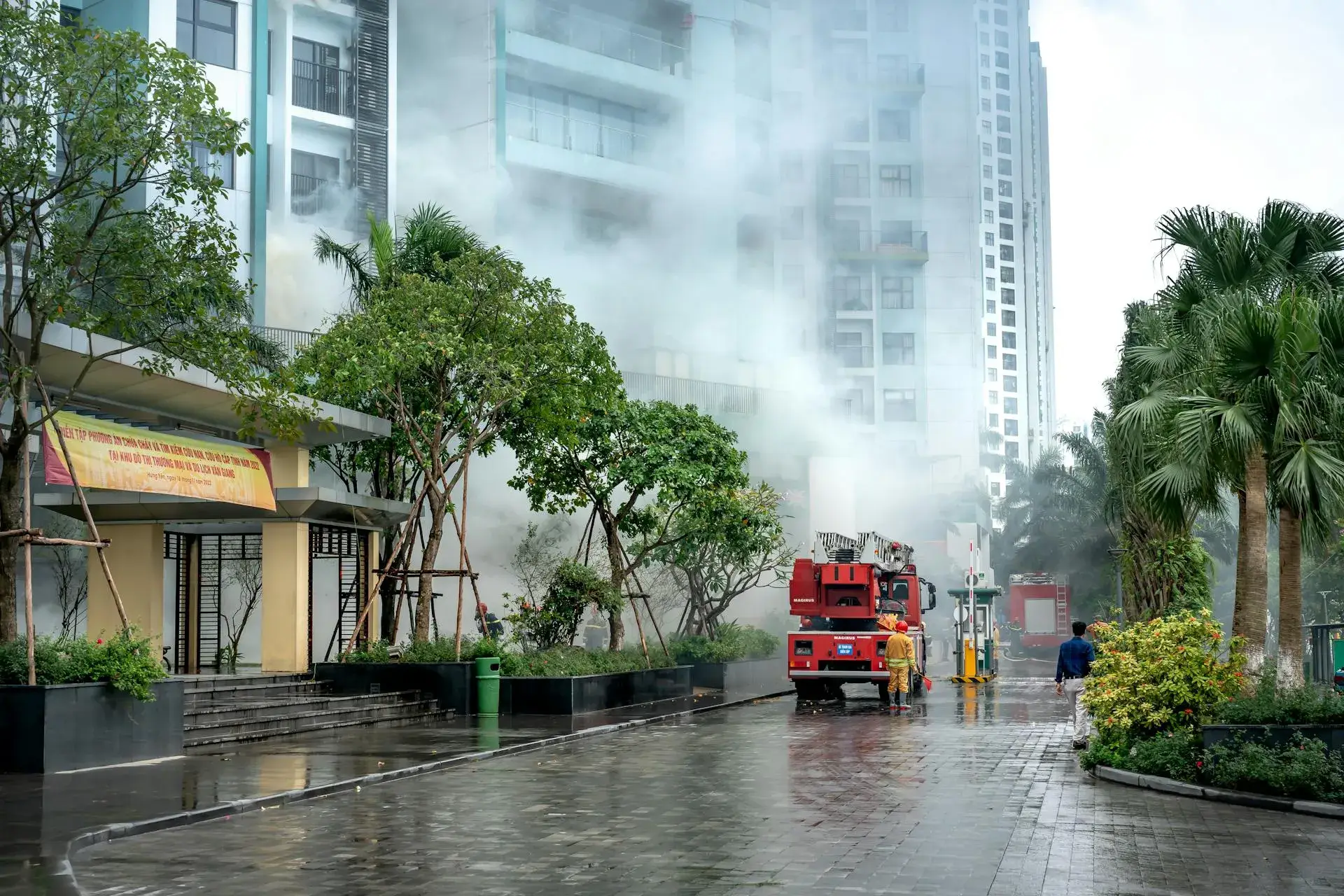
Smoke Damage Restoration in Brownsburg, IN
Smoke residue corrodes surfaces and bonds to materials within hours. Our local team responds to Brownsburg emergencies within 60 minutes to stop the damage from setting permanently.
What Happens When You Call
A real person answers, not a call center. We assess the smoke source, affected areas, and urgency, then begin coordinating your response immediately.
Your dedicated restoration team is dispatched from our local base serving Brownsburg and the surrounding Hendricks County communities.
Team arrives with air quality testing equipment, HEPA filtration, and professional cleaning systems. Containment and initial cleaning begin immediately.
Contamination contained, HVAC isolated, cleaning plan documented. You know exactly what comes next.
Smoke damage is deceptive. The fire may be out or the source may be gone, but the contamination is active and spreading through your home right now. Soot corrodes metal, stains surfaces permanently, and fills your HVAC system with particulate that recirculates every time the blower runs. X Response exists for exactly this moment. Call now. Your team is standing by.
Why Brownsburg Homes Are Vulnerable to Smoke Damage
Brownsburg is a town of approximately 34,000 residents in Hendricks County that experienced sustained poor air quality during the June 2023 Canadian wildfire smoke events alongside the entire Indianapolis metro. The Indiana Department of Environmental Management issued statewide Air Quality Action Days in June 2023 after Canadian wildfire smoke pushed fine particulate levels into the unhealthy range across all Indiana counties, and Brownsburg in Hendricks County experienced the same sustained poor air quality that triggered nine Knozone Action Days across the Indianapolis metro during the summer of 2023. For Brownsburg residents, these events deposited fine particulate on surfaces, inside HVAC ductwork, and throughout soft goods in every home that had windows open or fresh air intakes running during the multi-day smoke episodes.
Brownsburg's smoke damage risk extends well beyond regional wildfire events. The August 2025 fire at a home and preschool on Ballard Drive, the March 2026 house fire on Green Street that required three-department response, and the May 2026 HVAC smoke event at Legacy Park Apartments all produced localized smoke that affected surrounding properties. In a community with over 140 confirmed tornadoes within 25 miles since 1950, storm-related fires from lightning strikes and downed power lines add another smoke source during severe weather season. The combination of wildfire infiltration, localized structure fires, storm-related ignition, and furnace puffbacks during Indiana's cold winters gives Brownsburg a broader smoke exposure profile than its suburban character might suggest.
Canadian Wildfire Smoke Infiltration
The June 2023 wildfire smoke events proved that Brownsburg homes are vulnerable to smoke contamination from distant sources. PM2.5 particulate infiltrated through building envelope gaps, open windows, and fresh air intakes, then was distributed by HVAC systems to every room. Standard MERV 8 filters capture only a fraction of these fine particles. Multi-day smoke events deposit enough particulate to produce visible haze on surfaces, discolor furnishings, and degrade indoor air quality for weeks after outdoor conditions normalize.
Lightning and Storm-Related Smoke
More than 140 tornadoes have been confirmed within 25 miles of Brownsburg since 1950, and the severe thunderstorms that produce tornadoes also generate cloud-to-ground lightning. Lightning-struck homes produce smoke that fills the structure from concealed attic spaces. Downed power lines during wind events can ignite fires that produce localized smoke plumes affecting downwind properties. Storm-related smoke damage often accompanies wind and water damage from the same event.
Furnace Puffbacks
Brownsburg's cold winters drive continuous furnace operation from November through March. Puffbacks occur when unburned fuel ignites all at once in the combustion chamber, sending oily soot through the ductwork and out every supply register. The residue coats walls, ceilings, and furnishings throughout the home within seconds. Puffback soot is petroleum-based and requires solvent cleaning rather than standard methods. Homes with furnaces that have operated for 20 or more years are most susceptible.
Subdivision Density and Smoke Migration
Brownsburg's rapid growth produced subdivisions with homes on smaller lots and tighter spacing than the rural parcels that characterized the community before 2000. When a structure fire occurs in these subdivisions, smoke and heat affect neighboring homes through proximity. Even without direct flame contact, radiant heat can damage exterior surfaces, and smoke infiltrates through windows, doors, and HVAC intakes of adjacent homes. Residents may not realize their home has been contaminated until they notice residue or odor days after the event.
Multi-Zone HVAC Distribution
Brownsburg's newer homes frequently feature two or three HVAC zones serving different levels and areas of the home. When smoke enters from any source, each running HVAC system distributes contamination and becomes a reservoir for particulate. Each zone must be evaluated and decontaminated independently. The zone running during the event may be heavily affected while a dormant zone remains relatively clean.
Smoke damage in Brownsburg comes from wildfire infiltration, localized structure fires, lightning-related ignition, furnace puffbacks, and subdivision proximity effects. In every case, the forced-air HVAC system turns a localized event into whole-home contamination. Effective restoration requires identifying the smoke type, matching cleaning techniques to each surface, decontaminating every HVAC zone, and eliminating embedded odor at the molecular level.
What Happens to Your Home While You Wait
Within 1 Hour
Smoke residue begins bonding to surfaces. Acidic compounds start corroding metal fixtures. The HVAC system distributes particulate throughout the home. Early intervention prevents permanent staining on most surfaces.
1–24 Hours
Soot oxidizes and bonds tightly. Metal tarnishes. Painted surfaces yellow. Smoke odor penetrates soft furnishings. Cleaning difficulty increases substantially.
24–48 Hours
Permanent staining sets on porous surfaces. Smoke odor embeds in framing, padding, and insulation. Corrosion accelerates on metal surfaces.
48–72 Hours
Many surfaces cross from cleanable to requiring replacement. Restoration scope and cost increase sharply.
One Week and Beyond
Extensive corrosion, permanent staining, and deeply embedded odor. What began as cleaning becomes demolition and replacement.
Professional intervention within hours prevents permanent damage. Contact X Response now. Our Brownsburg team responds within 60 minutes.
How We Restore Smoke-Damaged Brownsburg Homes
Every step targets the specific type of smoke contamination in your home.
Smoke Source Identification and Assessment
Our team identifies the smoke type, which determines every cleaning decision. Protein smoke, synthetic smoke, wood smoke, and puffback residue each require different cleaning chemistry. We map contamination throughout the home and immediately isolate the HVAC system to prevent further distribution.
Containment and Air Quality Control
Containment barriers prevent cross-contamination. HEPA air scrubbers capture airborne particulate. Each HVAC zone is evaluated independently to determine contamination levels.
Surface Cleaning
Professional cleaning addresses every surface using the method matched to the smoke type and material. Dry sponge for light soot, solvent for oily puffback, wet cleaning for heavy protein smoke. We clean top-down and HEPA-vacuum all surfaces.
HVAC Decontamination
Every contaminated duct run, register, coil, and air handler is professionally cleaned. Each zone is decontaminated independently and verified before returning to service.
Molecular Odor Elimination
Thermal fogging, hydroxyl generators, and ozone treatment neutralize embedded odor compounds in structural materials. Final verification confirms elimination, not masking.
The X Response Difference
One team, matched techniques, verified results.
Insurance Claim Guidance for Brownsburg Homeowners
Smoke damage claims require documentation of the full contamination scope, not just the visible fire area. Standard homeowner's policies cover smoke damage as part of a covered fire loss. Content damage, HVAC decontamination, and odor elimination are legitimate restoration costs that should be documented separately.
How X Response Helps
- Document full contamination scope including areas beyond the fire's origin
- Itemize content damage with replacement values
- Document HVAC decontamination separately from surface cleaning
- Record odor elimination methods and verification results
- Align documentation with adjuster requirements
X Response does not file claims on your behalf, adjust claims, or make coverage determinations. Coverage decisions are made solely by your insurance carrier.
Certified Restoration Specialists Serving Brownsburg
When you contact X Response for smoke damage in Brownsburg, your team understands Hendricks County conditions. They have cleaned wildfire particulate from homes across the community, decontaminated HVAC systems in multi-zone homes throughout the subdivisions, and restored air quality after neighboring structure fires. Local team, local expertise, national standards.
Every technician holds current IICRC certification in fire and smoke restoration. Equipment includes HEPA air scrubbers, thermal foggers, hydroxyl generators, and professional cleaning systems for every smoke type.
In Brownsburg, X Response works with The Cleaning Source, an independent local restoration partner serving Hendricks County.
Smoke Damage Restoration FAQ for Brownsburg Homeowners
Other Emergency Services in Brownsburg

Water Damage Restoration
Burst pipes, storm flooding, standing water. We extract, dry, and restore before mold sets in.
Learn more
Fire Damage Restoration
Structural damage, soot, debris. We stabilize, clean, and rebuild what fire destroyed.
Learn more
Mold Remediation
Testing, containment, removal, prevention. We find the source, eliminate the growth, and stop it from returning.
Learn more
Sewage Cleanup
Sewer backups, contaminated water, biohazard. We extract, sanitize, and restore safely.
Learn moreNearby Service Areas
Also serving nearby: