
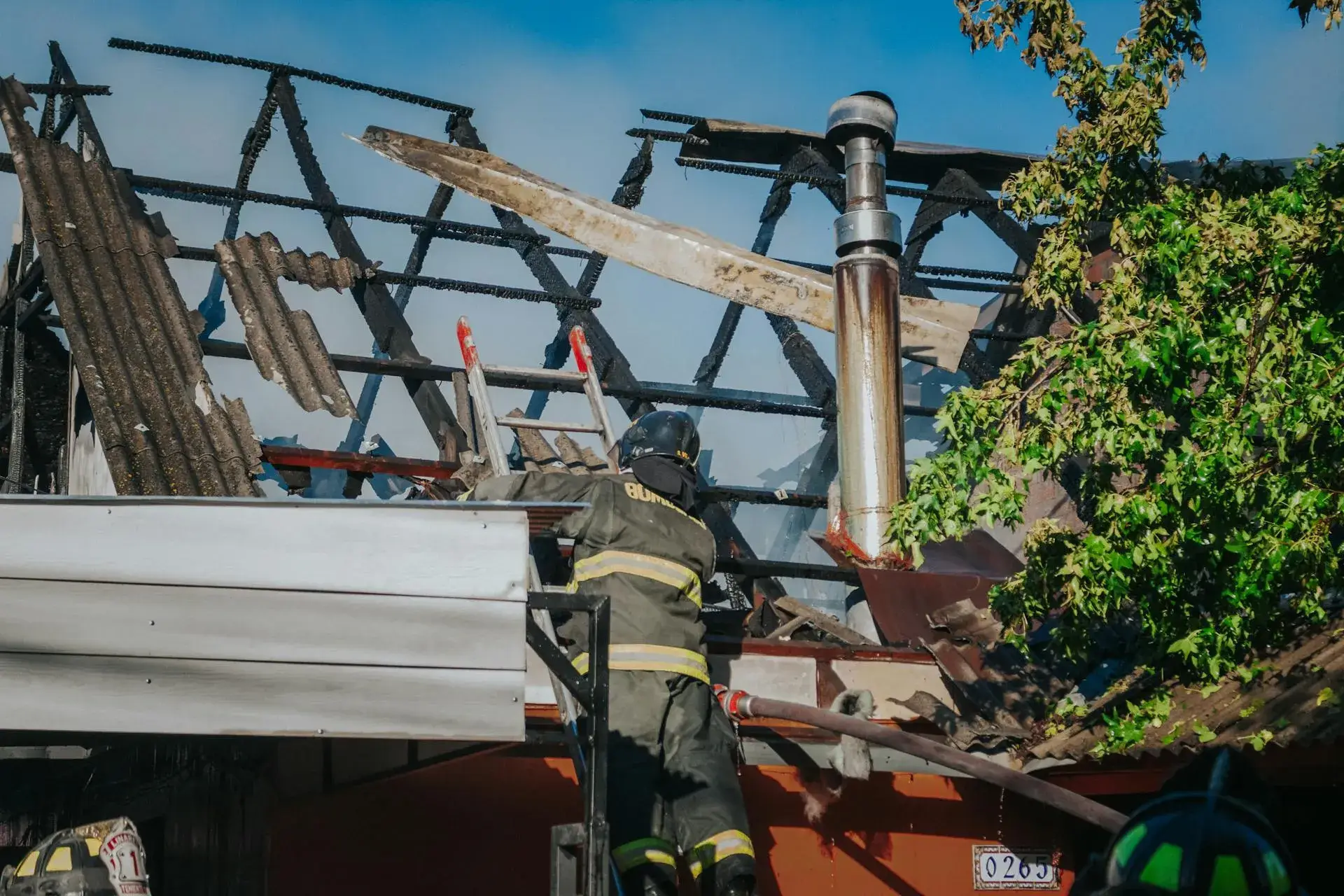
Fire Damage Restoration in Dearborn Heights, MI
Acidic soot and toxic smoke residue begin etching glass, corroding plumbing fixtures, and permanently staining drywall within hours of a fire. Our local IICRC-certified restoration crew arrives in Dearborn Heights within 60 minutes to secure your property and start emergency stabilization.
What Happens When You Call
Our 24/7 emergency hotline connects you directly with a restoration coordinator who immediately dispatches a local Wayne County fire recovery team.
Technicians arrive on site within 60 minutes to perform an initial structural safety assessment and secure the building with emergency board-up and tarping.
We extract residual firefighting water, install industrial drying systems, and stabilize indoor air quality using HEPA air scrubbers.
Our certified specialists remove acidic soot, clean salvageable surfaces, neutralize odors with hydroxyl generators, and prepare detailed structural rebuild plans.
A structure fire leaves behind catastrophic disruption, toxic chemical residues, and pervasive smoke odor. The crucial hours following the extinguishing of a blaze determine whether structural materials and personal property can be restored or must be completely demolished. At X Response, our dedicated emergency fire restoration team deploys immediately across Dearborn Heights and Wayne County. We handle emergency security, water extraction, soot removal, and insurance coordination with a single seamless team. Call now. Your team is standing by.
Why Dearborn Heights Homes Are Vulnerable to Fire Damage
Fire damage restoration in Dearborn Heights demands specialized expertise due to the architectural styles, heating systems, and aging infrastructure common to western Wayne County. In February 2022, Dearborn Heights Fire Department Captain Joshua Erickson rescued a resident from a heavily smoke-filled and burning home at the Crestwood Estates Mobile Home Park on 4th Street moments before the structural ceiling collapsed. This dramatic event illustrates the high stakes of structural fires in the community, where rapid heat spread and toxic combustion products quickly compromise building integrity and endanger occupants.
The residential landscape of Dearborn Heights consists largely of single-story brick ranches, Cape Cods, and split-level homes built during the mid-twentieth century. Many of these older homes still feature original electrical panels, knob-and-tube or early ungrounded Romex wiring, and heavily loaded branch circuits that struggle with modern electrical demands. When an electrical fault or appliance malfunction ignites inside a wall cavity or basement ceiling joist, fire travels rapidly through unblocked balloon framing and shared floor assemblies before smoke alarms on upper levels detect the heat.
Heating systems in Dearborn Heights introduce significant seasonal fire risks during the harsh Michigan winter. Forced-air natural gas furnaces, boiler systems, space heaters, and wood-burning fireplaces operate under heavy loads from November through April. Incomplete fuel combustion or cracked heat exchangers create dangerous furnace puffbacks, spreading fine petroleum soot and acidic carbon residues throughout every room via the supply ductwork. Even small contained furnace fires can coat an entire home in oily soot that corrodes metals and embeds deeply into porous furnishings.
A critical and often overlooked aspect of fire emergencies is the massive water damage caused during fire suppression operations. Municipal fire crews from the Dearborn Heights Fire Department, operating from headquarters on North Beech Daly Road and Station 1 on South Telegraph Road, must pump thousands of gallons of water into a burning structure to extinguish the blaze. This water pools in basements, saturates ceiling drywall, and soaks insulation. Without immediate water extraction and structural drying, a fire loss rapidly compounds into a severe mold outbreak within 24 to 48 hours.
Postwar Electrical Systems and Modern Power Demands
Many Dearborn Heights residences built in the 1950s and 1960s were originally wired for 60-amp or 100-amp electrical service. Decades of DIY modifications, overloaded extension cords, and high-draw modern electronics create severe strain on aging wiring, making electrical arc faults inside wall cavities and attic spaces a leading cause of residential fires.
Forced-Air HVAC Smoke Distribution Networks
Most homes in Dearborn Heights rely on centralized basement-mounted furnaces and forced-air duct systems. When a fire occurs in one section of the house, the return air ducts pull superheated smoke, soot particulates, and volatile organic compounds directly into the HVAC unit, distributing toxic residues into every connected room.
Acidic Chemical Composition of Modern Soot
Modern residential fires burn synthetic materials, plastics, polyurethane foam cushions, and composite flooring. Combustion of these synthetic products creates highly acidic chemical residues that corrode copper plumbing lines, etch glass windows, discolor porcelain fixtures, and degrade appliances within 24 to 72 hours if left untreated.
Severe Firefighting Water Saturation in Basements
Extinguishing a residential structure fire requires thousands of gallons of water, which flows downward by gravity and accumulates in the basement. In Dearborn Heights' older concrete block basements with limited drainage, standing water quickly threatens electrical panels, water heaters, and structural joists, demanding immediate high-volume extraction.
Hidden Structural Charring and Compromised Load-Bearing Framing
Mid-century framing techniques in Dearborn Heights often lack modern fire-blocking between floor levels and roof rafters. Fire can burn concealed inside wall assemblies and knee walls, charring dimensional lumber and weakening structural rafters while leaving exterior brick veneer looking relatively intact.
Recovering from a fire in Dearborn Heights requires addressing structural burning, corrosive chemical soot, toxic smoke infiltration, and gallons of standing firefighting water. Our integrated restoration approach restores safety, eliminates odors, and protects your property investment.
What Happens to Your Home While You Wait
Within Minutes
Superheated smoke and combustion gases rise through vertical pathways, penetrating ceilings, attic spaces, and ductwork. Acidic soot deposits settle on all horizontal surfaces, beginning immediate chemical etching on polished metals, mirrors, and glass.
1 to 24 Hours
Acidic residues cause yellowing of plastic components, discoloration of fiberglass and acrylic fixtures, and permanent staining of porous stone surfaces. Standing water from fire hoses wicks into hardwood floors and drywall, creating high humidity that accelerates soot corrosion.
24 to 48 Hours
Soot penetrates deeply into unsealed wood framing, drywall paper, and upholstered furniture. Metal fixtures, copper pipes, and aluminum window frames begin pitting and tarnishing. Mold spores activate on materials soaked by firefighting water.
48 to 72 Hours
Synthetic soot permanently bonds with painted walls, cabinetry, and counter finishes. Wood furniture and structural joists absorb smoke odors deeply into the grain, requiring aggressive abrasive cleaning or encapsulation. Restoration costs rise as salvageable items become total losses.
One Week and Beyond
Severe etching, deep odor penetration, and secondary mold growth become entrenched throughout the structure. Unmitigated corrosive residues cause permanent failure of electrical components and appliances, requiring comprehensive structural tear-out and reconstruction.
The chemical reactions triggered by fire and soot do not stop when the flames are extinguished. Contact X Response now. Our Dearborn Heights team responds within 60 minutes.
How We Restore Fire-Damaged Dearborn Heights Homes
Our IICRC-certified fire restoration protocol follows strict technical standards to ensure complete decontamination, structural stability, and odor elimination.
Emergency Board-Up, Tarping, and Safety Stabilization
We secure damaged windows, exterior doorways, and compromised roof sections with heavy-duty plywood and reinforced tarps to prevent weather intrusion and unauthorized entry. We inspect the building for structural integrity and secure electrical and gas utilities.
Water Extraction and Psychrometric Drying
Our technicians immediately deploy industrial extractors to remove water left by firefighting efforts. We install commercial low-grain refrigerant dehumidifiers and air movers to thoroughly dry framing, concrete block basements, and subfloors before secondary mold can develop.
Soot and Chemical Residue Removal
Using specialized chemical sponges, alkaline cleaning agents, and HEPA vacuum systems, we clean all affected surfaces. We differentiate between dry carbon soot, oily petroleum soot, and protein residue, applying tailored cleaning agents that lift contaminants without driving them deeper into porous materials.
Advanced Thermal Fogging and Odor Neutralization
To eliminate stubborn smoke odors embedded in framing, insulation, and ductwork, we utilize commercial hydroxyl generators, thermal foggers, and ozone treatments. These technologies break down odor molecules at the molecular level rather than merely masking the scent.
Structural Reconstruction and Final Restoration
Our construction division handles all required structural rebuilds, including replacing charred framing joists, hanging and finishing drywall, installing new insulation, and repainting with odor-sealing primers to return your property to pre-loss condition.
The X Response Difference
Trust your fire recovery to certified specialists who understand the intricate chemistry of fire, smoke, and water restoration.
Insurance Claim Guidance for Dearborn Heights Homeowners
Filing a property insurance claim after a structure fire in Dearborn Heights can be an overwhelming experience. Fire policies typically cover direct fire damage, smoke contamination, and secondary water damage resulting from firefighting efforts. However, adjusters require thorough, itemized proof of loss, including detailed structural assessments, moisture readings, and non-salvageable personal property inventories. We work directly with you and your insurance provider to provide clear, indisputable documentation from day one.
How X Response Helps
- Compile a comprehensive digital photographic and video inventory of all structural damage and personal contents prior to cleanup
- Generate transparent, line-item estimates formatted in Xactimate software, the gold standard used by major insurance carriers
- Categorize damaged personal property into salvageable items for specialized cleaning and non-salvageable items for replacement
- Document all emergency mitigation steps, including board-up, security fencing, water extraction, and structural drying equipment usage
- Coordinate directly with your assigned insurance adjuster during site walkthroughs to verify that all fire and smoke impacts are included
X Response is an emergency mitigation and restoration contractor. We do not adjust insurance claims, offer legal interpretations of policy language, or act as public adjusters. All policy coverage decisions are determined solely by your insurance carrier.
Certified Restoration Specialists Serving Dearborn Heights
Our fire recovery specialists serving Dearborn Heights have years of hands-on experience restoring homes and businesses throughout Wayne County. They possess deep technical understanding of local construction methods, from 1950s block basements and dimensional wood framing to modern architectural retrofits. Having handled fire losses across every major neighborhood in the western Detroit suburbs, our crews approach every project with technical precision and empathetic care.
Every crew leader holds certifications from the Institute of Inspection, Cleaning and Restoration Certification (IICRC) in Fire and Smoke Restoration (FSRT), Odor Control (OCT), and Water Damage Restoration (WRT). We utilize state-of-the-art diagnostic and cleaning tools, ensuring your Dearborn Heights home is restored to the highest standards of safety and comfort.
In Dearborn Heights, X Response works with H2O Pros, an independent local restoration partner serving Wayne County.

