
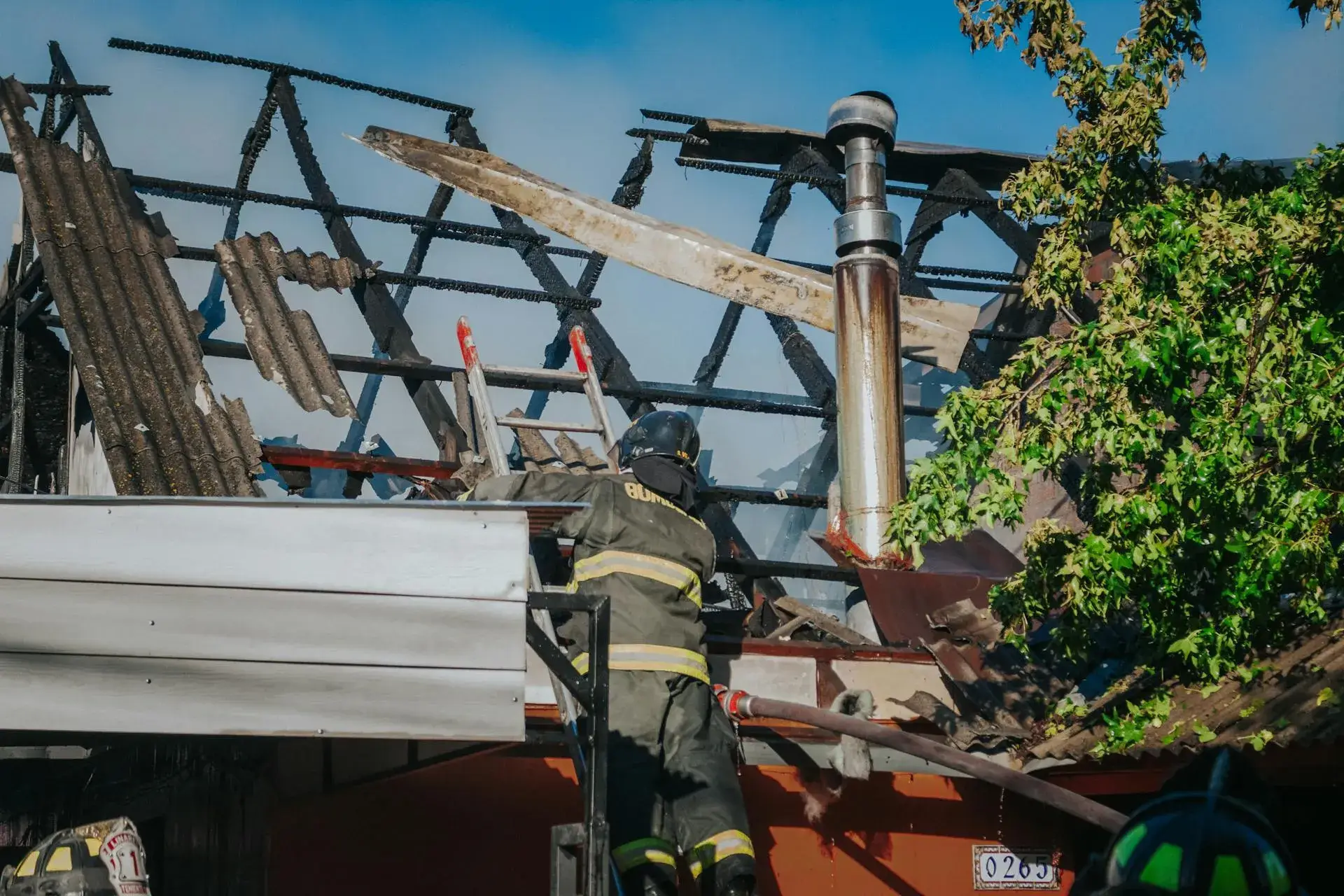
Fire Damage Restoration in Westland, MI
Fire damage compounds by the hour as acidic soot corrodes surfaces and smoke residue works deeper into wall cavities and ductwork. Our local team responds to Westland and Wayne County emergencies within 60 minutes.
What Happens When You Call
A real person answers, not a call center. We assess your situation, confirm the scene is safe and released by the fire department, and begin coordinating your response immediately.
Your dedicated restoration team is dispatched from our local base serving Westland and the surrounding Wayne County communities.
The team arrives with board-up materials, HEPA filtration, soot removal equipment, and structural assessment tools. Emergency stabilization begins immediately.
Structure secured, initial soot and debris cleared from critical areas, restoration plan documented. You know exactly what comes next.
Your home just came through a fire. Whether the Westland Fire Department knocked it down quickly or you caught it before it spread, the damage is active and compounding right now. Soot is acidic and keeps corroding every metal, fabric, and painted surface it touches. Smoke residue is working deeper into wall cavities, insulation, and ductwork with each passing hour, and if the furnace is running it carries contamination through the entire house. X Response exists for exactly this moment. When you reach out, your restoration team is mobilized within minutes. From that point forward, one team manages everything: stabilization, cleaning, demolition, and rebuild. Call now. Your team is standing by.
Why Westland Homes Are Vulnerable to Fire Damage
Fire damage in Westland is driven by a combination of aging residential infrastructure, Michigan's long heating season, and the density of multi-family housing complexes that allow fires to spread rapidly once they start. On September 5, 2025, a fire at the Woodview Condominiums near Warren Road and Central City Parkway in Westland destroyed eight units and displaced 10 to 12 residents, with Westland Fire Chief Darrell Stamper confirming the loss of all eight units to FOX 2 Detroit. The fire broke out just after 5 a.m. and spread through multiple connected units before crews could contain it. The Woodview fire demonstrated a pattern common to Westland's condominium and apartment complexes: once fire breaches a shared wall or attic space in a multi-unit building, it can travel horizontally through roof assemblies and common structural elements faster than occupants in adjacent units realize they are in danger.
Just four months earlier, on May 5, 2025, a natural gas explosion destroyed a vacant house on the 31000 block of Calhoun Court near Merriman Road and Michigan Avenue, sending a shockwave through the neighborhood that rattled windows and shook foundations in surrounding homes. Westland Fire Marshal Kelly Eggers confirmed the blast to 7 News Detroit, and the incident was reported as the fifth home explosion in metro Detroit in just seven months. While no injuries occurred because the home was unoccupied, the explosion illustrates a hazard particular to aging residential gas infrastructure: leaks accumulate in enclosed spaces and detonate without warning when they reach ignition concentration. For neighboring homes, the shockwave itself can crack foundations, displace window frames, and stress structural connections even without direct fire exposure.
Westland's housing stock, built predominantly in the 1950s and 1960s, presents specific fire restoration challenges that differ from newer construction. These homes feature plaster-and-lath or early drywall walls, hardwood floors, original electrical panels that predate modern arc-fault protection, and forced-air heating systems with ductwork that runs through the basement and interior wall cavities. When a fire occurs, smoke and soot travel through that ductwork network and contaminate rooms far from the fire's point of origin. The original wiring in many of these homes uses fabric-insulated conductors that degrade over decades, and aging electrical panels with Federal Pacific or Zinsco breakers, common in construction of that era, may fail to trip during an overload, allowing wiring to overheat inside wall cavities where the fire smolders undetected until it breaks through.
Michigan's heating season stretches from October through April, and during those seven months Westland homes depend heavily on natural gas furnaces, often supplemented by space heaters, fireplaces, and electric baseboards in rooms that the main system does not reach adequately. The National Fire Protection Association identifies heating equipment as the second leading cause of home fires nationally, and the risk intensifies in older homes where clearances between heat sources and combustible materials have been reduced by decades of modifications, stored belongings, and furniture placement. A single space heater placed too close to curtains or a stack of newspapers in a Westland basement can produce a working fire in minutes, and the forced-air system in the home can pull smoke into the supply plenum and distribute it through every register in the house before the fire alarm activates.
Multi-Unit Condominium and Apartment Fire Spread
Westland has a significant inventory of condominium complexes and apartment buildings constructed from the 1960s through the 1980s, many of which lack the fire-rated wall assemblies and automatic sprinkler systems required in modern construction. The September 2025 Woodview Condominiums fire demonstrated how rapidly fire travels through shared roof assemblies and attic spaces in these older multi-unit buildings. Once flame enters the attic or roof structure above one unit, it can spread horizontally through continuous truss spaces to adjacent units before occupants know the fire has extended beyond the original apartment. Residents in adjacent units often discover the fire only when smoke enters through ceiling fixtures or shared wall penetrations, and by that point their unit already has significant smoke and soot contamination even if the flames never directly entered their living space. Restoration in these scenarios involves multiple units with varying degrees of damage, complex coordination between unit owners and the condominium association, and separate insurance policies for each affected unit.
Gas Infrastructure Failures and Explosion Risk
The May 2025 Calhoun Court explosion was the fifth home explosion in metro Detroit in seven months, a pattern that reflects the age and condition of residential gas infrastructure across the region. Westland's gas service lines and internal piping date to the original construction of the subdivisions in the 1950s and 1960s. Corroded fittings, deteriorated flexible connectors, and aging shut-off valves can develop slow leaks that go undetected because the gas accumulates in enclosed spaces like crawl areas beneath homes, wall cavities, or sealed basement rooms. When the concentration reaches ignition levels, any spark from a light switch, furnace pilot, or even static discharge can trigger a catastrophic explosion. For neighboring homes, restoration involves assessing structural damage from the shockwave, repairing cracked foundations and displaced framing, and addressing secondary fire damage when debris or ruptured gas lines ignite.
Electrical Fires in Aging Postwar Wiring
Homes built in Westland during the 1950s and 1960s were wired to the electrical codes of that era, with 60-amp service panels, limited circuit counts, and conductor insulation materials that degrade over decades. Many of these homes still have original Federal Pacific Stab-Lok or Zinsco panels, both of which have documented failure rates for tripping during overcurrent events. When a circuit breaker fails to trip, the wiring overheats inside the wall cavity until insulation ignites and fire spreads through the stud bay. Because the fire starts inside the wall, it can burn for minutes before producing visible flame or triggering a smoke detector, and by the time it breaks through the finished surface it has already compromised structural framing and spread through wiring pathways to other areas of the home. Restoration of an electrical fire typically involves opening walls to identify the full extent of charring, replacing compromised framing, and ensuring the electrical system is brought to current code before rebuild.
Heating Season Fires and Space Heater Ignition
Westland's heating season runs roughly seven months, from October through April, and during that period every home in the city runs its heating system continuously. Natural gas forced-air furnaces are the dominant heating type, but many homeowners supplement with portable electric space heaters in rooms that the main system does not warm adequately, especially in basements converted to living space and in bedrooms at the ends of aging duct runs. Space heaters placed too close to furniture, bedding, curtains, or stored combustibles are a leading ignition source in residential fires. In Westland's older homes, where basements often serve as combination utility, storage, and living spaces, the proximity of the furnace, water heater, stored cardboard and belongings, and supplemental heaters creates concentrated fire risk in a single area of the home.
Secondary Water Damage from Fire Suppression
When the Westland Fire Department responds to a structure fire, the water used to suppress the flames creates a secondary damage layer that compounds the restoration challenge. A single fire hose can deliver 150 to 250 gallons per minute, and a working residential fire may require multiple hose lines operating for 15 to 30 minutes or more. That volume of water saturates every material it touches, pools in the basement, soaks through floor systems, and penetrates wall cavities from above. In a Westland home with a finished basement, the suppression water drains downward and floods the lower level exactly as a plumbing failure would, except the water also carries dissolved soot, char, and fire retardant chemicals that contaminate surfaces on contact. Effective fire restoration must address both the fire and smoke damage on the upper levels and the water damage in the basement simultaneously, using different cleaning and drying strategies for each.
Fire damage restoration in Westland requires understanding the specific construction patterns, infrastructure age, and fire dynamics of this community. A condominium fire that spreads through shared roof structures demands a different response than an electrical fire that burned inside a 1950s wall cavity or a gas explosion that sent a shockwave through a block of homes. Our team assesses each situation on its own terms and builds a restoration plan that addresses the fire, the smoke, the water, and the structural damage as interconnected problems rather than separate line items.
What Happens to Your Home While You Wait
Within 1 Hour
Soot begins corroding metal surfaces, tarnishing fixtures, and embedding into porous materials. Smoke residue in the air settles on every horizontal surface. If the HVAC system is running, it pulls smoke through the return air and distributes contamination through ductwork to every room served by the system. Acidic soot residue begins etching glass, chrome, and stainless steel on contact.
1 to 24 Hours
Soot permanently discolors grout, porous tile, fiberglass, and unfinished wood if not cleaned promptly. Smoke odor absorbs deeper into upholstery, carpet, clothing, and drapery. Metals throughout the home continue to corrode and pit under the acidic residue. In areas exposed to fire suppression water, the moisture begins its own damage cycle as drywall swells and carpet padding holds water against the subfloor.
24 to 48 Hours
Smoke residue penetrates lacquered and varnished wood finishes, causing permanent yellowing. Wall paint absorbs smoke and the odor becomes chemically bonded rather than surface-level. Suppression water in the basement triggers mold colonization on drywall paper and carpet backing. Restoration scope expands as materials that could have been cleaned in the first 24 hours now require replacement.
48 to 72 Hours
Corrosion on appliance surfaces, wiring terminals, and HVAC components becomes permanent. Smoke odor migrates deep into insulation, concrete, and structural wood where surface cleaning cannot reach it. Mold growth from suppression water becomes visible. The line between restoration and full reconstruction shifts further toward demolition and rebuild.
One Week and Beyond
Without professional intervention, soot corrosion permanently damages electronics, HVAC systems, and plumbing fixtures. Smoke odor becomes embedded at a molecular level in structural materials, requiring thermal fogging, ozone treatment, or material replacement to eliminate. Suppression water left unaddressed leads to extensive mold colonization. What might have been a targeted restoration becomes a comprehensive rebuild affecting systems, finishes, and structure.
Every hour of delay after a fire allows soot to corrode deeper, smoke to penetrate further, and suppression water to trigger secondary mold damage. Contact X Response now. Our Westland team responds within 60 minutes to begin stabilization and prevent further loss.
How We Restore Fire-Damaged Westland Homes
Fire damage restoration is more complex than water damage alone because it involves multiple overlapping damage types: structural fire damage, pervasive smoke and soot contamination, chemical residue from fire suppression, and water damage from hose operations. Here is how we address each layer in a Westland home.
Emergency Stabilization and Board-Up
Our team arrives to secure the property immediately after the fire department releases the scene. Openings created by the fire or by firefighter access, including broken windows, compromised doors, and ventilation holes cut in the roof, are boarded and tarped to prevent weather intrusion, theft, and animal entry. We assess structural stability, identify load-bearing elements that may have been compromised by the fire, and establish safe working zones. This stabilization prevents additional damage and protects the property while the full restoration scope is developed.
Damage Assessment and Scope Development
A thorough inspection maps the full extent of fire, smoke, soot, and water damage throughout the home. We identify which materials are salvageable with professional cleaning and which require removal and replacement. In Westland homes with forced-air systems, we inspect the complete duct network for smoke contamination because the HVAC system often distributes soot to rooms the fire never reached. The assessment produces a detailed, itemized scope of work with photos and measurements that supports your insurance claim and guides every subsequent restoration step.
Soot and Smoke Removal
Soot removal techniques vary based on the type of fire. A protein fire from a kitchen grease incident leaves a thin, nearly invisible film with an intense odor. A furnace puffback deposits oily soot through every supply register in the house. A structural fire produces heavy dry soot mixed with char fragments. Each type requires a different cleaning chemistry and technique. We use dry sponges, chemical sponges, and alkaline-based cleaning solutions matched to the specific soot type, working from ceilings down to floors. HEPA air scrubbers run continuously during cleaning to capture airborne particles and prevent recontamination of cleaned surfaces.
Deodorization and Air Quality Restoration
Smoke odor is not a surface problem. It penetrates into porous materials at a molecular level, and standard cleaning eliminates the visible residue without fully addressing the embedded odor. We deploy thermal fogging equipment that produces a solvent-based vapor capable of penetrating into the same microscopic spaces the smoke reached, neutralizing odor at the source. For severe cases, hydroxyl generators run continuously to break down volatile organic compounds in the air. The HVAC system is cleaned and sealed registers are opened only after the air quality in the home meets acceptable standards, preventing the ductwork from recontaminating freshly cleaned spaces.
Structural Repair and Rebuild
Once cleaning, deodorization, and any required demolition are complete, the rebuild phase restores the home to its pre-fire condition. Charred framing is sistered or replaced, fire-damaged electrical and plumbing systems are brought to current Michigan code, drywall is hung and finished, and flooring, trim, and finishes are installed to match the existing home. For Westland's older homes, the rebuild often represents an opportunity to update electrical panels, add arc-fault protection, and improve insulation where fire exposed wall cavities. We manage the rebuild from start to completion so you have one team and one point of contact throughout the entire process.
The X Response Difference
Fire damage restoration requires managing fire, smoke, soot, water, and structural damage as a single coordinated project. X Response provides that coordination from first call to final inspection, with one team and one standard of work throughout.
Insurance Claim Guidance for Westland Homeowners
Fire damage insurance claims in Michigan are generally straightforward in terms of coverage because standard homeowner's policies cover fire and smoke damage as a named peril. The complexity comes in the scope and documentation. Insurance carriers require detailed proof of what was damaged, what can be restored versus what must be replaced, and that the restoration scope is reasonable and necessary. Smoke damage that extends beyond the fire's immediate area, contamination distributed through ductwork, and secondary water damage from suppression all need to be documented and justified. Carriers may dispute the extent of smoke contamination in rooms the fire never directly reached, or question whether materials need replacement versus professional cleaning. Thorough documentation from the first day of restoration protects your claim.
How X Response Helps
- Document the full extent of fire, smoke, and water damage with professional photos and detailed written scope before any cleaning or demolition begins
- Distinguish clearly between areas requiring cleaning versus removal, with moisture readings and contamination evidence supporting each determination
- Document HVAC contamination and the necessity of duct cleaning when smoke traveled through the forced-air system
- Track secondary water damage from fire suppression separately, with moisture readings showing affected areas and drying progress
- Provide itemized scope of work aligned with standard insurance estimating formats so your adjuster can process the claim efficiently
X Response does not file claims on your behalf, adjust claims, or make coverage determinations. We provide documentation and guidance to help you make informed decisions about your property and your policy. Coverage decisions are made solely by your insurance carrier.
Certified Restoration Specialists Serving Westland
When you contact X Response after a fire in Westland, your restoration team is drawn from certified professionals who work across Wayne County and understand the specific challenges of restoring fire-damaged homes in this community. They know how Westland's 1950s forced-air systems distribute smoke contamination through ductwork to every room in the house, how multi-unit condo fires create complex multi-party restoration situations, and how fire suppression water floods the basement and triggers secondary mold damage if not addressed immediately. They have restored homes after kitchen fires, electrical fires that burned inside walls, furnace malfunctions, and multi-unit blazes like the Woodview Condominiums incident. This is a local team with direct experience in this housing stock and these fire dynamics.
Every technician on your team holds current IICRC certification in fire and smoke restoration and carries appropriate Michigan licensing for the structural work involved. Equipment includes HEPA air scrubbers, thermal fogging units, hydroxyl generators, and the full range of soot removal chemistry needed for different fire types. For structural assessment and rebuild, our team includes experienced tradespeople who understand load-bearing systems, Michigan building code requirements, and the electrical and mechanical upgrades that fire-damaged homes require when walls are opened for restoration.
In Westland, X Response works with H2O Pros, an independent local restoration partner serving Wayne County.
Fire Damage Restoration FAQ for Westland Homeowners
Other Emergency Services in Westland


Nearby Service Areas
Also serving nearby: