
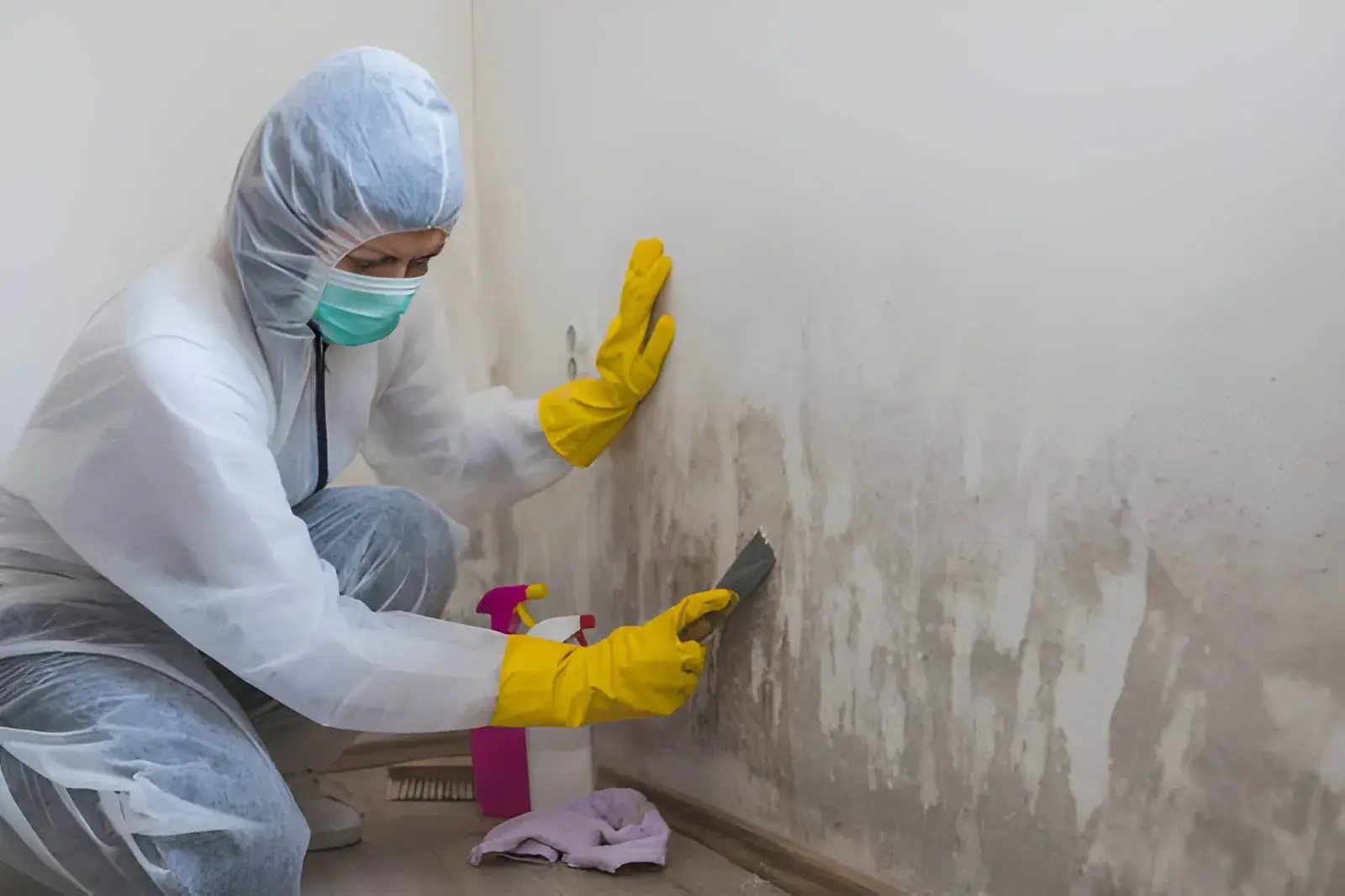
Mold Remediation in Acworth, GA
Mold spreads through your home's air and structure every day it goes unaddressed. Our certified team responds to Acworth properties within 60 minutes for assessment.
What Happens When You Call
A real person answers, not a call center. We assess your situation, ask targeted questions about moisture history and symptoms, and begin coordinating your response immediately.
Your dedicated remediation team is dispatched from our local base serving Acworth and the surrounding northwest Cobb County communities.
Team arrives with moisture meters, thermal imaging, HEPA air scrubbers, and containment materials. Professional assessment begins immediately.
Assessment complete, containment established, remediation plan documented. You know exactly what the problem is, where it is, and how we resolve it.
You have discovered mold in your home, or you suspect it based on musty odors, unexplained allergies, or visible discoloration. The problem is not going to stabilize on its own. In Acworth's humid climate, mold colonies grow and spread daily, releasing spores through your HVAC system and into the air your family breathes. X Response exists for exactly this moment. When you reach out, your remediation team is mobilized within minutes. From that point forward, one team manages everything: assessment, containment, removal, prevention, and clearance testing. Call now. Your team is standing by.
Why Acworth Homes Are Vulnerable to Mold
Acworth sits in northwest Cobb County on Georgia's Piedmont plateau, where red clay soils, high humidity, and abundant rainfall create ideal conditions for mold growth in residential structures. The city receives approximately 52 inches of rain annually, and relative humidity averages 65 to 70 percent year-round with summer months regularly exceeding 80 percent. These conditions mean that any moisture source inside a home, whether from a plumbing leak, crawl space intrusion, roof failure, or condensation, will support mold colonization within 24 to 48 hours rather than drying out naturally. Acworth's older homes near downtown, many built with crawl space foundations on the Piedmont clay, are particularly vulnerable because the clay holds moisture against the foundation indefinitely and the vented crawl space design actually pulls humid outdoor air across cool surfaces where condensation forms. On a warm Georgia day, a crawl space with a bare dirt floor can release 10 to 15 gallons of moisture into the air, creating a perpetual humidity source that feeds mold growth on floor joists, subfloor sheathing, and any HVAC ductwork running through the space.
The problem extends well beyond crawl spaces. Acworth's housing stock ranges from the 1850s through current construction, and each era brings different mold vulnerabilities. The historic homes near Main Street have minimal vapor barriers, original single-pane windows that create condensation points, and plaster walls that absorb and hold moisture. The ranch homes from the 1960s through 1980s often have inadequate bathroom ventilation, aging roof penetrations, and crawl spaces that were never properly sealed. The newer subdivisions built from the 1990s forward are generally tighter construction, but that tightness can trap moisture inside wall cavities when vapor barriers are improperly placed or when small leaks go undetected because the tight envelope prevents the slow drying that older, leakier homes allowed. In all cases, Acworth's humid climate means the margin for error is thin: a small leak that might dry harmlessly in an arid climate will grow mold in north Georgia within days.
Piedmont Clay and Crawl Space Moisture
Acworth sits on Georgia's Piedmont clay, a dense red soil that absorbs water slowly and holds it for extended periods. For homes with crawl space foundations, this means the ground beneath the structure remains damp long after the last rain, continuously releasing moisture into the crawl space air. The traditional vented crawl space design, still present in most of Acworth's older homes, makes the problem worse by drawing humid outdoor air into the space during summer. When that hot, humid air contacts the cooler surfaces beneath the floor, condensation forms on floor joists, subfloor sheathing, metal ductwork, and plumbing lines. This creates a perpetual moisture environment where mold thrives year-round without any leak or flood event triggering it. The clay also prevents proper drainage away from foundations, allowing rainwater to pool against crawl space walls and seep through block or poured concrete into the space below the home.
Humid Subtropical Climate and Condensation
Acworth's humid subtropical climate maintains relative humidity near 65 to 70 percent on an annual average, with summer months routinely exceeding 80 percent during morning and evening hours. These conditions create condensation risk on any surface cooler than the dew point: cold water supply pipes, air conditioning ductwork, poorly insulated exterior walls, and single-pane windows in older homes. Each condensation point is a potential mold colonization site that requires no leak or flood to initiate growth. The condensation forms silently, often in concealed locations like wall cavities around bath fixtures, behind kitchen cabinets on exterior walls, and inside HVAC closets. By the time visible mold appears or musty odors become noticeable, the colony has typically been established for weeks or months and has spread beyond the originally visible area.
HVAC Systems and Spore Distribution
Every home in Acworth relies on forced-air heating and cooling, and the HVAC system plays a dual role in mold problems. First, the ductwork running through unconditioned crawl spaces and attics sweats condensation on its exterior when temperature differentials are high, feeding mold growth on the duct surface and the framing it contacts. Second, when mold establishes anywhere in the home, the HVAC system distributes spores to every room through the supply air. A mold colony in the crawl space releases spores that are drawn through floor penetrations and return air pathways into the HVAC system, then deposited on surfaces throughout the home. This means a crawl space mold problem is never just a crawl space problem. It becomes a whole-home air quality issue the moment the air handler cycles.
Post-Flood and Post-Leak Mold Development
Acworth's proximity to Allatoona Creek and Lake Allatoona, combined with the Piedmont clay's poor drainage and the area's intense rainfall patterns, means water intrusion events are common. The September 2009 flood exceeded the 500-year level on streams in Cobb County, but even routine storms drive water against foundations and overwhelm aging gutters and drainage systems. After any water intrusion, whether from flooding, roof leaks, plumbing failures, or appliance malfunctions, mold colonization begins within 24 to 48 hours in Acworth's warm, humid environment. Properties that experience water damage and do not receive professional drying within that window almost invariably develop mold growth in the affected areas. The growth often occurs in concealed locations: inside wall cavities behind baseboards, beneath flooring on the subfloor surface, and in crawl space framing where water pooled on the vapor barrier.
Georgia Disclosure Requirements and Property Value
Georgia law requires sellers to disclose known material defects that affect property value, and known mold contamination falls within that obligation. For Acworth homeowners, this means unaddressed mold is not just a health and structural concern but a financial one. Properties with documented mold history face buyer skepticism, potential financing complications, and reduced market value. Professional remediation with clearance testing and documentation resolves the disclosure issue by demonstrating that the problem was identified, properly addressed, and verified clean. Without that documentation, a mold history follows the property through every future transaction. Given Acworth's active real estate market as a desirable northwest Cobb County community with lake access, protecting property value through proper remediation and documentation is a practical consideration alongside the health and structural motivations.
These factors create a mold environment in Acworth that is persistent, progressive, and systemic. The Piedmont clay feeds moisture into crawl spaces year-round. The humid climate creates condensation on any cool surface. The HVAC system distributes spores throughout the home. Water intrusion events from the area's intense rainfall trigger rapid colonization. And Georgia's disclosure requirements mean that unaddressed mold carries financial consequences beyond the remediation cost itself. Effective mold remediation in Acworth requires a team that understands the difference between treating visible colonies and resolving the moisture source that created them, because removing mold without addressing the underlying moisture simply restarts the colonization clock.
What Happens to Your Home While You Wait
24–48 Hours After Moisture
Mold spores, which are always present in the air, begin germinating on any surface that remains wet. In Acworth's warm, humid climate, this colonization window is at the short end of the range. Growth starts in concealed areas first: inside wall cavities, on the back side of drywall, beneath flooring, and on crawl space framing. No visible mold is apparent yet, but the biological process has begun.
3–7 Days
Mold colonies become established and begin producing spores in quantity. Musty odors may become noticeable in the affected area. Growth remains primarily in concealed locations but is now actively releasing spores into the air that the HVAC system distributes throughout the home. Allergic reactions and respiratory symptoms may begin for sensitive occupants. At this stage, remediation involves cleaning affected materials and correcting the moisture source.
1–4 Weeks
Mold growth becomes visible on surfaces in the affected area. Colonies expand across drywall, wood framing, and any organic material that remains damp. Structural materials begin to degrade as the mold digests cellulose in wood and paper-faced drywall. The HVAC system has distributed spores to other areas of the home, and secondary colonies may establish in locations far from the original moisture source. Remediation scope has expanded beyond the initial affected area.
1–3 Months
Extensive mold growth compromises structural integrity of affected framing, subfloor, and sheathing. Multiple colonies are established throughout the home via HVAC distribution. Indoor air quality has deteriorated significantly, with spore counts potentially reaching levels that cause symptoms in previously unaffected occupants. Materials that could have been cleaned at earlier stages now require removal and replacement. Remediation cost and timeline have multiplied.
3 Months and Beyond
Structural wood decay advances as mold breaks down cellulose in framing, joists, and sheathing. Entire sections of subfloor may require replacement. The home's air quality requires extended HEPA filtration and multiple rounds of clearance testing. The financial impact includes remediation costs, structural repair costs, potential temporary relocation, and diminished property value if documentation is incomplete. What began as a moisture correction becomes a major reconstruction project.
Mold does not stabilize or resolve on its own in Acworth's climate. Every day of delay expands the affected area, increases the remediation scope, and deepens the structural and air quality impact. Contact X Response now. Our team begins assessment within 60 minutes.
How We Restore Mold-Affected Acworth Homes
Mold remediation follows a protocol designed to remove existing contamination, protect unaffected areas during removal, and address the moisture source that created the problem. Here is exactly what our process involves for Acworth properties.
Professional Assessment and Moisture Mapping
Our team arrives with moisture meters, thermal imaging cameras, and professional-grade hygrometers to identify both the mold contamination and the moisture source feeding it. We map moisture levels throughout the affected area and trace the pathway back to its origin, whether that is a crawl space moisture issue, a concealed plumbing leak, condensation from an HVAC problem, or residual water damage from a previous intrusion. For Acworth homes with crawl spaces, we inspect the entire crawl space environment including the vapor barrier condition, ventilation configuration, foundation drainage, and ductwork. The assessment produces a detailed scope of work that identifies every affected area and the specific moisture source that must be corrected to prevent recurrence.
Containment and Air Filtration
Before any mold is disturbed, we establish physical containment around the affected area using polyethylene sheeting and create negative air pressure within the containment zone using HEPA-filtered air scrubbers. This prevents spores released during removal from migrating to unaffected areas of the home. For crawl space remediation, common in Acworth, containment extends from the crawl space access through the work pathway to prevent spore migration into the living space above. HEPA air scrubbers run continuously inside the containment, filtering the air to capture spores at 99.97 percent efficiency down to 0.3 microns. The rest of the home remains habitable during the work in most cases because the containment isolates the remediation zone.
Mold Removal and Material Disposal
Contaminated materials are removed or cleaned depending on the substrate and the depth of mold penetration. Porous materials with mold growth throughout their thickness, such as drywall, insulation, carpet padding, and severely affected wood, are removed and disposed of following regulated waste protocols. Semi-porous materials like wood framing and subfloor sheathing are cleaned to bare wood using HEPA-vacuuming, wire brushing, and sanding, then treated with EPA-registered antimicrobial agents. Non-porous surfaces are cleaned and treated in place. All work is performed within the containment using personal protective equipment and HEPA-filtered tools. Removed materials are bagged within the containment before transport to prevent spore release during disposal.
Moisture Source Correction
Removing mold without correcting the moisture source guarantees recurrence. For Acworth homes, moisture correction commonly involves crawl space encapsulation with a heavy-duty vapor barrier, dehumidifier installation for crawl spaces and basements, plumbing leak repair, HVAC condensation management including duct insulation and drain line maintenance, improved bathroom and kitchen ventilation, and foundation drainage correction. For crawl spaces on the Piedmont clay, we often recommend converting from a vented to a sealed configuration with mechanical dehumidification, because the traditional vented design actively imports humid air that feeds mold in north Georgia's climate. The specific correction depends on the moisture source identified during assessment.
Clearance Testing and Documentation
After remediation is complete and the containment is removed, we conduct clearance testing to verify that the remediation was successful. Air samples taken inside the remediated area are compared against outdoor baseline samples to confirm that indoor spore counts are at or below normal ambient levels. Surface samples verify that treated materials are clean. All results are documented in a remediation report that includes the assessment findings, scope of work performed, moisture source correction, and clearance test results. This documentation satisfies Georgia's disclosure requirements for future property transactions and provides evidence for insurance claims.
The X Response Difference
When you contact X Response for mold remediation in Acworth, you get a team that resolves the complete problem: identifies the moisture source, contains the contamination, removes affected materials, corrects the underlying condition, and verifies success with clearance testing. One team, one scope, one documented resolution.
Insurance Claim Guidance for Acworth Homeowners
Mold insurance coverage in Georgia depends on the cause of the moisture that produced the growth. If mold developed because of a sudden, accidental covered event like a burst pipe, appliance failure, or storm-driven roof leak, your homeowner's policy typically covers the mold remediation as part of the water damage claim. If mold developed from long-term moisture conditions like chronic crawl space humidity, deferred maintenance, slow leaks, or condensation, standard policies generally exclude it as a maintenance issue rather than a covered loss. Many Georgia homeowner's policies include a mold remediation sublimit, often $10,000 to $25,000, that caps coverage even when the cause is a covered event. The key distinction is between sudden water damage that was reported and mitigated promptly versus gradual moisture that accumulated over time. Documentation of the water event and the timeline from intrusion to mold discovery is critical for establishing coverage.
How X Response Helps
- Document the moisture source and establish whether it qualifies as a sudden, accidental covered event or a gradual maintenance condition
- If mold resulted from a covered water event, connect the mold claim to the original water damage claim with timeline documentation
- Photograph and document all mold-affected areas before remediation begins to establish the scope of contamination
- Provide detailed scope of work itemizing remediation, moisture correction, and clearance testing separately so your adjuster can evaluate each component
- Obtain clearance testing documentation that demonstrates successful remediation, supporting claim closure
X Response does not file claims on your behalf, adjust claims, or make coverage determinations. We provide documentation and guidance to help you make informed decisions about your property and your policy. Coverage decisions are made solely by your insurance carrier.
Certified Restoration Specialists Serving Acworth
When you contact X Response for mold remediation in Acworth, your team brings certified expertise to a community they understand. They know that Acworth's crawl spaces on Piedmont clay behave differently from slab foundations in the newer subdivisions. They know that the older homes near downtown with their original plaster walls and minimal vapor barriers require different remediation approaches than the tighter construction in modern developments. They have assessed and remediated mold in everything from the Victorian-era residential properties near the railroad corridor to the lakeside homes along Lake Allatoona where seasonal moisture fluctuations create unique condensation patterns. This is not a crew following a generic protocol. It is a team that has worked across northwest Cobb County's specific housing conditions and moisture challenges.
Every technician holds current IICRC certification in mold remediation and water damage restoration, because in Acworth the two disciplines are inseparable. The team carries professional moisture meters, thermal imaging cameras, HEPA air scrubbers, containment materials, antimicrobial treatment agents, and the personal protective equipment required for safe mold removal. When your team arrives, they bring the complete capability to assess, contain, remediate, and verify without waiting for additional equipment or subcontractor scheduling.
In Acworth, X Response works with Atlanta's Best Restoration, an independent local restoration partner serving Cobb County.
Mold Remediation FAQ for Acworth Homeowners
Other Emergency Services in Acworth

Water Damage Restoration
Burst pipes, storm flooding, standing water. We extract, dry, and restore before mold sets in.
Learn more
Fire Damage Restoration
Structural damage, soot, debris. We stabilize, clean, and rebuild what fire destroyed.
Learn more
Smoke Damage Restoration
Soot residue, chemical odors, HVAC contamination. We decontaminate surfaces, eliminate odors, and restore air quality.
Learn more
Sewage Cleanup
Sewer backups, contaminated water, biohazard. We extract, sanitize, and restore safely.
Learn more