
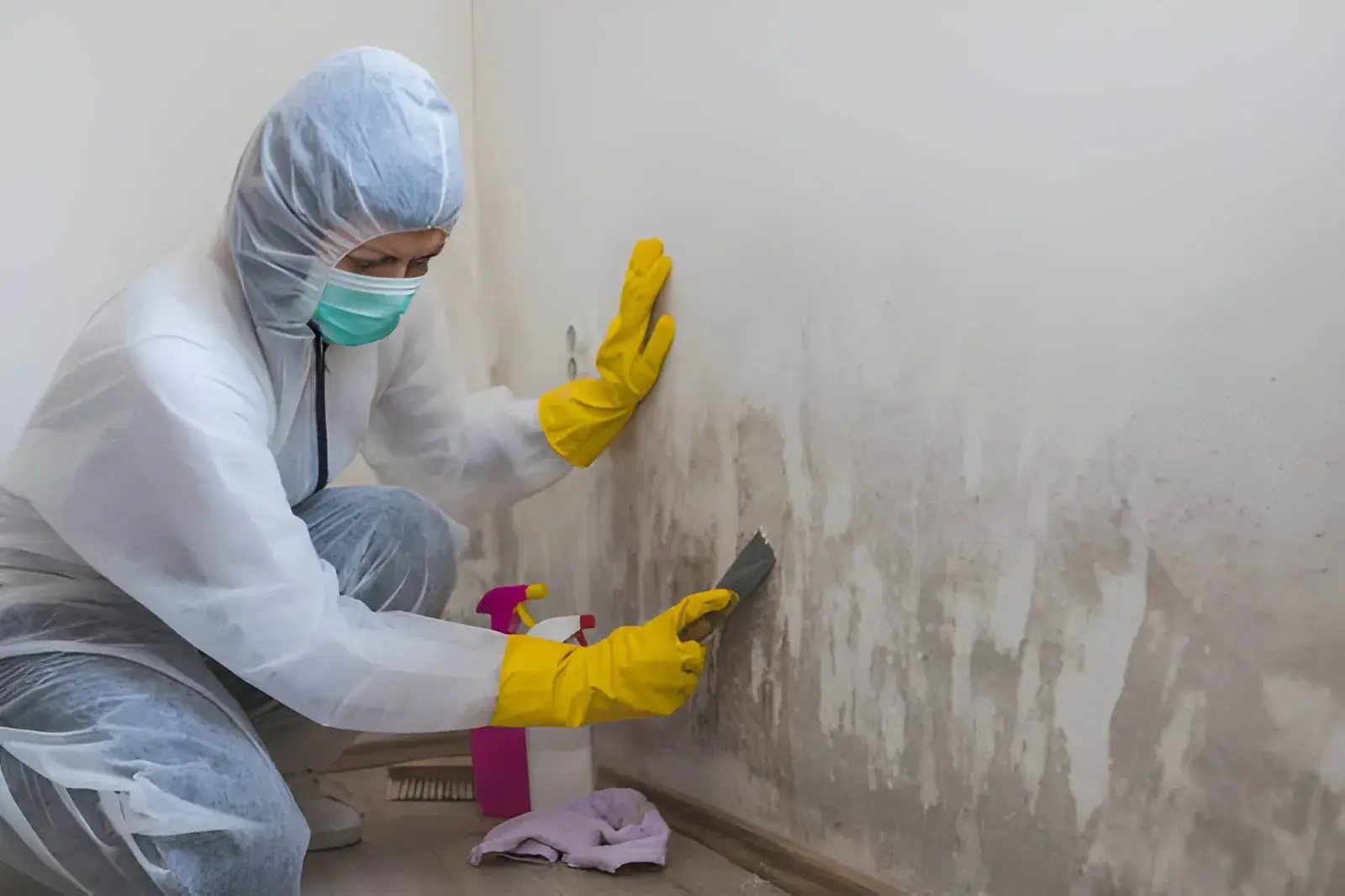
Mold Remediation in Bolingbrook, IL
Mold spreads rapidly in Bolingbrook's humid below-grade environments. Our local team responds within 60 minutes to assess, contain, and stop growth before it compromises your home and health.
What Happens When You Call
A real person answers, not a call center. We assess your situation, ask the right questions about moisture history and visible growth, and begin coordinating your response immediately.
Your dedicated remediation team is dispatched from our local base serving Bolingbrook and the surrounding Will County communities.
Team arrives with moisture meters, thermal imaging, HEPA filtration, containment materials, and professional remediation equipment. Assessment begins immediately.
Moisture source identified, mold extent mapped, containment established, remediation plan documented. You know exactly what comes next.
You have found mold in your home, or worse, you smell it but cannot see it. Either way, the problem is growing right now and will not stop on its own. Mold does not wait for convenient timing. It colonizes wet materials within 24 to 48 hours and spreads through wall cavities, beneath flooring, and into HVAC systems where it distributes spores to every room in the house. X Response exists for exactly this moment. When you reach out, your remediation team is mobilized within minutes and on site within the hour. Call now. Your team is standing by.
Why Bolingbrook Homes Are Vulnerable to Mold
Bolingbrook is a village of 73,922 residents in Will and DuPage counties, Illinois, covering 24.6 square miles along the I-55 corridor approximately 28 miles southwest of Chicago. Bolingbrook was built in the 1960s on former Gateway Wetlands west of the Des Plaines River. Developers transformed thousands of acres of marsh, wet prairie, and agricultural land into residential subdivisions, but the underlying hydrology that made this area wetland did not change with construction. The soils beneath Bolingbrook are predominantly heavy glacial clay deposits from the Wisconsinan glaciation that drain poorly, hold moisture for extended periods, and maintain a water table that sits within a few feet of basement floor elevation during wet seasons. This combination of reclaimed wetland ground, clay soils, high water tables, and thousands of homes with below-grade living spaces creates conditions where moisture intrusion and mold growth are persistent, recurring challenges rather than rare anomalies.
Illinois does not require a state license for mold remediation or mold inspection, meaning homeowners must rely on industry certifications and professional standards to evaluate contractors. The IICRC S520 Standard for Professional Mold Remediation and the ACAC (American Council for Accredited Certification) protocols provide the frameworks that qualified remediators follow. In Bolingbrook, where mold growth is driven by chronic moisture conditions in below-grade spaces rather than a single water event, remediation must address both the visible growth and the underlying moisture source to prevent recurrence. Simply removing visible mold without resolving the hydrostatic pressure, foundation seepage, or humidity conditions that created it guarantees the problem returns within months.
Former Wetland Soils and Chronic Basement Humidity
Bolingbrook's development on reclaimed wetland creates a fundamentally different moisture environment than communities built on well-drained glacial outwash or sandy soils. The heavy clay beneath the village retains water for weeks after rain events, maintaining saturation against foundation walls long after surface conditions appear dry. During spring and early summer when the water table rises from snowmelt and seasonal rainfall, hydrostatic pressure builds against basement floors and walls, forcing moisture through any crack, joint failure, or porous section of the concrete. Even in homes without visible water intrusion, this sustained contact between saturated soil and concrete creates elevated humidity in basement spaces. Relative humidity above 60 percent in any enclosed space provides sufficient moisture for mold colonization on organic materials: drywall paper facing, carpet backing, wood framing, cardboard storage, and the dust layer that accumulates on surfaces. In Bolingbrook basements where the original 1960s construction lacks vapor barriers between the concrete and finished interior surfaces, moisture migrates continuously from the soil through the concrete and into the living space without any dramatic flooding event. This chronic moisture condition, rather than acute flooding, is the primary driver of mold growth in Bolingbrook homes.
1960s-1980s Finished Basements and Concealed Growth
The majority of Bolingbrook homes were built between 1965 and 1985 with full basements designed for finishing as additional living space. Many homeowners have finished these basements with wood framing set directly against concrete foundation walls, drywall over that framing, carpet over the concrete slab, and drop ceilings below the floor joists. This construction creates multiple concealed spaces where moisture accumulates and mold grows without visible evidence in the living space. Behind the drywall, the narrow cavity between framing and concrete traps moisture that migrates through the foundation wall, creating a dark, humid environment ideal for mold colonization on the paper-faced drywall and the wood studs. Beneath the carpet, moisture that seeps through the slab or condenses on the cold concrete surface is trapped against the carpet backing and pad where it cannot evaporate. Above the drop ceiling, the unfinished area around ductwork, plumbing, and electrical contains condensation-prone surfaces where mold grows on dust deposits and organic debris. Homeowners often detect mold through musty odor, allergic reactions, or visible growth at baseboards long after colonies have established throughout these concealed spaces.
Post-Flood Mold Risk from the East Branch DuPage River
The East Branch of the DuPage River flows through Bolingbrook with a documented flood history that includes the catastrophic July 1996 event and recurring high-water episodes that trigger basement flooding across the village. After any flooding event, whether from river overflow, storm sewer surcharge, or sump pump failure during power outages, the clock for mold colonization begins immediately. In Bolingbrook's climate, mold can begin growing on wet materials within 24 to 48 hours during warm months when temperatures and humidity are elevated. The July 2013 storms that prompted the Illinois Farmers Insurance lawsuit over 'sewer water invasions' across Will County created exactly these conditions: hundreds of Bolingbrook basements were flooded with contaminated water that wet drywall, carpet, and framing, then remained damp long enough for mold to establish before professional drying could occur. In homes where flooding water was pumped out but walls and framing were not professionally dried, mold colonies established behind finished surfaces where they remained undetected for weeks or months, growing steadily in the warm, humid cavity until musty odor or health symptoms prompted investigation.
HVAC Condensation and Ductwork Mold
Central air conditioning systems in Bolingbrook homes create condensation on cold surfaces throughout the HVAC distribution system during summer operation. When warm, humid basement air contacts the cold supply ductwork, condensation forms on the exterior of metal ducts, on insulation wrapping, and at register boots where temperature differentials are greatest. Inside the ductwork, the evaporator coil and drain pan collect moisture continuously during cooling operation, and any interruption in drainage or excess humidity creates standing water that supports mold and bacterial growth. In Bolingbrook homes where ductwork runs through the basement or crawlspace, the combination of below-grade humidity and mechanical cooling creates persistent condensation that supplies moisture to mold colonies on duct insulation, on surrounding framing, and inside the air handler cabinet. When mold establishes in the HVAC system, the blower distributes spores to every room in the home each time it cycles, creating exposure throughout the living space even when the visible colony is confined to the mechanical area. Drain pan overflow, clogged condensate lines, and dirty evaporator coils are among the most common mold triggers in Bolingbrook homes during summer months.
Climate Zone 5A Humidity and Seasonal Patterns
Bolingbrook sits in DOE Climate Zone 5A, characterized by cold winters and warm, humid summers. The mold season peaks between May and October when outdoor temperatures support biological growth and humidity levels regularly exceed 70 percent. During these months, warm, humid outdoor air enters basements through window wells, stairwells, and building envelope gaps, then contacts the cooler concrete surfaces below grade. This temperature differential causes condensation on foundation walls, slab edges, and any cool surface in the basement, providing a continuous moisture supply for mold growth without any plumbing failure or flooding event. The July 2023 Cook County flooding event that affected communities across northeastern Illinois demonstrated how a single intense storm during peak humidity season can create mold conditions in thousands of homes simultaneously. In Bolingbrook, where the former wetland soils extend drying timelines by maintaining exterior moisture pressure against foundations, the combination of a flooding event during humid summer months creates ideal conditions for rapid, extensive mold colonization that can establish in concealed spaces before homeowners recognize the scope of the problem.
These factors create a community where mold growth is driven by chronic, structural conditions rather than isolated events. Former wetland soils that maintain moisture against foundations year-round, finished basements with concealed spaces that trap humidity against organic materials, flood events that wet structures during peak mold season, HVAC condensation that supplies continuous moisture in mechanical spaces, and a humid summer climate that accelerates colonization all combine to make mold a persistent challenge in Bolingbrook homes. Effective remediation requires addressing both the visible growth and the underlying moisture source, because removing mold without eliminating the conditions that created it guarantees recurrence.
What Happens to Your Home While You Wait
Within 24 Hours
After a water event or when humidity conditions are sustained above 60 percent, mold spores that are always present in indoor air begin germinating on wet organic surfaces. In Bolingbrook basements where drywall, carpet, and wood framing contact moisture from foundation seepage or flooding, colonization can begin within 24 hours during warm months. At this stage, growth is microscopic and invisible, but the biological process is active. Professional drying within this window can prevent colonization entirely if moisture is removed before spores establish.
24–48 Hours
Mold colonies become visible as small spots or patches on drywall, ceiling tiles, carpet backing, and wood surfaces. Behind finished walls, growth is establishing on the concealed paper facing of drywall and on wood framing where moisture from the foundation has accumulated. Musty odor may become noticeable as the colony produces volatile organic compounds during active growth. In Bolingbrook homes where the moisture source is ongoing hydrostatic pressure rather than a single event, the colony will continue expanding as long as conditions persist.
48 Hours–One Week
Established colonies expand across affected surfaces and begin producing spores in quantities sufficient to affect indoor air quality. In Bolingbrook homes with forced-air HVAC systems, these spores are distributed throughout the home each time the blower cycles. Growth behind finished basement walls can cover large areas of concealed drywall without any visible evidence in the living space beyond musty odor. Health symptoms, including nasal congestion, eye irritation, cough, and aggravated asthma, may develop in sensitive occupants. The scope of remediation at this stage expands significantly as affected materials must be removed rather than cleaned in place.
One Week–One Month
Without intervention, mold growth becomes extensive throughout moisture-affected areas. Behind finished basement walls in Bolingbrook homes, colonies can cover entire wall sections from floor to ceiling in the concealed cavity. Structural wood at sill plates and rim joists may show early decay where sustained moisture from the high water table has maintained growth conditions. The HVAC system continues distributing spores throughout the home, creating secondary colonization on dust deposits and organic materials in areas far from the original moisture source. Remediation at this stage requires significant demolition of finished materials, structural assessment, and comprehensive treatment of the affected zone.
Months and Beyond
Long-term mold growth in concealed spaces can compromise structural wood through decay, create health conditions for occupants, and significantly reduce property value. In Bolingbrook homes where chronic moisture conditions persist unaddressed, mold growth becomes a permanent feature of the below-grade environment until both the moisture source and the established colonies are professionally resolved. Insurance coverage for mold becomes increasingly limited the longer the condition persists, as carriers typically exclude gradual or maintenance-related mold damage from standard policies.
Mold does not stop growing on its own. Every day of delay allows colonies to expand, penetrate deeper into structural materials, and distribute spores throughout your home. Contact X Response now. Our Bolingbrook team responds within 60 minutes to assess, contain, and begin resolving the problem.
How We Restore Mold-Affected Bolingbrook Homes
From the moment our team arrives, every step follows a documented protocol designed to eliminate mold safely and prevent recurrence. Here is exactly what the remediation process involves for Bolingbrook properties.
Inspection and Moisture Assessment
Our team arrives with professional moisture meters, thermal imaging cameras, and hygrometers to identify the full extent of moisture intrusion and mold growth. In Bolingbrook homes, this means investigating beyond visible mold to find the moisture source: checking foundation walls for seepage, measuring humidity in wall cavities behind finished surfaces, inspecting HVAC systems for condensation and drain issues, and assessing whether the high water table is creating chronic hydrostatic pressure against the slab and walls. Thermal imaging reveals temperature differentials that indicate hidden moisture behind finished surfaces without destructive investigation. We map every area of elevated moisture and identify every location of visible or suspected mold growth to establish the full scope before work begins. This assessment determines the remediation protocol, containment requirements, and whether the moisture source can be resolved or must be managed ongoing.
Containment and Source Control
Before any mold is disturbed, the affected area is isolated from the rest of the home using physical containment barriers and negative air pressure. HEPA-filtered air scrubbers maintain negative pressure inside the containment zone, ensuring that spores released during removal cannot migrate to unaffected areas. The HVAC system is isolated so that it cannot distribute disturbed spores throughout the home. Simultaneously, we address the moisture source to the extent possible: repairing plumbing leaks, adjusting drainage, clearing condensate lines, or establishing temporary dehumidification to reduce humidity below the threshold that supports growth. In Bolingbrook homes where the moisture source is ongoing hydrostatic pressure from the high water table, we establish conditions that allow remediation to proceed while developing a long-term moisture management plan.
Mold Removal and Material Demolition
Mold-contaminated materials are removed following IICRC S520 protocols. Porous materials that have been colonized, including drywall, carpet, carpet pad, ceiling tiles, and insulation, cannot be decontaminated and must be removed and disposed of as contaminated waste. Non-porous materials like concrete, metal, and sealed wood are cleaned, treated with antimicrobial solutions, and verified clean. In Bolingbrook basements where mold has established behind finished walls, removal typically involves cutting drywall above the growth line, removing all affected insulation, and exposing the framing and foundation wall for direct treatment. Wood framing that shows surface mold but retains structural integrity is cleaned and treated in place. Wood with decay from sustained moisture exposure is assessed for structural capacity and replaced if compromised.
Treatment and Drying
After contaminated materials are removed, exposed surfaces are treated with EPA-registered antimicrobial solutions that eliminate residual mold and prevent regrowth during the drying and reconstruction period. Commercial dehumidifiers and air movers are positioned to bring the affected area to appropriate moisture levels. In Bolingbrook, where clay soils maintain moisture against foundation walls even after interior conditions improve, we monitor the drying process with daily moisture readings and do not release the area until readings confirm that conditions will not support regrowth. For homes where chronic hydrostatic moisture is the underlying cause, we discuss long-term solutions including interior drainage systems, vapor barriers, continuous dehumidification, and foundation waterproofing that address the root cause rather than just the current outbreak.
Post-Remediation Verification
After the affected area has been treated, dried, and verified stable, a final inspection confirms that all mold has been removed, moisture levels are within acceptable range, and the space is ready for reconstruction. Visual inspection under appropriate lighting confirms no remaining growth on any surface. Moisture readings verify that conditions have been resolved to levels that will not support regrowth. Air quality sampling can be performed if requested or required by your insurance carrier to provide laboratory confirmation that spore counts have returned to normal background levels. Only after passing final verification does the containment come down and the space return to use. Documentation of the entire process, including pre- and post-remediation conditions, supports your insurance claim and provides a record of the work performed.
The X Response Difference
When you contact X Response for mold remediation, you get a team that treats the cause, not just the symptom. We eliminate the moisture, remove the growth, verify the results, and help you prevent recurrence in Bolingbrook's challenging below-grade environment.
Insurance Claim Guidance for Bolingbrook Homeowners
Mold insurance coverage in Illinois depends heavily on the cause of the moisture that led to growth. Standard homeowner's policies typically cover mold remediation when it results from a covered peril: a burst pipe, appliance failure, or other sudden and accidental water event that created the conditions for growth. However, most policies exclude mold that results from maintenance failures, gradual seepage, chronic humidity, or flooding. In Bolingbrook, where much of the mold in residential basements is driven by chronic hydrostatic moisture from the high water table and clay soils rather than a single covered event, coverage can be limited. Many Illinois policies include a mold sublimit, typically $5,000 to $10,000, that caps the carrier's obligation regardless of actual remediation costs. Understanding your specific policy language and the documented cause of moisture is essential before filing.
How X Response Helps
- Document the moisture source that caused mold growth, as coverage depends on whether it resulted from a covered peril or chronic/maintenance-related conditions
- Photograph all visible mold and document the timeline of discovery to establish when you became aware of the condition
- Identify your policy's mold sublimit and any exclusions specific to below-grade moisture or gradual seepage
- Provide your adjuster with professional moisture assessment data showing the cause and extent of the moisture condition
- Separate mold remediation costs from any associated water damage repair costs, as they may fall under different coverage provisions
X Response does not file claims on your behalf, adjust claims, or make coverage determinations. We provide documentation and guidance to help you make informed decisions about your property and your policy. Coverage decisions are made solely by your insurance carrier.
Certified Restoration Specialists Serving Bolingbrook
When you contact X Response for mold remediation in Bolingbrook, your team is drawn from certified professionals who work across Will County and understand the specific moisture and mold challenges of this community. They know that Bolingbrook was built on former wetland soils with a high water table, that the 1960s-1980s housing stock features finished basements with concealed spaces prone to moisture accumulation, that the clay beneath the village holds water against foundations for weeks after rain events, and that remediation without addressing the underlying moisture conditions guarantees recurrence. They have worked through chronic basement mold in older subdivisions, post-flood colonization after storm events, HVAC-related mold in condensation-prone mechanical spaces, and attic mold driven by inadequate ventilation. This is not a crew dispatched from hours away with no understanding of local conditions. It is a local team with local expertise, operating under national quality standards and IICRC S520 protocols.
Every technician on your team holds current IICRC certification in mold remediation and carries the appropriate Illinois licensing for the work being performed. Equipment includes professional moisture meters, thermal imaging cameras, HEPA air scrubbers, negative-air machines for containment, commercial dehumidifiers, antimicrobial treatment systems, and personal protective equipment appropriate for the contamination level encountered. When your team arrives, they bring everything needed to assess, contain, and begin remediation immediately.
In Bolingbrook, X Response works with Scene Cleaners, an independent local restoration partner serving Will County.
Mold Remediation FAQ for Bolingbrook Homeowners
Other Emergency Services in Bolingbrook

Water Damage Restoration
Burst pipes, storm flooding, standing water. We extract, dry, and restore before mold sets in.
Learn more
Fire Damage Restoration
Structural damage, soot, debris. We stabilize, clean, and rebuild what fire destroyed.
Learn more
Smoke Damage Restoration
Soot residue, chemical odors, HVAC contamination. We decontaminate surfaces, eliminate odors, and restore air quality.
Learn more
Sewage Cleanup
Sewer backups, contaminated water, biohazard. We extract, sanitize, and restore safely.
Learn more