
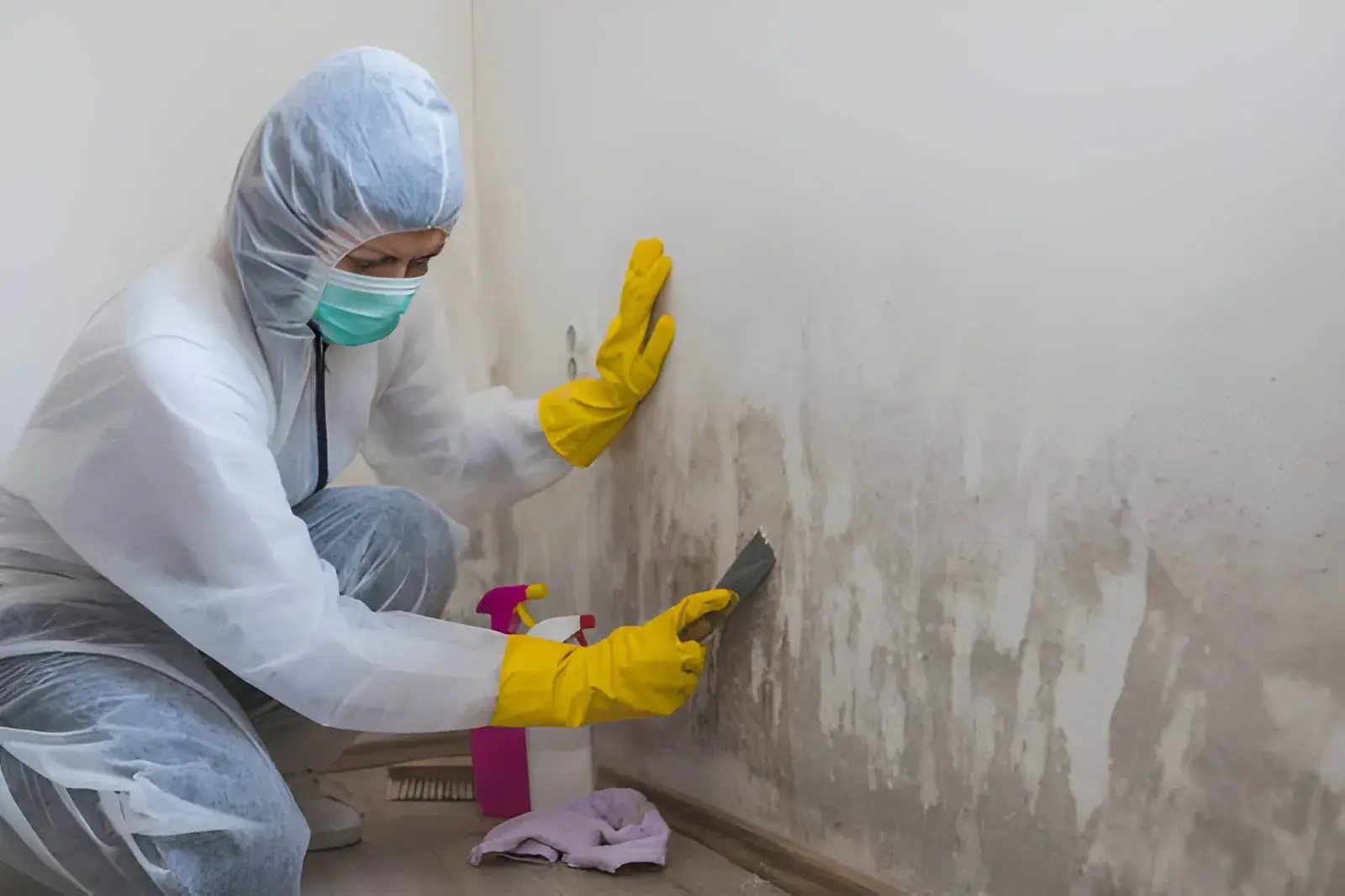
Mold Remediation in Wheaton, IL
Mold colonies double in size every 24 to 48 hours in favorable conditions. The longer you wait, the larger the affected area and the higher the remediation cost. Our local team responds to Wheaton emergencies within 60 minutes.
What Happens When You Call
A real person answers, not a call center. We assess your situation, ask the right questions, and begin coordinating your response immediately.
Your dedicated remediation team is dispatched from our local base serving Wheaton and the surrounding DuPage County communities.
Team arrives with moisture meters, containment materials, HEPA filtration, and PPE. Assessment begins immediately to determine the scope and moisture source.
Source identified, containment established, remediation plan documented. You know exactly what comes next.
You found mold in your home and you need it handled correctly, not by someone who will spray bleach on visible growth and call it done. X Response exists for exactly this moment. When you reach out, your remediation team is mobilized within minutes and on site within the hour. From that point forward, one team manages everything: assessment, containment, removal, moisture elimination, and post-remediation verification. You are never left guessing about the next step. Call now. Your team is standing by.
Why Wheaton Homes Are Vulnerable to Mold
Wheaton is a city of 53,970 residents and the county seat of DuPage County, Illinois, located approximately 25 miles west of downtown Chicago. The city's housing stock spans nearly a century of construction, from 1920s bungalows near the historic downtown core to mid-century ranches in the established neighborhoods to newer homes on the city's edges, with a median construction year of approximately 1975. This older housing stock means the majority of Wheaton homes have foundation waterproofing, drain tile systems, and sump infrastructure that are 40 to 50 years old, operating well beyond original design life and in varying states of deterioration. Illinois does not require a state license for mold remediation, meaning homeowners must rely on industry certifications such as IICRC S520 and AMRT to verify that the company they hire follows recognized standards for safe mold removal. DuPage County's glacial-till clay soils have extremely low permeability, creating persistent hydrostatic pressure against basement foundations that drives chronic moisture problems independent of any single storm event.
The City of Wheaton and the Wheaton Sanitary District jointly developed a sewer system master plan after documenting that inflow and infiltration in the sanitary sewer system caused basement backups and sanitary sewer overflows after even small rain events. The city agreed to reduce excess flows in Basin 4 by 40 percent and in Basin 3 by 60 percent through a multi-year rehabilitation program that began in 2011. The rehabilitation work acknowledged that approximately 80 percent of the city's sewer mains had been lined, yet unacceptable levels of infiltration remained in certain basins. For homeowners in these areas, particularly the Basin 4 neighborhood south and east of Wheaton College, even moderate rainfall can produce enough groundwater infiltration into aging sewer laterals and storm drains to create conditions where basement moisture goes from intermittent nuisance to persistent mold risk. The City of Wheaton recommends overhead sewer conversion for homes that have experienced basement backups during large rain events, recognizing that the infrastructure serving these neighborhoods cannot fully prevent wet-weather backflows with rehabilitation alone.
Glacial-Till Clay Soils and Chronic Foundation Moisture
DuPage County soils consist primarily of glacial till deposited by the Wisconsin glaciation, with high clay content that produces infiltration rates measured in fractions of an inch per hour. Rainfall and snowmelt do not drain through the soil profile but instead saturate the upper layers surrounding home foundations, creating persistent hydrostatic pressure against basement walls and floor slabs. In Wheaton, where the median home age approaches 50 years, original waterproofing membranes applied to foundation exteriors during construction have long since degraded, cracked, or separated from the concrete surface. The result is a gradual increase in moisture transmission through foundation walls over the life of the home: what started as a dry basement in the 1970s develops dampness in the 1990s, visible efflorescence by the 2000s, and active water intrusion by the 2020s as the waterproofing system reaches end of life. This progressive deterioration means mold problems in Wheaton basements often develop gradually, driven by chronic elevated humidity rather than a single dramatic flood event, and homeowners may not recognize the problem until mold growth is established behind finished walls.
Aging Drain Tile Systems and Sump Pump Dependence
Homes built in Wheaton during the 1960s and 1970s typically have interior or exterior clay tile drain systems designed to collect groundwater around the foundation perimeter and route it to a sump pit for mechanical discharge. After 50 to 60 years of service, these clay tile systems develop common failure modes: joints separate as the surrounding soil shifts, allowing soil to enter and clog the tile; roots from mature landscaping penetrate joints and fill sections of tile; and sections crush under the weight of settling backfill. When the drain tile system partially fails, it stops collecting groundwater uniformly around the perimeter, creating localized areas where hydrostatic pressure concentrates against specific wall sections. Homeowners notice the sump pump running less frequently but do not connect this to increasing basement humidity, because the reduced pump activity actually indicates the tile is no longer delivering water to the pit rather than less water being present. The moisture that the tile no longer collects instead passes through the foundation wall into the basement, elevating humidity in the space and creating conditions for mold colonization on organic surfaces including the back side of drywall, wood framing, carpet backing, and stored materials.
Finished Basements in Mid-Century Homes as Concealed Mold Environments
Many Wheaton basements were finished during the 1980s and 1990s by homeowners who added living space by framing walls directly against foundation concrete, insulating with fiberglass batts, covering with drywall, and installing carpet on the concrete floor. These renovations created concealed cavities between the living space and the foundation where moisture accumulates without any visible indication in the room. The paper facing on drywall pressed against damp concrete provides an ideal growth substrate for mold. Fiberglass insulation does not support mold growth itself but traps moisture against the foundation wall and prevents evaporation, maintaining the saturated conditions mold requires. Carpet padding on concrete acts as a moisture reservoir, absorbing vapor that transmits through the slab and holding it in contact with organic carpet backing where mold colonizes out of sight. In Wheaton homes where these basement finishes are 30 to 40 years old, the concealed cavity between the finish and the foundation has been accumulating moisture for decades, and mold growth may be extensive behind walls that show no outward indication of a problem. Homeowners typically discover the condition through persistent musty odor, worsening respiratory symptoms in family members who spend time in the basement, or visible mold at the base of walls where moisture finally wicks through to the finished surface.
Seasonal Humidity Cycles and Summer Condensation
Wheaton experiences significant seasonal humidity variation that creates condensation conditions in basements during summer months. Concrete basement walls and floor slabs maintain temperatures of 55 to 60 degrees Fahrenheit year-round because they are in contact with the ground below the frost line. When warm, humid summer air carrying 70 to 80 percent relative humidity enters the basement through open windows, stairwells, or the HVAC system, it contacts these cool concrete surfaces and condenses. The condensation is often invisible because it occurs on the back side of finished walls, on the concrete surface behind insulation, and beneath flooring systems where it cannot be observed without removing finishes. Homeowners who open basement windows during summer to ventilate the space are actually introducing the moisture-laden outdoor air that creates the condensation problem. Running the air conditioning system with supply registers in the basement can help if the thermostat is set to maintain temperatures that prevent condensation, but in homes where the basement is not part of the conditioned envelope or where ductwork was added as an afterthought, temperature differentials persist. The correct approach for Wheaton basements is keeping them sealed from outdoor air during summer and running dedicated dehumidification equipment, but many homeowners do not learn this until after repeated mold problems have established.
No Illinois State Mold License and the Qualification Gap
Illinois does not require a state license for mold remediation, meaning any general contractor, handyman, or cleaning service can advertise mold removal without demonstrating competency in containment protocols, HEPA filtration, negative air pressure management, proper disposal procedures, or post-remediation verification. The industry standard for mold remediation is the IICRC S520 Standard for Professional Mold Remediation, which establishes protocols for assessment, containment, removal, cleaning, and verification. The AMRT (Applied Microbial Remediation Technician) certification demonstrates that individual technicians have been trained in these protocols. In DuPage County, where mold problems are common due to the soil, climate, and housing conditions described above, the absence of state licensing creates a market where homeowners cannot rely on legal credentials to distinguish qualified remediators from unqualified ones. Companies that perform remediation without proper containment risk spreading mold spores throughout the home through the HVAC system and air currents, turning a localized problem in one wall section into whole-home contamination. Companies that skip post-remediation verification leave homeowners with no assurance that the problem was actually resolved rather than merely concealed behind new drywall.
These factors create a city where mold is not an occasional problem but a predictable consequence of aging foundation waterproofing, glacial-till clay soils that maintain persistent hydrostatic pressure, drain tile systems operating decades beyond their design life, finished basements with concealed moisture-trapping cavities, seasonal condensation dynamics that introduce moisture behind finished surfaces every summer, and a regulatory environment with no licensing requirements for mold remediation companies. Effective mold remediation in Wheaton requires identifying the moisture source driving the growth, establishing proper containment to prevent cross-contamination, removing affected materials following IICRC S520 protocols, eliminating the moisture condition permanently so growth does not recur, and verifying results with post-remediation testing.
What Happens to Your Home While You Wait
Within 24 Hours of Moisture Exposure
Mold spores, present at baseline levels in virtually all indoor environments, begin germinating on wet surfaces when relative humidity exceeds 60 percent and temperatures are above 50 degrees Fahrenheit. In Wheaton basements where a sump pump failure, plumbing leak, sewer backup, or summer condensation event has created sustained moisture on organic surfaces like drywall paper facing, wood framing, carpet backing, and stored cardboard, the 24-hour mark represents the beginning of active colonization. At this stage, no visible growth is present and no musty odor has developed. The problem is entirely hidden and can only be detected with professional moisture meters and hygrometers that identify the elevated humidity conditions preceding visible growth.
24–72 Hours
Active mold colonies establish on the wettest surfaces: the back side of drywall pressed against damp concrete, the bottom plate of framing sitting on the slab, carpet padding holding residual moisture against the concrete floor. Colonies are microscopically visible but not yet detectable by the naked eye in normal lighting. Musty volatile organic compounds begin accumulating in the closed basement environment but may not yet be noticeable to occupants who spend limited time in the space. In Wheaton finished basements where these surfaces are concealed behind walls and beneath floors, the colonization proceeds entirely out of sight.
3–7 Days
Colonies become visible as fuzzy white, green, gray, or black patches on affected surfaces. Musty odor becomes noticeable in the basement space and may be detectable on the main floor near the basement stairway. Spore counts in the ambient air begin rising above outdoor baseline levels. In finished basements, growth is typically still concealed behind walls, but the odor penetrating through drywall joints and electrical outlets signals the problem. Occupants with mold sensitivity or respiratory conditions may begin experiencing symptoms: congestion, headache, eye irritation, or worsening asthma. The affected area is still relatively contained at this point, typically limited to surfaces that experienced direct moisture contact.
1–4 Weeks
Mold colonies expand across all organic surfaces within the moisture zone, consuming drywall paper facing, wood framing, carpet backing, and any stored materials in contact with damp surfaces. Elevated spore counts distribute mold to adjacent areas through air movement and HVAC circulation. What began as localized growth on one wall section has spread along the bottom plate, up adjacent studs, and potentially into the ceiling cavity or adjacent rooms through shared wall openings. The remediation scope now includes multiple wall sections, possibly ceiling areas if moisture wicked upward, and HVAC decontamination if spores entered the air handling system. Remediation costs at this stage are typically two to three times what early intervention would have required.
One Month and Beyond
Extensive colonization throughout connected wall cavities, beneath flooring systems, and potentially on structural wood members including floor joists, rim joists, and sill plates. Spore counts throughout the home may be elevated above outdoor baselines, indicating contamination has spread beyond the original moisture zone through air pathways and HVAC distribution. The remediation scope involves significant demolition of finished materials, structural assessment of affected wood, HVAC system cleaning, and comprehensive post-remediation verification to confirm clearance. In Wheaton homes where chronic moisture from aging foundations has been feeding growth for months or years before discovery, the affected area can extend along entire basement perimeter walls, requiring full-scale remediation of the entire finished basement level.
The longer mold grows undiscovered, the larger the affected area, the higher the remediation cost, and the greater the health risk for occupants. Contact X Response now. Our Wheaton team responds within 60 minutes to assess your situation and stop the problem from expanding.
How We Restore Mold-Affected Wheaton Homes
From the moment our team arrives, every step follows established industry protocols. Here is exactly what the mold remediation process involves for Wheaton properties.
Assessment and Moisture Source Identification
Our team arrives with professional moisture meters, hygrometers, thermal imaging cameras, and air sampling equipment to determine the full scope of mold contamination and identify the moisture source driving it. In Wheaton homes, that means evaluating whether the moisture originates from aging foundation waterproofing allowing groundwater transmission, a partially failed drain tile system creating localized pressure points, a sump pump malfunction, seasonal condensation from summer humidity contacting cool basement surfaces, a plumbing leak, or a sewer backup event. Identifying the moisture source is the most critical step because remediation without source correction guarantees recurrence. We check behind finished walls with moisture meters that read through drywall, inspect the sump system for proper function, evaluate the dehumidification capacity of the space, and assess whether the basement's HVAC configuration is contributing to the problem through inadequate air circulation or temperature differentials.
Containment and Negative Air Pressure
Before any mold-contaminated material is disturbed, we establish containment barriers isolating the affected area from the rest of the home. In Wheaton basements where HVAC returns draw air from the basement space, we seal return registers to prevent spore transport to upper floors during remediation. Polyethylene sheeting creates a physical barrier between the work area and unaffected spaces. Negative air machines with HEPA filtration maintain lower air pressure inside the containment zone than outside it, ensuring that when spores are released during material removal, contaminated air flows inward through the filters rather than outward into clean areas. This containment protocol is the single most important distinction between professional remediation and amateur removal: without it, disturbing moldy drywall releases millions of spores into the air that the HVAC system then distributes throughout the home, converting a localized basement problem into whole-home contamination.
Mold Removal and Material Disposal
Within the contained work area, affected materials are removed following IICRC S520 protocols. Drywall with mold growth on either face is cut at least two feet beyond the last visible growth to ensure all colonized material is captured. Carpet, pad, and any porous material that contacted moisture and shows growth is removed entirely and double-bagged in heavy polyethylene for disposal. Wood framing with surface mold is cleaned using HEPA vacuuming followed by sanding or media blasting to remove all visible growth from the wood grain, then treated with antimicrobial solution. Structural wood with deep penetration or decay is evaluated for replacement if structural integrity has been compromised. All removed materials are transported through the containment system and out of the home without passing through uncontaminated areas, preventing cross-contamination during the removal process.
Moisture Source Correction
With contaminated materials removed, we address the underlying moisture condition that created the mold problem. In Wheaton, this varies by property: for homes with chronic foundation moisture from degraded waterproofing, we recommend exterior or interior waterproofing solutions and proper dehumidification equipment. For homes with failed or deteriorated drain tile, we coordinate repair or replacement to restore groundwater collection. For sump pump failures, we install new pumps with battery backup systems to prevent recurrence during power outages. For summer condensation problems, we seal the basement from outdoor air infiltration and install appropriately sized dehumidification capacity for the space. The moisture source correction is documented and verified before any new finish materials are installed, because enclosing a space that still has unresolved moisture simply recreates the conditions that produced the original mold growth.
Post-Remediation Verification
After remediation is complete and before containment is removed, we verify that the work was successful. Visual inspection confirms all visible mold has been removed from the work area. Moisture readings confirm the affected materials and surrounding structure have returned to acceptable moisture levels. For projects where air sampling was performed during the initial assessment, post-remediation air sampling confirms that spore counts inside the remediated area are at or below outdoor baseline levels, demonstrating that airborne contamination has been resolved. The containment barriers remain in place until verification passes, because if any area fails, additional cleaning or removal can be performed without recontaminating the broader space. You receive a completion report documenting the entire remediation process, including before-and-after conditions, moisture readings, and any air sampling results, providing a record for your files and insurance claim.
The X Response Difference
When you contact X Response for mold remediation in Wheaton, you get a team that follows the full IICRC S520 protocol from assessment through verification, addresses the moisture source permanently, and documents every step so you have proof of professional remediation for your records and insurance.
Insurance Claim Guidance for Wheaton Homeowners
Mold remediation insurance coverage in Illinois depends on the cause of the moisture that produced the mold. Standard homeowner's policies typically cover mold remediation when it results from a covered peril: a burst pipe, a failed appliance, or other sudden and accidental water damage. Mold from gradual conditions, including chronic foundation seepage, long-term humidity problems, or deferred maintenance, is typically excluded or subject to sublimits that cap coverage at $5,000 to $10,000 regardless of actual remediation costs. Many Illinois policies include specific mold exclusions or sublimits that the homeowner may not be aware of until they file a claim. For Wheaton homes where mold results from a documented covered event, like a sump pump failure during a storm, prompt documentation of the water event and its connection to the subsequent mold growth is essential for establishing coverage. The longer the gap between the water event and the mold discovery, the more difficult it becomes to connect the two for insurance purposes.
How X Response Helps
- Document the water event that preceded the mold growth with photos, dates, and professional assessment connecting the moisture source to the contamination
- Identify whether the mold resulted from a sudden covered event or from gradual conditions, as this determines whether coverage applies under standard policies
- Provide professional scope documentation that distinguishes remediation work from maintenance or improvement, keeping the claim within covered categories
- Document the extent of contamination with moisture readings, photos, and when applicable air sampling results that demonstrate the scope for your adjuster
- Review your policy's mold sublimit before filing so you understand potential out-of-pocket exposure if coverage is capped
X Response does not file claims on your behalf, adjust claims, or make coverage determinations. We provide documentation and guidance to help you make informed decisions about your property and your policy. Coverage decisions are made solely by your insurance carrier.
Certified Restoration Specialists Serving Wheaton
When you contact X Response for mold remediation in Wheaton, your team is drawn from certified professionals who work across DuPage County and understand the specific mold conditions in this community. They know how Wheaton's aging housing stock with 40-to-50-year-old foundation waterproofing creates progressive moisture transmission through concrete, how the glacial-till clay soils maintain year-round hydrostatic pressure regardless of recent rainfall, how finished basements from the 1980s and 1990s conceal mold behind walls for months or years before symptoms surface, and how the Basin 3 and Basin 4 sewer infrastructure challenges documented in the city's rehabilitation program create additional moisture risk for homes in those neighborhoods. They have remediated mold following sump pump failures, foundation waterproofing degradation, seasonal condensation events, and sewer backup contamination throughout Wheaton's varied housing stock.
Every technician on your team holds current IICRC certification in Applied Microbial Remediation (AMRT) and carries the appropriate Illinois state licensing for the work being performed. Equipment includes commercial HEPA air scrubbers, negative air machines for containment, professional-grade moisture meters and thermal imaging cameras, EPA-registered antimicrobial treatments, and containment materials designed for residential applications. When your team arrives, they bring everything needed to begin assessment immediately and can establish containment the same day if the scope warrants immediate action.
In Wheaton, X Response works with Scene Cleaners, an independent local restoration partner serving DuPage County.
Mold Remediation FAQ for Wheaton Homeowners
Other Emergency Services in Wheaton

Water Damage Restoration
Burst pipes, storm flooding, standing water. We extract, dry, and restore before mold sets in.
Learn more
Fire Damage Restoration
Structural damage, soot, debris. We stabilize, clean, and rebuild what fire destroyed.
Learn more
Smoke Damage Restoration
Soot residue, chemical odors, HVAC contamination. We decontaminate surfaces, eliminate odors, and restore air quality.
Learn more
Sewage Cleanup
Sewer backups, contaminated water, biohazard. We extract, sanitize, and restore safely.
Learn more