
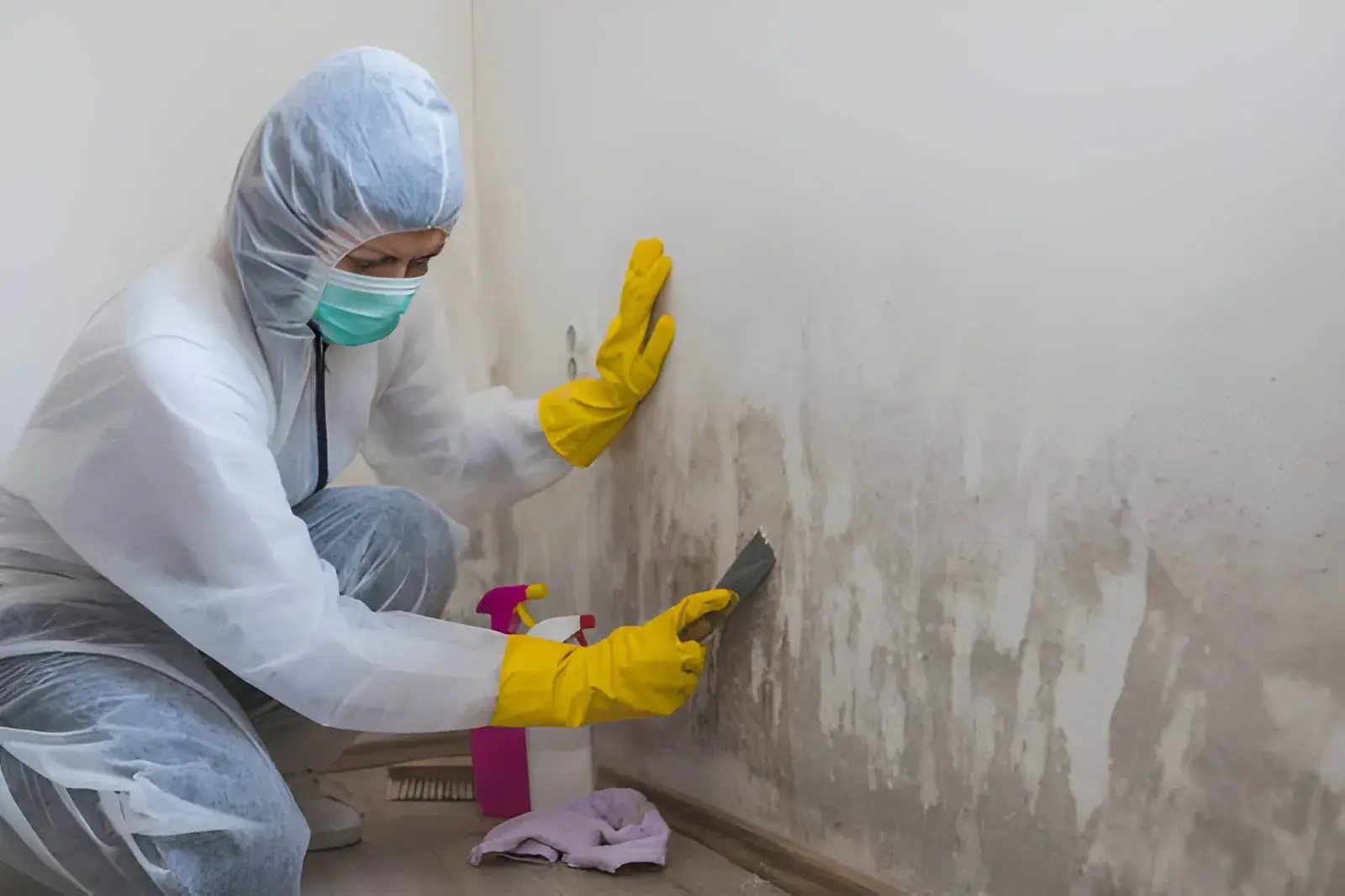
Mold Remediation in Allen Park, MI
Hidden mold growth inside Allen Park basements and crawl spaces continuously releases microscopic spores and mycotoxins, degrading indoor air quality and compromising structural framing. Our local IICRC-certified remediation team arrives within 60 minutes to establish negative air containment.
What Happens When You Call
Your call connects directly with our certified environmental specialists, who schedule an immediate on-site inspection and mobilize local technicians.
Technicians arrive at your Allen Park home within 60 minutes equipped with thermal imaging cameras, digital moisture meters, and air-sampling equipment.
We construct critical containment barriers using 6-mil poly sheeting and deploy negative air machines with HEPA filtration to isolate the work zone.
Contaminated porous materials are safely removed, structural elements are micro-cleaned with EPA-registered antimicrobials, and air quality is verified.
Discovering mold inside your Allen Park home signals an active underlying moisture intrusion that will continue degrading structural framing, rotting drywall, and impacting your family's respiratory health until professionally resolved. Surface scrubbing with household bleach fails to eliminate deep hyphal roots embedded within porous concrete block and wooden subflooring, while disturbing dry colonies disperses millions of spores throughout the home. At X Response, our certified environmental remediation technicians follow strict engineering controls to safely contain, remove, and sanitize mold infestations. Call now. Your team is standing by.
Why Allen Park Homes Are Vulnerable to Mold
Mold growth in Allen Park is driven by the city's low-lying Downriver topography, high groundwater levels, and severe seasonal humidity swings across Southeast Michigan. According to the United States Environmental Protection Agency, indoor relative humidity should be maintained below 60 percent, and ideally between 30 and 50 percent, to inhibit mold colonization on subterranean surfaces like basement walls and floor joists. In Allen Park neighborhoods situated near the Ecorse Creek and Allen Drain corridors, outdoor summer humidity regularly runs high, and saturated clay soils exert continuous vapor pressure against subterranean basement walls, creating ideal conditions for rapid fungal colonization.
The residential housing stock in Allen Park consists predominantly of postwar brick ranches, Cape Cods, and traditional bungalows built between 1940 and 1965. Most of these residences feature full subterranean basements constructed with hollow concrete block or poured concrete footings. Decades of seasonal freeze-thaw cycles and clay soil expansion create hairline step cracking along foundation mortar seams. Moisture seeps through these porous masonry blocks via capillary wicking, depositing white mineral efflorescence and keeping relative humidity inside enclosed basements elevated throughout the summer, fostering mold growth on drywall, subfloors, and wood floor joists.
Forced-air heating and cooling systems commonly found in Allen Park homes accelerate the distribution of mold spores. Because furnaces, air conditioning evaporator coils, and main supply ducts are located in basements, fungal colonies developing near foundation walls, floor drains, or sump pump crocks easily contaminate the air return plenum. When the blower fan runs, microscopic spores of Aspergillus, Cladosporium, and toxic Stachybotrys chartarum circulate into upper bedrooms and living spaces, causing persistent musty odors and allergic respiratory reactions.
Public health agencies in Michigan, including the Michigan Department of Health and Human Services and the Wayne County Health Department, do not perform residential mold testing or certify remediation contractors. Homeowners in Allen Park rely on certified environmental remediation professionals who adhere to national IICRC S520 standards to ensure that mold abatement is conducted safely, thoroughly, and with verifiable post-remediation clearance.
Ecorse Creek Basin High Water Table and Clay Hydrostatic Pressure
Allen Park's location in the low-gradient Ecorse Creek drainage basin causes seasonal groundwater tables to rise near the surface. Saturated clay soil creates constant moisture pressure against basement concrete slabs and foundation walls, driving vapor into living spaces.
Porous Concrete Block Mortar Joints and Efflorescence
Mid-century concrete block foundations feature hundreds of feet of mortar seams that absorb groundwater from surrounding clay soil. As water evaporates inward, it leaves behind white mineral salts and creates persistent damp microclimates that sustain mold growth behind finished drywall and wood paneling.
High Southeast Michigan Summer Humidity and Condensation
During Michigan summer months, warm humid air enters cool subterranean basements through windows and foundation drafts. When humid air contacts cool concrete floors, foundation walls, or cold water pipes, it condenses into liquid moisture, providing the water necessary for mold spores to germinate within 24 to 48 hours.
Furnace Plenum and Unsealed HVAC Duct Contamination
Sheet metal ductwork running through damp basements often has unsealed joints that draw in ambient basement air. When mold colonizes near basement floor drains or sump pits, running the central air conditioning or heating distributes airborne spores throughout the entire house.
Moisture Trapped Behind Finished Basement Paneling
Many older Allen Park homes have basements that were finished in the 1970s and 1980s with wood paneling and fiberglass insulation placed directly against exterior block walls without proper vapor barriers. Moisture trapped inside these dark wall cavities allows massive mold colonies to thrive unseen until structural damage occurs.
Mold in Allen Park is an active environmental hazard signaling a serious structural moisture imbalance. Our certified remediation process safely removes active fungal growth, cleanses indoor air, and eliminates the root moisture cause.
What Happens to Your Home While You Wait
24 to 48 Hours
Microscopic mold spores settle on damp drywall, carpet backing, or wood framing and begin germinating. Initial hyphal roots penetrate porous organic substrates, and a faint musty odor becomes noticeable in enclosed basement areas.
3 to 7 Days
Visible black, green, or white fungal colonies spread across surfaces. Mold feeds on cellulose in drywall paper and subflooring, causing surface discoloration, peeling paint, and softening of building materials.
1 to 2 Weeks
Colonies release millions of airborne spores and volatile organic compounds that spread through the HVAC ductwork. Household occupants with allergies, asthma, or respiratory sensitivities experience increased coughing, headaches, and eye irritation.
2 to 4 Weeks
Fungal mycelium penetrates deeply into structural floor joists, rim joists, and subflooring. Wood framing suffers progressive structural decay, requiring aggressive sanding, dry ice blasting, or physical structural removal.
1 to 3 Months and Beyond
Severe cross-contamination spreads throughout the home's heating and cooling ductwork. High spore counts compromise entire living levels, requiring comprehensive whole-home environmental decontamination and containment.
Ignoring mold growth in an Allen Park basement allows fungal colonies to expand and contaminate the entire home. Contact X Response today. Our certified environmental team arrives within 60 minutes.
How We Restore Mold-Affected Allen Park Homes
Our remediation methodology strictly follows the IICRC S520 Standard for Professional Mold Remediation, ensuring thorough physical removal, source moisture elimination, and third-party clearance verification.
Comprehensive Inspection and Thermal Moisture Mapping
Our certified microbial investigators inspect your property using infrared thermal cameras and digital moisture meters to locate active fungal colonies and identify the hidden moisture source sustaining growth.
Negative Air Containment and HEPA Filtration
We construct sealed containment chambers using 6-mil flame-retardant poly sheeting and commercial zipper doors. Industrial negative air machines with HEPA filtration continuously scrub indoor air and prevent spore escape.
Safe Demolition and Removal of Contaminated Materials
Non-salvageable materials, such as mold-infested drywall, acoustic ceiling tiles, and contaminated carpet padding, are misted with antimicrobial solutions, sealed in heavy-duty disposal bags, and removed through decontamination airlocks.
HEPA Vacuuming and Botanical Antimicrobial Micro-Cleaning
Exposed structural framing and masonry walls are remediated using specialized HEPA vacuuming, dry ice blasting, and hand wiping with EPA-registered botanical antimicrobials to eliminate all fungal roots and surface spores.
Encapsulation and Post-Remediation Verification Testing
Cleaned framing surfaces are coated with a moisture-resistant, antimicrobial sealant to prevent future spore adherence. We arrange third-party post-remediation air sampling to verify that indoor air quality has returned to normal ecology.
The X Response Difference
When mold threatens your home's structural integrity and your family's health in Allen Park, trust the certified environmental team that delivers proven, safe remediation.
Insurance Claim Guidance for Allen Park Homeowners
Navigating mold damage insurance coverage in Allen Park requires understanding specific policy language and strict documentation. Most standard Michigan homeowner policies cover mold remediation only if it directly results from a covered 'sudden and accidental' peril, such as a burst plumbing line or sudden water heater rupture. Many policies include specific mold remediation coverage caps (often $5,000 or $10,000) or exclude mold caused by long-term foundation seepage, high ambient humidity, or chronic maintenance issues. Our team provides comprehensive photographic evidence, moisture mapping logs, and causation reports to help you navigate your claim effectively.
How X Response Helps
- Conduct high-resolution photo and video documentation of all visible mold growth, water intrusion points, and affected structural materials
- Provide detailed psychrometric moisture logs and thermal imaging reports that identify the exact origin and timeline of the moisture source
- Prepare itemized, transparent estimates formatted in Xactimate software, the platform recognized by all major property insurance carriers
- Help clearly distinguish between covered sudden water damage remediation and long-term secondary environmental cleanup
- Coordinate directly with your insurance representative during on-site inspections to ensure all necessary containment and remediation steps are accounted for
X Response is an emergency restoration contractor. We do not adjust insurance claims, provide legal interpretations of policy language, or act as public adjusters. All policy coverage determinations remain solely between the policyholder and their licensed insurance carrier.
Certified Restoration Specialists Serving Allen Park
Our mold remediation specialists serving Allen Park live and work across Wayne County, bringing extensive local experience in addressing Downriver soil conditions, high groundwater tables, and mid-century basement construction. We have successfully remediated hundreds of residential and commercial properties affected by basement dampness, foundation seepage, and HVAC contamination throughout Allen Park, Lincoln Park, Dearborn, and Taylor.
Every project lead holds active credentials from the Institute of Inspection, Cleaning and Restoration Certification (IICRC) as an Applied Microbial Remediation Technician (AMRT) and Water Damage Restoration Technician (WRT). Equipped with commercial HEPA negative air machines, infrared thermal cameras, and EPA-registered botanical antimicrobials, our team provides the highest standard of environmental remediation care.
In Allen Park, X Response works with H2O Pros, an independent local restoration partner serving Wayne County.
Mold Remediation FAQ for Allen Park Homeowners
Other Emergency Services in Allen Park

Nearby Service Areas
Also serving nearby: