
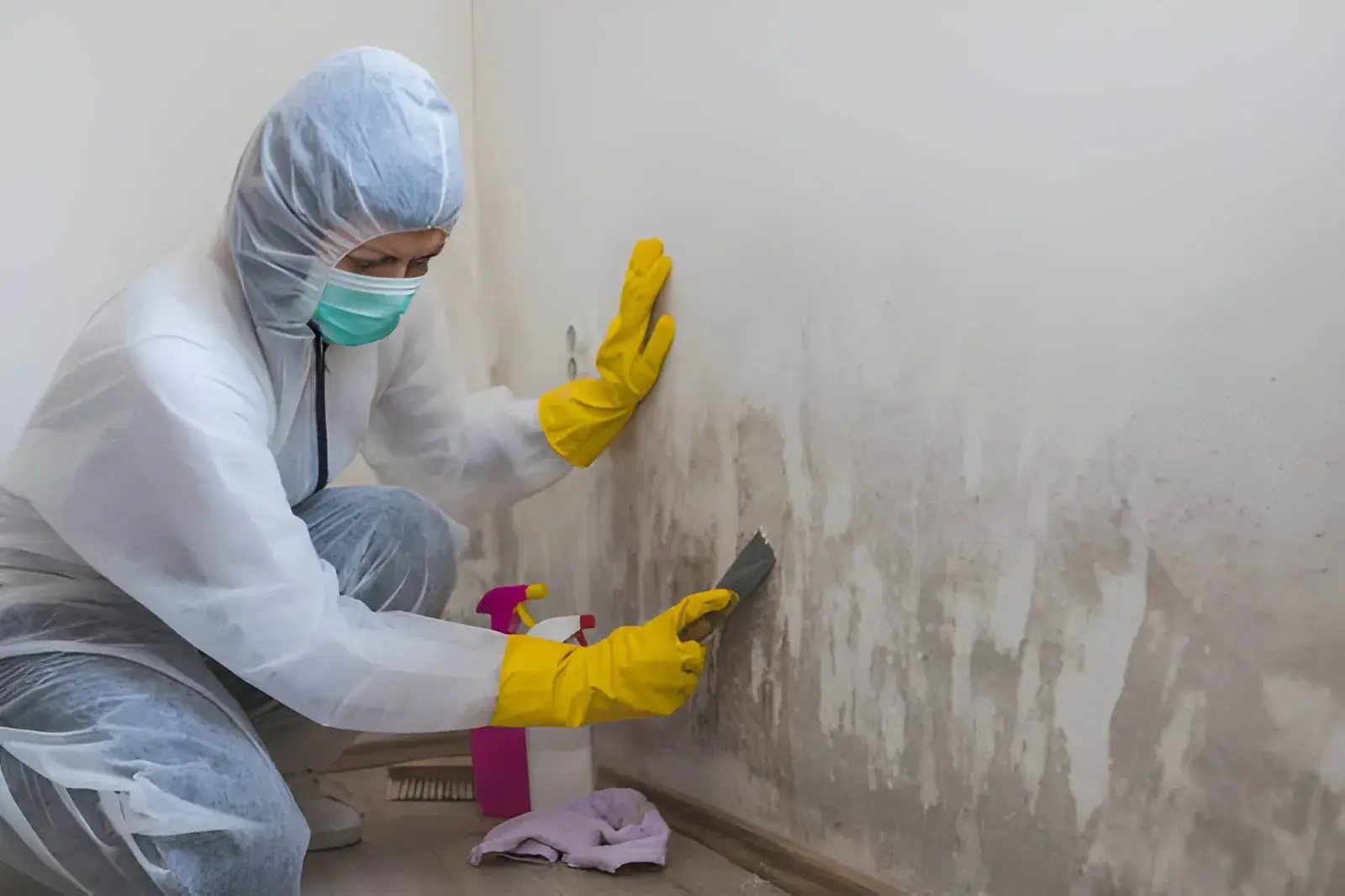
Mold Remediation in College Station, TX
High humidity, attic HVAC condensation, and hidden plumbing leaks trigger aggressive mold colonization in College Station properties. Our certified team responds 24/7.
What Happens When You Call
Our remediation coordinator reviews assessment protocols, moisture sources, and containment needs across Brazos County.
Certified technicians arrive in College Station and construct sealed poly-containment barriers under negative air pressure.
Commercial HEPA air scrubbers capture airborne fungal spores and prevent cross-contamination to unaffected living spaces.
Contaminated drywall and insulation are removed under containment, while structural framing is sanitized with EPA-registered antimicrobials.
Microscopic mold spores colonize damp cellulose materials within 24 to 48 hours of a water intrusion or persistent humidity spike. When fungal growth takes hold inside wall cavities, ceiling plenums, or subflooring, it compromises indoor air quality and structural integrity. X Response deploys state-licensed mold remediation specialists across College Station within 60 minutes, following strict Texas regulatory standards to isolate containment zones and eliminate contamination. Call now for 24/7 mold remediation.
Why College Station Homes Are Vulnerable to Mold
College Station is a dynamic academic center located in the Brazos Valley of East-Central Texas, anchored by Texas A&M University. According to the 2020 United States Census, College Station had a population of 120,511 residents across 51.30 square miles in Brazos County. The city features dense multi-family student housing developments near the Northgate district and Wellborn Road corridor, alongside established residential communities in Southwood Valley, Pebble Creek, and Castlegate.
The Brazos Valley's humid subtropical climate (Köppen Cfa) creates persistent environmental challenges for indoor moisture control. Summer temperatures consistently reach the upper 90s with average relative humidity running high. When central air conditioning systems run constantly in unconditioned attic spaces, condensation pans overflow and duct insulation sweats, dripping moisture onto ceiling drywall. Additionally, seasonal ground shifting in expansive vertisol clay soils cracks sub-slab plumbing pipes, sending hidden moisture into baseboards and flooring. Because Texas strictly regulates mold remediation under the Texas Department of State Health Services (DSHS) guidelines (25 TAC §295), professional containment, licensed execution, and formal post-remediation clearance testing are essential for property preservation and legal compliance.
Subtropical Humidity and Fungal Spore Proliferation
College Station's long, humid summers maintain high ambient moisture levels throughout East-Central Texas. When indoor relative humidity climbs above 55%, dormant fungal spores on drywall, carpet backing, and wood framing germinate rapidly, establishing active colonies without requiring direct liquid flooding.
Attic HVAC Condensation and Ductwork Sweating
Air conditioning air handlers and ductwork installed in unconditioned attic spaces operate under extreme temperature differentials during Texas summers. Blocked condensate drain lines, cracked drip pans, and uninsulated ducts cause significant water accumulation that leaks into ceiling framing and triggers widespread attic mold growth.
Expansive Clay Soils and Slab Plumbing Fractures
Brazos County is characterized by expansive vertisol clays that shift significantly between wet and dry seasons. This subterranean soil movement strains rigid foundation slabs, causing hairline fractures in underground water lines. Water wicks silently into slab-on-grade floors and bottom wall plates, fostering hidden mold colonization behind baseboards.
High-Density Student Housing Moisture Loads
Multi-family student apartment complexes experience heavy daily moisture generation from frequent showering, cooking, and laundry. Poor bathroom exhaust ventilation and delayed maintenance reporting in leased properties allow localized humidity to build up, leading to surface mold across bathrooms and closets.
Texas DSHS Regulatory Compliance Requirements
Under Texas Administrative Code (25 TAC §295), remediation projects involving more than 25 contiguous square feet of mold require an independent protocol from a licensed Mold Assessment Consultant (MAC) and remediation by a licensed contractor to issue the Certificate of Mold Damage Remediation (Form CMDR-1).
Mold remediation in College Station demands a certified, compliant approach tailored to regional climate extremes and Texas legal standards. Our licensed specialists deliver safe, permanent mold removal across Brazos County.
What Happens to Your Home While You Wait
24–48 Hours
Fungal spores germinate on damp drywall backing, baseboard trims, and carpet padding. Microscopic hyphae begin penetrating porous organic substrates, establishing early mold colonies.
3–7 Days
Visible fungal colonies expand across painted walls, cabinetry, and ceiling gypsum. Microbial volatile organic compounds (mVOCs) produce strong musty odors, and air quality degrades.
1–2 Weeks
Fungal root structures penetrate deep into structural wood framing and subflooring. Spores enter return HVAC plenums, contaminating ductwork and spreading throughout unaffected rooms.
2–4 Weeks
Extensive structural weakening occurs as cellulose breakdown rots framing members and dissolves gypsum wallboard. Building occupants may experience heightened allergic and respiratory reactions.
One Month and Beyond
Severe, widespread structural colonization requires complete demolition of interior finishes, structural lumber replacement, and comprehensive whole-home decontamination under full containment.
Immediate professional containment stops mold spreading. Contact X Response immediately for certified mold remediation in College Station.
How We Restore Mold-Affected College Station Homes
Our mold remediation protocol adheres strictly to Texas DSHS regulatory standards and IICRC S520 guidelines, ensuring safe spore containment and verified clearance.
Initial Assessment and Protocol Review
We review the independent Mold Assessment Consultant (MAC) protocol, identify active moisture intrusion sources, and establish remediation scope boundaries across your property.
Critical Barrier Containment and Negative Air Setup
Technicians construct sealed polyethylene containment barriers around affected areas and install commercial HEPA air scrubbers to maintain negative air pressure and prevent spore dispersal.
Controlled Material Removal
Non-salvageable, heavily colonized materials such as water-damaged drywall, carpet padding, and ceiling tiles are carefully bagged under negative pressure and removed for safe disposal.
Structural Cleaning and Antimicrobial Treatment
Exposed wood framing and concrete slab surfaces are HEPA-vacuumed, hand-scrubbed with EPA-registered antimicrobial fungicides, and treated to eliminate all residual fungal hyphae.
HEPA Filtration and Post-Remediation Clearance Support
Continuous air scrubbing purifies indoor air until the independent assessment consultant completes visual inspection and air sampling to issue the final Certificate of Mold Damage Remediation (CMDR-1).
The X Response Difference
Choose licensed, compliant mold remediation that guarantees permanent property protection and verified air quality.
Insurance Claim Guidance for College Station Homeowners
Texas property insurance coverage for mold damage is strictly defined and often subject to specific policy limits or endorsements. Most standard Texas homeowners policies cover mold remediation only when resulting directly from a covered sudden and accidental water peril, such as a burst plumbing line. Our team provides comprehensive photographic, moisture, and protocol documentation to facilitate claim processing under Texas insurance rules.
How X Response Helps
- Detailed photographic logs showing the direct cause-and-effect relationship between covered water loss and mold growth
- Comprehensive itemized scopes prepared in Xactimate aligned with the licensed consultant's remediation protocol
- Chain-of-custody documentation and containment setup records for regulatory compliance
- Assistance facilitating independent clearance testing for official CMDR-1 certificate issuance
- Direct communication with insurance adjusters adhering to Texas Prompt Payment of Claims Act timelines
X Response delivers independent damage assessment and structural restoration services. Final coverage determinations and claim payments remain the exclusive authority of your insurance carrier.
Certified Restoration Specialists Serving College Station
Our College Station mold remediation team consists of state-licensed, IICRC-certified specialists dedicated to restoring healthy indoor environments across Brazos County. Experienced in managing mold challenges specific to the Brazos Valley, including attic HVAC sweating, slab moisture wicking, and multi-tenant student housing remediation, our technicians bring extensive technical knowledge to every project. We operate 24/7 to deliver rapid, compliant containment and remediation.
Every project is supervised by technicians holding active Applied Microbial Remediation Technician (AMRT) certifications and state credentials under the Texas Department of State Health Services (DSHS). Utilizing commercial HEPA filtration, negative air machines, and EPA-approved sanitizers, our specialists guarantee thorough decontamination and clearance readiness.
In College Station, X Response works with First Response Restoration, an independent local restoration partner serving Brazos County.
Mold Remediation FAQ for College Station Homeowners
Other Emergency Services in College Station

Water Damage Restoration
Burst pipes, storm flooding, standing water. We extract, dry, and restore before mold sets in.
Learn more
Fire Damage Restoration
Structural damage, soot, debris. We stabilize, clean, and rebuild what fire destroyed.
Learn more
Smoke Damage Restoration
Soot residue, chemical odors, HVAC contamination. We decontaminate surfaces, eliminate odors, and restore air quality.
Learn more
Sewage Cleanup
Sewer backups, contaminated water, biohazard. We extract, sanitize, and restore safely.
Learn more